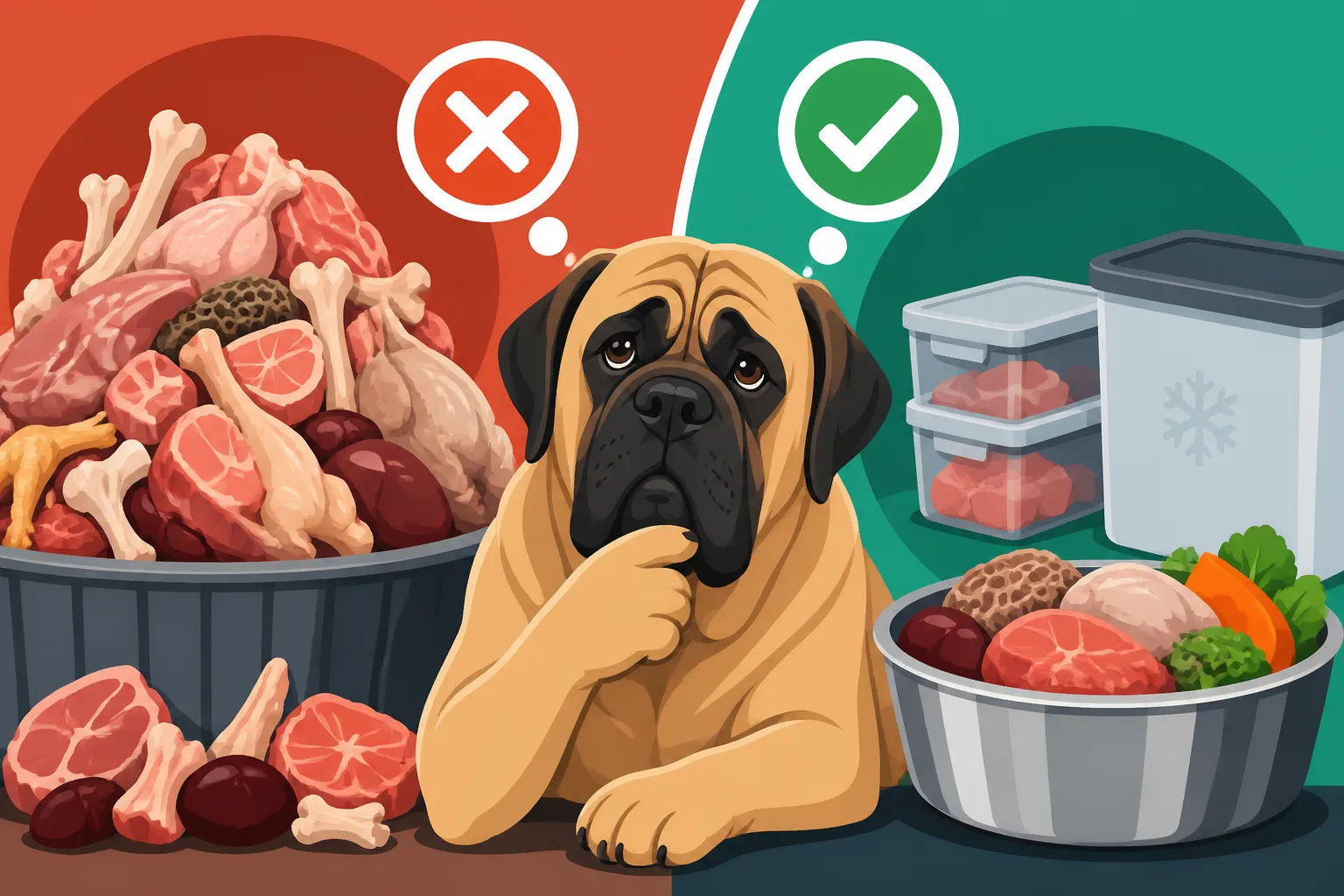
Whether Raw Feeding Is Practical at Mastiff Volume
You've been researching raw feeding for your beloved Mastiff, maybe you've heard amazing stories about shinier coats, cleaner teeth, or boundless energy. It sounds incredible, a way to connect with your dog's ancestral diet, but then you look at your Mastiff—all two hundred pounds (or more!) of majestic, slobbery love—and a very practical question hits you: how on earth do I even begin to raw feed a dog this big? The sheer volume of food a Mastiff consumes makes many popular dog care trends, including raw feeding, feel less like a holistic lifestyle choice and more like an Olympic-level logistical and financial challenge. This guide is here to walk you through the realistic considerations, the undeniable hurdles, and whether raw feeding truly is practical at Mastiff volume.
The Lure of Raw Feeding for Mastiffs (and the Reality Check)
There's a definite mystique around raw feeding, often called the BARF (Biologically Appropriate Raw Food) or prey model diet. Many Mastiff owners, striving to provide the absolute best for their gentle giants, are drawn to the idea of feeding a diet that mimics what their dog's wild ancestors might have eaten. It sounds primal, natural, and incredibly healthy.
Why Owners Consider Raw
The testimonials from raw feeders can be incredibly compelling. People often report dramatic improvements in their dogs' health, such as a gleaming, soft coat that practically sheds glitter, an impressive reduction in "doggy odor," and teeth so sparkling white you'd think they'd just come from a professional cleaning. Owners speak of increased energy levels, better muscle tone, and a noticeable difference in stool quality – smaller, firmer, and less odorous. For a breed like the Mastiff, which can be prone to various health issues, the promise of a diet that could potentially stave off some of these problems or improve overall vitality is incredibly appealing. We all want our Mastiffs to live their Six to Ten Years Is What a Mastiff Gets to the fullest, and a perceived "optimal" diet seems like a direct path to that goal.
The Scale Problem: When Ancestral Diets Meet Modern Mastiff Appetites
Here's where the dream often clashes with reality when you own a Mastiff. While the concept of raw feeding itself isn't inherently complicated, the scale at which you need to apply it to a Mastiff is monumental. A tiny Chihuahua might eat a few ounces of raw food a day; a 200-pound Mastiff, however, can consume anywhere from 4 to 10 pounds of raw meat, bone, and organ daily, depending on their age, activity level, and individual metabolism. Multiply that by 30 days, and you're looking at well over a hundred pounds of raw material each month.
This isn't just about buying a slightly larger bag of kibble. This is about sourcing, storing, preparing, and handling hundreds of pounds of perishable ingredients every single month. Your standard kitchen freezer will laugh at you. Your local grocery store will look at you strangely if you try to buy fifty pounds of chicken necks every week. The logistical challenge alone can make even the most dedicated raw feeder reconsider their options. It's a fundamental shift in how you manage your entire kitchen and home, far beyond simply switching brands.
Sourcing and Storage: A Giant Logistical Puzzle
Feeding a Mastiff is a commitment, and feeding one a raw diet amplifies that commitment exponentially. It forces you to think like a small-scale farm manager or a specialized butcher shop, purely for your dog's meals.
Finding Affordable Bulk Ingredients
One of the biggest initial hurdles is finding the sheer volume of ingredients your Mastiff needs. You can't just pick up a couple of packs of ground beef from the supermarket. You're thinking cases of chicken quarters, whole turkeys, beef hearts, livers, and necks by the bulk container. This often means forging relationships directly with local butchers, farmers, or even restaurant suppliers. You might join raw feeding co-ops where members pool orders to buy massive quantities from distributors at wholesale prices.
The goal isn't just bulk, though; it's affordable bulk. The cost of feeding a Mastiff can already be eye-watering, and raw feeding can quickly inflate that further if you're not savvy about sourcing. You’re looking for deals on cuts that humans might not prioritize but are perfectly nutritious for dogs, like backs, frames, and organs. This takes time, research, and often, a willingness to travel to different suppliers to get the best prices and variety. Consider Whether a Mastiff Owner Should Buy by the Pallet of meat if you're truly going this route.
The Freezer Space Conundrum
Let's talk freezers. If you have a Mastiff, you probably already understand that nothing about owning one is "standard." This definitely applies to food storage. A typical refrigerator-freezer combo simply won't cut it. You'll need at least one, if not two, dedicated chest freezers. And not the small, apartment-sized ones, but substantial units that can hold hundreds of pounds of meat. Imagine filling it with whole chickens, racks of ribs, and bags of ground organ mix.
These freezers need space in your garage or basement, and they need to be reliably powered. A power outage can turn your carefully stocked raw diet into a very expensive, very smelly disaster. Beyond the space, there's the organization. You can't just toss everything in. You'll need to package individual meal portions or daily rations, clearly labeled, to ensure proper rotation and ease of access. This is where Where a Mastiff Owner Stores a Month of Food becomes a very real discussion point in your household.
Safe Handling at Mastiff Scale
The larger the volume of raw meat you're handling, the higher the stakes for food safety. Cross-contamination is a constant concern. You're dealing with raw poultry, beef, and other meats that carry bacteria like Salmonella and E. coli. While a dog's digestive system is often more resilient to these bacteria than a human's, the risk of contaminating your kitchen surfaces, utensils, and even your own hands is significant.
This means meticulous cleaning protocols after every meal prep session. Dedicated cutting boards, knives, and bowls that are used only for the dog's raw food are a must. Hot soapy water, disinfectants, and constant vigilance are your allies. Imagine cleaning up after preparing 5 pounds of raw chicken for dinner, and then repeating that process every single day. It’s a time-consuming aspect of raw feeding that many new to it often underestimate, especially with a dog that produces as much drool and mess as a Mastiff.
Nutritional Balance: More Than Just Meat
It's a common misconception that raw feeding simply means tossing your dog a chunk of meat. For a giant breed like a Mastiff, especially one still growing, achieving proper nutritional balance is absolutely critical. Imbalances can lead to severe and irreversible health problems.
The Complexities of a Balanced Raw Diet
A truly balanced raw diet for a Mastiff isn't just muscle meat. It needs to replicate the nutrient profile of a whole prey animal, which means incorporating a precise ratio of:
- Muscle Meat (70-80%): This is the bulk of the diet – beef, chicken, lamb, turkey, pork.
- Edible Bone (10%): Crucial for calcium and phosphorus. This means raw, non-weight-bearing bones like chicken necks, backs, or wings, or finely ground bone meal. Never cooked bones, which can splinter.
- Organ Meat (10%): About half of this should be liver, with the other half being other secreting organs like kidney, spleen, or pancreas. These are nutrient powerhouses, rich in vitamins and minerals.
- Other (0-5%): This might include a small amount of vegetables, fruits, seeds, or supplements, depending on your chosen raw feeding model.
Maintaining these ratios daily for a Mastiff means careful weighing and portioning. It’s not just about getting enough calories; it's about ensuring the calcium-to-phosphorus ratio is correct, that they're getting sufficient trace minerals, and that all their vitamin needs are met. For a puppy, this is even more critical, as improper calcium levels can lead to devastating growth deformities. The Protein and Calcium Ceiling for a Mastiff Puppy is a real concern that must be managed.
The Cost of Quality and Variety
To ensure a truly balanced diet and prevent nutrient deficiencies or excesses, you need to provide a variety of protein sources. Relying solely on chicken, for example, might be cheaper, but it won't offer the full spectrum of amino acids and micronutrients found in a rotating diet of beef, lamb, and other meats. This variety adds significantly to the cost.
Some commercially prepared raw diets, often sold as frozen patties or nuggets, offer convenience and pre-balanced nutrition. Brands like Stella & Chewy's or Primal are popular. However, consider the sheer volume: if a small dog eats one patty, your Mastiff might need 10-15 patties per meal. The cost for these convenient options, while nutritionally sound, rapidly escalates beyond what most families can afford for a Mastiff. Imagine how many frozen patties you'd need for How Much an Adult Mastiff Eats by Weight Each Day. While Ollie offers fresh, pre-portioned meals, those are typically cooked, not raw, and again, the volume for a Mastiff pushes practicality.
Consulting a Veterinary Nutritionist
Given the complexities and the potential for serious health consequences from an unbalanced diet, it is non-negotiable to consult with a board-certified veterinary nutritionist if you are considering raw feeding a Mastiff. They can help you formulate a diet plan tailored to your dog's specific age, weight, activity level, and any underlying health conditions.
They can guide you on appropriate ratios, safe bone sources, and necessary supplements, ensuring you don't inadvertently create deficiencies or excesses that could harm your giant breed. Self-formulating a raw diet for a Mastiff without expert guidance is a risky endeavor that could lead to orthopedic issues, organ damage, or other severe health problems down the line. Remember, What Excess Calcium Does to a Mastiff's Elbows can cause irreversible damage in growing puppies.
Cost Analysis: Breaking Down the Budget
Let’s be brutally honest: Mastiffs are expensive dogs. Every single expense, from food to vet care to toys, is multiplied by their immense size. Raw feeding is no exception, and often, it significantly increases the financial outlay.
Monthly Raw Food Expenses
To give you a realistic picture, let's consider a hypothetical 180-pound adult Mastiff eating roughly 6 pounds of raw food per day. That's 180 pounds of raw food per month.
Here's a rough breakdown, acknowledging that prices fluctuate wildly by region and supplier:
| Item | Estimated Daily Quantity | Estimated Monthly Quantity | Average Cost per Pound | Estimated Monthly Cost |
|---|---|---|---|---|
| Muscle Meat (e.g., chicken leg quarters, beef trim) | 4.5 lbs | 135 lbs | $1.50 – $3.00 | $202.50 – $405.00 |
| Edible Bone (e.g., chicken necks/backs, ground bone) | 0.6 lbs | 18 lbs | $1.00 – $2.50 | $18.00 – $45.00 |
| Organ Meat (e.g., liver, kidney) | 0.6 lbs | 18 lbs | $2.00 – $4.00 | $36.00 – $72.00 |
| Subtotal Food Cost | $256.50 – $522.00 | |||
| Supplements (fish oil, kelp, etc.) | N/A | N/A | N/A | $20.00 – $50.00 |
| Total Estimated Monthly Cost | $276.50 – $572.00+ |
This table only includes the food itself. It doesn't account for the initial investment in chest freezers, the electricity to run them, or the fuel costs for driving around to source ingredients. As you can see, raw feeding can easily cost well over What Feeding a Two Hundred Pound Mastiff Costs a Month.
Comparing Raw to High-Quality Kibble
Let's put this into perspective against a high-quality kibble. A premium, large-breed kibble from a reputable brand (which you can often find readily on platforms like Chewy or Amazon) might cost you roughly $70-$100 for a 30-40 lb bag. A Mastiff might go through 1.5 to 2 bags of this per month, depending on the calorie density and the specific dog.
| Item | Estimated Monthly Quantity | Average Cost per Bag | Estimated Monthly Cost |
|---|---|---|---|
| High-Quality Kibble | 1.5 – 2 bags (30-40 lbs each) | $70 – $100 | $105 – $200 |
| Supplements (if desired) | N/A | N/A | $10 – $30 |
| Total Estimated Monthly Cost | $115 – $230+ |
As you can see, even at the lower end of the raw feeding spectrum, the cost is often significantly higher than feeding a high-quality kibble. This cost difference can easily be $150-$300 or more per month. Over the lifespan of your Mastiff, this adds up to thousands upon thousands of dollars. It’s a huge factor in The Mastiff's Short Life Buys the Biggest Bills and Why a Mastiff Costs More Per Year Than a Dog That Lives Twice as Long.
Hidden Costs and Time Investment
Beyond the obvious monetary costs, there are significant hidden costs and time investments when raw feeding a Mastiff:
- Freezer Investment: As mentioned, you’ll need at least one large chest freezer. These can cost several hundred dollars each, a significant upfront expense.
- Electricity Costs: Running large freezers adds to your monthly utility bill.
- Time for Sourcing: Finding, communicating with, and picking up bulk orders takes hours out of your week.
- Time for Preparation: Unpacking bulk meat, portioning, grinding (if you choose to grind bones or muscle meat), weighing, and repackaging for daily meals is a substantial daily or weekly chore. This isn't just a few minutes; it can be an hour or more for a Mastiff's worth of food.
- Time for Cleaning: The meticulous cleaning required to prevent contamination adds another layer of time commitment to your daily routine.
- Veterinary Nutritionist Fees: The initial consultation and follow-up adjustments with a specialist are an added cost, though a crucial one.
All these factors contribute to Whether Fresh Food Is Realistic for a Mastiff. Many Mastiff owners find that while the idea of raw feeding is appealing, the practicality of doing so at such a massive scale, both financially and in terms of time, becomes overwhelming. It's a dedication that requires a significant lifestyle adjustment, not just a diet change.
Disclaimer
This article is for general informational purposes only and does not constitute professional advice. Laws, prices and regulations vary by location and change over time. Consult a qualified professional for guidance on your specific situation.