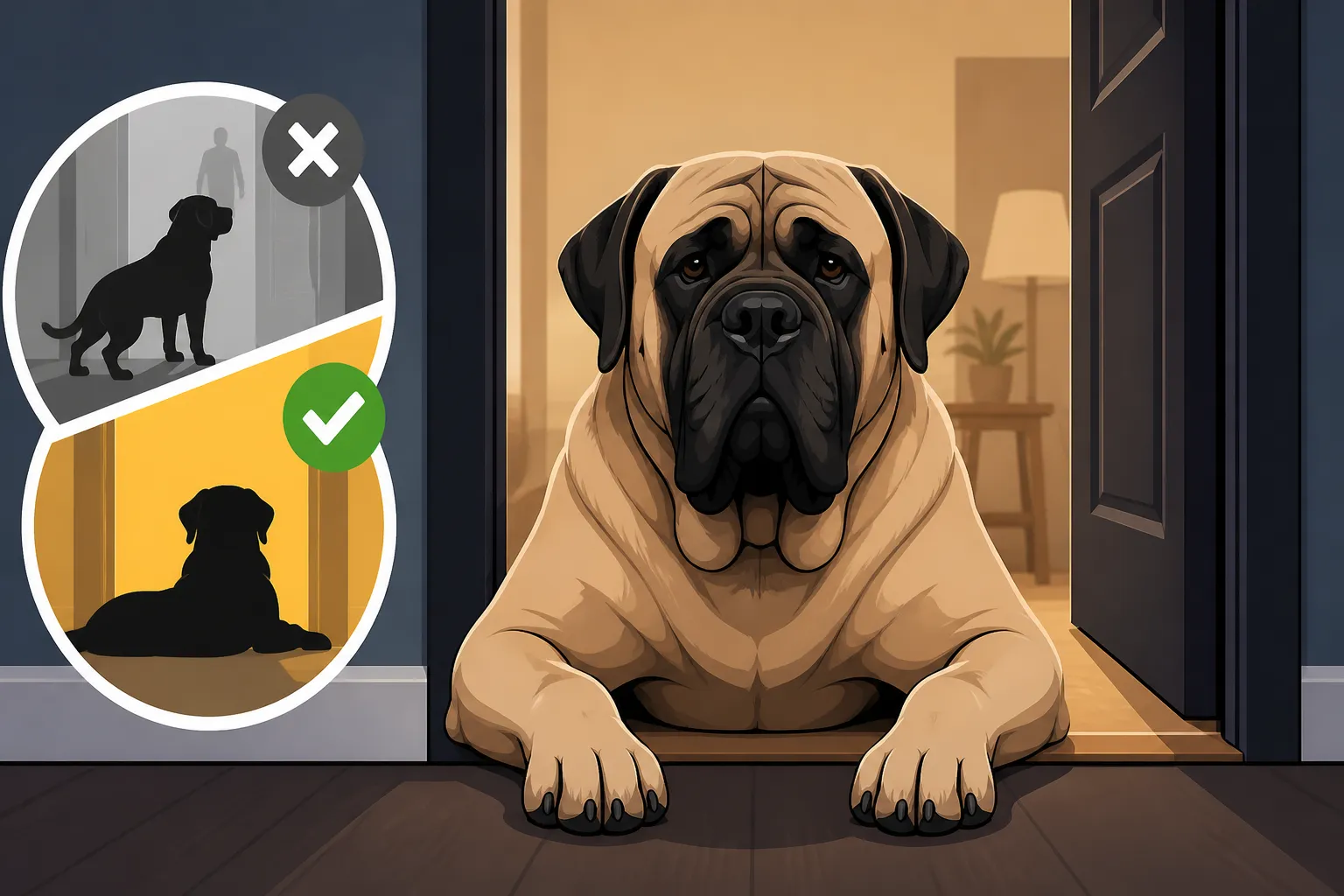
Why a Mastiff Blocks Doorways Instead of Guarding Them
It’s a scenario many Mastiff owners know all too well: you’re trying to navigate from one room to another, and there, sprawled across the threshold like a furry, immovable roadblock, is your beloved giant. It’s not aggression, it’s not defiance in the typical sense; it’s just… a Mastiff doing what Mastiffs do best: occupying space. This comprehensive guide will explore the fascinating reasons behind this endearing, if sometimes inconvenient, behavior and equip you with practical strategies to reclaim your hallways.
Understanding the Mastiff's Instinctive Behavior
When you bring a Mastiff into your home, you're not just getting a dog; you're inviting a magnificent, ancient lineage with deep-seated instincts. These aren't always about fierce protection in the way a Doberman might guard, but rather about a very particular form of presence and loyalty. Understanding this foundational behavior is key to interpreting why your gentle giant prefers to be your personal doorway bouncer.
The Gentle Giant Misconception
Many people hear "Mastiff" and immediately picture a formidable guard dog, ever vigilant and ready to challenge threats. And while their sheer size can certainly be a deterrent, the reality of a Mastiff's temperament often surprises newcomers. They are, at their core, incredibly gentle, affectionate, and surprisingly sensitive creatures. Their protective instincts rarely manifest as overt aggression, but rather as a quiet, watchful presence. They are keenly attuned to their family and their immediate environment, often preferring to be with their people rather than patrolling the perimeter with a bark. This inherent gentleness means that their "guarding" often looks more like a benevolent, immobile sentry than an active defender. You might notice your Mastiff placing themselves between you and a perceived newcomer, not barking furiously, but simply being a massive, quiet barrier. This is their way of saying, "I've got this," in the most understated, Mastiff-like fashion. The Sensitivity Nobody Expects in a Two Hundred Pound Mastiff delves deeper into their delicate nature.
A History of Close Proximity
The Mastiff's historical role wasn't just about fighting in arenas or guarding castles from afar; it was also about being an integral, ever-present part of the household. These dogs were bred to live in close quarters with their human families, often sleeping near them, accompanying them on their daily routines, and providing a constant, reassuring presence. They weren't nomadic hunters or independent herders; they were guardians of the hearth and home, and that meant being in the home, right where the action was, or where the most vulnerable members of the family might be. This historical predisposition for close proximity translates directly into their modern-day behavior. They want to be involved, they want to know what's happening, and often, the best vantage point for this is right in the middle of a high-traffic area, like a doorway or hallway. They aren't trying to be inconvenient; they're trying to be part of everything, just as their ancestors were.
The Difference Between Guarding and Blocking
It's easy to mistake a Mastiff lying in a doorway for active guarding, but there's a nuanced difference. True guarding often involves a more active, alert stance, perhaps a low growl, a focused stare, or a readiness to engage with a perceived threat. Blocking, on the other hand, is generally a much more passive behavior. Your Mastiff isn't necessarily challenging you or an intruder; they are simply there. Think of it less as a strategic defensive maneuver and more as an extension of their desire to be close and to feel secure within their "territory" – which often extends to the entire house, and especially the pathways within it. They might be lying there because the sunbeam hits just right, or because they can keep an eye on both the living room and the kitchen from that spot. Their immense size naturally makes them a barrier, whether intended for guarding or not. This distinction is crucial for owners, as it guides how you approach the behavior. If it were aggressive guarding, the training approach would be very different. With blocking, it’s often about teaching polite cooperation and managing their comfortable, albeit inconvenient, habits.
Why Your Mastiff Becomes a Doorway Obstacle
Beyond their historical role, there are several very practical and often endearing reasons why your gentle giant might choose a doorway as their prime napping or lounging spot. It’s rarely about malice or outright defiance, but rather a combination of comfort, attachment, and sometimes, a little bit of strategic thinking on their part.
Comfort and Security in Strategic Locations
Let's be honest: Mastiffs are big dogs. They need space, and they like comfort. A doorway or hallway often offers a combination of factors that make it a surprisingly appealing spot for them. Firstly, it might be cooler on a tiled floor than on a rug, or conversely, a small patch of sunlight might make it the warmest spot in the house. Secondly, these areas often provide a sense of security. From a doorway, a Mastiff has a clear view of multiple rooms, allowing them to keep tabs on their human family without having to move much. It's their personal command center. They can monitor who comes and goes, hear every rustle in the kitchen, and generally feel "in the know." They might choose a spot that offers a wall to lean against, providing physical support for their massive bodies. This isn't just about being lazy; it's about optimizing for comfort and feeling safe in their environment. Imagine yourself picking the perfect spot on the couch to watch TV – your Mastiff is doing the same, just with a greater impact on your ability to move around your home. You can read more about how their physical needs impact their choices in A Mastiff Lying Two Hundred Pounds on One Elbow All Day.
The "Velcro" Dog Tendency
Mastiffs are famously "Velcro" dogs. They bond deeply with their families and have an almost insatiable need to be near their people. This isn't a shy, aloof breed; they crave connection and physical closeness. When you move from one room to another, your Mastiff often wants to come with you, or at least be close enough to observe. If you're in the kitchen, they want to be by the kitchen door. If you're heading to the bedroom, they're probably already there, or quickly making their way. A doorway then becomes a natural place to intercept you, or to simply "be" as you pass by. They're not actively herding you; they're simply following their instinct to be part of the family unit. This intense loyalty and desire for proximity means they might lie where they know you'll have to step over or around them, not to annoy you, but because that's where you are. This behavior is explored further in Why a Mastiff Leans Its Weight on People, which highlights their need for physical connection.
Seeking Attention and Proximity
Sometimes, the doorway blockade is a subtle, or not-so-subtle, bid for attention. Your Mastiff knows that if they're in the middle of the doorway, you absolutely have to acknowledge them. A pat, a scratch behind the ears, a kind word – even a gentle nudge to move – is still interaction. They're smart enough to realize that this position guarantees engagement. If they've been feeling a little left out, or if you've been busy, lying directly in your path is a very effective way to get noticed. It's their way of initiating contact, a silent plea for connection. Moreover, just being close to you, even if they're not actively engaged in play or training, is comforting for them. They thrive on being part of the family buzz, hearing your conversations, and feeling your presence. So, while it might feel like a literal roadblock, often it's just a big, furry declaration of love and a request for a little more of your time and affection.
The Physicality of a Mastiff's Blockade
Dealing with a Mastiff planted firmly in a doorway isn't like stepping over a Chihuahua. Their sheer mass and deliberate nature turn a simple request to move into a full-body interaction. This is where understanding their physical capabilities, and limitations, becomes incredibly important for safety and effective management.
Their Sheer Size and Presence
Let's state the obvious: Mastiffs are enormous. A fully grown adult can easily weigh between 150 to over 200 pounds, sometimes even more. This isn't a breed you can easily sidestep or gently push aside without thinking. Their bulk alone makes them a formidable presence in any doorway, which are usually designed for human passage, not massive canines. When a Mastiff decides to lie down, they often spread out, taking up every available inch of floor space. Their long bodies and powerful legs can block an entire threshold. This isn't necessarily a challenge, but simply an unavoidable consequence of their magnificent size. For younger Mastiffs, especially, they might not even realize how much space they're truly occupying. They just want to be comfortable, and perhaps feel the cool floor on their belly. The impact of their size is so profound it affects many aspects of living with them, from furniture to vehicles.
The Weight of a Stationary Mastiff
Beyond their impressive dimensions, a key factor is the sheer weight of a stationary Mastiff. When one of these giants decides to plant itself, it truly plants itself. Moving a two hundred pound dog who doesn't want to move is a task that requires both technique and patience. You can't just pick them up or shove them. Their deliberate nature, sometimes mistaken for stubbornness, means they need a good reason to shift their bulk. When they are comfortable and settled, rousing them requires more than a simple nudge. This is particularly true if they've found a spot that offers good traction, like a carpeted area, rather than slippery hardwood. Traction: Why a Mastiff Cannot Live on Bare Hardwood explains why flooring choices are so important for these dogs, especially when considering where they choose to lie down. Attempting to physically force a Mastiff can be counterproductive, potentially leading to injury for both dog and human, and can erode trust, which is something you absolutely do not want to do with such a powerful animal.
Dealing with a Dog That Won't Budge
So, you have a giant, comfortable, and utterly immovable Mastiff in your path. What now? The common frustration for owners is that their dog simply refuses to move, or acts as if they don't understand the request. It's less about genuine stubbornness and more about their deliberate nature combined with their sheer mass. They often need clear, consistent communication and motivation to change position. Shouting or becoming exasperated usually does little good and can make them more resistant, as their sensitive nature means they respond poorly to harshness. Why Harsh Correction Ruins a Mastiff is a must-read for understanding their emotional responses. Instead of getting into a tug-of-war, the solution lies in patient, positive training and understanding what truly motivates them. This might be a high-value treat, a favorite toy, or a clear command that they've been taught to associate with a positive outcome. The key is to make moving their idea, or at least a highly rewarding one.
Training Strategies for Navigating Doorways
Teaching your Mastiff to politely yield space, especially in doorways, is less about force and more about communication, consistency, and making the desired behavior rewarding. It's much easier to teach good habits when your Mastiff is a puppy, but adult dogs can certainly learn new tricks with the right approach.
Early Intervention and Positive Reinforcement
The golden rule for training a Mastiff, particularly when it comes to their imposing size, is to start early. Begin teaching polite doorway manners the moment your Mastiff puppy comes home. A tiny Mastiff puppy might be easy to step over, but that habit will become a significant problem when they're a two hundred pound adult. Use positive reinforcement exclusively. This means rewarding your Mastiff lavishly when they move out of your path, or choose to lie in a designated spot away from a doorway. When you approach a doorway and your puppy is there, gently lure them away with a treat or a toy, then immediately praise and reward as they move. You want to create a positive association with moving for you. A solid "place" command, taught from a young age, can be invaluable. Teaching a Mastiff Before It Outweighs You emphasizes the importance of these early lessons. Remember, consistency across all family members is crucial; everyone needs to use the same cues and rewards.
Teaching a "Place" or "Move" Command
Developing a reliable "place" or "move" command is perhaps the most effective way to manage a doorway-blocking Mastiff. The "place" command teaches your dog to go to a specific spot (like a dog bed or mat) and stay there until released. Start by luring your Mastiff to their designated "place" with a treat, say the word "place," and reward them when they get there. Gradually increase the duration they stay and the distance you can be from them. This gives you a clear, positive directive to offer when you need them out of a thoroughfare.
For a simpler "move" or "out of the way" command, you can use a lure. Hold a high-value treat just out of reach and move it in the direction you want your Mastiff to go. As they take a step to follow the lure, say your chosen command (e.g., "move" or "clear") and immediately reward them. Repeat this frequently, especially around doorways, until they associate the verbal cue with the action of moving and the reward. BAXTER & Bella offers excellent online training resources that focus on positive reinforcement techniques which are ideal for sensitive giants like Mastiffs, helping you build these essential commands step-by-step. The goal is to make moving for you a positive interaction, not a chore. What Actually Motivates a Mastiff provides more insights into effective reward strategies.
Managing the Environment
Sometimes, prevention is the best strategy. If you know your Mastiff has a favorite (and inconvenient) doorway spot, you can subtly manage their environment to encourage better choices. Consider placing a comfortable, orthopedic bed in a nearby, less obstructive location. Make that spot highly appealing with their favorite blanket or toy. If a particular doorway is a constant problem, you might temporarily use a baby gate or a sturdy pet barrier to block access or redirect them to their designated "place" when you need to pass. For dogs who love cool surfaces, provide a cooling mat in an appropriate area. For those who love a good view, find a spot with a window or sightline that doesn't impede traffic. Even something as simple as scattering a few high-value treats (like a piece of dried liver from Amazon) on their preferred, non-doorway bed can make that spot more attractive than the cold, hard floor of the hallway. Remember, their huge size means that the smallest shift in environment can have a big impact on where they choose to settle.
Addressing Underlying Behavioral Causes
While often simply a matter of comfort and proximity, consistent doorway blocking can sometimes hint at deeper behavioral nuances. Understanding these can help you fine-tune your approach and foster an even stronger bond with your gentle giant.
Anxiety and Insecurity
It might seem counterintuitive for such a large, imposing dog to experience anxiety, but Mastiffs, with their sensitive natures, are not immune. A dog that persistently blocks doorways, especially if they seem reluctant to leave that spot, could be feeling insecure or anxious about their environment. They might feel safer in a central location where they can observe everything, rather than feeling vulnerable in a more open space. This anxiety could stem from changes in the household routine, new people or pets, or even a lack of clear leadership from their humans. If your Mastiff exhibits other signs of anxiety—like excessive drooling, destructive behavior when left alone, or reluctance to be separated from you—the doorway blocking could be a manifestation of this. In such cases, addressing the root cause of the anxiety with the help of a professional trainer or veterinary behaviorist is crucial. Creating a predictable routine, providing a safe "den" space (like a large crate or quiet room), and engaging in calm, confidence-building activities can make a big difference.
Resource Guarding of Space
While less common as a primary reason for doorway blocking, some Mastiffs might develop a subtle form of resource guarding over their chosen spot or the pathway itself. This isn't usually aggressive, but they might become stiff, give a hard stare, or even offer a low growl if approached too closely or asked to move when they are settled in "their" space. If you notice any of these more assertive behaviors, it's important to address them immediately and with caution. This type of guarding signals that your Mastiff perceives that doorway or floor space as something they own and need to defend. This needs a different approach than simple attention-seeking. Instead of physically pushing them, reinforce a strong "move" or "off" command with extremely high-value rewards, ensuring they understand that moving away from the perceived resource actually leads to something better. For serious cases, consulting with a professional behaviorist experienced with large breeds is highly recommended to ensure safe and effective resolution.
Lack of Clear Boundaries
Sometimes, a Mastiff blocking a doorway is simply a sign that they haven't been taught clear boundaries and expectations. These intelligent dogs thrive on consistency and knowing what's expected of them. If they've consistently been allowed to lie wherever they please, or if their owners have been inconsistent in asking them to move, they will naturally assume that the doorway is fair game. Without a clear "no" or a consistent redirect to a more appropriate spot, they won't understand that their chosen lounging area is inconvenient or unsafe. This isn't defiance; it's simply a lack of understanding the rules of the house. Establishing clear boundaries doesn't mean being harsh; it means being firm, consistent, and always pairing your expectations with positive reinforcement. Every time you ask them to move, it should be an opportunity to reinforce a positive behavior and strengthen your bond, not to engage in a power struggle. Consider attending a basic obedience class, which BAXTER & Bella offers online, to help solidify these foundational boundaries and communication skills.
Essential Tools and Resources for Management
Managing a Mastiff's doorway-blocking habit effectively often involves more than just verbal commands. The right tools and resources can make a significant difference in both your dog's comfort and your ability to navigate your home safely and easily.
High-Value Treats and Engagement Toys
When it comes to motivating a Mastiff, especially one that is deeply settled, you need to bring out the big guns: high-value treats. Standard kibble might not cut it. Think small pieces of cooked chicken, cheese, or even specially made training treats from brands you trust. The treat should be enticing enough to make them think, "Moving for that is totally worth it!" Keep these treats readily available near doorways or in your pockets, so you're always prepared to reward good behavior.
| Treat Type | Description | Use Case |
|---|---|---|
| Cooked Chicken | Small, lean pieces; highly palatable. | Excellent for initial training of "move" command. |
| Cheese | Small cubes; strong scent, very appealing. | Rewards for consistent compliance; luring. |
| Dried Liver | Extremely high value, often found on Amazon. | When you absolutely need them to budge. |
| Training Treats | Store-bought, soft, smelly treats. | Daily reinforcement, varying texture/flavor. |
Beyond treats, engagement toys can also be a powerful motivator. If your Mastiff loves a particular squeaky toy or a durable chew toy, you can use it to lure them off a doorway. Toss it to their designated "place" and follow with enthusiastic praise when they move to retrieve it. This turns "moving" into a fun game rather than a command.
Durable Gates and Exercise Pens
Sometimes, direct management is necessary, especially during the training phase or when you have guests. Standard baby gates often don't stand a chance against a determined Mastiff. You'll need extra-tall, heavy-duty pet gates made of metal or reinforced wood. Look for gates that can be securely mounted to the wall, or very wide, freestanding gates that are difficult to push over. These can be invaluable for temporarily blocking off certain rooms or hallways, allowing you to establish designated "free zones" and "Mastiff zones" within your home.
Exercise pens, especially extra-large, heavy-gauge steel versions, can also be useful. While not ideal for long-term confinement, they can create a secure, temporary "place" for your Mastiff that is out of the main traffic flow. This is particularly helpful when you need to answer the door, or if you have children or elderly family members who need clear passage. Brands available on Amazon often offer extra-tall and extra-wide options specifically designed for giant breeds, which are a safer bet than flimsy plastic alternatives.
Professional Training Support
While many Mastiff owners can successfully address doorway blocking with consistent effort, sometimes you need an extra hand. Don't hesitate to seek out professional training support, especially if the behavior is persistent, escalating, or accompanied by any signs of anxiety or guarding. A certified professional dog trainer, particularly one experienced with giant breeds, can observe your Mastiff's specific behavior and your interactions, offering tailored advice and hands-on guidance. They can help you refine your communication, troubleshoot specific challenges, and ensure you're using the most effective and humane methods.
Many trainers offer private sessions in your home, which is ideal for addressing specific household behaviors like doorway blocking. There are also online platforms like BAXTER & Bella that provide virtual coaching and comprehensive training programs, which can be a fantastic resource if in-person trainers aren't readily available or within budget. Investing in professional help early can prevent minor annoyances from becoming major safety concerns, and ultimately leads to a happier, more harmonious household for everyone.
Living Harmoniously with a Doorway-Blocking Mastiff
Integrating a Mastiff who loves to sprawl into the flow of your home requires understanding, consistency, and a willingness to adapt. It’s about more than just getting them to move; it’s about fostering a respectful relationship where both you and your giant feel comfortable and understood.
Patience and Consistency Are Key
This cannot be stressed enough: patience and consistency are the cornerstones of successfully modifying any Mastiff behavior. These dogs are intelligent, but they are also deliberate. They don't learn overnight, and they thrive on routine. If you ask them to move one day, but let them get away with blocking the next, you're sending mixed signals that will only confuse them and prolong the training process. Every family member needs to be on the same page, using the same commands and rewards. Expect setbacks; there will be days when your Mastiff seems to have forgotten everything you taught them. Don't get discouraged. Simply go back to basics, reinforce the commands with high-value treats, and celebrate every small victory. Remember that their long lives, even if shorter than some breeds as discussed in Six to Ten Years Is What a Mastiff Gets, mean you have time to build these habits. Building trust and a clear understanding takes time, but the payoff is a well-mannered, cherished companion.
Adapting Your Home and Routine
While training is crucial, sometimes it's also about meeting your Mastiff halfway and adapting your environment to accommodate their natural tendencies. Can you strategically place comfortable beds or mats in less obstructive areas, making them more appealing than the doorway? Perhaps a designated "chill out" zone in a corner of the living room, complete with a cozy blanket and a durable chew toy. Consider rearranging furniture to create wider pathways, minimizing the impact of a sprawled Mastiff.
Establishing routines can also help. For instance, before a peak traffic time (like dinner prep or school pickup), you might preemptively send your Mastiff to their "place" with a long-lasting treat or a puzzle toy to keep them happily occupied. This proactive approach avoids the confrontation of needing them to move in a rush. If your Mastiff consistently blocks a certain door, evaluate why. Is it a cool spot? A sunny spot? Can you provide that same comfort in a more convenient location? Adapting your home isn't about giving in; it's about intelligent management that reduces stress for both you and your Mastiff. You might find some interesting ideas on optimizing your space in The Furniture, Vehicle and Doors a Mastiff Changes.
Celebrating Their Unique Personality
Ultimately, a Mastiff's tendency to block doorways is part of their unique charm. It's a manifestation of their desire for closeness, their calm presence, and sometimes, their subtle bids for attention. While you absolutely need to address the behavior for safety and practicality, try to view it through the lens of their gentle, loyal nature. When your Mastiff finally moves out of the way with a lumbering sigh, give them a good scratch and tell them they're a good dog. Acknowledge their presence and their desire to be near you. These moments, while sometimes inconvenient, are also opportunities for connection and to reinforce the incredible bond you share. Living with a Mastiff is an adventure in large-scale love, and sometimes that love takes up a lot of space – literally! Embrace the quirks, train with kindness, and you’ll find that navigating your home with your giant companion becomes a joyful dance rather than a perpetual obstacle course. The Stubbornness That Is Actually a Mastiff Thinking really puts their unique thought process into perspective.
Disclaimer
This article is for general informational purposes only and does not constitute professional advice. Laws, prices and regulations vary by location and change over time. Consult a qualified professional for guidance on your specific situation.