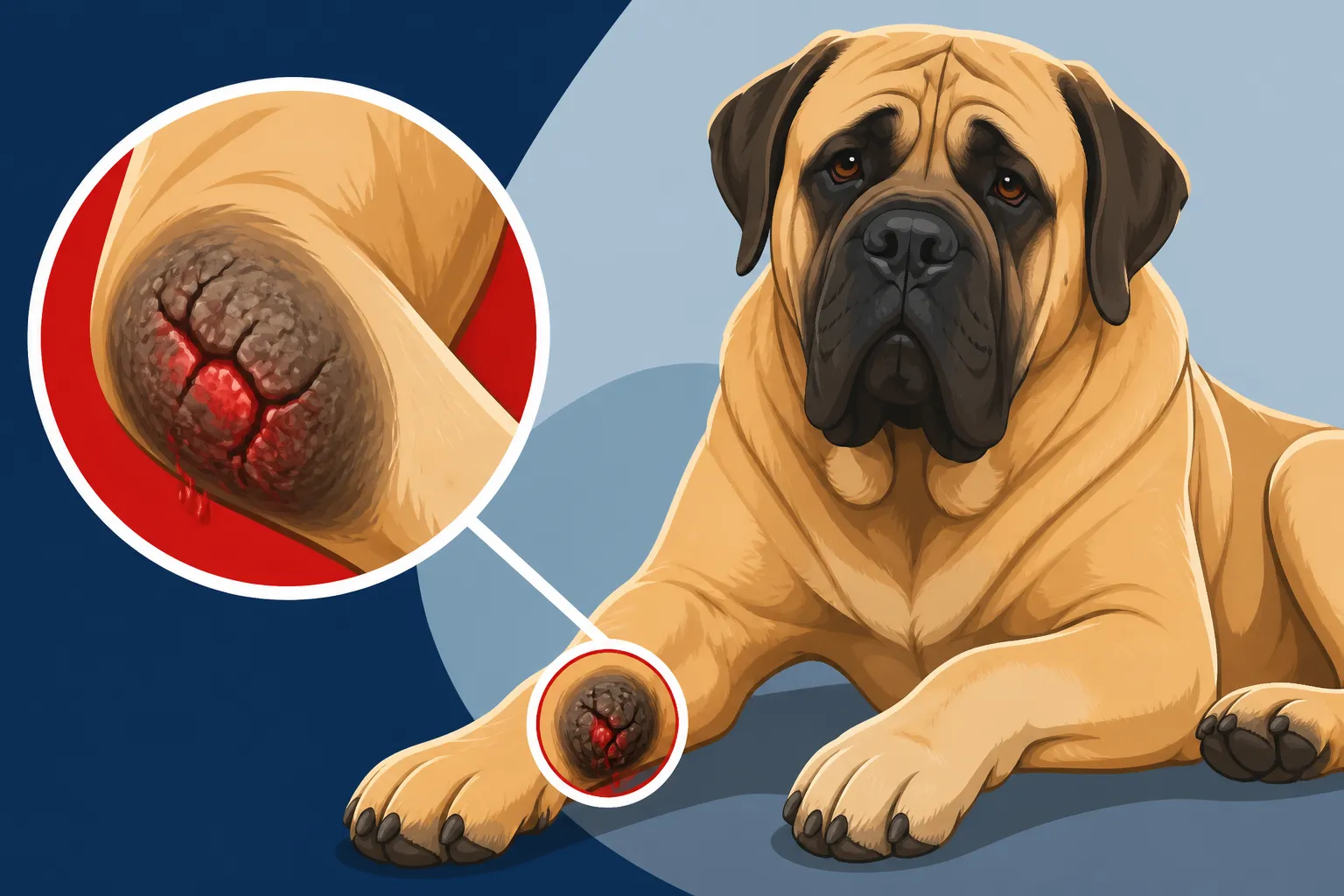
Whether a Mastiff’s Elbow Calluses Crack and Bleed
It’s a sight that can send a jolt of worry through any Mastiff owner: those rough, thick patches of skin on your giant friend’s elbows. You probably already know what elbow calluses are, but the real concern hits when they start to look dry, cracked, and you fear they might even bleed. This guide is all about understanding why those calluses can become problematic, how to prevent them from cracking, and what to do if they already have.
Understanding Mastiff Elbow Calluses: What They Are and Why They Form
When you have a dog the size of a Mastiff, every interaction with the world is amplified. Their sheer weight, that incredible bulk, creates unique challenges, and one of the most common and persistent issues is the development of elbow calluses. It’s not just a cosmetic thing; these can quickly become painful.
The Anatomy of a Callus and Why Mastiffs Get Them
A callus, or hygroma in its more severe, fluid-filled form, is essentially your Mastiff's body trying to protect itself. Imagine your Mastiff lying down, settling its magnificent two-hundred-pound frame onto a hard surface. All that weight, all that pressure, is concentrated on specific points, primarily the elbows, but also sometimes on the hocks or sternum. The skin in these areas experiences repeated friction and pressure. In response, the body does what it’s programmed to do: it thickens the skin, forming a dense, protective layer. It’s a bit like how your hands might get callused if you do a lot of manual labor.
For Mastiffs, this is almost an inevitability simply due to their size and their natural inclination to flop down wherever they please. Unlike smaller, lighter breeds that distribute their weight more easily, a Mastiff creates immense pressure points. If they prefer cool, hard surfaces like tile or concrete, which many Mastiffs do, the calluses can develop rapidly and become quite prominent. They might start as a small, hairless patch, then grow thicker, darker, and more prominent over time. It’s a constant battle to keep these areas comfortable and healthy. You can read more about A Mastiff Lying Two Hundred Pounds on One Elbow All Day to understand the mechanics.
The Progression from Mild to Severe Calluses
Calluses don't just appear overnight as a fully-formed problem. They typically follow a progression. Initially, you might notice a small, firm, hairless patch of skin over the elbow. This is the body's first response, a mild thickening to cushion the area. At this stage, it's often not painful and might just look a little unsightly.
As the pressure and friction continue, this protective layer becomes thicker and harder. The skin can lose its natural elasticity and moisture, becoming dry and leathery. This is where the real trouble can start. This hardened, inelastic skin is far more prone to cracking, much like dry, chapped human skin. If left unaddressed, these cracks can deepen, creating fissures that expose the underlying tissue. Once the skin is open, it's an invitation for bacteria, leading to infection, pain, and potentially even bleeding. It’s a downward spiral that we, as Mastiff owners, want desperately to avoid. The key is intervention long before they reach this painful, severe stage. Many owners wonder Whether a Mastiff's Calluses Can Be Prevented, and early action is indeed crucial.
When Calluses Crack and Bleed: The Painful Reality
The moment you see a crack or, worse, a trickle of blood on your Mastiff’s elbow callus, your heart probably sinks. It’s not just a minor issue; it indicates pain and a potential gateway to more serious health concerns.
Causes of Cracking and Bleeding
Several factors contribute to calluses cracking and, in severe cases, bleeding. Primarily, it's the sheer dryness and lack of elasticity in the thickened skin. This hardened skin doesn't stretch or flex like healthy skin. When your Mastiff moves, stands up, or lies down, the skin is put under stress. If it's too dry and brittle, it simply can't accommodate the movement, and it tears. Think of a very dry sponge compared to a damp one – the dry one will crack and crumble under pressure.
Another significant factor is the surface your Mastiff is habitually resting on. Hard surfaces like concrete, tile, or even thin rugs over hard floors, exacerbate the issue. These surfaces provide little cushioning, increasing the pressure and friction on the elbows. In colder, drier climates or during winter months when indoor air is often dry, the problem can worsen. Dehydration, both systemic in the dog and localized skin dehydration, also plays a role. If the cracks are deep enough, they can reach small blood vessels, leading to bleeding, which is not only alarming but also increases the risk of infection dramatically.
The Risks and Complications of Open Sores
Once a callus cracks and bleeds, it transitions from a minor annoyance to a legitimate medical concern. An open wound, no matter how small, is a direct pathway for bacteria to enter your dog's body. Mastiffs, with their massive weight and often less-than-delicate movements, can easily introduce dirt and pathogens into these open sores.
The immediate risks include localized skin infections, which can be incredibly painful for your dog. You might notice swelling, redness, pus, or a foul odor. If the infection spreads, it can lead to cellulitis, a deeper tissue infection, or even systemic infections requiring aggressive antibiotic treatment. In severe cases, particularly if left untreated, the infection could impact the bone underneath, leading to osteomyelitis, which is a very serious and difficult-to-treat condition. Chronic irritation and infection can also lead to the formation of granulomas, stubborn inflammatory lesions that are hard to resolve. It truly highlights the importance of proactive care to prevent these calluses from ever reaching the cracking and bleeding stage.
Preventing and Managing Cracked and Bleeding Calluses
The good news is that much can be done to prevent and manage cracked and bleeding calluses. It requires a multi-pronged approach focusing on environment, skin care, and sometimes, veterinary intervention.
Creating a Soft Landing: Optimal Bedding Solutions
This is, hands down, the most crucial step in preventing and managing elbow calluses. Your Mastiff needs soft, supportive bedding everywhere they choose to rest. If they love the cool kitchen tile, put a thick bed there. If they prefer the living room floor, make sure there’s a bed. It's about minimizing the pressure and friction that cause calluses in the first place.
Look for orthopedic beds with high-density foam that won't flatten under your Mastiff's immense weight. A cheap, flimsy bed will be useless. Memory foam or gel-infused orthopedic beds are excellent choices, providing both support and cushioning. Consider beds with waterproof liners, as they're easier to clean from drool or accidents. Investing in several high-quality beds for different areas of your home, like the living room, bedroom, and kitchen, is not an extravagance; it’s a necessity for a Mastiff’s joint and skin health. Brands like Chewy and Amazon offer a wide array of orthopedic options, often with detailed reviews from other large breed owners. Remember, your Mastiff isn't going to drag their bed around, so you need to bring the beds to them! For more guidance, explore How Thick a Bed a Mastiff Needs and Whether a Mastiff Needs Orthopedic Foam. Sometimes, people find that What a Bed That Holds a Mastiff Costs is surprising, but it’s an essential investment.
Daily Care and Moisturizing Strategies
Beyond plush bedding, consistent topical care is vital. Just like our own dry skin, a Mastiff’s calluses need moisture to stay supple and prevent cracking.
1. Regular Cleaning: Keep the callused areas clean. Gently wipe them down daily with a soft, damp cloth to remove any dirt or debris that could irritate them. If you suspect any irritation or early infection, a mild antiseptic wipe designed for dogs could be beneficial, but always consult your vet first.
2. Deep Moisturizing: This is where you become your Mastiff's personal dermatologist! Apply a thick, dog-safe moisturizer or balm to the calluses at least once, preferably twice, daily. Look for products specifically formulated for canine calluses, often containing ingredients like lanolin, shea butter, vitamin E, or natural oils. Some owners even use human-grade Bag Balm or Udder Balm (just ensure it's free of zinc oxide or other ingredients harmful if licked). Gently massage it in to help absorption. Consistency is key here.
3. Protective Covers: For calluses that are particularly prone to cracking or are already compromised, you might consider protective sleeves or wraps. These can add an extra layer of cushioning and keep the moisturizer in place. Make sure any wrap allows for air circulation and isn't too tight, which could restrict blood flow. You might find various options for balms and wraps on platforms like Chewy or Amazon.
4. Consider Socks/Booties: While perhaps not the most stylish look, dog socks or booties can also offer additional protection and a softer surface for elbow calluses, especially if your Mastiff is still seeking out those hard, cool spots. This can be especially helpful during periods of healing or extreme dryness.
When to Seek Veterinary Intervention
While much can be done at home, there are definite times when you need to involve your veterinarian. If you see any signs of infection – redness, swelling, warmth to the touch, pus, or a foul odor – it's time to call the vet. Deep cracks that are bleeding profusely, or calluses that seem unusually painful to your dog, also warrant immediate veterinary attention.
Your vet might prescribe oral antibiotics or a topical antibiotic ointment for infections. They may also suggest anti-inflammatory medications if there's significant pain or swelling. For chronic, severe calluses that are repeatedly cracking or getting infected, surgery to remove the callused tissue (a caudectomy or similar procedure, depending on location) might be considered, though this is usually a last resort. Your vet can also rule out any underlying skin conditions or systemic issues that might be contributing to poor skin health. Don't hesitate; early intervention can prevent much suffering and more complicated treatments down the line.
Long-Term Strategies for Elbow Health
Managing elbow calluses is a marathon, not a sprint. It’s about building a lifestyle that supports your Mastiff’s massive frame and delicate skin.
Nutrition and Supplements for Skin and Joint Health
What goes into your Mastiff's bowl has a direct impact on their skin health. A high-quality diet rich in essential fatty acids (Omega-3 and Omega-6) is paramount. These fats are crucial for maintaining skin elasticity, reducing inflammation, and promoting a healthy skin barrier. Look for foods that list fish oil, flaxseed, or other healthy fats high up in the ingredient list.
You might also consider adding supplements. Fish oil, specifically, is an excellent source of Omega-3s and can be a powerful ally in keeping skin supple and reducing inflammation. Glucosamine and chondroitin, while primarily for joint health, can also indirectly support the overall well-being of the areas prone to calluses by reducing pressure and discomfort in the joints themselves, leading to less friction. Antioxidants like Vitamin E can also support skin health. Always discuss any dietary changes or supplements with your vet to ensure they're appropriate for your individual Mastiff’s needs and won't interact with any existing medications. Many quality supplements are available on Chewy, and some specialized options might be found on Amazon. Keeping your Mastiff at a healthy, lean weight is also critical; excess weight puts even more pressure on those vulnerable points.
Environmental Management Beyond Bedding
While bedding is key, the broader environment plays a role too. Pay attention to the types of flooring in your home. Hardwood, tile, and concrete are the main culprits. If you can't cover all hard floors with beds, consider runners or large area rugs in high-traffic or favorite resting spots. This is not just for calluses but also for general joint health. Traction: Why a Mastiff Cannot Live on Bare Hardwood is a critical read for any Mastiff owner.
Consider the climate. In dry environments, especially during winter months with indoor heating, the air can become very dehydrating. Using a humidifier in the rooms your Mastiff spends the most time in can add moisture to the air, which in turn helps keep their skin from drying out. Even small changes, like providing a ramp for getting into vehicles to reduce impact, can contribute to overall comfort and reduce strain on their joints and pressure points.
Remember, consistency and vigilance are your best tools. Regular checks of your Mastiff’s elbows, along with a proactive approach to their comfort and skin care, will go a long way in keeping those magnificent giants healthy and happy. And let's not forget the bigger picture: The Mastiff's Short Life Buys the Biggest Bills, so being proactive about issues like calluses can save you significant veterinary costs in the long run.
Table: Comparison of Callus Management Strategies
| Strategy | Primary Benefit | Application Frequency | Recommended Products/Actions | When to Consult Vet |
|---|---|---|---|---|
| Orthopedic Bedding | Reduces pressure/friction | Constant | High-density memory foam beds, multiple placements | If existing calluses worsen despite bedding |
| Daily Moisturizing | Keeps skin supple, prevents cracks | 1-2 times daily | Dog-safe balms (lanolin, shea butter), Bag Balm | If cracks appear/worsen, or signs of infection |
| Protective Sleeves/Wraps | Adds extra cushion/protection | As needed (daily for severe cases) | Breathable elbow protectors, loose bandages | If irritation or rubbing occurs, or non-healing cracks |
| Environmental Flooring | Reduces impact, provides traction | Permanent | Area rugs, runners on hard floors | If dog avoids certain surfaces due to discomfort |
| Dietary Supplements | Improves skin elasticity, reduces inflammation | Daily | Omega-3 (fish oil), Vitamin E supplements | Before starting new supplements, for dosage advice |
| Veterinary Check-ups | Early detection, medical intervention | Regular, or immediately if issues arise | Regular physical exams, specific callus checks | Any signs of infection, deep bleeding, severe pain |
Disclaimer
This article is for general informational purposes only and does not constitute professional advice. Laws, prices and regulations vary by location and change over time. Consult a qualified professional for guidance on your specific situation.