Whether Baby Wipes Are Safe on a Mastiff’s Folds
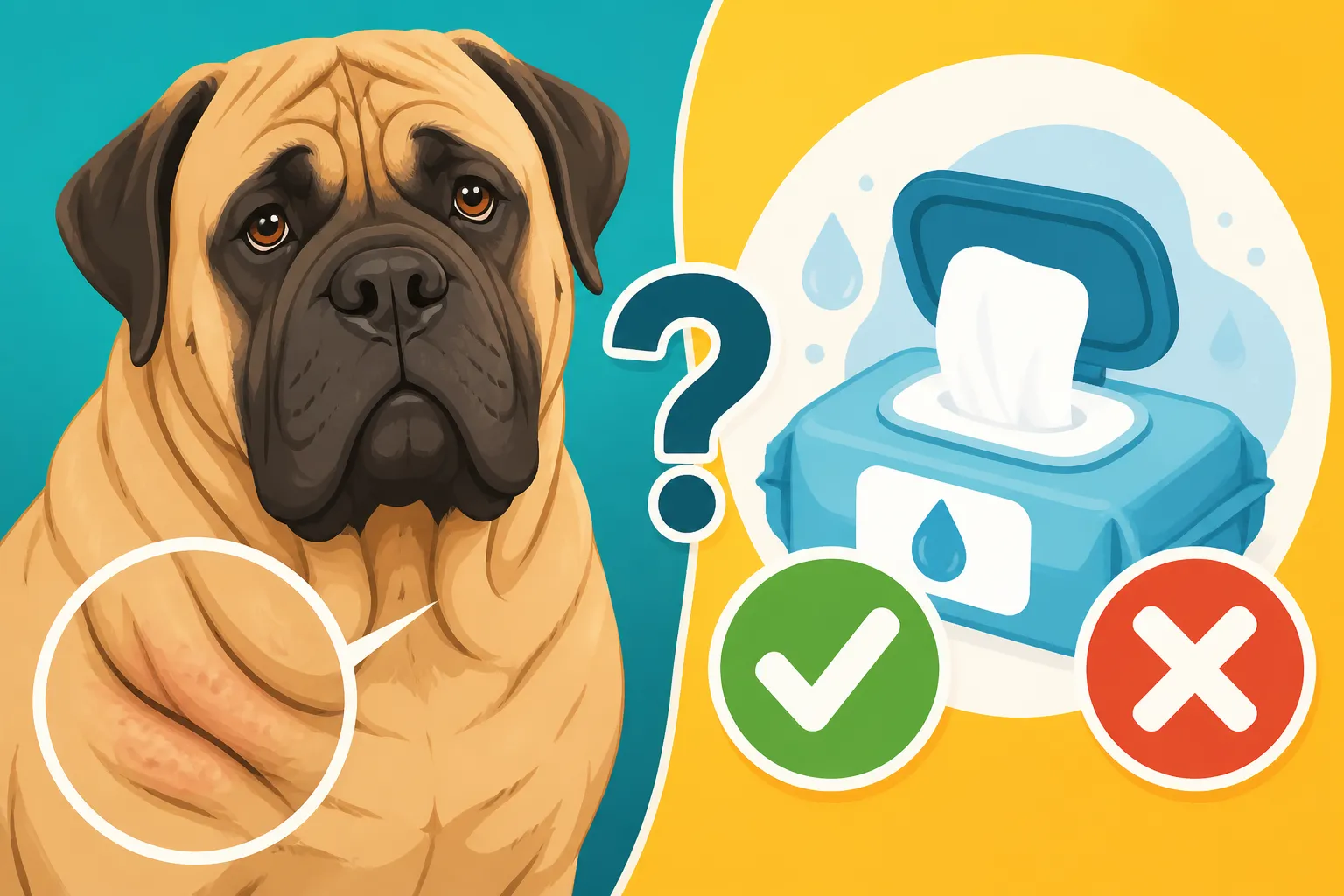
The deep, magnificent wrinkles and folds that give our Mastiffs their distinguished appearance are also, let's be honest, a constant source of worry and work. It's incredibly tempting to reach for a convenient baby wipe when you see a little grime or dampness hiding in those creases, thinking, "They're gentle enough for human babies, surely they're fine for my big baby?" This guide is here to unravel that common question, offering clarity on why those everyday baby wipes might not be your Mastiff's best friend and what truly safe and effective alternatives you have.
The Allure and Risks of Reaching for Baby Wipes
It's a scene most Mastiff owners know all too well: you're snuggling with your gentle giant, and you notice a bit of food debris, some dampness, or a faint odor emanating from one of those adorable, velvety folds around their muzzle. Your first thought might be to grab the nearest, most convenient cleaning solution. For many, that's a pack of baby wipes sitting on the changing table or under the bathroom sink. They're soft, pre-moistened, and seem utterly harmless, marketed for the most delicate skin. But what works for a human infant's bottom isn't necessarily the right choice for your Mastiff's sensitive skin folds, and understanding why can save you a lot of future heartache and vet visits.
Why Baby Wipes Seem Like a Good Idea (and why they're not always)
The convenience of baby wipes is undeniable. They're right there, ready to go, no water needed, no messy towels. For a quick cleanup after a particularly slobbery drink or a messy meal, they seem like a godsend. Plus, their reputation for being "gentle" and "hypoallergenic" for human babies often lulls us into a false sense of security regarding our pets. We naturally assume that if it's safe for a newborn, it must be safe for our dog, especially in a pinch. This perception is totally understandable, but it overlooks some fundamental differences between human and canine skin chemistry, particularly when it comes to pH levels and common ingredients.
Canine skin has a different pH balance than human skin. Human skin is typically more acidic, hovering around 5.5 on the pH scale, which is why most baby wipes are formulated to match that acidity or be slightly alkaline to counteract it. Dog skin, however, is generally more neutral, with a pH ranging from 6.0 to 8.0. Using products designed for human skin can disrupt this natural balance in dogs, leading to dryness, irritation, and making their skin more susceptible to bacterial and yeast infections. It’s a subtle but significant difference that can turn a simple cleanup into a skin problem over time.
Common Irritants in Human Baby Wipes for Canine Skin
The ingredients list on a pack of human baby wipes can be a minefield for canine skin, even if they're labeled "fragrance-free" or "sensitive." Many contain compounds that, while generally safe for humans, can cause a reaction in dogs. Fragrances, for example, are a big culprit. What smells pleasant to us can be an allergen to a dog and can also lead to excessive licking as they try to get rid of the foreign scent, further irritating the skin. Even "natural" fragrances can be problematic.
Beyond scent, look out for ingredients like alcohol, which is a drying agent that can strip natural oils from your Mastiff's skin, leaving it vulnerable. Propylene glycol, often used as a wetting agent, can also be an irritant for some dogs, especially with repeated exposure in confined, moist areas like skin folds. Preservatives like parabens or methylisothiazolinone (MIT) are common in many wipes to prevent bacterial growth in the product itself, but they can trigger allergic reactions or contact dermatitis in sensitive individuals, canine or human. Even seemingly innocuous ingredients can become a problem when trapped in a warm, moist fold with limited air circulation. The skin barrier in these areas is already compromised, making it more susceptible to these chemical irritants. It's a classic case of good intentions paving the way to uncomfortable results for our furry friends.
Understanding Your Mastiff's Unique Skin Folds and Their Needs
The Mastiff's magnificent, loose skin, particularly around their head and neck, is a defining characteristic of the breed. It contributes to their noble, sagacious expression and their ability to appear both formidable and incredibly gentle. However, these very features demand diligent and specific care, especially concerning their skin folds. Neglecting these areas isn't just about a little dirt; it can quickly escalate into painful infections and discomfort for your beloved companion.
The Anatomy of a Mastiff's Wrinkles and Why They're Prone to Trouble
Think about the architecture of a Mastiff's face. You have prominent wrinkles over the brow, deep folds around the muzzle, and often looser skin under the chin and along the neck. These aren't just superficial creases; they are literal pockets of skin where moisture, debris, and microbes love to hide. Unlike flatter skin surfaces that allow for airflow and quick drying, these deep folds trap everything. After a drink of water, food particles from dinner, or even just general environmental dust and dander, these areas become prime breeding grounds.
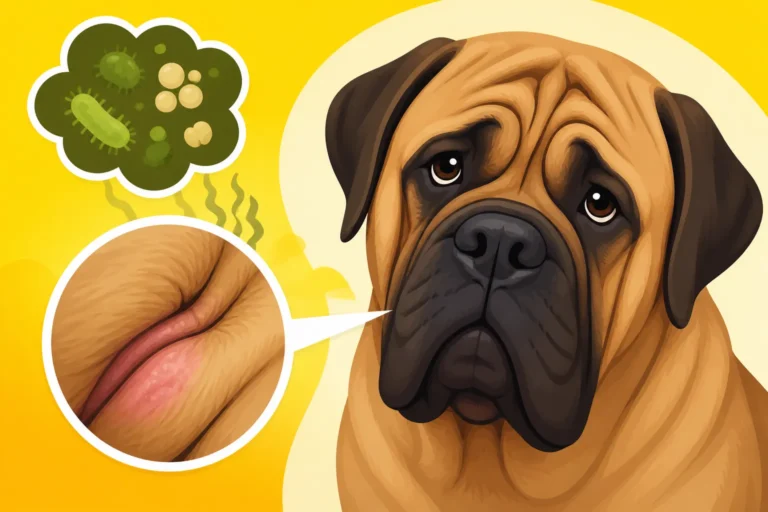
The constant dampness, combined with the warmth of the dog's body, creates an ideal, humid microclimate for opportunistic bacteria and yeast to flourish. These aren't necessarily "bad" microbes; they're often naturally present on the skin. But in an overly moist, warm, and air-restricted environment, they can multiply rapidly and cause issues. This is why you might notice a distinct, sometimes unpleasant, odor originating from these folds, even if you're trying to keep them clean. These areas are vulnerable spots and deserve special attention. You can learn more about these specific problem areas in The Wrinkles and Folds a Mastiff Owner Cleans Every Week.
The Ideal Environment for Skin Fold Infections (and how to avoid it)
To put it plainly, a skin fold infection, often called intertrigo, thrives in a warm, moist, dark, and airless environment. Imagine a tiny sauna for microbes right on your dog's face! When skin rubs against skin in these folds, it also causes friction and minor abrasions, further breaking down the skin's natural protective barrier. This makes it easier for bacteria (like Staphylococcus) and yeast (like Malassezia) to penetrate the skin and cause inflammation, itching, and pain.
Avoiding this scenario comes down to a consistent two-pronged approach: cleaning and drying. Simply wiping away visible dirt isn't enough if moisture remains. The goal is to keep the folds as dry and clean as possible at all times. This means not just removing foreign material but also addressing the underlying conditions that allow pathogens to thrive. It's a continuous process, not a one-off fix. If you're seeing persistent redness, an unusual discharge, or if your Mastiff is pawing at their face more often, it's a clear sign that the environment in those folds is out of balance.
Safer Alternatives and Best Practices for Mastiff Fold Care
Given the sensitivities of Mastiff skin and the unique challenges their folds present, it’s clear that we need to be more strategic than just grabbing any old wipe. Thankfully, there are many excellent, dog-specific products and simple techniques that can keep your Mastiff's wrinkles healthy, fresh, and free from irritation. Investing a little time in prevention and proper care will pay dividends in your Mastiff's comfort and your peace of mind.
Veterinarian-Recommended Wipes Formulated for Dogs
The pet care industry has recognized the need for specialized products, and you'll find a range of wipes specifically designed for canine skin folds. These wipes are often pH-balanced for dogs and contain ingredients that are either soothing, antiseptic, or antifungal, or a combination of these. Many contain active ingredients like chlorhexidine, which is an excellent broad-spectrum antiseptic, or miconazole, an antifungal agent, often prescribed or recommended by veterinarians for managing mild skin fold infections or preventing them in prone individuals. Other wipes might feature soothing natural ingredients like aloe vera, witch hazel, or vitamin E to help calm irritated skin.
When choosing a wipe, always read the label carefully. Look for wipes that are:
- pH-balanced for dogs: This is crucial for maintaining skin integrity.
- Fragrance-free: To avoid irritation and discourage licking.
- Alcohol-free: To prevent drying out the skin.
- Free from harsh chemicals: Such as parabens, sulfates, and dyes.
Some popular options might include medicated wipes from veterinary lines or those specifically marketed for "skin fold care" or "antiseptic dog wipes." These are formulated with your dog's unique physiology in mind. Many owners find a good selection of specialized canine wipes on platforms like Chewy or Amazon, making it easy to keep their supply stocked and delivered right to their door. Having these on hand can make routine cleaning a breeze and significantly reduce the risk of irritation compared to human products.
Simple, Effective DIY Cleaning Solutions
Sometimes, the simplest approach is the best. For everyday cleaning and maintenance, especially if your Mastiff's folds are generally healthy and free of infection, warm water and a soft, clean cloth can be incredibly effective. This method introduces no new chemicals or potential irritants, making it ideal for the most sensitive dogs.
Here’s a simple step-by-step for a DIY fold cleaning:
- Gather Your Supplies: You'll need a bowl of lukewarm water and several clean, soft cloths (microfiber cloths work wonderfully as they are gentle and absorbent). Some owners keep a dedicated set of "fold cloths."
- Gently Moisten the Cloth: Dip a corner of the cloth into the warm water and wring it out so it's damp, not dripping wet.
- Wipe the Folds: Gently pull apart your Mastiff's skin folds, starting with the outer, less sensitive areas and working your way deeper. Use the damp cloth to carefully wipe away any visible dirt, food debris, or discharge. Be thorough but gentle. You may need to use multiple cloths or rinse and re-wring your cloth frequently to avoid spreading debris.
- Dry, Dry, Dry! This is perhaps the most critical step. After cleaning, take a clean, dry soft cloth or even a cotton pad, and gently but thoroughly dry the inside of each fold. You want these areas to be completely dry to the touch. Trapped moisture is the enemy! For more on this, check out Whether a Mastiff's Folds Need Drying After Cleaning.
For deeper cleaning, perhaps once a week or if you notice a slight odor but no overt infection, you could use a very mild, pH-balanced dog shampoo diluted in water. Follow the same cleaning process, making absolutely certain to rinse the area thoroughly with plain water afterwards to remove all shampoo residue, and then, you guessed it, dry meticulously.
The Importance of Regularity and Observation
Consistency is king when it comes to Mastiff fold care. These aren't areas you can clean once a month and expect them to stay pristine. Depending on your individual Mastiff's activity level, how much they drool, and their facial structure, daily cleaning might be necessary, or at least every other day. Establishing a routine helps prevent problems from even starting. You can get more details on frequency in How Often a Mastiff's Folds Need Cleaning.
During your cleaning routine, take the opportunity to closely inspect the skin within the folds. You're looking for any changes that could indicate a brewing problem:
- Redness or inflammation: Is the skin pinker or redder than usual?
- Odor: Is there a strong, yeasty, or foul smell?
- Discharge: Do you see any pus, thick yellow discharge, or excessive moisture that wasn't there before?
- Pain or Sensitivity: Does your Mastiff flinch or resist when you touch a particular fold?
- Hair loss or changes in skin texture: Is the skin raw, broken, or do you notice thinning hair?
These are all signs that something isn't quite right. Early detection is key to preventing minor irritation from becoming a full-blown, painful infection. Even with the best products, like those you might order from Ollie or pick up from a local pet supply, consistency is paramount. Regular visual checks and tactile inspections allow you to catch problems when they are small and much easier to manage at home, before they require veterinary intervention. You can learn to identify specific issues by reading Signs a Mastiff's Fold Has Become Infected.
| Feature | Human Baby Wipes | Dog-Specific Wipes | Warm Water & Cloth |
|---|---|---|---|
| pH Balance | Acidic (for human skin pH 5.5) | Neutral (for canine skin pH 6.0-8.0) | Neutral (matches water) |
| Fragrances | Often present, even in "sensitive" varieties | Usually absent or natural, dog-safe versions | Absent |
| Alcohol | Can be present, drying | Typically alcohol-free | Absent |
| Preservatives | Common (parabens, MIT) – potential irritants | Dog-safe preservatives or natural alternatives | Absent |
| Antiseptic/Antifungal | Generally not present | Often contain chlorhexidine, miconazole for prevention/treatment | Not present |
| Irritation Risk | High for sensitive dog skin; disrupts skin barrier | Low, formulated for canine needs | Very low, if clean and dry cloth used |
| Convenience | High | High | Moderate (requires water, wash cloth) |
| Cost | Generally lower | Moderate to higher (specialty product) | Very low |
| Best Use | Not recommended for Mastiff folds | Routine cleaning, mild irritation, prevention | Daily maintenance, most sensitive dogs |
When to Consult Your Vet for Skin Fold Issues
While diligent home care can prevent many skin fold problems, there will inevitably be times when you need professional help. Knowing when to stop trying home remedies and pick up the phone to your veterinarian is crucial for your Mastiff's health and comfort. Delaying veterinary attention can turn a manageable irritation into a more severe, deeply rooted infection.
Recognizing Signs of Infection or Severe Irritation
It's one thing to see a bit of dirt or dampness; it's another to spot a full-blown infection. Here are definitive signs that indicate it’s time to see the vet:
- Pus or Green/Yellow Discharge: This is a clear indicator of bacterial infection.
- Strong, Foul Odor: A persistent, pungent smell that doesn't go away after cleaning often points to bacterial or yeast overgrowth.
- Significant Redness and Swelling: If the skin folds are bright red, inflamed, or swollen, it's a sign of significant irritation or infection.
- Pain or Tenderness: If your Mastiff vocalizes, pulls away, or shows aggression when you try to touch the affected area, it's likely painful.
- Ulcerations or Open Sores: Any broken skin or raw patches need immediate veterinary attention to prevent deeper infection.
- Hair Loss in the Folds: This can be a sign of chronic inflammation or a deeper skin problem.
- Lethargy or Fever: If your Mastiff is generally unwell, withdrawn, or has a fever in addition to skin fold issues, the infection might be systemic.
Don't ignore these symptoms hoping they'll resolve on their own. Canine skin fold infections can quickly become severe and very uncomfortable for your dog. A veterinarian can accurately diagnose the type of infection (bacterial, yeast, or both) and prescribe the appropriate treatment.
The Role of Medicated Treatments and Potential Surgical Solutions
Once your vet has examined your Mastiff, they'll be able to recommend the best course of action. For mild to moderate infections, this often involves a combination of topical and sometimes oral medications.
- Topical Medications: Your vet might prescribe medicated wipes with a higher concentration of antiseptic or antifungal agents than over-the-counter options. They might also provide an antibiotic or antifungal cream, ointment, or spray to apply directly to the affected folds. These are designed to target the specific pathogens causing the problem.
- Oral Medications: If the infection is widespread, deep, or if topical treatments aren't sufficient, your vet may prescribe oral antibiotics or antifungals. It's vital to administer these exactly as directed and complete the full course, even if symptoms improve quickly, to prevent recurrence and antibiotic resistance. You can read more about this in Whether a Mastiff's Fold Infection Needs Antibiotics.
In very rare and extreme cases, particularly for chronic, recurring infections that significantly impact a Mastiff's quality of life and don't respond to medical management, surgical intervention might be considered. This typically involves a procedure called cheiloplasty (for facial folds, often around the lips) or vulvoplasty (for vulvar folds in females), where the excess skin forming the deep, problematic folds is surgically removed. This is a significant decision and is usually reserved as a last resort when all other options have been exhausted, as it requires general anesthesia and a recovery period. However, for a dog suffering from constant, painful infections, it can provide immense relief and a better quality of life.
Ultimately, your veterinarian is your best resource for managing your Mastiff's health. Don't hesitate to seek their expertise when you're unsure or when home care isn't yielding positive results.
Disclaimer
This article is for general informational purposes only and does not constitute professional advice. Laws, prices and regulations vary by location and change over time. Consult a qualified professional for guidance on your specific situation.