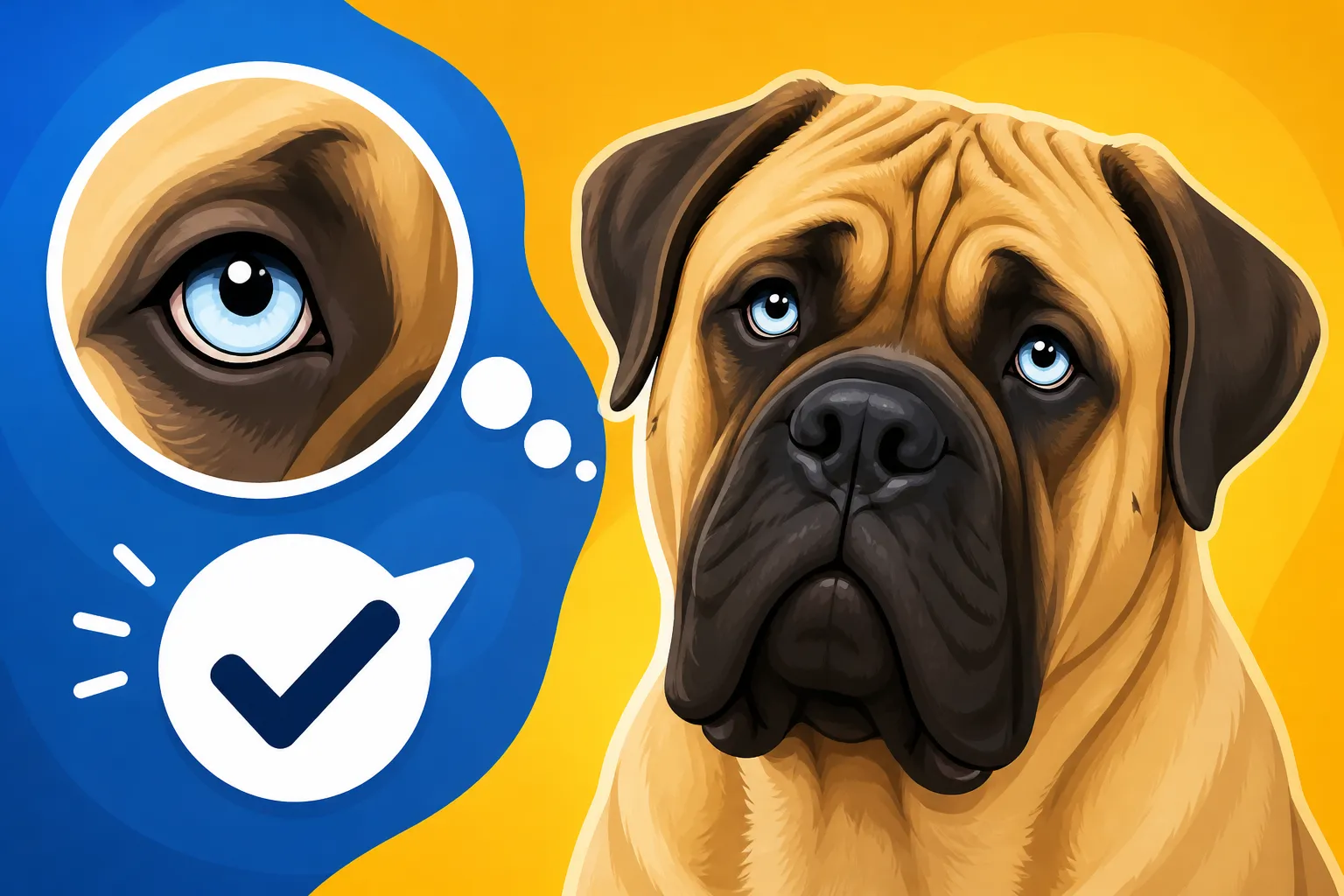
Whether a Mastiff Can Have Light Eyes
A Mastiff’s eyes are usually dark hazel or brown, so pale blue, gray, or unusually light eyes can catch an owner’s attention. Sometimes that color has been present since puppyhood; other times the eye only looks lighter because of age-related haze or a new health problem. This guide explains what light eyes may mean, how breed standards treat them, and when to call your veterinarian.
What color should a Mastiff’s eyes be?
The usual Mastiff eye color
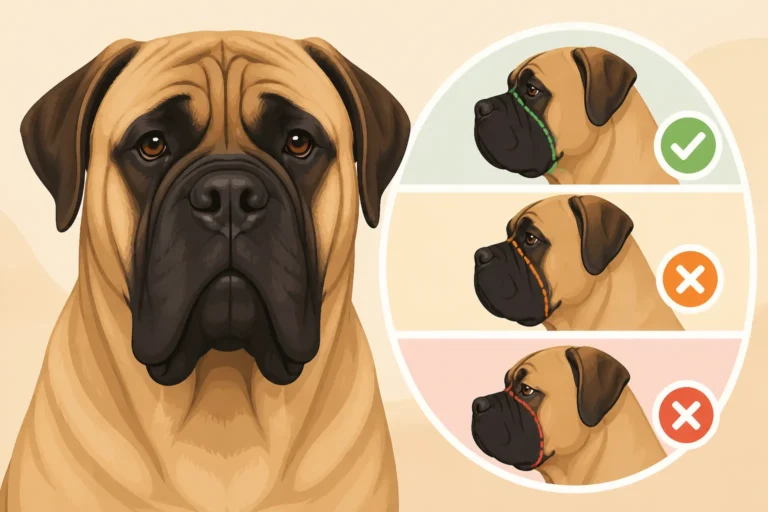
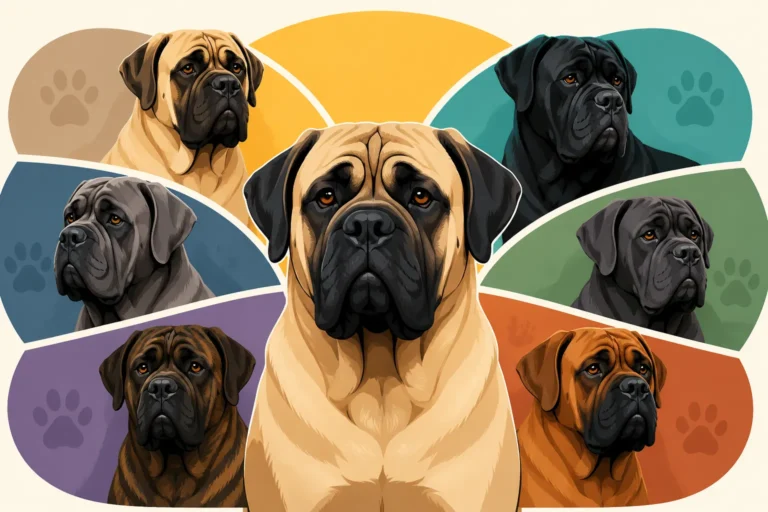
The Mastiff breed standard describes dark hazel eyes, with darker color generally preferred. The eyes should also be set well apart, and the dark rims around them contribute to the breed’s familiar expression. If you are comparing a dog with descriptions of The Colors a Mastiff Comes In, remember that coat color and eye color are separate traits: a fawn, apricot, or brindle coat does not mean a Mastiff should have pale eyes.
“Light eyes” can mean several different things. One person may use the phrase for medium brown eyes that look lighter in bright daylight; another may mean amber, pale yellow-brown, gray, or blue. That distinction matters. A Mastiff whose eyes are a warm, lighter brown is not necessarily in the same situation as one with vivid blue irises or a newly cloudy appearance.
Lighting can also fool the eye. Sunlight, indoor bulbs, camera flash, and the color of nearby surfaces may make an iris appear different from one setting to another. Before assuming your dog’s eye color has changed, look at both eyes in ordinary, indirect daylight and compare them with older photos taken in similar conditions.
How light eyes are viewed in the breed standard
For a purebred Mastiff, dark hazel is the expected eye color. A lighter shade may be considered a departure from the standard, particularly in conformation showing, but appearance alone does not tell you whether a dog is healthy, well cared for, or a good companion. Breed standards describe the preferred type; they are not a medical examination.
If you are choosing a puppy and eye color matters to you, ask the breeder what they observe in the parents and previous litters. Ask to see clear, recent photos of both parents and any health information the breeder shares. A breeder should be able to discuss appearance honestly without suggesting that a particular eye color proves a puppy is healthier. For broader background on how the written description guides appearance, see What the AKC Officially Calls the Mastiff.
A light-eyed Mastiff can still be a loving, sound family dog. Conversely, dark eyes do not guarantee good eye health. It is more useful to separate three questions: does the dog’s eye color differ from the breed preference, is the eye changing or showing signs of discomfort, and has a veterinarian assessed the dog’s vision and eye structures?
Can a Mastiff have blue or gray eyes?
A Mastiff can have blue or gray-looking eyes, but these colors are unusual for the breed. If both eyes have been that color since puppyhood and your dog sees and behaves normally, it may simply be a pigmentation variation. It is still sensible to mention it at a routine veterinary visit, especially if you have not had the eyes examined before.
Very pale or blue eyes may also prompt questions about ancestry. The recognized Mastiff colors and markings are described in Which Colors the Mastiff Standard Allows. If a dog has an unusual combination of coat pattern and eye color, ask about pedigree and parentage rather than drawing a conclusion from appearance alone. Eye color by itself cannot establish whether a dog is purebred or mixed.
A single blue eye, two different-colored eyes, or a strikingly pale iris deserves a closer look, but it does not automatically mean an emergency. The key is whether the color is longstanding and stable or whether it appeared alongside cloudiness, redness, squinting, tearing, changes in pupil size, or difficulty navigating. New symptoms call for prompt veterinary attention rather than an attempt to identify the cause at home.
Why a Mastiff’s eyes may look lighter
Puppy eye color can change as the dog matures
Some puppies’ eyes look lighter early in life and become darker as pigment develops. That change is not identical in every puppy, and a particular shade at a young age does not guarantee the final adult color. If you are looking at a very young Mastiff, give the eyes time to mature and ask the breeder or veterinarian what changes are reasonable to expect.
Take a few photos in consistent lighting rather than relying on memory. A quick phone picture by a bright window can make a brown iris look amber, while flash may create reflections that obscure its true color. Comparing photographs is useful for tracking appearance, but it cannot replace an examination if you notice a genuine change or discomfort.
When discussing a puppy’s eyes, ask the breeder whether the puppy has been examined and whether any concerns were noted. A litter eye examination and the parents’ health information can add context, though no screening removes the need for ongoing care. For more on that distinction, see Why a Mastiff Litter Needs an Eye Exam.
The iris may not be what looks cloudy
Owners often describe an eye as “turning blue” when the iris has not actually changed. A bluish-gray haze may come from a change in the lens behind the pupil, which can become more noticeable as a dog ages. Another possibility is a cataract, which affects the lens and can interfere with vision. These conditions are different from a naturally light-colored iris, and a veterinarian needs to examine the eye to distinguish them.
A simple way to describe what you see is to note where the color appears. Is the colored ring around the pupil lighter, or does the entire eye look hazy behind that ring? Is the change in one eye or both? Has it appeared slowly over months, or suddenly over hours or days? These observations help your vet, but they do not establish a diagnosis.
If the eye looks cloudy, do not assume it is “just old age.” A veterinary assessment can identify whether the change is related to the lens, the surface of the eye, inflammation, or another problem. You can read more about one possible lens condition in Whether a Mastiff Gets Cataracts.
Eye conditions and sudden color changes
A noticeable change in an adult dog’s eye should be taken seriously, especially if it comes with pain or altered vision. Redness, persistent watering, discharge, frequent blinking, squinting, pawing at the face, sensitivity to light, or a pupil that looks unusually large or small are reasons to contact a veterinarian. Sudden cloudiness or a sudden difference between the eyes also warrants prompt advice.
Some eye problems can worsen quickly, and a dog may not show discomfort in an obvious way. A Mastiff that is reluctant to move in a dim hallway, bumps into furniture, hesitates at stairs, or startles when approached from one side may be having a vision problem. Those clues are worth mentioning even if the eyes look normal to you.
Do not use human eye drops, leftover medication, or home remedies unless your veterinarian tells you to. The right treatment depends on the cause, and an inappropriate product can irritate the eye or delay care. A general overview of breed-related concerns is available in Eye and Eyelid Disease in a Mastiff.
What to do if your Mastiff has light eyes
Check whether the color is longstanding or new
Start with a calm observation, not a home diagnosis. Look at your dog’s eyes in indirect daylight and compare them with older photos if you have them. Note whether both eyes look alike, whether the appearance is stable, and whether you can see the iris clearly or instead notice a haze over the eye.
Keep a short record of what you observe: when you first noticed it, which eye is affected, whether the change seems to be progressing, and any changes in behavior. If there is discharge, redness, squinting, or obvious discomfort, take a photo only if it is easy and does not delay contacting your veterinarian. Never hold the eyelids open or press on the eyeball to get a better look.
| What you notice | What it may suggest | A sensible next step |
|---|---|---|
| Light brown eyes that have looked the same for years | Stable natural pigmentation | Mention it at the next routine exam |
| Blue or gray eyes present since puppyhood | Unusual pigmentation or inherited variation | Ask your veterinarian to assess them and discuss at the next checkup |
| A new cloudy or bluish appearance | A change involving the lens or another part of the eye | Contact your veterinarian for guidance |
| Redness, squinting, pawing, discharge, or apparent pain | Possible irritation or an eye problem needing assessment | Arrange prompt veterinary care |
| Sudden vision changes or rapid cloudiness | Potentially urgent eye issue | Seek veterinary advice promptly |
Arrange the right kind of veterinary examination
At a routine visit, tell the veterinarian exactly what you have noticed instead of simply asking whether the eyes “look okay.” Mention whether the color is new, whether one or both eyes are affected, and whether your Mastiff has begun hesitating in dim light or bumping into objects. The veterinarian can inspect the eye and decide whether additional testing or referral is appropriate.
A yearly eye check is a useful habit, particularly for a dog with a known eye concern, a history of eye disease, or a change in vision. The frequency may need to differ depending on your dog’s age and health, so ask your veterinarian what schedule makes sense. For more on routine monitoring, see Whether a Mastiff Should Have a Yearly Eye Exam.
If your Mastiff needs a particular cleaning product or medication, follow the veterinarian’s instructions about what to use and how to apply it. For ordinary pet-care purchases, some owners compare supplies through retailers such as Chewy, but the product must match the veterinarian’s advice; do not substitute a general eye wipe or drop for prescribed care. Keep medication labels and dosing directions together, and ask the clinic before using an older product from a previous problem.
Make daily life easier if vision is changing
If the veterinarian confirms reduced vision, a predictable home setup can make a meaningful difference. Keep food and water bowls in the same place, avoid rearranging furniture without a reason, and use rugs or runners to mark familiar paths across slippery flooring. A Mastiff can be a large dog to steady, so small changes that prevent confusion or slipping are often easier than trying to catch or lift the dog after a stumble.
Use your voice before touching a dog that may not see you approach, especially when it is resting. Give a simple verbal cue before stairs, doorways, or changes in floor level, and keep gates closed where a fall could happen. If your dog is losing vision, ask the veterinarian for practical guidance on safe movement and whether a veterinary ophthalmologist should be involved.
Some owners find it useful to keep a care list with the clinic’s instructions, appointment notes, and product details. If you order a veterinarian-approved supply through Chewy or another retailer, check that the item and directions match what the clinic recommended. Retail availability does not make a product suitable for every eye condition, so confirm any uncertainty with your veterinary team.
Light-colored eyes alone do not tell you whether a Mastiff can see well. A stable, naturally light iris is a different concern from a new haze, pain, or sudden change in vision. If the appearance has changed or your dog seems uncomfortable, contact your veterinarian rather than waiting to see whether it resolves. For ongoing care, you can also use a consistent record of photos and observations and ask your clinic to note the eye findings at each visit. Chewy may be one place to locate routine pet-care supplies after your veterinarian has specified what is appropriate, but examination and diagnosis belong with a veterinary professional.
Disclaimer
This article is for general informational purposes only and does not constitute professional advice. Laws, prices and regulations vary by location and change over time. Consult a qualified professional for guidance on your specific situation.