The Ear the Mastiff Standard Calls For
A Mastiff’s ears are easy to overlook beside that enormous head, but their size, placement, shape, and color all contribute to the breed’s familiar expression. If you are comparing your dog with a breed description or wondering whether natural ears should stand up, this guide explains what the Mastiff standard calls for, what variation is normal, and when an ear change deserves a vet’s attention.
What the Mastiff breed standard says about ears
Size, shape, and placement
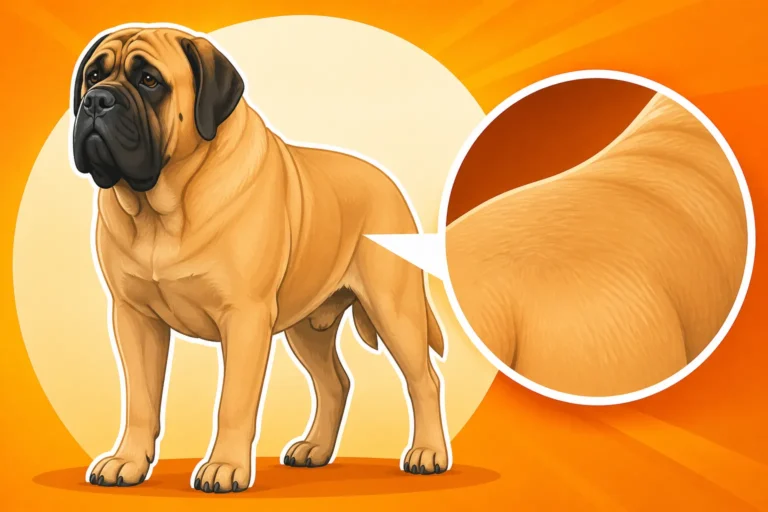
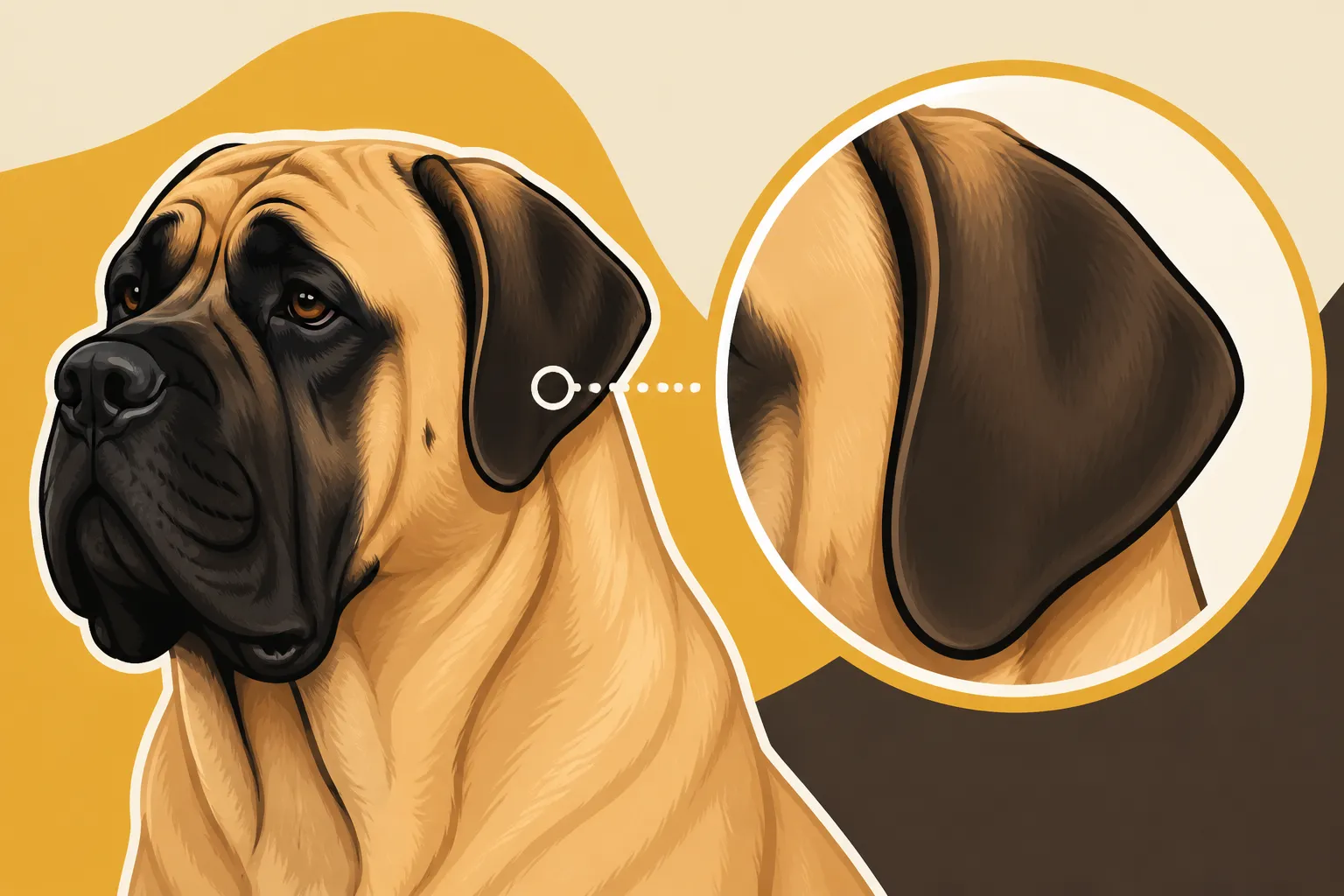
The Mastiff standard calls for ears that are small in proportion to the skull, thin to the touch, and set high on the sides of the head. They should lie close to the cheeks when the dog is relaxed. Because the Mastiff has a broad, substantial skull, “small” is relative: an ear that would look ordinary on another breed can appear especially modest beside a Mastiff’s head.
The ears are typically described as V-shaped, with rounded tips. They hang down rather than standing upright, and their natural position helps preserve the breed’s calm, soft expression. The standard’s wording is about the whole picture, not one measurement in isolation. A dog may have ears that look a little larger or smaller to an owner while still having the overall appearance expected of a Mastiff.
Placement matters because it affects the outline of the head. Ears set high and lying close to the cheeks tend to look neat and integrated with the skull. Ears set lower, held away from the head, or unusually large may create a different impression. Still, appearance can vary among individual dogs, and a single feature does not determine a dog’s health, temperament, or worth as a companion.
Color and the breed’s overall appearance
Mastiff ears should be darker than the coat. On a fawn or apricot dog, the contrast may be easy to see. On a brindle Mastiff, the dark ear color can blend into the darker striping and be less obvious at a glance. The ear color is one small part of the larger pattern of coat and facial markings described in The Colors a Mastiff Comes In.
The ears also work visually with the black mask and the broad, wrinkled head. A Mastiff’s expression is not created by the ears alone: the shape of the skull, muzzle, eyes, and facial folds all contribute. If you are trying to understand how these features fit into the official breed description, What the AKC Officially Calls the Mastiff offers useful context about the breed standard and terminology.
A puppy’s ears may seem out of proportion while the rest of the head is growing. Young Mastiffs change dramatically as they mature, and the skull, cheeks, and coat can all alter how the ears look from one stage to another. Rather than judging a puppy’s adult appearance from a snapshot, look at the whole dog over time and ask the breeder or a knowledgeable breed mentor how the puppy is developing.
| Feature | What the Mastiff standard calls for | What owners may notice |
|---|---|---|
| Size | Small in proportion to the skull | The ears may look especially small beside a massive head |
| Shape | V-shaped with rounded tips | Individual ears may appear slightly broader or narrower |
| Placement | Set high on the sides of the skull | Placement is easiest to assess when the dog is standing naturally |
| Carriage | Hanging and close to the cheeks at rest | Ears may shift when the dog is alert or moving |
| Color | Darker than the coat | Contrast may be less obvious on brindle dogs |
How a Mastiff’s ears should sit and move
Natural ear carriage is floppy, not erect
A Mastiff’s ears are naturally pendant, meaning they hang down. They are not meant to stand upright like the ears of some other breeds. A Mastiff may turn or lift the base of an ear slightly when listening, reacting to a sound, or focusing on a person, but that temporary movement does not mean the dog’s ears are supposed to remain erect.
The angle can also change with posture. When a dog is alert, the ears may shift forward; when relaxed, they usually rest close to the cheeks. During play or a head shake, they may swing outward briefly. Those everyday movements are different from a lasting change in carriage, such as one ear suddenly being held differently because of discomfort.
This distinction can reassure owners who are comparing their dog with a still photograph or show illustration. Breed descriptions describe the general form, while real dogs move, listen, nap, and react. For a wider look at the head and expression, including the folds that frame the ears, see How Deep a Mastiff's Wrinkles Should Be.
Why Mastiff ears are not cropped
The Mastiff’s natural ears are part of its breed appearance. Cropping is not needed to make them conform to the standard; the standard describes small, hanging ears that lie close to the cheeks. Cropping would alter the natural shape and carriage rather than bring the dog closer to the intended look. The subject is covered in more detail in Why a Mastiff's Ears Are Never Cropped.
If you encounter a Mastiff with unusually upright or altered ears, do not assume that this is a normal breed variation. It may reflect a prior procedure, an injury, or simply an unusual individual appearance. A breeder or veterinarian can help clarify what you are seeing, especially if the ear’s shape or position has changed over time.
For most pet owners, the practical point is straightforward: leave healthy ears alone unless a veterinarian recommends treatment for a medical reason. Cosmetic changes do not improve hearing or make routine care easier, and procedures involving the ear should be discussed with a qualified veterinary professional.
Caring for a Mastiff’s ears at home
Check the ears without overcleaning
A quick look during ordinary grooming is often more useful than frequent deep cleaning. Check the visible part of each ear for redness, swelling, unusual discharge, a strong odor, scabs, or debris. Notice whether your dog is scratching, rubbing an ear on furniture, shaking its head repeatedly, or reacting when the area is touched.
Healthy-looking ears do not necessarily need a cleaning routine on a fixed schedule. Overcleaning or putting unsuitable products into the ear canal can irritate the skin. Avoid cotton swabs pushed down into the canal, home remedies, and leftover medication from another pet. If the ear looks painful or inflamed, ask your veterinarian what to do rather than trying to clean away the problem.
If your veterinarian recommends a particular ear-cleaning solution, follow the clinic’s instructions for how and when to use it. You can ask whether the product is available through your veterinary practice, a local pet-supply shop, or a retailer such as Chewy. The important part is choosing a suitable product and using it in the way your vet advises, not simply buying a cleaner because it is labeled for dogs.
For a fuller overview of symptoms and veterinary care, see Ear Infections in a Mastiff. If you are unsure whether routine cleaning is appropriate for your dog, Whether a Mastiff's Ears Need Cleaning can help you think through the question before you start a new routine.
Make ear checks comfortable
Many Mastiffs are gentle but not necessarily enthusiastic about having their head handled. Make checks brief and calm. Choose a quiet moment when your dog is settled, touch the outer ear gently, and reward relaxed behavior. If your Mastiff pulls away, growls, or appears uncomfortable, stop rather than holding the head in place. A painful ear can make even a normally tolerant dog defensive.
For puppies, gradual handling practice can make future grooming and veterinary examinations less stressful. Pair a light touch near the ear with praise or a small treat, then finish before the puppy becomes restless. Over time, you can build toward briefly lifting the ear flap to look at the visible skin. Do not turn the exercise into a wrestling match; a positive, short check is more useful than forcing a thorough inspection.
Some owners keep basic grooming supplies together with towels, nail tools, and other care items. If you shop for those supplies through Chewy, or another retailer, check that any ear product is one your veterinary team has recommended for your dog. A retailer can help you obtain supplies, but a veterinarian is the right person to diagnose an infection or decide whether a product is suitable.
When an ear change needs veterinary attention
Watch for discomfort, odor, and discharge
A sudden change is more meaningful than a minor difference in ear shape. Contact your veterinarian if your Mastiff develops persistent head shaking, repeated scratching, redness, swelling, tenderness, discharge, or a strong new odor. These signs can have different causes, so they are not enough to diagnose an infection by themselves. A veterinarian can examine the ear and determine whether treatment is needed.
Pay attention to how quickly the problem appeared and whether it affects one ear or both. For example, a dog that was comfortable yesterday but now yelps when one ear is touched should be assessed rather than watched for several days while the area is repeatedly cleaned. A dog with recurring symptoms also needs an examination to identify why the issue keeps returning.
Seek prompt veterinary guidance if the ear flap becomes swollen, your dog seems very painful, or the dog develops balance problems or a head tilt. These signs can point to a more serious problem than ordinary wax or mild irritation. If your regular clinic is closed and your dog is in significant distress, contact an emergency veterinary service for advice about where to go.
Separate normal variation from a health problem
One Mastiff may have ears that look a little wider or fuller than another’s. A puppy’s ears may appear different as its head develops, and an alert dog may carry them differently for a moment. Those differences are not automatically a health concern. The key questions are whether the ears have changed noticeably, whether the dog seems uncomfortable, and whether there are signs such as odor, redness, swelling, or discharge.
The standard is a guide to breed type, not a medical checklist. A dog with ears that do not match the ideal description can still be a healthy, much-loved Mastiff. Likewise, ears that look exactly as expected can still develop an infection or irritation. Health decisions should be based on the dog’s condition, not just how closely its appearance matches a written description.
If you are choosing a puppy, ask the breeder about health care and handling rather than focusing only on ear shape. Consider how the puppy responds to gentle touch and whether the breeder can discuss routine veterinary care. For a broader look at the responsibilities and realities of living with the breed, What Mastiff Owners Wish They Had Known and Whether a Mastiff Suits a First Time Owner may help put small breed details in perspective.
A natural Mastiff ear should be small relative to the skull, V-shaped, darker than the coat, and carried close to the cheek. Its everyday position may shift as the dog listens or moves, but it should not stand permanently erect. Gentle observation, sensible handling, and veterinary advice when symptoms appear are the most useful ways to care for those distinctive ears.
Disclaimer
This article is for general informational purposes only and does not constitute professional advice. Laws, prices and regulations vary by location and change over time. Consult a qualified professional for guidance on your specific situation.