Whether a Mastiff Is Rough at Play
One of the biggest worries new Mastiff owners, or even just people considering bringing one of these magnificent giants into their lives, often have is about their play style. You see their immense size, their powerful build, and perhaps you've heard tales of other large breeds, and a natural question pops into your head: is a Mastiff rough at play? It's a completely valid concern. After all, a dog that can easily outweigh an adult human carries a lot of potential energy, even if they're just having fun. This guide is here to shed light on the truth about Mastiff play, helping you understand their natural inclinations and how to foster safe, joyful interactions for everyone.
Understanding the Mastiff Play Style: Gentle Giants in Action
When you look at a Mastiff, it's easy to assume their play will be as imposing as their stature. They are, without a doubt, physically powerful dogs. However, their size often belies a deeply affectionate and surprisingly gentle nature. They aren't typically the frenetic, bouncing-off-the-walls type of dog you might associate with smaller, high-energy breeds. Their play is often more deliberate, more grounded, and, yes, still full of a certain Mastiff-specific charm.
The Myth of Roughness Versus Reality
The sheer mass of a Mastiff can create a misconception that their play must inherently be rough or aggressive. This couldn't be further from the truth for a well-socialized Mastiff. Their breed history is rooted in guardianship, not in the kind of intense, hard-driving play of a terrier or a working retriever. They were bred to be watchful, discerning, and protective, relying on their imposing presence more than active confrontation. This genetic predisposition often translates into a play style that is heavy, yes, but rarely truly "rough" in the aggressive sense.
Instead, many Mastiffs exhibit a remarkable degree of self-awareness regarding their size, particularly when interacting with smaller family members, whether human or canine. Of course, individual personalities vary, and some Mastiffs might be more boisterous than others, but generally, their gentle giant reputation extends strongly to how they engage in play. It's a key part of The Sensitivity Nobody Expects in a Two Hundred Pound Mastiff. Their play often involves more leaning, gentle nudges, and a kind of slow-motion wrestling rather than fast, sharp movements that could inadvertently cause harm.
Typical Play Behaviors of an Adult Mastiff
So, what does Mastiff play actually look like? Imagine two giant pillows slowly thumping against each other, punctuated by soft grumbles and huffs. That's often a good visual. Adult Mastiffs tend to engage in a few characteristic play behaviors:
- Lumbering Wrestling: This is perhaps their most iconic play style. They'll lean into each other, push with their massive heads and shoulders, and engage in slow, deliberate "wrestling" matches. There's usually a lot of open-mouthed mouthing (without applying pressure), gentle neck biting, and body contact. It looks intense because of their size, but the intention is almost always playful. You might even see them flop down dramatically, inviting a chase or more wrestling.
- The "Body Slam" (Mastiff Edition): While the term "body slam" sounds alarming, for a Mastiff, it's often a gentle lean or a slow, heavy bump. It's their way of initiating or escalating play, sometimes followed by a joyful shake of the head and tail. It's less about force and more about making contact and engaging. It's important to differentiate this from anything aggressive or uncontrolled; a playful Mastiff's body slam is usually soft and inviting. If you're curious about this specific behavior, consider reading Whether a Mastiff Body Slams Other Dogs.
- Vocalizations: Mastiffs are not usually excessive barkers, but they are masters of the low growl, rumble, and huff during play. These are often sounds of enjoyment and excitement, not aggression. It can be startling to hear such deep vocalizations from a dog, but learning to distinguish a playful growl from a warning growl is crucial. A playful growl is usually accompanied by a loose, wiggly body, a wagging tail, and relaxed facial expressions.
- Short Bursts of Energy: Unlike breeds that can run and fetch for hours, Mastiffs often have shorter bursts of play. They might engage in a good wrestle, chase a toy for a few minutes, and then be perfectly content to flop down for a nap. Their massive bodies aren't built for sustained, high-impact activities, especially as they get older.
How a Mastiff Interacts with Other Dogs During Play
A Mastiff's interactions with other dogs in play are fascinating to observe. They generally adapt their play style based on their playmate.
- With Other Large Breeds: When playing with dogs of similar size, Mastiffs often let loose a bit more. They'll engage in the full body wrestling, pushing, and chasing that their size allows. This can be a truly majestic sight, watching two giants tumble and play with surprising agility for their bulk. They often find a natural rhythm with other large breeds who understand their "heavy" style of communication.
- With Smaller Dogs: This is where their inherent gentleness truly shines. A well-socialized Mastiff will often show remarkable restraint and sensitivity when playing with smaller dogs. They'll drop to the ground, use their paws more carefully, offer gentle nudges instead of full-body pushes, and mouth incredibly softly. Supervision is always key, but many Mastiffs form wonderful, gentle bonds with smaller canine companions. For more on this, check out Whether a Mastiff Tolerates a Small Dog. However, it's also important to remember that even a gentle lean from a 200-pound dog can accidentally knock over a smaller dog, so vigilance is still paramount.
- Play Bows and Communication: Like all dogs, Mastiffs use classic canine communication signals, such as the play bow, to invite interaction and signal that their intentions are friendly. They'll often present themselves for a chase, or drop their head down as an invitation to wrestle. Understanding these universal signals is key to interpreting their play. For deeper insight into how Mastiffs typically interact with other dogs, the article Whether a Mastiff Accepts Another Dog offers valuable perspective.
Managing Play Interactions for Safety: Tips for a Harmonious Home
While Mastiffs are generally gentle, their sheer size means that even accidental bumps can have consequences, especially for smaller, more fragile playmates. It’s not about their intent, but simply the physics of a large, happy dog. Therefore, proactive management and consistent guidance from you are vital for ensuring all play remains safe and enjoyable.
Supervised Play with Smaller Dogs and Children
The number one rule for a Mastiff, especially around vulnerable family members, is supervision. This isn't because a Mastiff is inherently dangerous, but because a playful, excited dog of their magnitude can easily cause an unintentional accident.
- Children: A Mastiff can be an incredible companion for children, but boundaries and supervision are non-negotiable. Teach children how to interact respectfully – no pulling ears or tails, no riding the dog, and understanding when the dog needs space. Equally important, teach your Mastiff appropriate behavior around kids. Games that encourage chasing or jumping can quickly become hazardous. Keep play calm and controlled. If you're bringing a Mastiff into a home with little ones, you'll find a lot of helpful advice in A Mastiff in a House With Small Children. Always remember, even the most patient Mastiff has limits, and a child's unpredictable movements or loud noises can sometimes startle them.
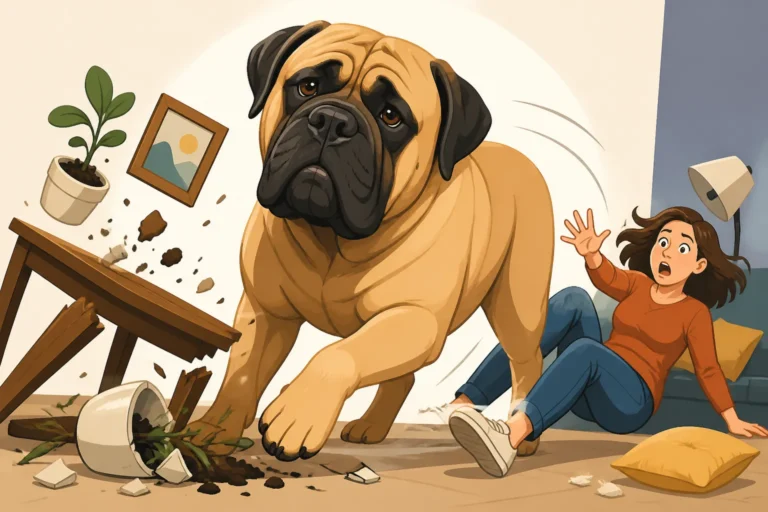
- Smaller Dogs: As mentioned, many Mastiffs are wonderfully gentle with smaller dogs. However, their size difference means that even a happy wag of a tail can be quite a thump, and a playful pounce could send a tiny dog sprawling. Always supervise play, especially initially, to ensure the Mastiff understands and respects the smaller dog's boundaries. Be ready to intervene calmly if play gets too boisterous, even if it's not aggressive. Providing separate resting areas or "safe zones" where the smaller dog can retreat without being followed can also be beneficial.
Appropriate Toys and Play Environments
Choosing the right tools and setting the stage correctly can make all the difference in a Mastiff's play.
- Durable Toys: Forget flimsy squeaky toys; a Mastiff will demolish them in seconds. Invest in heavy-duty, giant-breed-appropriate toys. Think hard rubber chew toys, thick ropes for tug (under supervision), and enrichment toys designed for strong jaws. You can find many excellent options for large breeds on platforms like Amazon, often with reviews from other giant dog owners. Look for brands known for durability.
- Safe Play Spaces: Hardwood floors can be treacherous for a playful Mastiff, leading to slips and potential injuries. Ensure play areas have good traction, whether it's carpet, rugs, or non-slip mats. Keep breakable items out of reach. Avoid playing in crowded spaces where they might knock things (or people) over. Outdoor play in a securely fenced yard is ideal, offering ample space for their lumbering play without risk to household items.
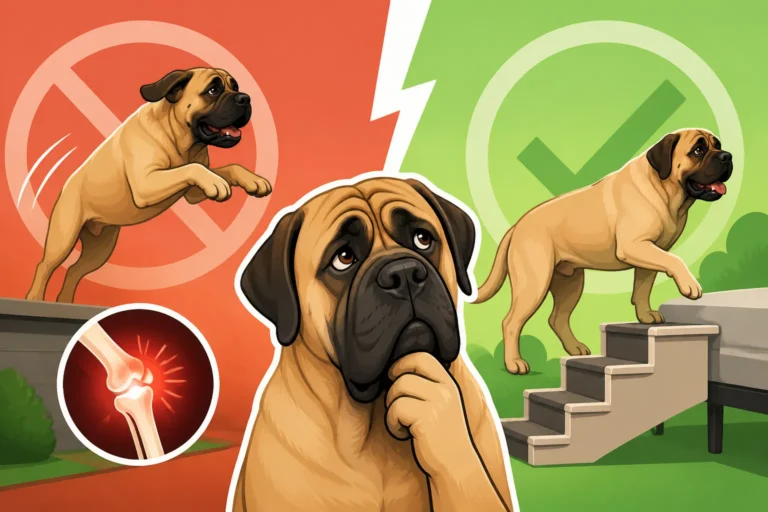
- Discouraging High-Impact Games: Try to avoid games that encourage excessive jumping, sudden stops, or sharp turns, especially with a growing Mastiff. These actions can put undue stress on their developing joints. Focus instead on slow, controlled games, gentle tug, or "find it" games that engage their minds. For growing puppies, remember The First Year With a Mastiff Puppy That Doubles in Size, and that over-exercising can be detrimental.
The Importance of Interrupting and Redirection
You are the conductor of your Mastiff's play orchestra. Knowing when and how to intervene is a crucial part of responsible ownership.
- Spotting Over-Arousal: Learn to recognize the signs that your Mastiff is getting over-excited. This might include frenetic pacing, intense staring, vocalizations that shift from playful to insistent, or ignoring your cues. It’s a good idea to end play before they reach this point.
- Calm Interruption: Don't yell or physically restrain your Mastiff if play gets too much. Instead, use a calm, firm voice to interrupt the game ("Enough," "Settle"). You can also create a distraction, like dropping a few treats on the ground for them to sniff out, which helps them switch from high arousal to a calmer, seeking behavior.
- Redirection: Once you've interrupted, redirect their energy to a calmer activity. This might be a solo chew toy, a short training session focusing on basic commands like "sit" or "down," or simply a quiet time-out in their bed. Consistency in redirection teaches them what is acceptable and helps them regulate their own excitement levels.
Recognizing the Line: When Play Becomes Too Rough
There's a fine line between enthusiastic, boisterous play and truly rough or inappropriate behavior. With a Mastiff's size, understanding this distinction is paramount. Most Mastiffs are inherently gentle, but even gentle giants need guidance to ensure their play remains positive and safe for everyone involved.
Distinguishing Between Boisterous Play and Aggression
Learning your individual Mastiff's body language is key. What looks alarming in one dog might be completely normal for another. However, there are general indicators to help you tell the difference.
- Body Language Cues:
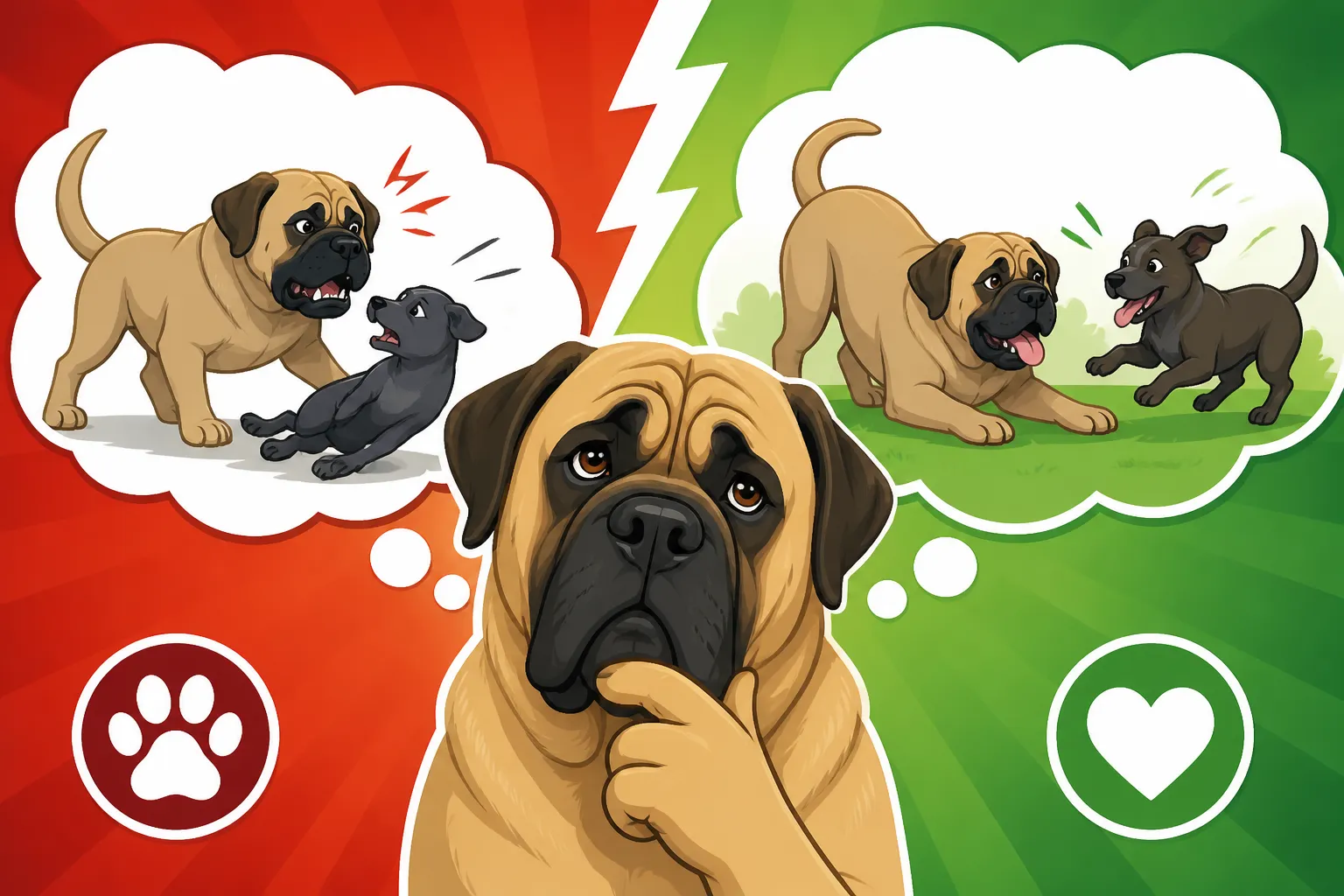
- Playful: Loose, wiggly body, open mouth with a "smile" or relaxed jowls, soft eyes, bouncy movements, and a wagging tail (often a full body wag, not just the tip). Play bows are a classic sign of an invitation to play.
- Problematic/Aggressive: Stiff body, tense posture, ears pinned back or forward aggressively, hard stare, tight lips, wrinkled brow, raised hackles, tail tucked or stiffly held high. Growls become lower-pitched, sustained, and accompanied by tense body language, not happy wiggles. Snapping or lunging with intent to make contact, rather than just mouthing the air playfully, is a major red flag.
- Vocalizations: As mentioned, Mastiffs can be quite vocal during play with their deep grumbles and growls. In playful contexts, these sounds are often accompanied by happy body language. If the growl becomes harsher, more insistent, or is paired with stiff body language, it's a warning. The key is to observe the entire dog, not just one isolated signal.
Factors That Can Contribute to Overly Rough Play
Even a naturally gentle Mastiff can occasionally cross the line into overly rough or even inappropriate behavior. Understanding the triggers can help you prevent these situations.
- Lack of Socialization: A Mastiff puppy that isn't properly socialized will struggle to understand appropriate play boundaries. They won't have learned how to read other dogs' signals or how to control their own strength. This is why early, positive exposure to various people, places, and well-behaved dogs is so critical. An undersocialized Mastiff, particularly one of this size, can be a handful, as detailed in What Becomes of an Undersocialized Mastiff.
- Over-Excitement/Over-Stimulation: Just like kids, dogs can get over-tired or over-stimulated, leading to crankiness or a loss of impulse control. Too much play, too many unfamiliar dogs, or a highly chaotic environment can push a Mastiff past its comfort zone, making their play rougher.
- Pain or Discomfort: A dog in pain might snap or lash out if touched in a sensitive area, even during play. Any sudden change in play behavior, especially an increase in roughness or irritability, should prompt a visit to the vet to rule out underlying medical issues.
- Poor Training or Inconsistent Boundaries: If a Mastiff isn't taught bite inhibition as a puppy, or if owners don't consistently enforce rules about appropriate play (e.g., no jumping on guests, no hard nipping), they won't learn self-control. This isn't usually malice; it's a lack of understanding the rules you've set. Consistent training from an early age is vital, especially when you're Teaching a Mastiff Before It Outweighs You.
When to Seek Professional Guidance
It's okay to admit you need help. With a giant breed, getting professional guidance sooner rather than later can prevent small issues from becoming major problems.
- Persistent Roughness: If your Mastiff consistently plays too roughly, despite your efforts to redirect and manage, it's time for professional help. This includes relentless pushing, jumping that can't be stopped, or inability to disengage from play.
- Aggressive Tendencies: Any signs of genuine aggression – snarling, snapping with intent to bite, growling defensively over toys or food, or showing fear aggression – warrant immediate consultation with a certified professional dog trainer or veterinary behaviorist. These behaviors are not typical of a well-adjusted Mastiff and need to be addressed seriously.
- Inability to Read Signals: If your Mastiff seems unable to read or respond to the play signals of other dogs, leading to constant conflicts or frightened playmates, a professional can help teach them better social skills.
- Safety Concerns: If you are genuinely worried about the safety of children, other pets, or yourself during play, do not hesitate to reach out to a professional. They can provide tailored advice and hands-on training to address the specific challenges you're facing.
Training and Socialization for Appropriate Play
A well-behaved Mastiff is a joy, and appropriate play is a big part of that. Because of their impressive size, early and consistent training and socialization are non-negotiable. It’s not about stifling their natural playfulness, but about channeling it into safe and acceptable outlets.
Early Puppy Socialization and Play Etiquette
The foundation for a well-adjusted adult Mastiff is laid during puppyhood. This is a critical window for learning.
- Exposure, Exposure, Exposure: From a young age, safely expose your Mastiff puppy to a variety of sights, sounds, smells, people, and, most importantly, well-socialized, calm adult dogs. Puppy classes are excellent for this, as they offer controlled environments for interaction. Always ensure interactions are positive and don't overwhelm your puppy. However, remember the Mastiff puppy’s delicate bone structure and keep exercise short and low-impact.
- Bite Inhibition: Puppies naturally mouth and bite. It’s how they explore and how they learn. Teaching bite inhibition means teaching them that human skin is fragile. When they nip too hard, give a sharp "ouch!" and withdraw attention. The game stops. This teaches them to control the pressure of their jaws. This is crucial for any breed, but with a Mastiff, it’s absolutely vital. As they grow, they’ll learn to mouth softly, if at all, during play.
- Controlled Playdates: Arrange playdates with trusted friends' dogs who are known to be good with puppies and have appropriate play styles. Watch for signs of your puppy getting too rough or being overwhelmed, and step in to gently separate them if needed. This structured interaction helps them understand canine social cues.
Consistent Training for Impulse Control
Training isn't just about sitting on command; it's about developing impulse control, which is essential for a giant dog that needs to understand boundaries during play.
- Basic Obedience Commands: Commands like "sit," "stay," "down," "leave it," and "drop it" are your best friends. "Leave it" is invaluable for preventing them from snatching a toy too eagerly, and "drop it" ensures they release something they shouldn't have or are playing too intensely with. Practice these commands regularly, even during play, to reinforce good habits.
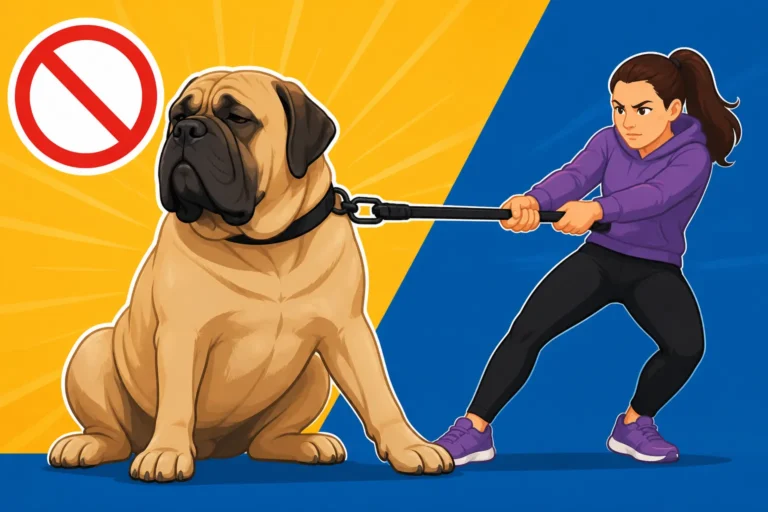
- Positive Reinforcement: Mastiffs respond best to positive reinforcement. They are sensitive souls, as we discussed in The Sensitivity Nobody Expects in a Two Hundred Pound Mastiff, and harsh corrections can damage their trust and willingness to work with you. Reward calm, gentle play and appropriate behavior with treats, praise, and continued playtime. This makes them want to offer good behavior.
- Online Training Resources: If local classes aren't an option, or you prefer to learn at your own pace, online training programs can be incredibly helpful. Platforms like BAXTER & Bella offer comprehensive courses that guide you through puppyhood and beyond, teaching you how to build a strong bond and establish clear communication with your Mastiff. These resources can be especially valuable for giant breeds where physical handling might become difficult as they grow.
- Consistency is Key: Every member of the household needs to be on the same page with rules and expectations. Inconsistent training will only confuse your Mastiff and make it harder for them to learn appropriate play behaviors.
The Role of the Owner in Guiding Play
Ultimately, you are your Mastiff's guide. You're the one who teaches them the rules of engagement in the human world and helps them navigate interactions responsibly.
- Be the Referee: Think of yourself as the vigilant referee during all play sessions. You initiate play, you monitor it, and you end it if it gets too much. You set the tempo and the boundaries. This means being actively involved, not just letting them "figure it out" with other dogs or children.
- Set Clear Boundaries: Decide what is acceptable and what isn't in terms of play. For example, jumping up on people, even playfully, should be a firm "no" from the start. Mouthing too hard during tug? Game over. The clearer and more consistent your boundaries are, the quicker your Mastiff will learn what’s expected.
- Understand Their Learning Style: Mastiffs are not generally quick learners when it comes to repetitive drills; they prefer to think things through. They are intelligent but deliberate. Short, fun training sessions work best. They are also incredibly observant and will learn from your reactions. If you scream or get upset when they're too rough, they might get more excited or retreat in confusion. A calm, consistent response is always more effective.
A Mastiff’s play style is a wonderful reflection of their "gentle giant" nature – heavy but typically soft, powerful yet often surprisingly restrained. With proper socialization, consistent training, and active supervision, you can ensure their play is a source of joy and safety for everyone in your home.
| Characteristic | Playful Mastiff Interaction | Potentially Problematic Interaction |
|---|---|---|
| Body Posture | Loose, wiggly, often includes play bows | Stiff, tense, low to the ground, or puffed up |
| Facial Expression | Soft eyes, relaxed mouth, panting, "smile" | Hard stare, tight lips, wrinkled brow, exposed teeth |
| Vocalizations | Happy grumbles, soft growls, playful huffs | Harsh, sustained growls, barks with aggressive intent |
| Tail Movement | Loose, wide wag, often entire body wags | Stiffly held high, tucked between legs, rapid twitch |
| Biting/Mouthing | Open-mouthed, soft mouthing, no skin pressure | Hard nips, biting with pressure, prolonged hold |
| Engagement | Takes turns, pauses, invites more play | Persistent, ignoring cues, bullying, obsessive |
| Disengagement | Easily redirected, settles quickly | Difficulty disengaging, agitated after play stops |
Disclaimer
This article is for general informational purposes only and does not constitute professional advice. Laws, prices and regulations vary by location and change over time. Consult a qualified professional for guidance on your specific situation.