What Fawn Looks Like on a Mastiff
A fawn Mastiff can look pale cream in one photo and warm apricot in another, leaving new owners unsure whether they are seeing a normal shade or a different coat color. This guide explains what fawn looks like, how the black mask fits into the picture, what may change as a puppy grows, and how to compare a dog’s appearance with the breed standard.
What fawn looks like on a Mastiff
The range of fawn shades
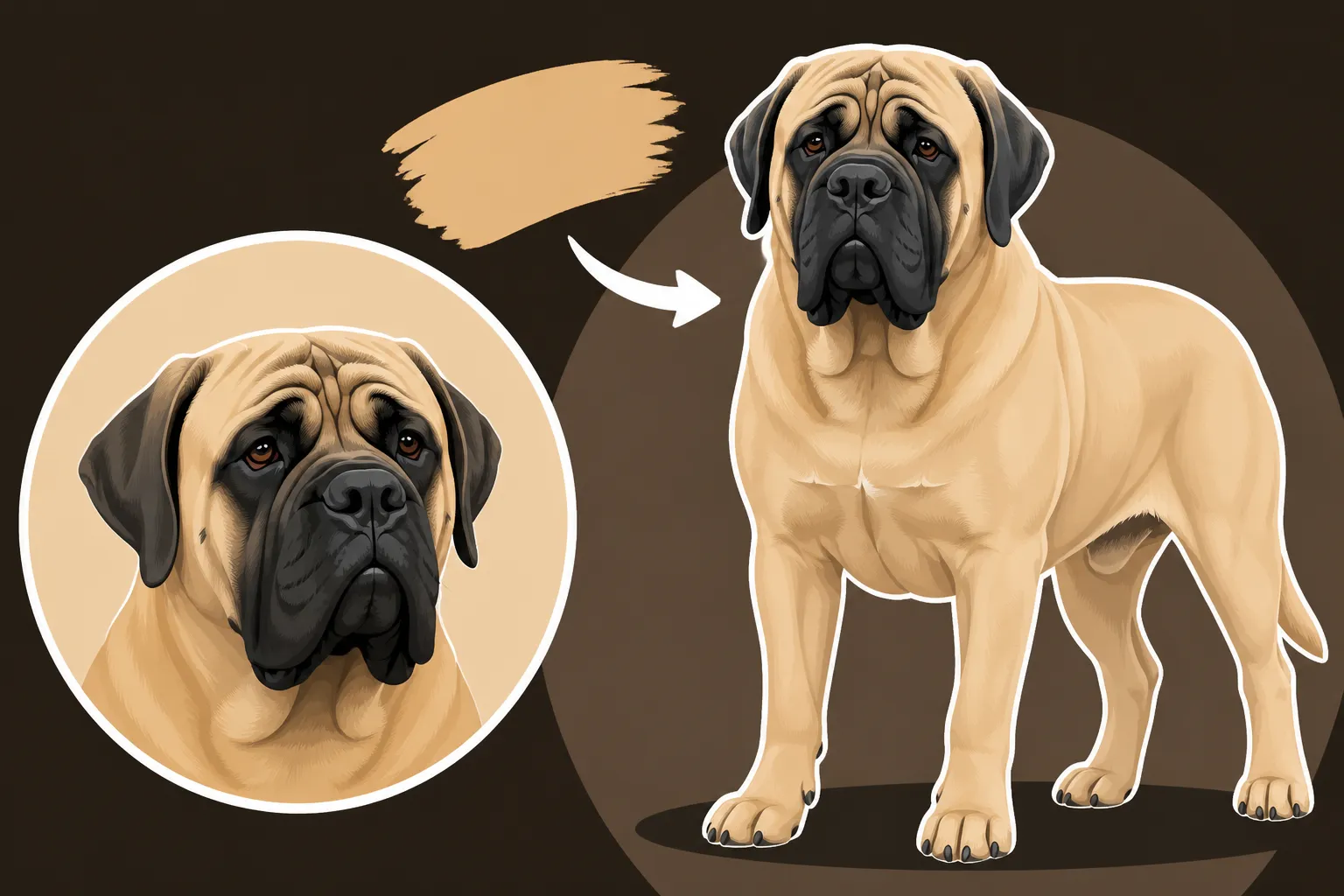
Fawn is a light-to-medium coat color that can look anything from soft, pale beige to a richer golden tan. On a Mastiff, the shade may have warm honey or reddish undertones, and the same dog can appear lighter or darker depending on the light, the camera, and the color of the background. A pale fawn Mastiff may look nearly cream in bright daylight, while a deeper fawn can look closer to caramel indoors.
There is no single fawn shade that every Mastiff must match. The breed standard recognizes fawn, apricot, and brindle, and fawn dogs naturally vary in tone. It is more useful to look at the overall coat and its pattern than to expect a particular paint-chip color. A fawn dog is generally one solid base shade rather than a coat with distinct dark stripes across the body.
The black mask makes a fawn Mastiff especially recognizable. The muzzle, ears, and nose are dark, and the darker coloring around the eyes continues upward between them. The contrast can make a fawn coat appear brighter by comparison. For a closer look at the breed’s accepted shades, see The Colors a Mastiff Comes In and Which Colors the Mastiff Standard Allows.
Fawn, apricot, and brindle are different descriptions
Fawn and apricot can be easy to confuse because both may have warm, golden or reddish tones. In everyday conversation, people may use the words loosely, particularly when looking at a puppy or a photo. The coat may sit near the border between shades, and lighting can exaggerate the difference. In the breed standard, however, fawn and apricot are separate color descriptions.
Brindle is different in appearance because it has a striped pattern over a base color. A brindle Mastiff may have dark stripes that stand out clearly or blend subtly into the coat, but the pattern—not simply a darker overall shade—is what distinguishes it from a solid fawn dog. If you are unsure whether a dog’s coat has a brindle pattern, examine the body in natural light rather than relying on a heavily edited picture. What Apricot Means on a Mastiff and Whether the Standard Accepts a Brindle Mastiff explain those distinctions in more detail.
Color labels can also vary between breeders, owners, and listing sites. One person might describe a warm fawn dog as apricot; another may call the same coat dark fawn. That difference in wording does not, by itself, tell you anything about a dog’s health, personality, or quality. For a puppy purchase, ask the breeder how the color is recorded and look at clear photos of the puppy and its parents rather than treating a label as proof of anything else.
| Appearance | What you may notice | How it differs from fawn |
|---|---|---|
| Pale fawn | Light beige or cream-like coat with a dark mask | A lighter shade within the fawn range |
| Deep fawn | Golden, tan, or warm brownish coat with a dark mask | A richer shade within the fawn range |
| Apricot | Warmer orange or reddish cast | A separate recognized color description |
| Brindle | Dark stripes over a lighter base | A visible pattern rather than one solid body shade |
The black mask is part of the overall look
A fawn Mastiff’s black mask is not an accessory or a marking that owners add; it is part of the characteristic appearance described by the breed standard. The mask includes the dark muzzle and is accompanied by dark ears and nose. Dark shading extends around the eyes and upward between them, helping frame the face.
The mask may look especially bold on a light fawn dog and less sharply contrasted on a deeper fawn one. Its appearance can also be affected by the shape of the dog’s wrinkles and the angle of a photograph. A close-up may make the muzzle look almost entirely black, while a side view shows more gradual shading around the eyes. That variation in how the face photographs does not necessarily mean that the dog’s color has changed.
If you are comparing a puppy with an adult relative, remember that the face can look different as the puppy grows. The mask’s overall placement is more informative than judging it from one snapshot. For a fuller explanation of this defining feature, read Why a Mastiff Must Have a Black Mask and How Far a Mastiff's Mask Should Reach.
How a fawn Mastiff’s coat can look different over time
Puppy color is not always the final impression
A young Mastiff’s coat may seem to change as the dog grows, even when its basic color description remains the same. Changes in coat length, texture, and density can affect how light reflects off the body. A puppy photographed under a warm indoor lamp may look noticeably more orange than the same dog in outdoor shade. Seasonal shedding can also make a coat look less dense or slightly different in tone.
The face may be particularly hard to judge in puppy photographs. Wrinkles become more pronounced as the dog matures, and the black mask can appear to spread or deepen simply because the head is changing shape. Do not assume that every difference between puppy and adult photos indicates a change from fawn to another color.
When looking at a breeder’s photos, ask for images taken in ordinary daylight and from more than one angle. If the dog is still young, ask how the breeder describes its color and whether the parents’ adult coats are available to view. You can also read How a Mastiff Puppy's Mask Changes for more about how the face may look as a puppy develops.
Lighting and photography can distort coat color
Photographs are useful, but they are imperfect evidence of color. Warm indoor bulbs can add a golden or reddish cast; a cloudy day may flatten the contrast; and phone cameras can adjust brightness and color automatically. A pale fawn dog beside dark furniture may look much lighter than it does against a bright wall. Filters and image editing add another layer of uncertainty.
If you are choosing between photos, compare them under similar conditions. Look for natural light, a neutral background, and pictures that show the dog’s body rather than only its face. If possible, ask for an unedited video or to meet the dog in person. A breeder who can explain the coat and show you the dog’s parents gives you more useful context than a highly polished listing image.
A practical way to judge the shade is to consider the coat and mask separately. First note the general color across the body. Then look at the muzzle, ears, nose, and eye area. This prevents a strongly contrasting black mask from making the body coat seem lighter or darker than it is.
Adult coats may appear to deepen or soften
An adult fawn Mastiff may appear richer or more muted than it did as a puppy. That impression can come from coat development, seasonal changes, sun exposure, or a simple difference in photography. It is reasonable for owners to notice a shift in how the color reads, but a change in appearance alone is not a reliable way to identify a health problem or determine a dog’s pedigree.
If the coat change is accompanied by hair loss, persistent itching, redness, sores, or other skin changes, the issue is no longer just a question of color. Ask a veterinarian to assess those symptoms rather than trying to treat the coat with color-enhancing products. Ordinary grooming and a suitable dog shampoo are generally more sensible than products intended to bleach, dye, or dramatically alter the coat.
For basic grooming supplies, a Mastiff owner might browse Chewy for a gentle dog shampoo or a rubber grooming brush, but the dog’s skin and coat needs matter more than its fawn shade. Avoid treating fawn fur as if it needs to be lightened or “corrected.” For background on color changes as a dog matures, see How a Mastiff's Color Changes With Age.
White markings and other details to check
A small white chest marking may be permitted
A fawn Mastiff may have a small white patch on the chest. A chest marking does not automatically mean the dog is a different color or that it cannot be a Mastiff. The breed standard allows a small white patch in that location, so it is worth looking at both the size and placement of the marking before drawing conclusions.
People sometimes see a white patch in a photograph and assume it is a sign of mixed ancestry. Appearance alone cannot establish a dog’s pedigree. If lineage matters to you, ask for appropriate registration and pedigree documentation from the breeder. A white marking should be considered in context, not used as a substitute for checking records or learning about the dog’s background.
Markings can also be difficult to assess in photographs when a dog is lying down or its chest is partly hidden. Ask for a clear, natural-light image if you are trying to understand where the white appears. The related guides Whether a Mastiff Can Have White Markings and How Much White a Mastiff May Carry discuss permitted markings in more detail.
Look at the whole dog rather than one feature
When deciding whether a Mastiff looks fawn, consider the coat over the body, the presence or absence of brindle striping, the facial mask, and any white markings. No single photo detail tells the whole story. A black muzzle does not make a dog black, and a small white chest patch does not erase an otherwise fawn coat.
It is also helpful to separate color questions from health and temperament questions. A dog’s shade cannot tell you whether it has been health tested, whether it has a suitable temperament, or whether it will be a good match for your household. Those considerations deserve their own careful questions during a breeder conversation or adoption process.
If a listing uses an unusual color description, ask the seller to explain what they mean and provide several unedited images. Be cautious about treating rare-sounding labels as proof of special quality. Clear communication about the dog, its parents, and its documentation is more meaningful than a dramatic color name.
Avoid color products and unnecessary coat treatments
A fawn Mastiff does not need dye, bleach, or a special “color correction” routine to look like a fawn Mastiff. Products intended to alter a coat’s appearance can irritate skin or cause problems if they are used improperly, particularly around the eyes, nose, and mouth. If the dog gets dirty, routine bathing with a dog-appropriate product is a better starting point.
For a simple grooming setup, Chewy may be one place owners look for a brush, towels, or dog shampoo. Choose products based on the dog’s skin and coat, and ask a veterinarian if the Mastiff has recurrent irritation or unusual hair loss. A second trip through Chewy for a different coat-color product is unlikely to solve a skin problem; persistent symptoms need a proper assessment.
Most fawn Mastiffs can be cared for like other short-coated Mastiffs. Regular brushing can help remove loose hair, while routine checks of the skin, ears, nails, and facial folds support general care. The coat color itself does not call for a complicated grooming schedule.
How to identify a fawn Mastiff when choosing a puppy
Ask for straightforward descriptions and photos
If you are considering a puppy, ask the breeder to describe the color in plain language. “Light fawn,” “dark fawn,” or “fawn with a small white chest patch” is more informative than a vague claim that a puppy is exceptionally rare. Ask for natural-light photos of the puppy and, if available, adult photos of the parents.
Photos should show more than the face. A full-body view helps you see whether the coat is solid or brindled, while a close-up can show the mask and any facial markings. If the puppy’s coat is still developing, ask whether the breeder expects its appearance to change as it matures. The answer may be an estimate rather than a guarantee, which is normal when discussing a growing dog.
You can also ask how the color is recorded in the puppy’s paperwork. Consistent, transparent answers matter more than a particular shade. If the breeder’s wording and the photos seem to disagree, ask them to clarify rather than trying to solve the discrepancy from a single image.
Use color as one small part of the decision
It is understandable to have a favorite color, especially when you have pictured a particular kind of Mastiff for years. Still, coat shade should not outweigh the more important parts of choosing a dog: health information, temperament, responsible breeding or rescue practices, and whether the household can manage a giant breed.
A fawn puppy is not automatically healthier, calmer, or more suitable than an apricot or brindle one. Nor does a darker mask tell you what the dog will be like with children, visitors, or other pets. Ask about the puppy’s upbringing, the parents’ health information, and how the breeder matches puppies to homes. If you are comparing colors more broadly, Whether a Black Mastiff Is Purebred offers useful context on appearance and assumptions about coat color.
For an adopted adult Mastiff, ask the rescue or current caregiver what they know about the dog’s history and health. The coat may be easy to describe, but the most useful information is often how the dog behaves in a home, on a leash, and around other animals. A good match depends on more than a color preference.
A simple visual checklist
When you look at a Mastiff you believe may be fawn, use this checklist:
- Look at the body coat in natural light. Decide whether it appears broadly beige, golden, tan, or another warm fawn shade.
- Check for stripes. Distinct dark striping may indicate brindle rather than a solid fawn coat.
- Notice the mask. Look for the dark muzzle, ears, nose, and shading around the eyes.
- Check for white markings. A small white chest patch may be permitted; ask about any markings you are unsure how to interpret.
- Compare several images or see the dog in person. One photo can distort both shade and pattern.
- Ask about documentation and health separately. Color is not a substitute for records or a conversation about the dog’s care.
If grooming items are all you need after bringing a puppy home, Chewy is one retailer owners may consider for routine supplies, but a fawn coat does not require special color products. The useful goal is a clean, comfortable coat and healthy skin—not making the dog’s natural shade look different.
Disclaimer
This article is for general informational purposes only and does not constitute professional advice. Laws, prices and regulations vary by location and change over time. Consult a qualified professional for guidance on your specific situation.