How a Mastiff Puppy’s Mask Changes
A Mastiff puppy’s black mask can look faint, uneven, or more dramatic as the puppy grows, leaving owners wondering whether the color is changing or something is wrong. Often, the difference is simply easier to see as the coat matures and the face changes shape. This guide explains what is normal, what can affect the mask’s appearance, and when a change deserves a closer look.
What the black mask is on a Mastiff
The mask is dark hair on the face
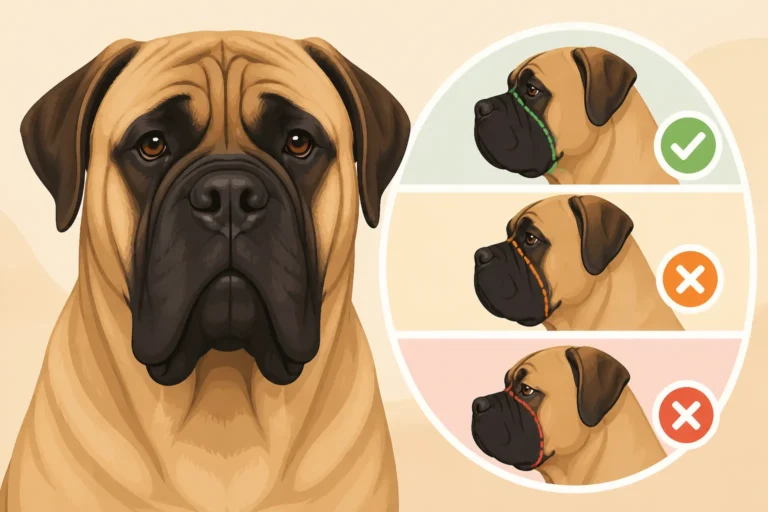
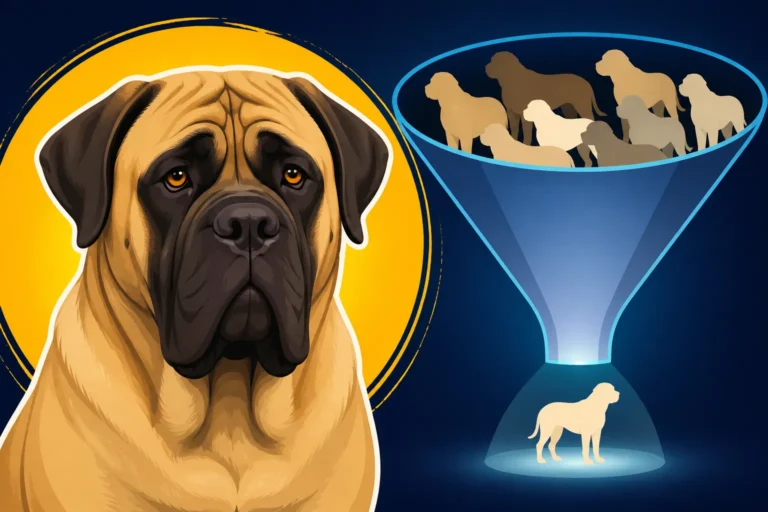
A Mastiff’s mask is the darker coloring over the muzzle and around the eyes. It is part of the dog’s coat pattern, not a separate feature that develops like a wrinkle or a patch of fur. The breed standard calls for a black mask, though how bold it looks can vary from dog to dog. For a closer look at the breed’s expected pattern, see Why a Mastiff Must Have a Black Mask.
A puppy’s mask may be visible early, but it might not look as crisp as it does in an adult photo. Puppy fur can be soft and fluffy, and the muzzle is still growing. As the face lengthens and widens, the same dark coloring may seem to cover a different area or stand out more clearly against the surrounding coat.
It also helps to separate the mask from nearby dark features. The nose, lips, and eye rims have their own pigment, and they do not always appear to change in the same way as the hair. If the nose itself seems to be losing pigment, or the skin around the eyes looks irritated, that is different from a coat pattern simply becoming easier to see.
Coat color and mask color are related but distinct
Mastiffs may be fawn, apricot, or brindle, and those background coat colors can make a mask look stronger or softer by contrast. A dark mask on a light fawn puppy may appear especially bold. On a brindle dog, dark striping can visually blend with the mask and make its edges less obvious. The range of accepted coat colors is discussed in The Colors a Mastiff Comes In.
The contrast can change without the mask itself changing much. Imagine taking a photo of the same puppy in bright outdoor light and then in a dim living room: the dark fur may look nearly black in one picture and brownish in another. A wet muzzle, fresh shedding, or a camera’s automatic color adjustment can also make the mask seem different.
That is why a single photo is a poor way to judge whether a puppy’s coloring has changed. Compare pictures taken in similar light, from a similar angle, and with the coat dry. If you are looking at a puppy from a breeder, ask for photos from several stages rather than trying to interpret one image on its own.
How a Mastiff puppy’s mask can seem to change
Growth changes the shape of the face
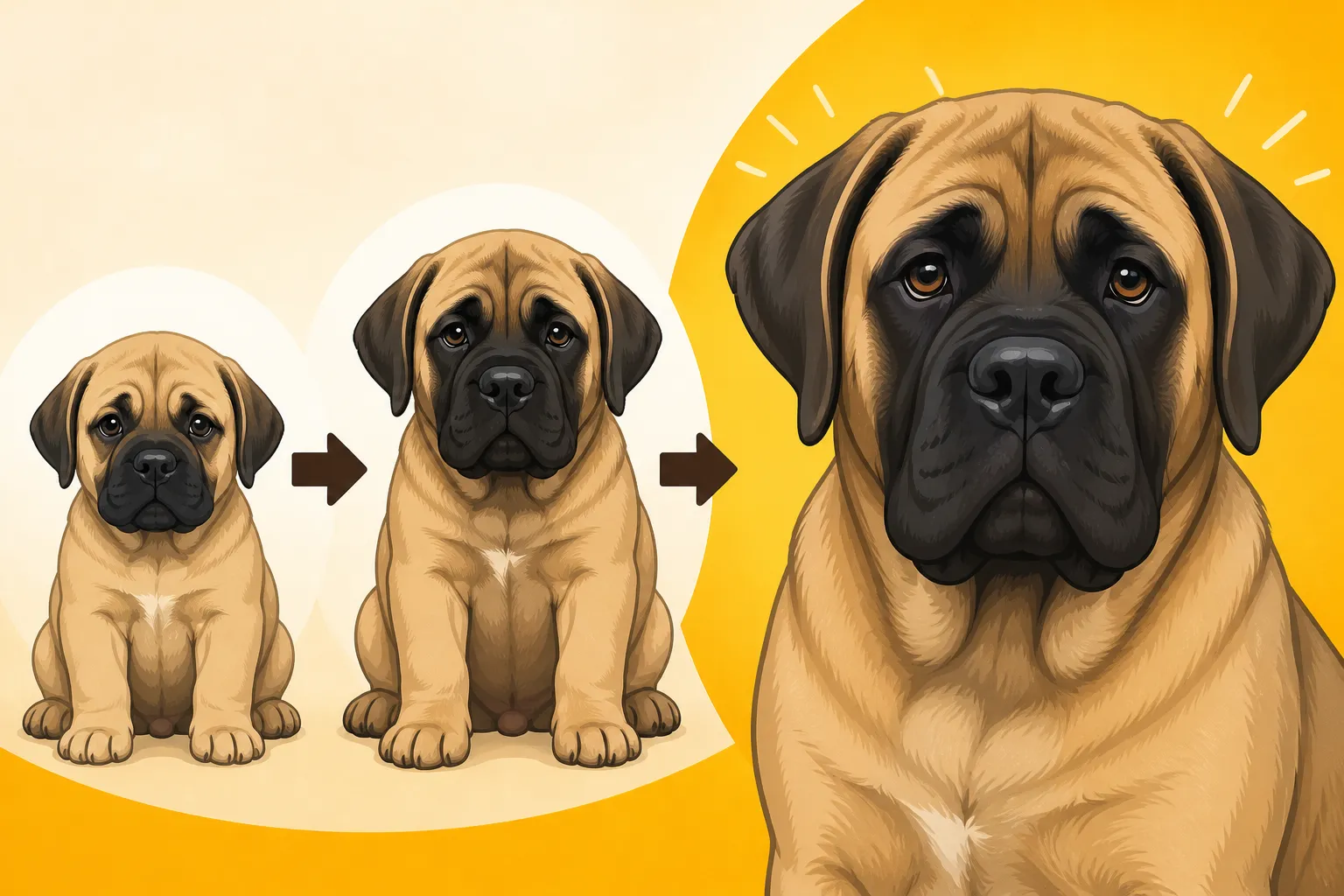
Mastiff puppies grow quickly, and their proportions change along the way. The muzzle broadens, the head becomes more substantial, and the skin folds can become more noticeable. Those changes can make the mask look wider, narrower, or more defined even when the distribution of dark hair is broadly similar.
The area around the eyes can be especially misleading. As a puppy’s head develops, the dark fur around the eyes may seem to spread or become more prominent because the surrounding face has changed shape. That does not necessarily mean the puppy has developed a new marking. It may simply be easier to see the pattern on a larger, less baby-faced head.
Owners often notice this while comparing puppy photos with pictures taken a few months later. A useful habit is to take a monthly photo from the front and side, in natural light, with the face dry and relaxed. This gives you a more reliable record than memory, which tends to magnify small differences.
Coat texture and shedding affect the appearance
Puppy fur can have a different texture and finish from an adult Mastiff’s coat. As the coat develops, the hair may lie differently, and shedding can make the color look temporarily patchier or less even. A little loose fur around the muzzle or face can also soften the mask’s outline in a photo.
Seasonal shedding may change how strongly the colors contrast, but it does not usually mean the underlying pattern has been replaced. If you notice loose hair, ordinary grooming with a suitable brush can help remove it. For basic supplies such as a soft brush or a washable cloth, you may find options through retailers such as Chewy; choose items that suit your puppy’s coat and avoid scrubbing the face.
The same principle applies to cleaning wrinkles and folds. A damp, clean cloth may be enough for routine wiping, but the area should be dried gently afterward. If you are comparing grooming products on Chewy, check that the product is intended for dogs and appropriate for the area you plan to clean. Avoid putting human cosmetics, dyes, or strong cleaners on the muzzle to make the mask look darker.
Background coat color can shift the contrast
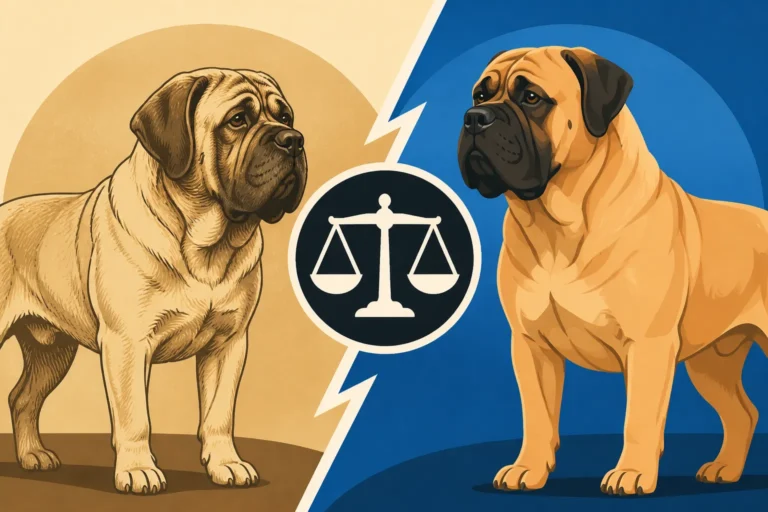
Some Mastiff owners describe the mask as “getting darker” when what has changed is the surrounding coat. A fawn or apricot coat may look lighter or warmer in different seasons, lighting, or stages of coat development. As a result, the black mask can appear more dramatic simply because it contrasts more strongly with the hair beside it.
This is why descriptions such as “fawn,” “apricot,” and “brindle” are helpful but do not tell the whole visual story. Two puppies with similar base colors can have masks that appear quite different in photographs. To learn what fawn coloring typically looks like, see What Fawn Looks Like on a Mastiff. For the broader ways a dog’s coat may look different over time, How a Mastiff's Color Changes With Age offers related context.
| What you notice | Common explanation | What to do |
|---|---|---|
| The mask looks bolder in newer photos | The face has grown, lighting differs, or coat contrast has changed | Compare photos in similar light |
| Dark fur looks patchy during shedding | Loose or shifting coat can affect the appearance | Groom gently and watch for skin irritation |
| The muzzle looks different when wet | Wet hair lies flat and reflects light differently | Recheck when the coat is dry |
| The nose or eyelid skin changes color | Skin pigment may be changing, rather than the coat pattern | Ask your veterinarian if the change is new or concerning |
| Hair loss, sores, redness, or itching appear | A skin or health issue may be present | Arrange veterinary advice rather than treating it as normal color change |
Normal variation versus a change worth checking
A gradual visual change is often less concerning
A gradual shift in how the mask looks, with healthy skin and a comfortable puppy, is often a matter of growth, coat texture, or contrast. If your puppy is eating, playing, and behaving normally, and the hair and skin look healthy, you can document the change and bring it up at the next routine veterinary visit.
Still, do not assume every facial change is cosmetic. A pattern that seems to change suddenly, a bare patch, crusting, redness, swelling, repeated rubbing, or a strong odor from a skin fold deserves attention. These signs are more meaningful than a subtle difference in shade between two photographs.
If you are unsure whether you are seeing a coat change or a skin change, take a clear photo and note when you first noticed it. A veterinarian can examine the skin directly and determine whether the change needs treatment. Avoid applying creams or wipes near the eyes unless your veterinarian recommends them.
Mask color is not the same as eye or skin color
The dark hair of the mask can make a puppy’s eyes look darker in some light, but eye color and coat color are separate traits. Likewise, the black pigment on the nose and lips is not the same thing as the black hair around the muzzle. A shift in one area does not automatically mean the others will change.
Some variation in the appearance of pigmentation can be harmless, but a new or progressive loss of pigment on the nose, eyelids, or lips is worth mentioning to a veterinarian—especially if it comes with discomfort, redness, scaling, or sores. Do not try to diagnose a pigment change from a photo alone; camera settings and lighting can distort color.
If you are interested in the breed’s facial features beyond the mask, How Deep a Mastiff's Wrinkles Should Be explains another part of the face that changes in appearance as a puppy matures. And if you are comparing a puppy’s eyes with adult Mastiff photos, Whether a Mastiff Can Have Light Eyes can help separate eye-color questions from coat-pattern questions.
How to track your puppy’s mask as it matures
Take consistent photos rather than relying on memory
A simple photo routine can answer many “Has the mask changed?” questions. Once a month, take a front-facing photo and a side profile in indirect daylight. Keep the coat dry, use a plain background if possible, and avoid filters. Include the date so you can compare images later without guessing which came first.
Try not to photograph the puppy immediately after a bath, a muddy walk, or a long nap with the muzzle pressed against a blanket. Those conditions can change the way the fur lies. If you use a phone camera, step back slightly rather than using a close-up zoom that can distort the shape of the head.
You can also note the puppy’s age, coat condition, and anything else that may explain a temporary difference, such as shedding or a recent grooming session. If you shop for a basic brush or grooming cloth at Chewy, use it for gentle routine care rather than trying to alter the mask’s color. The goal is to keep the skin comfortable, not to make a natural marking look more dramatic.
Ask the breeder what they observed in the family
A responsible breeder may be able to show photos of the puppy’s parents and older relatives at different ages. Family photos can help you understand the range of facial markings in that line, although they cannot guarantee exactly how an individual puppy’s mask will look as an adult.
Ask whether the puppy’s mask was visible from birth or became clearer in early weeks, and whether the breeder noticed any skin problems. These questions are more useful than asking for a promise that the pattern will remain exactly the same. Coat color can be influenced by inherited traits, but the appearance in a photo also depends on light, coat condition, and age.
If the breeder provides records or descriptions, keep them with your puppy’s veterinary notes. This is particularly helpful if a mark later changes in a way that worries you. A documented, gradual difference is easier to discuss than a vague impression that the face “looks different lately.”
Keep expectations realistic
A Mastiff puppy’s mask may become more noticeable as the head and coat mature, but there is no reliable visual schedule that fits every puppy. Some look strongly masked from an early age; others have an outline that seems to sharpen gradually. Adult color can also be photographed in ways that make it look deeper or more even than it appears in everyday life.
If you are choosing a puppy, focus on health, temperament, and a thoughtful match rather than expecting the mask to develop in a particular way. Color is a visible feature, but it cannot tell you whether the puppy has a good start, sound care, or a suitable home environment. A puppy’s mask may be part of what first catches your eye, yet the relationship you build will matter far more than whether that dark coloring looks identical in every year of photographs.
For routine coat care, use gentle, dog-appropriate tools and ask your veterinarian about any product you are unsure of. Chewy can be one place to compare ordinary grooming supplies, but no wipe or brush should be used to treat an unexplained skin change. If the difference is sudden, painful, or paired with hair loss or irritation, seek veterinary guidance.
Disclaimer
This article is for general informational purposes only and does not constitute professional advice. Laws, prices and regulations vary by location and change over time. Consult a qualified professional for guidance on your specific situation.