Whether a Mastiff Drools More Than a Saint Bernard
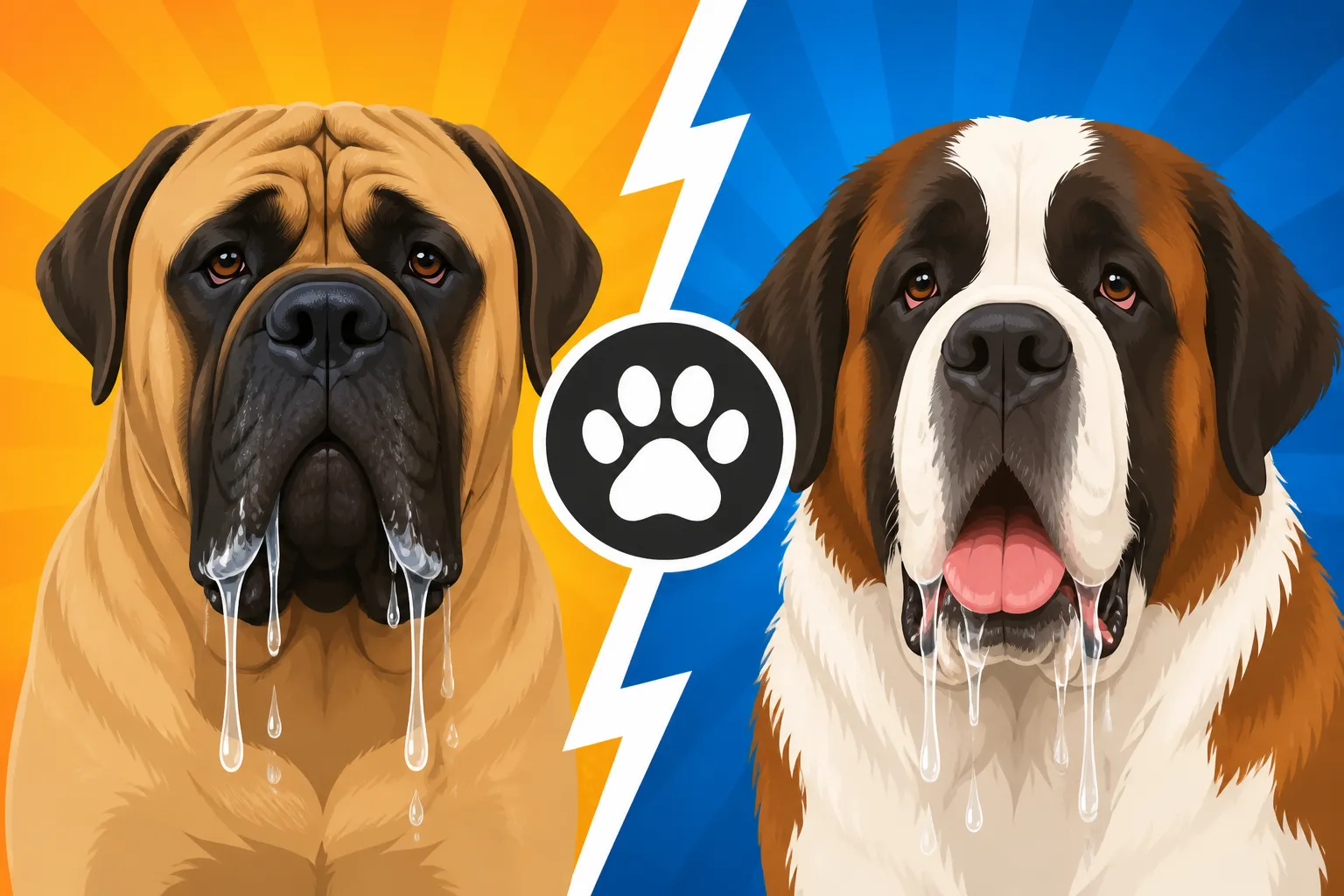
If you’re choosing between a Mastiff and a Saint Bernard, drool can be a real day-to-day concern: wet floors, damp jowls, and the occasional shake that sends saliva farther than you expected. Both breeds can drool heavily, and there isn’t a reliable rule that every Mastiff drools more than every Saint Bernard. This guide explains what to expect and how to manage the mess.
Do Mastiffs drool more than Saint Bernards
Why there is no clear breed-wide winner
Both Mastiffs and Saint Bernards are large, loose-lipped breeds, and both can leave noticeable saliva around the house. Their broad heads and pendulous lips can allow saliva to collect and escape rather than staying neatly inside the mouth. But breed alone cannot predict exactly how much a particular dog will drool.
A Mastiff with especially loose jowls may be messier than a Saint Bernard with tighter lips. Another Mastiff may drool only after drinking or eating, while a Saint Bernard in the same household seems to leave saliva on every nearby surface. Individual anatomy, excitement, temperature, food, and health all play a part.
So, if you’re asking which breed is guaranteed to be the tidier choice, neither one is a safe bet. It is more useful to think of drooling as a possibility with both breeds, then assess the individual dog and your tolerance for regular cleanup. Seeing a dog in person can help, though a puppy’s adult drooling habits may not be obvious yet.
What to expect in everyday life
With either breed, saliva may show up on the floor near the water bowl, on a favorite bed, or along the sides of furniture where a dog rests its head. Some dogs leave most of their drool in one predictable area. Others shake their heads after drinking or when excited, spreading it across a wider space.
The quantity and frequency can change over the day. A dog may drool more while anticipating a meal, panting after a walk, or greeting a familiar person. Hot weather can also mean more panting, which can make a drooly dog’s mouth and jowls feel wetter. For a closer look at the physical reasons behind it, see The Anatomy Behind a Mastiff's Drool.
| Situation | What you may notice with either breed | Practical response |
|---|---|---|
| After drinking | Wet jowls, drips beside the bowl, or a small puddle | Keep an absorbent towel nearby and wipe the lips gently |
| Around meals | Saliva increases when the dog anticipates food | Wipe the muzzle after eating and clean the feeding area |
| When excited | Drooling may increase during greetings or play | Keep washable towels in the rooms where the dog spends time |
| In warm weather | Panting and dampness may become more noticeable | Offer a cool resting place and avoid strenuous activity in heat |
| During a head shake | Saliva can land on walls, furniture, or people | Give the dog space to shake and choose easy-to-clean resting areas |
This is a practical comparison, not a guarantee about an individual dog. If you have an opportunity to meet the dog’s parents or adult relatives, ask their owners how much they drool at home. It can offer a useful clue, although it still cannot predict every dog’s habits.
What affects how much a dog drools
Lip shape, head movement, and routine
Loose lips and pendulous jowls are a major reason saliva escapes from a dog’s mouth. How pronounced those features are varies from one dog to another, even within the same breed. That is why one Mastiff may need frequent jowl wipes while another seems relatively tidy, and why the same range of variation applies to Saint Bernards.
Movement makes a difference, too. Saliva may gather around the lips while a dog drinks or pants, then drip when the dog lifts its head. A sudden shake can spread it around the room. Some owners learn to recognize the little pause after a drink when their dog raises its head and turns away from the bowl; that can be the moment to offer a towel before the dog wanders off.
Pay attention to your dog’s patterns rather than assuming every wet patch is a sign that drooling has suddenly worsened. If the mess mostly follows drinking, meals, or excitement, it may simply be part of that dog’s normal routine. Managing a Mastiff's Jowls After It Drinks offers more detail on handling the familiar post-water-bowl drips.
Triggers, discomfort, and sudden changes
Drooling can increase when a dog feels excited, anxious, nauseated, overheated, or uncomfortable. A car ride, a busy gathering, or an unfamiliar environment may bring on more saliva than usual. If your dog drools more in a specific setting, note what was happening and whether the change settles when the situation ends.
A sudden or marked increase deserves more attention than a familiar, steady pattern. Excessive drooling accompanied by repeated swallowing, pawing at the mouth, trouble eating, vomiting, unusual lethargy, or signs of pain should prompt a call to a veterinarian. Drooling together with heavy panting, weakness, confusion, or collapse—especially in hot conditions—can be urgent.
Don’t assume a new change is just “the breed.” Dental problems, an injury in the mouth, nausea, and other health concerns can cause extra saliva. Your veterinarian can help distinguish a dog’s usual slobber from a symptom that needs assessment. For common everyday influences, see What Makes a Mastiff Drool More.
Managing drool at home
Set up a simple cleanup routine
A few small adjustments can make life with a drooly giant breed much easier. Keep absorbent towels where they are most useful: beside the water bowl, near the dog’s bed, and by the door if your dog tends to drool during greetings. Washable covers on beds and throws can help protect furniture, while a pet-safe cleaner can make floor and wall cleanup less of a chore.
Some owners keep a dedicated cloth near the feeding area and gently wipe the lips after meals and drinks. The goal is to dry the skin without rubbing hard or turning the routine into a wrestling match. If your dog is uncomfortable with face handling, introduce the towel gradually: let the dog sniff it, reward calm behavior, and build up to a brief touch around the jowls.
You can find basic household supplies and pet-care items through retailers such as Chewy, but the important thing is choosing washable, comfortable materials that suit your dog and home. A bib may help some dogs while they rest or eat, but it needs to fit comfortably, stay clean, and come off if it becomes damp or irritating. For more on head shakes and the cleanup radius, see Whether a Mastiff Shakes Drool Onto the Ceiling.
Protect the spots where drool gathers
Look at where your dog naturally sleeps and drinks before buying or rearranging anything. A washable mat under the water bowl can catch drips, and a bed with a removable cover can be simpler to maintain than one that requires a full wash every time. If saliva is staining painted surfaces or fabrics, The Staining a Mastiff's Drool Leaves can help you think through where the mess tends to collect.
Travel takes a little planning, too. A familiar towel on the seat or cargo-area bedding can make cleanup easier after a drink break or an exciting outing. Keep water available, but allow your dog time to finish drinking and settle before getting back into the vehicle. Managing a Mastiff's Drool in a Vehicle covers this particular challenge.
Chewy may be one place to look for washable covers, towels, or feeding-area mats; compare the materials and care instructions rather than choosing something just because it is marketed for a large dog. A practical setup is usually better than an elaborate one: a few towels you can wash easily, a protected resting spot, and a bowl area that is simple to wipe down.
Choosing between the breeds with drool in mind
Consider the whole dog, not one mess-related trait
If you’re choosing between a Mastiff and a Saint Bernard, drool should be part of the conversation, but it shouldn’t be the only deciding factor. Consider the dog’s size, exercise needs, coat care, space requirements, health history, and temperament, along with what daily cleanup you can realistically handle. The broader comparison The Mastiff Against the Bullmastiff and the Cane Corso may help put the Mastiff’s overall traits in context.
Ask breeders or rescue organizations direct questions about drooling in the individual dog and its close relatives. You might ask whether the parents leave wet patches after drinking, whether they need their mouths wiped during the day, and whether drool is worse during excitement or warm weather. These questions are more useful than asking for a simple yes-or-no answer about which breed drools more.
Also be honest about your home. If saliva on furniture would be a constant source of stress, meet adult dogs from both breeds and talk with people who live with them. A breed reputation can tell you what may happen; seeing the dog’s actual habits can help you judge what you’re comfortable living with.
A realistic bottom line for potential owners
It is reasonable to expect drool from either a Mastiff or a Saint Bernard, but it isn’t possible to promise that one breed will always be messier. A particular dog’s jowl shape and daily habits may matter more than the breed label. If low-maintenance cleanliness is a priority, spend time around adult dogs before making a decision.
If you already share your home with one of these gentle giants, you don’t need to eliminate every trace of drool to have a comfortable routine. Keep towels handy, protect the places your dog uses most, and get familiar with what is normal for your dog. That way, ordinary slobber is easier to manage—and a sudden change is less likely to go unnoticed.
Disclaimer
This article is for general informational purposes only and does not constitute professional advice. Laws, prices and regulations vary by location and change over time. Consult a qualified professional for guidance on your specific situation.