Mastiffs in Bull Baiting
It’s sometimes uncomfortable to look back at certain chapters in canine history, especially when they involve practices that modern sensibilities find appalling. For those of us who adore our gentle, magnificent Mastiffs today, it can be particularly jarring to learn about their ancestors' role in brutal activities like bull baiting. This guide aims to peel back the layers of history, offering an honest look at where these powerful dogs came from and how their role in society has dramatically, and thankfully, transformed over centuries.
The Historical Context of Bull Baiting
To truly understand the Mastiff's connection to bull baiting, we have to travel back in time to an era vastly different from our own, where what we now consider cruelty was once a popular form of public entertainment. It's a challenging history, but one that is crucial for appreciating the journey this breed has taken.
Origins and Purpose of Bull Baiting
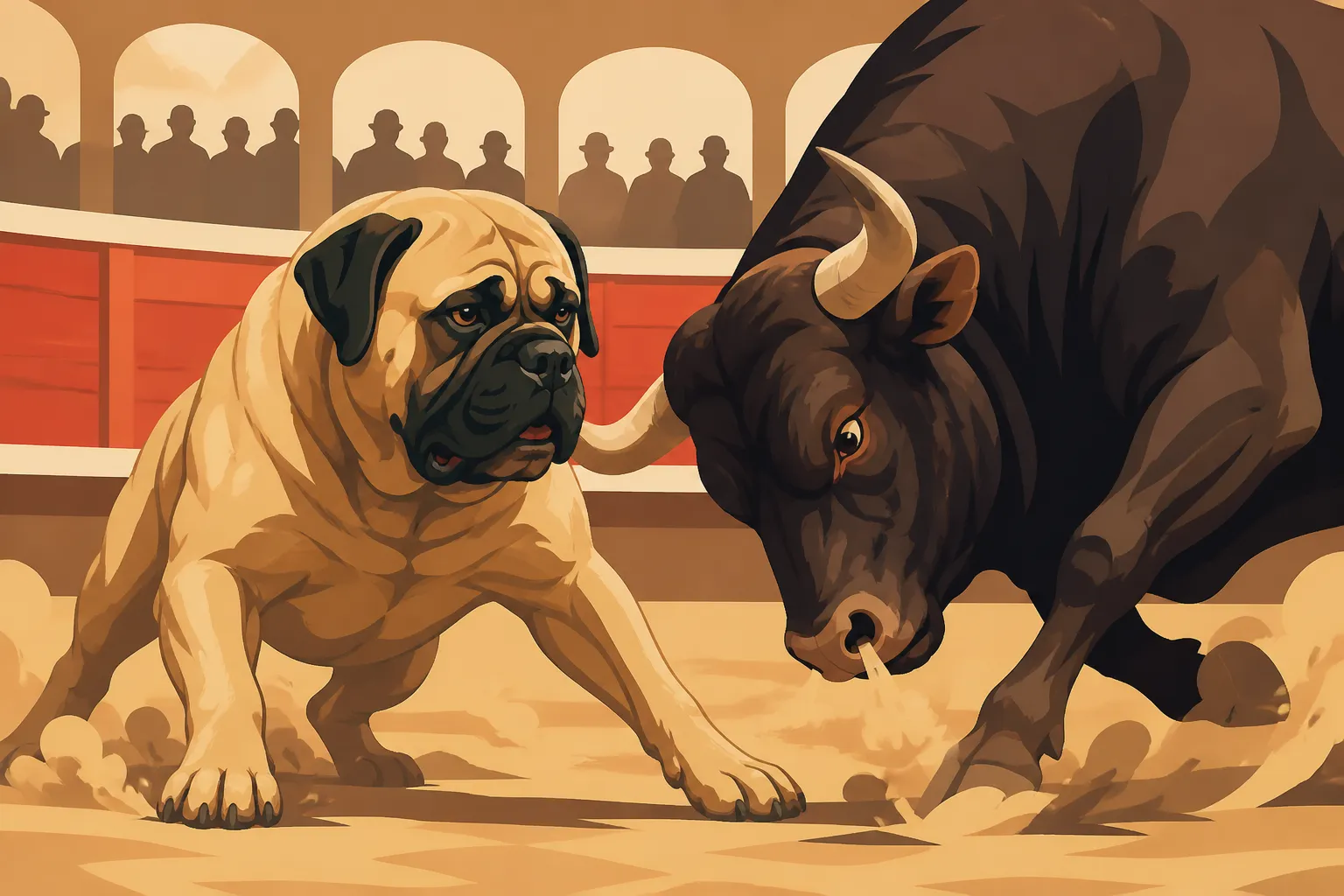
Bull baiting was a "sport" that gained significant popularity across Britain, especially from the medieval period through the 18th century. It involved chaining a bull to a stake, often in a town square or designated arena, and then setting specially bred dogs upon it. The goal was for the dogs to harass and subdue the bull, often by seizing its nose or ears and holding on, forcing the bull to its knees. This wasn't merely a rough pastime; it was deeply ingrained in the culture of the time, often sanctioned by local authorities and attracting large crowds. People believed it toughened the bull's meat (a myth, of course) and provided a thrilling spectacle for the masses.
The Role of Early Mastiff-Type Dogs
The dogs employed in these gruesome events were not the refined, beloved Mastiffs we know today. Instead, they were powerful, tenacious, and incredibly strong "mastiff-type" dogs, often referred to as "bandogs" or "butcher's dogs." These were working animals, bred for their immense physical strength, courage, and an unrelenting grip. Their size and heavy bone structure were critical assets, enabling them to withstand the force of a bull's charge and hold on with remarkable endurance. The Molossus, an ancient type of large dog, is often cited as a distant ancestor, hinting at the long lineage of powerful canids from which these early fighting dogs derived. While the modern Mastiff carries the genes of these formidable ancestors, generations of selective breeding have intentionally moved away from the aggressive traits that were once prized in the arena.
Public Spectacle and Social Function
Bull baiting wasn't just about the fight; it was a major social event. People from all walks of life, from nobility to common folk, would gather to watch, place bets, and enjoy the communal atmosphere. It was a brutal form of public theater, often held on market days or during local festivals. Beyond the entertainment, these events served as a kind of morbid display of dominance over nature, reflecting the prevailing attitudes of an era that had a far more utilitarian and less sentimental view of animals. The dogs, and the bulls, were seen as commodities or tools for entertainment rather than sentient beings deserving of kindness. It's a stark reminder of how much societal values have evolved.
The Brutality and Decline of the Practice
While bull baiting was popular for centuries, its inherent cruelty eventually led to its downfall. The shift in public consciousness, coupled with legal action, brought an end to this barbaric practice.
The Realities of the Arena
The reality of bull baiting was far from glorious. It was a prolonged, violent struggle that often resulted in severe injury or death for both the bull and the dogs. Dogs would suffer broken bones, punctures from the bull's horns, and internal injuries. The bulls, often weakened and provoked, endured immense stress and pain. This wasn't a fair fight; it was a torturous spectacle. Imagine the cacophony of the crowd, the fear of the animals, and the sheer physicality of these encounters. It painted a very different picture than the serene image of a modern Mastiff napping on a What a Bed That Holds a Mastiff Costs. The animals' suffering was undeniable, even if many at the time chose to ignore it.
Shifting Societal Views and Legal Bans
As the 18th century gave way to the 19th, a growing movement for animal welfare began to challenge such cruel practices. Philanthropists, religious leaders, and compassionate individuals started speaking out against the barbarity of bull baiting, bear baiting, and dog fighting. They argued for more humane treatment of animals, advocating for laws that would protect them from such exploitation. After years of campaigning and several failed attempts, legislation was finally passed to outlaw these sports. The landmark Cruelty to Animals Act of 1835 effectively The Year Britain Banned the Baiting Mastiffs Were Used For, marking a pivotal moment in animal welfare history and signaling a clear shift in societal values. This wasn't an overnight change, but a gradual awakening to the suffering inflicted upon animals for human amusement.
The Legacy of a Brutal Past
The legacy of bull baiting casts a long shadow, but it also highlights the remarkable transformation of the Mastiff breed. For a long time, the association with such aggressive pastimes meant that "Mastiff" carried connotations of ferocity and danger. Breeders in the post-prohibition era faced the challenge of reshaping both the breed's image and its inherent temperament. They had to consciously select for different traits, focusing on docility, loyalty, and a stable disposition. This deliberate effort allowed the breed to shed its fighting past and emerge as the gentle giant we know. It's a testament to responsible breeding and the potential for positive change within a breed. Today, when you see a calm Mastiff, you're witnessing the culmination of generations of careful breeding designed to erase the very instincts that were once desired.
From Baiting Dog to Gentle Giant: The Mastiff's Transformation
The story of the Mastiff is one of profound evolution, moving from a formidable, often feared, arena combatant to one of the most beloved and gentle family companions. This shift didn't happen by accident; it was a conscious, dedicated effort by breeders and fanciers.
Breeding for Temperament and Companionship
After bull baiting and other cruel sports were outlawed, the original "fighting" Mastiff-types largely disappeared. The dogs that survived and formed the basis of the modern Mastiff breed were those that exhibited a calmer, more manageable temperament. Dedicated breeders took it upon themselves to actively select for traits like gentleness, loyalty, and a strong bond with their human families. This was a deliberate process of "un-breeding" aggression and reinforcing the protective, yet docile, qualities that are now hallmarks of the breed. It literally became about How the Mastiff Was Bred Away From Fighting. The focus shifted from sheer power and tenacity in a fight to a stable, reliable temperament suitable for a family home. They recognized the inherent majesty of the Mastiff and sought to preserve its impressive presence while refining its character.
The Modern Mastiff's Nature
Today's Mastiff is renowned for its calm, devoted, and often surprisingly sensitive nature. While their imposing size and deep bark can be an effective deterrent, they are generally not aggressive. Instead, they are typically described as "gentle giants" who are incredibly patient with children and utterly dedicated to their families. They possess a quiet dignity and a watchful demeanor, making them excellent guardians who observe rather than react impulsively. The breed's inherent The Sensitivity Nobody Expects in a Two Hundred Pound Mastiff means they respond best to positive reinforcement and gentle handling. They thrive on companionship and want nothing more than to be part of the family, often following their owners from room to room. When considering a Mastiff, it's vital to focus on these modern characteristics, not the outdated stereotypes.
Responsible Ownership and Training Today
Owning a modern Mastiff means embracing their gentle nature while respecting their incredible size and strength. Early and consistent socialization is paramount. A well-socialized Mastiff puppy, exposed positively to various sights, sounds, people, and other animals, grows into a confident, well-adjusted adult. It's crucial to ensure Socializing a Mastiff Puppy Before It Gets Heavy, before they become too large to easily manage. Positive reinforcement training works wonders, helping them understand expectations without resorting to harsh methods that can damage their sensitive spirit.
Because of their sheer mass, proper training is non-negotiable. Teaching them basic manners like "sit," "stay," and a reliable recall is essential. Imagine a two-hundred-pound dog that decides to pull on the leash because it spots a squirrel – that's a recipe for disaster. Investing in quality training equipment, perhaps from a trusted retailer like Chewy, and consistent practice is key. They need to learn boundaries and understand their place in the family unit from a young age.
Understanding Your Mastiff's Innate Traits
Even with centuries of careful breeding, some echoes of the Mastiff's ancestral past remain in their fundamental traits, though expressed in vastly different, more desirable ways today. Understanding these innate characteristics helps us be better owners.
Natural Protective Instincts
While the modern Mastiff is far from an aggressive fighting dog, they do retain a strong, natural protective instinct. This isn't the fierce, offensive aggression seen in bull baiting dogs, but rather a calm, watchful guardianship of their family and home. They are naturally observant and will often position themselves to keep an eye on their surroundings. When a stranger approaches, a Mastiff might stand between you and the visitor, or offer a deep, resonant bark as a warning. This is How a Mastiff Guards Without Being Taught rather than through specific training for attack. They size up situations carefully, and while they might appear intimidating to an intruder simply due to their sheer presence, they are rarely quick to resort to physical aggression unless a direct threat is perceived. Their role today is one of a living security system, deterring trouble through size and gravitas.
Managing Size and Strength
One cannot discuss Mastiffs without acknowledging their incredible physical presence. A fully grown Mastiff is a formidable animal, both in weight and height. What a Mastiff Actually Weighs can easily put them in the 150-230 pound range, and their muscle mass means they possess immense strength. This requires careful management in daily life. Leash training is paramount; a Mastiff that decides to stop or pull can easily overpower an unprepared owner. Learning to handle a dog that A Mastiff Does Not Pull You Over, It Simply Stops is an art form. You'll need durable leashes and harnesses, perhaps finding heavy-duty options from retailers like Chewy, to ensure control during walks.
Indoors, their size means careful consideration for space and child safety. While gentle, their sheer bulk can lead to accidental bumps or knocks, especially with small children or elderly family members. Teaching them to be mindful of their surroundings and to lie down rather than stand in busy areas is important. Similarly, stairs can be problematic for their joints, especially when young. Why Stairs Are Worse for a Mastiff Than Any Breed due to their rapid growth and heavy frames, so limiting access or using ramps when they're puppies can prevent future issues.
Health and Longevity Considerations
The massive size of the Mastiff, a direct result of their historical role where bulk was an advantage, unfortunately comes with certain health implications. Giant breeds, including Mastiffs, are prone to specific health challenges and typically have shorter lifespans than smaller dogs. It's a sad reality that Six to Ten Years Is What a Mastiff Gets, and sometimes even less, with many Mastiffs being considered "old" by five years of age.
Conditions like hip and elbow dysplasia, bloat (gastric torsion), and certain cancers are more prevalent in these large breeds. Their sheer weight puts a lot of strain on their joints, making good nutrition and appropriate exercise critical, especially during their growth phases. High-quality food designed for giant breeds, available at pet supply stores like Chewy, can support their skeletal development. Being mindful of their health throughout their lives is an essential part of responsible Mastiff ownership. Understanding these realities is part of honoring their legacy and giving them the best life possible, far removed from the brutal past of the bull baiting arena.
| Characteristic | Historical Mastiff-Type Dog (Bull Baiting Era) | Modern Mastiff (Companion Dog) |
|---|---|---|
| Primary Purpose | Bull baiting, fighting, guarding | Family companion, guardian, gentle pet |
| Temperament | Tenacious, aggressive, fearless, high pain tolerance | Calm, gentle, loyal, protective, sensitive, patient |
| Breeding Focus | Strength, grip, fighting drive, intimidation | Health, stable temperament, family suitability, docility |
| Social Role | Public spectacle, utility animal | Cherished family member, therapy dog potential |
| Interaction with Humans | Often handler-focused for sport, less domestic | Deeply bonded, affectionate, seeks companionship |
| Training Methods | Harsh, punitive (historically) | Positive reinforcement, gentle, consistent, early socialization |
Disclaimer
This article is for general informational purposes only and does not constitute professional advice. Laws, prices and regulations vary by location and change over time. Consult a qualified professional for guidance on your specific situation.