The Age a Mastiff Can Start Real Walks
Oh, the sheer excitement of bringing home a Mastiff puppy! You just want to get out there and show them the world, right? To see their giant paws exploring new paths and stretching those long legs. But here's the honest truth: pushing your Mastiff puppy into "real" walks too soon can have devastating, lifelong consequences for their enormous, rapidly developing bodies. This guide is all about helping you navigate the crucial period of your Mastiff's early life, understanding why restraint is key, and exactly when you can safely introduce proper walks without risking their precious joints.
Understanding Mastiff Growth and Joint Development
It's tempting to think that because a Mastiff puppy is already so big, they must be sturdy and ready for anything. But that couldn't be further from the truth. Their size is precisely what makes them so vulnerable in their early months. They are growing at an astonishing rate, sometimes gaining several pounds a week, and this rapid growth puts immense stress on their developing skeletal system.
The Unique Growth Plate Challenges of Giant Breeds
Imagine a tiny scaffolding structure within their bones – that's essentially what growth plates are. These areas of cartilage, located near the ends of long bones, are where new bone tissue is generated, allowing the bones to lengthen as your puppy grows. In Mastiffs, these growth plates remain open, soft, and extremely vulnerable for a much longer period than in smaller breeds. They aren't fully calcified and fused until your Mastiff is often well over a year old, sometimes closer to 18 months or even two years.
During this time, any excessive impact, repetitive strain, or sudden twists can easily damage these delicate growth plates. A minor injury that a smaller dog might shrug off could lead to a permanent deformity or debilitating lameness in a Mastiff. We're talking about serious issues like angular limb deformities or conditions that predispose them to crippling arthritis down the line. It's not just about what they can do, but what they shouldn't do during this critical development phase.
Why Slow and Steady Wins the Race for Mastiff Health
Because of their genetic predisposition and the sheer mechanics of their immense size, Mastiffs are already at a higher risk for orthopedic conditions like hip and elbow dysplasia. These aren't just minor aches; they can be incredibly painful and severely impact a dog's quality of life. Pushing a puppy too hard with structured, forced exercise before their growth plates have closed is like inviting trouble. You might think you're building strong bones, but you're actually doing the opposite – you're creating micro-traumas that prevent proper development.
Forcing long walks, encouraging vigorous running, or allowing them to jump excessively can exacerbate any underlying genetic predispositions to joint problems. Even if your Mastiff puppy comes from impeccably health-tested parents, their own growth still needs careful management. The long-term consequences of pushing a puppy too hard can be heartbreaking: chronic pain, expensive surgeries, and a significantly reduced quality of life. It truly is a marathon, not a sprint, when it comes to raising a healthy Mastiff. You'll thank yourself later for exercising restraint early on. It's worth learning Why a Mastiff Puppy Must Not Be Exercised Hard and understanding How Fast a Mastiff Puppy Puts On Weight to appreciate the delicate balance.
Defining "Real Walks" Versus Puppy Exploration
When we talk about "real walks," it often conjures images of a brisk pace, a set route, and a specific duration. For a human, it's about getting steps in or seeing the neighborhood. But for a Mastiff puppy, this type of activity is often exactly what we need to avoid. It’s crucial to differentiate between natural puppy exploration and structured exercise.
What Constitutes a "Real Walk" for a Young Mastiff?
A "real walk" for a growing Mastiff puppy implies a sustained period of activity where the puppy is often asked to maintain a human-determined pace and direction. This might mean walking a mile down a paved sidewalk, going up and down hills, or engaging in a lengthy game of fetch in a park. These are precisely the types of activities that put excessive, repetitive strain on vulnerable growth plates and developing joints. The impact of concrete, the torque from sudden turns, and the constant stress on muscles and ligaments are far too much for their rapidly growing, yet still fragile, bodies.
Think about it: when your puppy is dictating the pace and stopping to sniff every blade of grass, they’re engaging in natural, low-impact exploration. When you’re tugging them along, keeping them on a tight schedule, or pushing them to cover distance, you’re engaging in a "real walk." The difference lies in the intensity, duration, and control exerted by the human, rather than allowing the puppy to self-regulate. What may seem like a short stroll to you can easily turn into The Walk Length That Damages a Mastiff Puppy for a young giant.
Appropriate Exercise for a Mastiff Puppy's First Few Months
So, if real walks are out, what can a Mastiff puppy do? The answer is simple: self-directed play and short, controlled potty breaks. For puppies under six months, their exercise should primarily consist of free play in a safe, enclosed yard or a soft, carpeted indoor area. This allows them to run, wrestle, and tumble for short bursts, then flop down and rest when they choose. They know their limits far better than we do at this age.
Potty breaks on a leash are perfectly fine, but these should be brief, functional trips outdoors, not extended adventures. Use this time for important early socialization, exposing them to new sights, sounds, and smells from a distance. Mental stimulation is also incredibly valuable – short training sessions, puzzle toys, and new experiences build their brains without stressing their bodies. Focus on gentle play, not forced endurance.
The Recommended Timeline for Introducing Structured Walks
Patience is a virtue when raising a Mastiff, especially concerning their physical development. There's no magic age where all their growth plates suddenly fuse, but we can offer a general timeline that prioritizes their long-term health.
The Critical 4-6 Month Window: Gentle Introduction
In this age range, your Mastiff puppy is still very much in the rapid growth phase, and their joints are incredibly delicate. "Walks" during this period should be less about covering distance and more about socialization and short bursts of exploration. Think of it as a rolling classroom, not a boot camp.
Take your puppy out for very short, supervised excursions. We're talking 5-10 minutes, perhaps once or twice a day, on soft surfaces like grass in a quiet park or your own lawn. The primary goal is exposure to the world – the sounds of traffic, people walking by, the smell of other dogs – all from a safe distance. This is also an ideal time to start teaching basic leash manners in a low-pressure environment. If your puppy lies down and refuses to move, don't drag them; simply wait or carry them a short distance if they're still light enough. This foundational period is critical for Socializing a Mastiff Puppy Before It Gets Heavy, setting them up for a calm demeanor as adults.
6-12 Months: Gradual Increase in Duration and Terrain
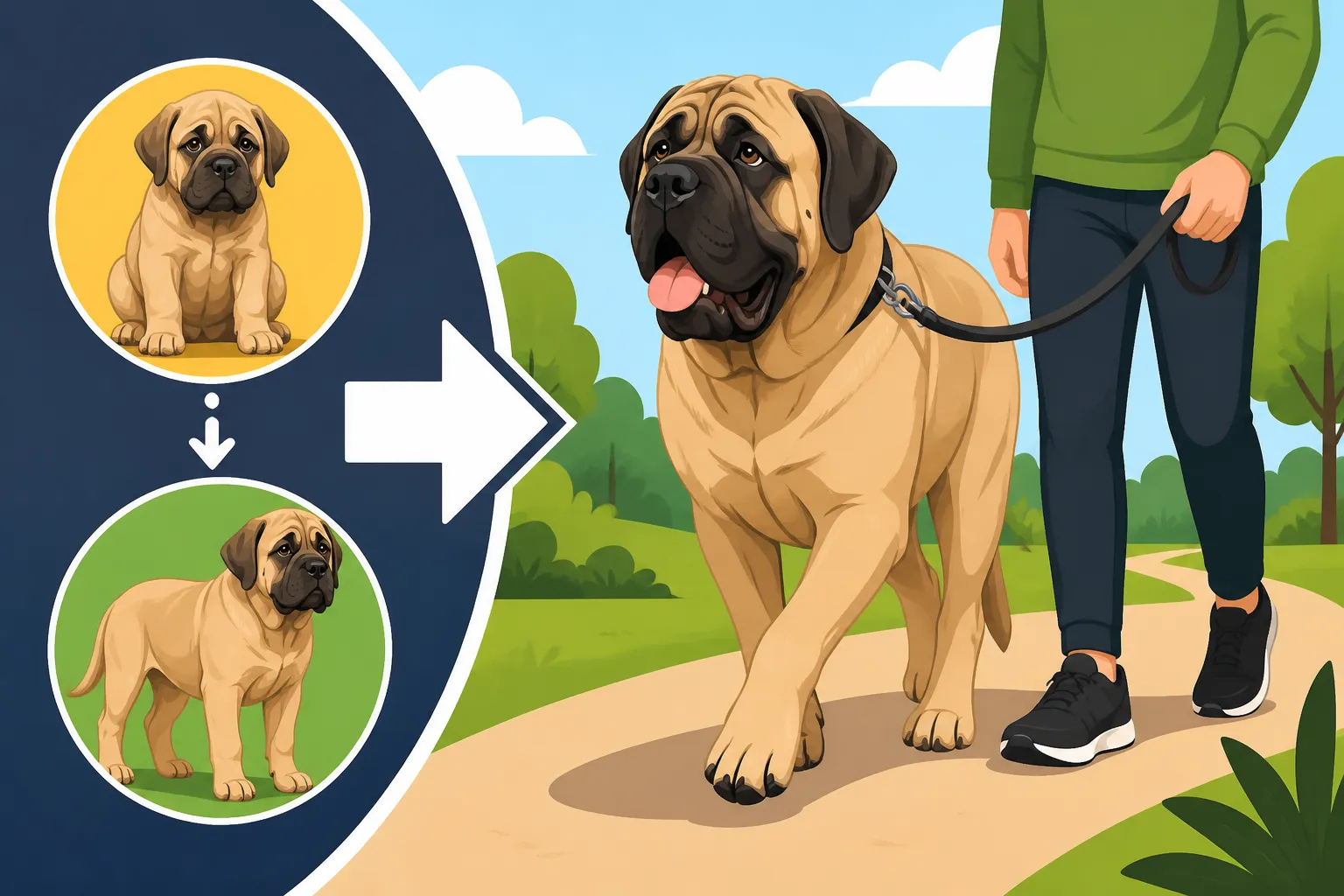
As your Mastiff moves into this phase, their growth rate might slightly decelerate, but their growth plates are still very much open. You can begin to gradually increase the duration of your walks, but always with caution. A good rule of thumb is about 5 minutes of structured walking per month of age, twice a day. So, a 6-month-old might get 30 minutes total of walking per day, split into two 15-minute sessions. Listen to your puppy and always err on the side of less.
Focus on varied terrain, but prioritize soft surfaces. Grassy fields, dirt trails, or woodchip paths are far kinder to their joints than concrete or asphalt. Avoid long walks on hard pavements. Continue to discourage excessive jumping, running up and down stairs frequently, or prolonged rough play with other dogs. Even short periods of high-impact activity can cause damage. Be mindful of Why Stairs Are Worse for a Mastiff Than Any Breed and the subtle damage that What Bare Floors Do to a Growing Mastiff can cause inside your home.
Post-12 Months and Beyond: When Real Walks Become a Reality
For many Mastiffs, around 12-18 months is when their growth plates begin to close, and their bones start to mature. This is the point where you can generally start introducing more substantial "real walks." However, even then, it's crucial to proceed gradually and continue to monitor your dog for any signs of discomfort. Large breeds mature slower than smaller ones, and even at 18 months, they are often still filling out and consolidating bone density.
A good indicator of readiness is often when your veterinarian gives the all-clear after X-rays or a general orthopedic assessment. Some breeders will have their Mastiffs certified for hips and elbows after this age. For example, the Orthopedic Foundation for Animals (OFA) certifies dogs at two years of age, which speaks to the complete maturation of joints. While you don't have to wait until then for any exercise, it's a good benchmark for when their skeletal system is truly considered adult. Even then, remember that Mastiffs are not endurance athletes. An hour of gentle, self-paced walking a day is usually more than sufficient for their needs and contributes to a healthy weight and mental well-being. This is where The Age a Mastiff Is Certified by OFA becomes relevant, indicating structural maturity. And truly, for a Mastiff, Why One Hour a Day Is Enough for a Mastiff is often plenty.
| Age Range | Type of Exercise | Duration/Frequency | Key Focus | What to Avoid |
|---|---|---|---|---|
| 0-4 Months | Free play indoors/safe yard | Short bursts, self-regulated | Potty breaks, basic house-training, handler bonding | Any forced walks, long play sessions, jumping |
| 4-6 Months | Free play, very short supervised outings | 5-10 mins, 1-2 times/day | Socialization, leash introduction, scent exploration | Long walks, hard surfaces, stairs, rough play |
| 6-12 Months | Moderate free play, structured walks | 5 mins per month of age, 2 times/day (e.g., 6mo = 15 mins x 2) | Leash manners, varied soft terrain, stamina building | High-impact activities, forced running, excessive mileage |
| 12-18+ Months | Gradually increasing structured walks | Build up slowly as per vet advice, 30-60 mins daily | Endurance, sustained activity, mental engagement | Marathon runs, intense agility, extreme jumping |
Tools and Techniques for Safe Mastiff Walks
Even when your Mastiff is ready for longer walks, their size and strength mean you need the right gear and training to ensure safety for both of you. A Mastiff pulling on a leash is not just an inconvenience; it can be dangerous.
Choosing the Right Gear for a Growing Giant
Selecting appropriate equipment is paramount for managing a Mastiff. Forget the flimsy nylon collars and thin leashes – they simply won't cut it. For a Mastiff, especially a young, enthusiastic one, a sturdy, well-fitting harness is often a better choice than a collar alone. A front-clip harness can be incredibly helpful for managing pulling, as it redirects their momentum back towards you when they try to forge ahead. Brands often available on Amazon offer a good selection of durable harnesses specifically designed for large breeds, ensuring a comfortable and secure fit that won't chafe or restrict movement. Look for broad straps and ample padding.
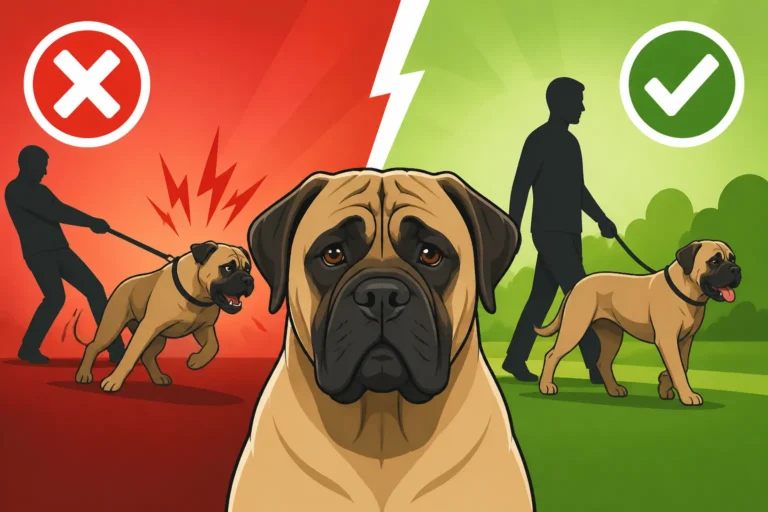
In addition to a harness, a wide, flat buckle collar should be used for ID tags. However, avoid relying on it for primary leash control, especially when they are young and their necks are still developing. A strong, thick leash with a comfortable handle is also essential. A six-foot standard leash is usually ideal, allowing enough slack for exploration without giving too much room for them to build up speed. Resist the urge to use harsh corrective tools like prong collars or choke chains, as these can cause physical harm to a Mastiff's neck and throat, and are generally counterproductive to building a positive relationship. Understanding Whether a Mastiff Should Wear a Harness or a Collar is key here, as is recognizing How Much Force a Mastiff Can Apply on a Leash.
Training for Leash Manners and Control
Starting positive reinforcement training early is not just beneficial, it's non-negotiable for a Mastiff. Their sheer size dictates that they must have impeccable leash manners long before they reach their adult weight. Imagine trying to control a 200-pound dog that hasn't learned to walk politely – it’s a recipe for disaster.
Begin in a low-distraction environment, teaching foundational commands like "heel" and "let's go." Reward generously with high-value treats and praise for every step taken on a loose leash. Consistency is key. Many online resources and training programs, like those from BAXTER & Bella, can provide excellent structured guidance for teaching loose-leash walking. If your Mastiff develops the notorious habit of planting themselves and refusing to budge, which they are prone to do, patience is your best friend. Don't pull or drag them; instead, try to lure them forward with a treat or simply wait them out. This teaches them that stubbornness won't get them out of moving. The goal is a companion who walks with you, not one who drags you or stops you dead in your tracks. This also applies to situations like Stopping a Mastiff That Plants Itself and Will Not Move. Investing time in Teaching a Mastiff Before It Outweighs You will pay dividends for their entire life.
Monitoring Your Mastiff for Signs of Stress or Injury
Even with the most careful planning, it’s vital to be an astute observer of your Mastiff. Their stoic nature can sometimes mask discomfort, making it crucial for owners to pick up on subtle cues that something might be amiss.
Recognizing Subtle Cues of Discomfort
Mastiffs, like many large breeds, often have a high pain tolerance and can be masters at hiding discomfort. They aren't likely to yelp or limp dramatically unless they're in significant pain. Instead, you need to look for more subtle signs. Is your Mastiff suddenly reluctant to go for a walk, or lagging behind more than usual? Are they taking shorter steps, or is their gait a little stiff, especially after getting up from a nap? Perhaps they're shifting their weight more frequently when standing, or favoring one leg slightly.
Excessive panting, even on a cool day, can indicate they're overexerting themselves. Keep an eye on their energy levels; a sudden decrease in playfulness or an increase in lethargy could signal an issue. Sometimes, even changes in appetite or a generalized "off" feeling are indicators. If you notice any of these changes, even minor ones, it’s always best to err on the side of caution and consult your veterinarian. Early intervention can make a huge difference in managing potential issues.
The Role of Your Veterinarian in Exercise Planning
Your veterinarian is your most important partner in raising a healthy Mastiff. Regular check-ups aren't just for vaccinations; they're essential opportunities to discuss your dog's growth, development, and exercise regimen. Be open with your vet about your Mastiff’s activity levels and any concerns you have.
They can assess your Mastiff's gait, palpate joints, and provide guidance tailored to your individual dog's growth rate and conformation. If there are any signs of lameness or stiffness, your vet can recommend appropriate diagnostics, such as X-rays, to evaluate bone and joint health. This is particularly important around key developmental milestones. For example, some breeders recommend preliminary X-rays of elbows and hips as early as The Age a Mastiff Puppy's Elbows Are First Filmed to get a sense of joint health, though official certifications come later. Always follow your vet's advice on when to increase exercise, what types of activities are safe, and when it’s time to scale back. They have the expertise to help you make the best decisions for your giant companion's long-term well-being.
Disclaimer
This article is for general informational purposes only and does not constitute professional advice. Laws, prices and regulations vary by location and change over time. Consult a qualified professional for guidance on your specific situation.