Whether Jumping Is Safe for a Mastiff
The majestic Mastiff is an incredible companion, but their sheer size and powerful build can sometimes lead to situations that cause a lot of worry for their owners. One common concern is jumping – whether it's up on people in excitement, off furniture, or even just in and out of a car. It feels like a quick way for such a heavy dog to get hurt, and you're not wrong to be concerned. This guide will meticulously explore why jumping can be particularly unsafe for a Mastiff at every stage of their life and offer practical, empathetic advice on how to manage this instinct to protect their precious joints and well-being.
Why Jumping is a Big Deal for Mastiffs
Let's face it, when a Mastiff decides to jump, it’s not just a cute little bounce like a toy breed. We're talking about a dog that can easily weigh over 150 or even 200 pounds launching itself into the air, and then, crucially, landing again. The physics involved here are astounding, and unfortunately, not in favor of their joints. Understanding the sheer mechanics and the unique developmental stages of a Mastiff is crucial to grasping why jumping is such a significant risk factor.
The Sheer Physics of a Mastiff Landing
Imagine a human jumping off a small wall. Even for us, the impact jars our knees and ankles. Now, multiply that force by the weight of a Mastiff. When a Mastiff jumps, whether it's off a sofa, out of the back of an SUV, or simply greeting you with an enthusiastic leap, the force of their landing is immense. Their immense body weight translates into incredible concussive energy transmitted directly through their leg bones and into their joints – hips, elbows, shoulders, and even their spine. This isn't just a hypothetical concern; it's a real, tangible stress on their skeletal structure every single time. It's like a repetitive micro-trauma, chipping away at the resilience of their cartilage and ligaments over time, even if an immediate injury isn't apparent. This constant stress can hasten the onset or worsen existing conditions like arthritis, making their later years more painful and less mobile.
Growth Plates and Joint Development
The concern about jumping intensifies dramatically when we talk about Mastiff puppies and adolescents. Unlike us, dogs don't have fused bones until they reach maturity. Puppies have "growth plates" at the ends of their long bones, which are areas of soft, rapidly growing cartilage that are incredibly vulnerable to injury. For a giant breed like a Mastiff, these growth plates remain open much longer than in smaller breeds, often not closing until 18-24 months of age, sometimes even later.
A Mastiff puppy jumping, even from a seemingly small height, can cause significant damage to these delicate growth plates. An injury here isn't just a temporary sprain; it can lead to abnormal bone growth, causing permanent lameness, angular limb deformities, or predisposing them to severe conditions like elbow or hip dysplasia. It’s a bit like building a skyscraper on a shifting foundation – any undue stress during the construction phase can lead to structural weaknesses later on. This is precisely Why a Mastiff Puppy Must Not Be Exercised Hard, and similarly, why jumping must be rigorously managed to ensure proper development. The goal during these formative years is to provide steady, controlled growth and minimal impact to allow their massive frames to develop as soundly as possible.
The Risks of Jumping for Mastiff Puppies and Adolescents
Those adorable, clumsy puppy jumps might seem harmless, but for a growing Mastiff, they're anything but. The combination of rapid growth, immense weight, and developing skeletal structures creates a perfect storm where even seemingly innocuous leaps can lead to debilitating, lifelong issues. It's a tough pill to swallow when you want to encourage their playful antics, but understanding the specific risks can help you make informed choices for their long-term health.
Common Injuries from Puppy Jumping
When a Mastiff puppy jumps, the impact reverberates through their still-developing joints. One of the most dreaded injuries is a cranial cruciate ligament (CCL) tear, which is unfortunately common in large breeds. Imagine the main stabilizing ligament in your knee suddenly snapping or tearing – that's what a CCL tear means for a dog, often requiring expensive and invasive surgery like TPLO, especially considering Whether TPLO Surgery Suits a Two Hundred Pound Mastiff. This can happen from a sudden twist on landing or even just repeated stress.
Beyond acute tears, chronic impact from jumping can contribute to conditions Mastiffs are already prone to, such as hip and elbow dysplasia. Hip dysplasia, where the hip joint doesn't form correctly, can be worsened by constant high-impact activities. Why a Mastiff's Hips Fail Under Its Own Weight is a serious concern, and uncontrolled jumping only adds to the immense pressure on these vulnerable joints. Similarly, elbow dysplasia, a complex condition affecting the elbow joint, can be aggravated by the repetitive shock of jumping and landing. Why One Mastiff in Seven Fails Its Elbow Grade highlights just how common elbow issues are, and why protecting those growing joints is paramount. Soft tissue injuries, such as strains and sprains in muscles and tendons, are also far more likely when a large, heavy puppy jumps without the full stability of mature musculature. These often cause temporary lameness but can contribute to chronic weakness or instability.
Discouraging Jumping from an Early Age
Prevention is always better than cure, especially with a Mastiff puppy where injuries can be so severe. This means being incredibly proactive about discouraging jumping from the moment they come home. It starts with simple environmental management. If you have stairs, consider carrying your Mastiff puppy up and down them for as long as you physically can, or block access entirely to prevent unsupervised ascents and descents. Why Stairs Are Worse for a Mastiff Than Any Breed is because of the sheer force of their weight impacting their joints on each step.
Invest in ramps for vehicle access or to help them get onto furniture if you allow it. This might seem like a lot of effort for a small puppy, but remember, the habits they form now will be nearly impossible to break once they're 150 pounds and have developed a strong routine. Keep greetings calm and teach a "four on the floor" command from day one. This means rewarding them heavily for keeping all four paws on the ground when they greet you or visitors. It’s a process that requires consistency from everyone in the household, but it's absolutely vital for their long-term soundness and your peace of mind.
Jumping Risks for Adult and Senior Mastiffs
While puppies face unique risks due to growth plates, the danger doesn't magically disappear once a Mastiff matures. Adult and senior Mastiffs, with their massive bodies and often pre-existing joint wear and tear, face a different, but equally concerning, set of challenges when it comes to jumping. The sheer bulk of these dogs means that any impact can be far more damaging, whether to themselves or, quite unintentionally, to the humans around them.
Exacerbating Existing Joint Conditions
By the time a Mastiff reaches adulthood, and certainly into their senior years, it's very common for them to have some degree of joint stiffness or arthritis. Arthritis in a Mastiff at Four is not unheard of, and for many, it's a reality they live with. Jumping, even seemingly minor leaps off a couch, can significantly exacerbate these existing conditions. The repetitive shock can inflame already sensitive joints, leading to increased pain, swelling, and reduced mobility.
Imagine having aching knees and then jumping off a platform – it's going to hurt! For a Mastiff with early-onset arthritis or even mild hip/elbow dysplasia that may not have been symptomatic before, a single bad jump could be the catalyst for a severe flare-up, accelerating the degenerative process. Caring for a Mastiff Past Five often involves managing joint health, and preventing high-impact activities like jumping becomes a critical part of their daily care routine to maintain their comfort and quality of life as long as possible. A healthy adult Mastiff might appear robust, but their joints are still bearing an enormous load, and pushing them with unnecessary impact is a recipe for trouble.
Accidental Injury to Themselves or Others
Beyond the internal joint damage, jumping poses significant risks for accidental injuries. A Mastiff launching themselves off a smooth surface, like a polished hardwood floor, can easily slip and pull a muscle, sprain a ligament, or even fracture a bone. Their mass means they carry a lot of momentum, and an awkward landing can send them sprawling, potentially causing injury to their paws, legs, or spine. This is why addressing issues like What Bare Floors Do to a Growing Mastiff is so important throughout their lives, not just as puppies.
Then there's the human element. An excited Mastiff, even one trying to be gentle, jumping up for a greeting can easily knock over an elderly person, a child, or even a sturdy adult, simply due to their immense size and weight. A flying slobber string is one thing, but a 180-pound dog making direct contact can cause bruises, fractures, or more serious falls. It's not about aggression; it's about pure, unadulterated mass and enthusiasm that can lead to unintended harm. Owners often express frustration because they know their dog means no harm, but the physical reality of their size cannot be ignored when it comes to preventing these incidents.
How to Manage and Prevent Unsafe Jumping
Living with a Mastiff means being proactive and thoughtful about their physical environment and training, especially when it comes to preventing dangerous jumping. It’s a commitment, but one that pays dividends in their comfort and longevity. There are many strategies, from simple home modifications to consistent training, that can make a world of difference.
Environmental Modifications
One of the most effective ways to prevent unsafe jumping is to remove the opportunities for it. Consider how your Mastiff interacts with their environment.
- Ramps: If your Mastiff rides in a vehicle, a sturdy ramp is non-negotiable. Asking them to leap from the height of an SUV or truck bed, especially as they age, is incredibly risky. Look for ramps specifically rated for large breeds, available on sites like Amazon, to ensure they can handle the weight of your Mastiff. Similarly, ramps can be used to access elevated dog beds or even low pieces of furniture if you allow them on it. This also ties into What a Ramp Rated for a Mastiff Costs and how it's an investment in their long-term health.
- Supportive Bedding: Provide ample, supportive bedding throughout your home. A thick, orthopedic bed can cushion their joints when they lie down and discourage jumping onto human furniture simply because their own bed is so comfortable. What an Orthopedic Bed for a Mastiff Costs can be significant, but it's essential. Make sure it's thick enough that they don't flatten it and end up on the hard floor.
- Floor Traction: Hardwood, tile, and laminate floors are notorious for causing slips and falls, especially for heavy breeds. Consider runners, area rugs, or even carpeted rooms to provide traction, particularly in high-traffic areas or wherever your Mastiff spends a lot of time getting up and down. This directly combats the problem of What Bare Floors Do to a Growing Mastiff.
Training for Calm Greetings and Controlled Movement
Environmental changes are vital, but training is equally important to address the root causes of jumping, such as excitement or impatience. Mastiffs are intelligent dogs, but they often require consistent, patient, positive reinforcement. The Sensitivity Nobody Expects in a Two Hundred Pound Mastiff means that harsh corrections are counterproductive and can damage your bond.
- "Four on the Floor": This is your mantra. When your Mastiff approaches to greet you or guests, reward them only when all four paws are on the ground. Turn your back, or even briefly leave the room, if they jump. Re-engage only when they are calm. This teaches them that jumping means the interaction stops, while calmness earns attention and treats. Consistency is key here.
- "Off" Command: Teach a reliable "off" command for when they might try to jump onto furniture or people. Start by luring them off with a treat, saying "off," and then immediately rewarding them when their paws hit the floor.
- Impulse Control: Work on impulse control exercises. This can involve waiting patiently for their food bowl, waiting at doorways, or practicing "stay." Resources like BAXTER & Bella offer online puppy programs that can help teach these foundational behaviors in a positive way, making them less likely to impulsively jump in exciting situations.
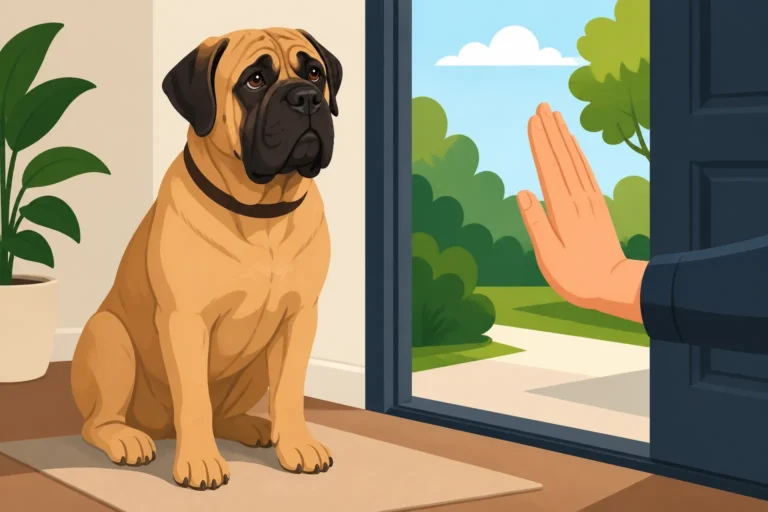
- Doorway Manners: For many Mastiffs, the biggest trigger for jumping is someone arriving at the door. Practice having a designated spot for your Mastiff to go to when the doorbell rings (e.g., a "place" command on their bed). Reward heavily for staying on their spot until guests are settled. This is crucial for managing How a Mastiff Judges a Stranger at the Door.
Managing Specific Jumping Scenarios
Beyond general training, consider specific situations where jumping is likely and prepare for them.
- Car Access: As mentioned, always use a ramp for getting in and out of vehicles. Start practicing with the ramp when they are young and lightweight, so it becomes a normal part of their routine before they're too heavy to lift. Why a Mastiff Puppy Must Be Lifted Into a Car until they can master a ramp is a perfect example of proactive management.
- Furniture Access: If you allow your Mastiff on furniture, consider providing a ramp or stairs specifically designed for large dogs to prevent them from leaping on and off. If you prefer them off furniture, be consistent with your "off" command from the start.
- Excited Greetings: When you come home, keep your voice calm and your movements slow. Avoid hyping them up with excited tones or sudden movements. Get down to their level if you want to greet them, reinforcing the "four on the floor" rule. Ask guests to do the same. This can mitigate situations like Whether a Mastiff Jumps Up on Visitors.
Here's a quick overview of jumping risks and mitigation strategies:
| Mastiff Age Group | Primary Jumping Risk Factors | Recommended Mitigation Strategies |
|---|---|---|
| Puppy/Adolescent | Open growth plates, soft ligaments, rapid bone growth, hip/elbow dysplasia exacerbation. | Carry up/down stairs, use ramps for vehicles/furniture, consistent "four on the floor" training, avoid rough play on slick surfaces. |
| Adult | Exacerbating mild arthritis, soft tissue strains/sprains, accidental injury to self or others. | Continue ramp use, maintain good floor traction, reinforce "off" and calm greetings, provide orthopedic bedding. |
| Senior | Severe arthritis flare-ups, joint degeneration, instability, higher risk of severe falls/fractures. | Strict no-jumping policy, ramps everywhere (vehicles, beds), gentle exercise, consider supportive harnesses for stability. |
By being mindful of these risks and implementing these proactive measures, you can help ensure your magnificent Mastiff enjoys a longer, healthier, and more comfortable life, free from the painful consequences of unsafe jumping.
Disclaimer
This article is for general informational purposes only and does not constitute professional advice. Laws, prices and regulations vary by location and change over time. Consult a qualified professional for guidance on your specific situation.