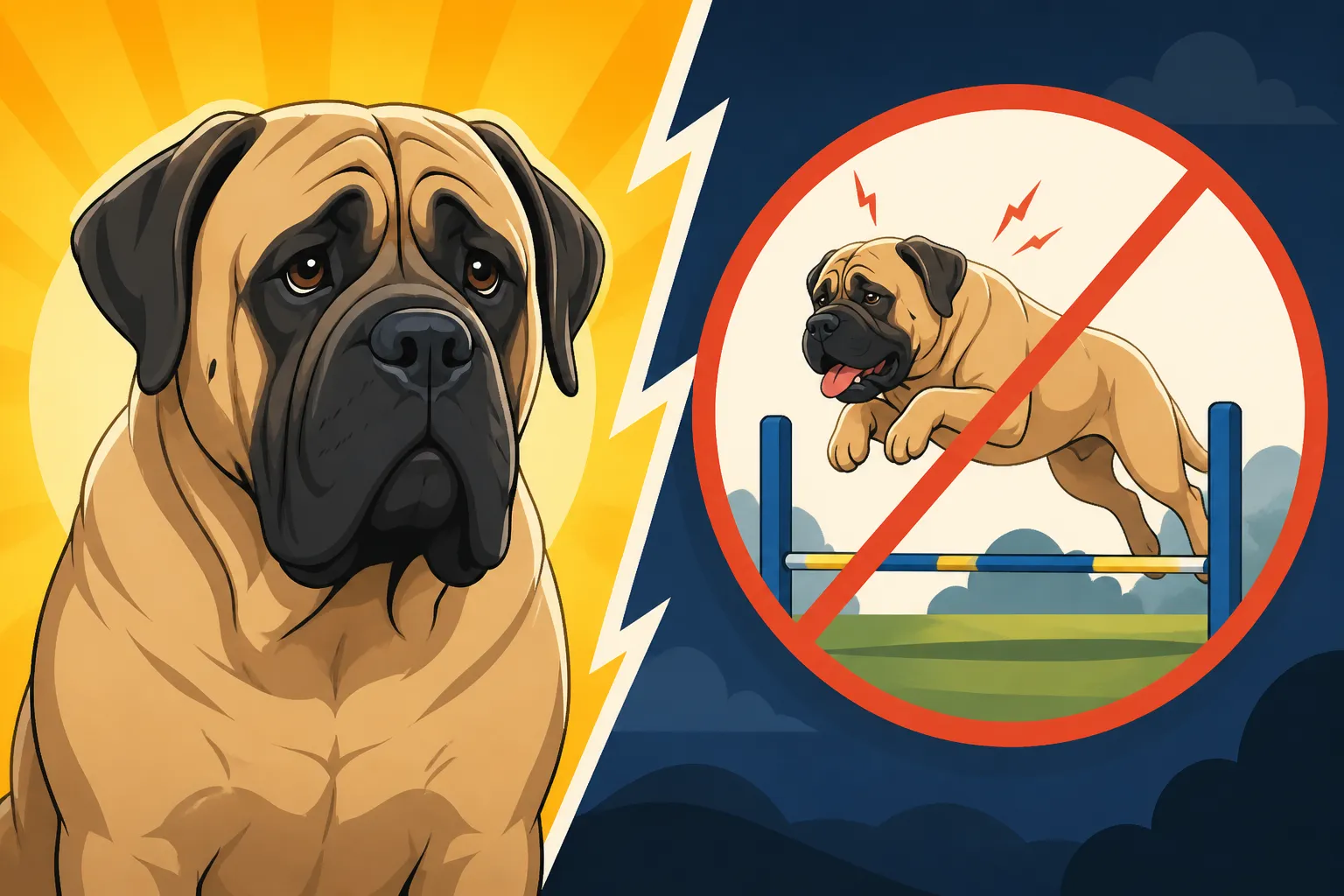
Why Agility Is Wrong for a Mastiff
As a Mastiff owner, you might sometimes look at those energetic agility dogs zipping through tunnels and over jumps and wonder if your gentle giant could ever do something similar. It's a natural thought, given how smart and eager to please our big dogs can be. However, the reality is that agility, with its intense demands for speed, sharp turns, and high-impact jumps, is fundamentally ill-suited for the Mastiff breed due to their unique physiology and inherent health vulnerabilities. This guide will delve into why agility poses significant risks for Mastiffs and explore activities that are truly beneficial for their well-being.
The Mastiff's Unique Physique and Its Impact on Agility
Mastiffs are magnificent, awe-inspiring dogs, but their very grandeur is what makes many strenuous activities, including agility, potentially harmful. Their massive bone structure, sheer body weight, and deliberate movement style are not built for the quick bursts and acrobatic feats that agility demands.
Immense Size and Weight: A Recipe for Stress
Imagine a professional weightlifter trying to compete in gymnastics. That's a bit like asking a Mastiff to do agility. These dogs are among the heaviest breeds, with many males easily topping 200 pounds and even females being substantial. This immense body mass creates incredible pressure on their joints, ligaments, and soft tissues with every step, let alone every jump or sudden stop. When a dog of this size lands from a jump or pivots sharply, the forces exerted on their elbows, hips, and spine are tremendous. These are forces that breeds like Border Collies or Shelties, which excel in agility, simply do not contend with. Their lighter, more athletic builds are designed for explosive movements and quick recovery, something a Mastiff's frame is simply not engineered to do without significant risk of injury.
Slower Reflexes and Deliberate Movement
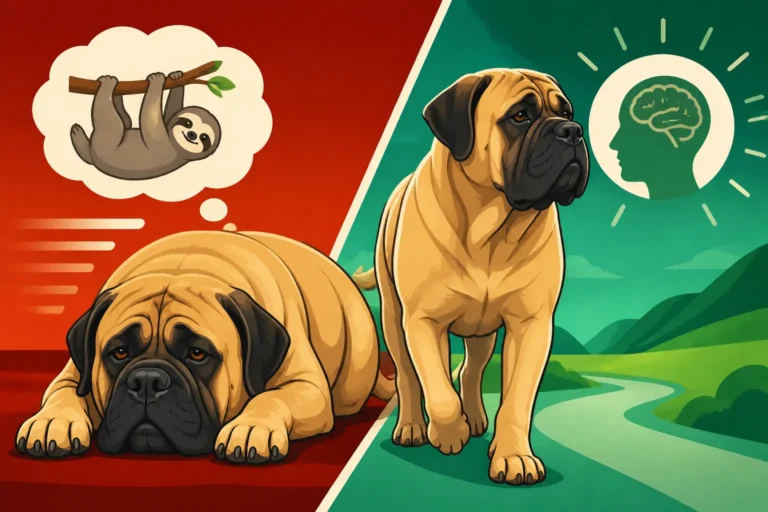
Mastiffs aren't "slow" because they're unintelligent; they're deliberate. There's a huge difference. Their brain works quickly, but their massive body needs more time to process and execute movements. A Mastiff naturally approaches tasks with a thoughtful, measured pace. This inherent characteristic means they lack the lightning-fast reflexes and instinctive agility that allow smaller, more spry breeds to navigate obstacle courses with grace and speed. Asking a Mastiff to suddenly accelerate, twist through a tunnel, or quickly change direction after a jump goes against their very nature and puts undue strain on their musculoskeletal system. It's like trying to turn a supertanker on a dime – it’s just not how they're built to operate. Their body mechanics are designed for powerful, sustained movement, not quick, dynamic shifts.
High-Impact Activities and Long-Term Health Risks
The biggest concern with agility for Mastiffs isn't just the immediate risk of a sprain or strain, but the compounding effect of high-impact activities on their long-term joint health. Mastiffs are already predisposed to several debilitating orthopedic conditions, and repetitive stress only accelerates their onset and severity.
Joint Dysplasia and Arthritis: An Ever-Present Threat
If you've spent any time researching Mastiffs, you'll know that hip and elbow dysplasia are unfortunately common issues in the breed. Why a Mastiff's Hips Fail Under Its Own Weight is a serious concern, as their joints are under constant strain just supporting their everyday bulk. When you add the concussive forces of jumping over hurdles, weaving through poles, or scrambling up an A-frame, you're essentially accelerating the wear and tear on these already vulnerable joints. Each hard landing sends shockwaves through their cartilage and bone, intensifying inflammation and speeding up the degenerative process that leads to Arthritis in a Mastiff at Four or even earlier. While genetics play a significant role, environmental factors like high-impact exercise can drastically worsen these conditions, turning a manageable issue into chronic pain and greatly impacting their quality of life. We want our Mastiffs to move comfortably well into their golden years, and protecting their joints from unnecessary stress is paramount.
The Risk of Injuries: Sprains, Strains, and Worse
Beyond chronic conditions, acute injuries are a very real danger in agility for a Mastiff. Their sheer weight, combined with the often awkward angles and sudden movements required, makes them incredibly susceptible to soft tissue injuries. A quick turn can easily lead to a muscle strain, a pulled ligament, or even a rupture. Imagine a Mastiff landing slightly off-balance from a high jump, or catching a paw incorrectly in a weave pole. Whether a Mastiff Tears a Cruciate Ligament is not uncommon in active giant breeds, and the recovery from such a surgery on a dog weighing over 150 pounds is incredibly challenging, both physically for the dog and logistically for the owner. Fractures, while less common, are also a concern if a Mastiff takes a bad fall or misjudges an obstacle. The structural integrity of their limbs, while robust for their purpose, is not designed for the specific stresses of agility.
Mastiff Temperament and Training Considerations for Agility
It's not just about their bodies; a Mastiff's mind also operates differently than the typical agility superstar. While they are intelligent and capable of learning, their approach to training and their natural drive don't often align with the rapid-fire, high-energy environment of an agility course.
The Mastiff's Thoughtful Pace vs. Agility's Demands
Mastiffs are known for their calm, patient, and often philosophical demeanor. They are thinkers, observing the world and reacting with a measured response. The Stubbornness That Is Actually a Mastiff Thinking is often mistaken for defiance, but it's usually just their internal processing. They want to understand why they are doing something, not just do it because you said so, especially if it seems repetitive or without clear purpose from their perspective. This thoughtful approach clashes directly with the quick, instinctive decision-making required in agility. An agility course demands that a dog react instantly to cues, navigate complex sequences, and maintain speed without hesitation. A Mastiff might pause, consider the next obstacle, and then decide to approach it at their own speed, which simply won't work in a timed, high-stakes competition. Whether a Mastiff Is Slow or Deliberate is a key question here, and for agility, the latter is a disadvantage.
Motivational Differences and Training Approach
What lights up a Border Collie for agility might barely register with a Mastiff. High-pitched praise and a frantic game of tug might be enough for some breeds, but Mastiffs often thrive on different forms of motivation. They respond best to positive reinforcement, gentle guidance, and tasks that feel meaningful. What Actually Motivates a Mastiff often involves a quiet connection, food rewards, or satisfying their desire to be close to their people. The constant, repetitive drilling needed to build speed and accuracy for agility can quickly lead to disengagement in a Mastiff. Whether a Mastiff Gets Bored of Drilling is a real consideration; they're not typically built for endless repetition of physically demanding tasks if the reward isn't compelling enough or the activity feels pointless. Their sensitive nature also means that any pressure or frustration from a handler during a complex agility sequence could set them back significantly, as Whether Positive Training Alone Works on a Mastiff is usually the best approach for this gentle giant.
Safer and More Suitable Activities for Your Mastiff
So, if agility is off the table, what can you do with your magnificent Mastiff? Plenty! The key is to choose activities that respect their size, build, and temperament, focusing on low-impact exercise, mental stimulation, and bonding.
Low-Impact Exercise and Mental Stimulation
Mastiffs certainly need exercise, but it should be appropriate for their large frame. Regular, moderate walks are fantastic for them, allowing them to stretch their legs without excessive pounding. Think a leisurely stroll around the neighborhood or a gentle amble through a park, not a vigorous hike. Swimming can be an excellent low-impact option if your Mastiff enjoys water and can access it safely; it builds muscle without stressing joints. Whether a Mastiff Should Swim for Its Joints is often a yes, but ensure the entry and exit are easy.
Mental stimulation is just as crucial as physical exercise for these intelligent dogs. Puzzle toys, interactive feeders, and scent work are perfect. Activities like Scent Work as a Mastiff's Low Impact Sport tap into their natural instincts and provide a wonderful mental workout without any physical strain. You can hide treats around the house or yard and let them use their powerful noses to find them. This kind of activity engages their minds, builds confidence, and reinforces the bond between you without ever asking them to jump a hurdle.
Canine Good Citizen and Therapy Work
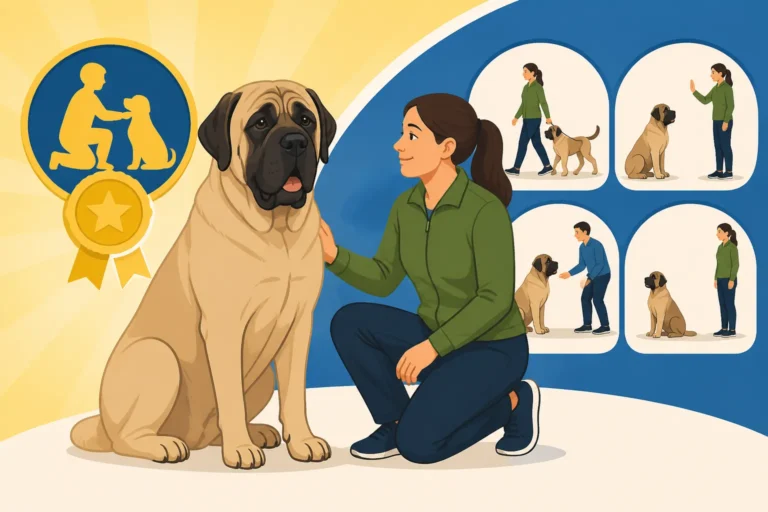
Mastiffs truly shine in roles that leverage their calm, gentle, and empathetic nature. Achieving a Canine Good Citizen (CGC) title is an excellent goal, focusing on basic manners, leash skills, and public behavior. Programs like those offered by BAXTER & Bella can provide structured online training resources to help you and your Mastiff work through these foundational skills at your own pace, right from the comfort of your home. They understand the need for clear communication and positive reinforcement, which aligns perfectly with a Mastiff's learning style.
Furthermore, many Mastiffs make exceptional therapy dogs. The Mastiff as a Therapy Dog highlights how their imposing yet comforting presence can bring immense joy and solace to people in hospitals, nursing homes, or schools. Their quiet dignity and affectionate disposition are truly their superpowers. These activities celebrate the Mastiff for who they are – loving, gentle companions – rather than trying to fit them into a mold that's physically and temperamentally wrong for them. Getting a Mastiff Through the Canine Good Citizen Test is a rewarding journey that prepares them beautifully for such a role.
Importance of Appropriate Gear
Regardless of the activity, ensuring your Mastiff has the right gear is critical for their comfort and safety. For walks, a well-fitting, supportive harness that distributes pressure evenly across their chest, rather than their neck, is ideal. For their downtime, which is considerable, an orthopedic dog bed is an absolute necessity. Given their weight, a cheap, flimsy bed will flatten quickly, offering no support. Look for high-density foam or memory foam options, readily available on platforms like Amazon, that can genuinely cushion their joints. What an Orthopedic Bed for a Mastiff Costs might seem like a lot, but it's an investment in their long-term comfort and health, preventing pressure sores and giving them a supportive place to rest their massive bodies. Think about a bed in every room where your Mastiff likes to lie down to ensure they always have that crucial support.
| Activity Type | Suitability for Mastiffs | Why It Works/Doesn't Work |
|---|---|---|
| Agility | Very Poor | High-impact jumps, sharp turns, speed demands stress heavy joints, risk acute injury, clashes with deliberate temperament. |
| Long Walks | Good (Moderate) | Excellent for general fitness and mental stimulation, but keep pace leisurely; avoid excessive distances or hard surfaces. |
| Swimming | Excellent (Supervised) | Low-impact muscle building, excellent for joint health. Ensure easy entry/exit and monitor for overheating. |
| Scent Work | Excellent | Mentally stimulating, taps natural instincts, zero physical impact. Can be done indoors or outdoors. |
| Obedience/CGC | Excellent | Builds communication, manners, and confidence. Focuses on positive reinforcement and thoughtful engagement. |
| Therapy Work | Excellent | Leverages their calm, gentle temperament for community service. Low physical demand, high emotional reward. |
| Weight Pull | Very Poor | While powerful, this sport places extreme stress on joints, spine, and heart, exacerbating genetic predispositions to orthopedic issues. |
| Intense Fetch | Poor | Repetitive hard stops, starts, and jumps can quickly damage joints, especially on a large, heavy dog. Short, gentle retrieves might be okay on soft ground. |
| Hard Running | Poor (especially puppies) | Especially for growing puppies, Why a Mastiff Puppy Must Not Be Exercised Hard is critical. Even adults, their heavy frames are not built for sustained high-speed running over various terrains. |
Ultimately, our goal as Mastiff owners is to provide them with a full, happy, and healthy life. This means choosing activities that align with their inherent strengths and protect their vulnerabilities, ensuring they can enjoy many years as our cherished, gentle giants.
Disclaimer
This article is for general informational purposes only and does not constitute professional advice. Laws, prices and regulations vary by location and change over time. Consult a qualified professional for guidance on your specific situation.