How Deep a Mastiff’s Bark Is
One of the most common questions I get from people considering a Mastiff, or even just curious about these gentle giants, is about their bark. Many envision a booming, earth-shaking sound that would shatter windows, simply because of their immense size. The reality is far more nuanced, and often, much quieter than you'd expect. If you're wondering how deep a Mastiff's bark is, and more importantly, how often you'll actually hear it, you've come to the right place. This guide will delve into the powerful, yet often reserved, vocalizations of these magnificent dogs, helping you understand what to expect from your own Mastiff's voice.
The Resonant Sound of a Mastiff's Bark
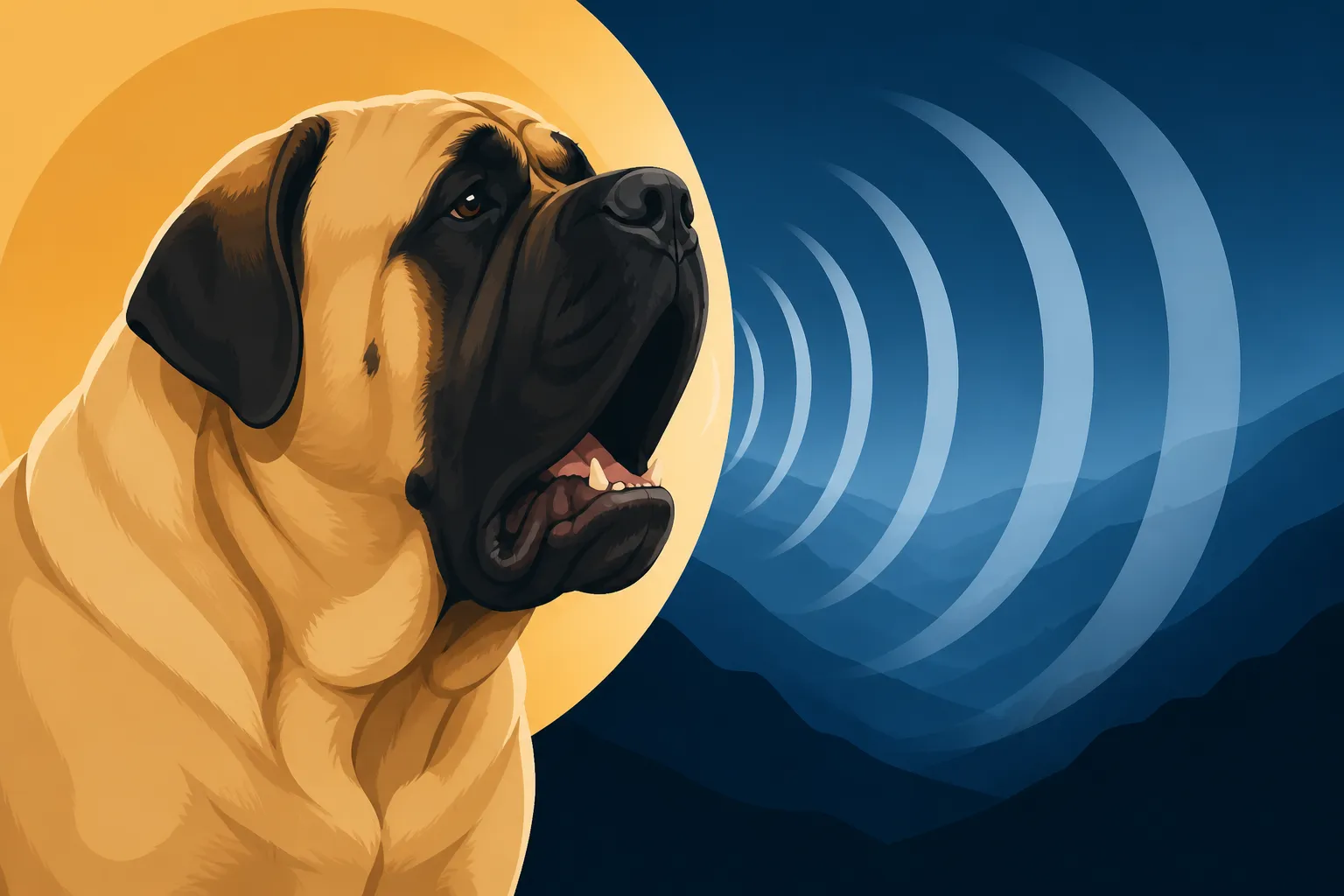
When a Mastiff does decide to vocalize with a bark, it's rarely a high-pitched yap or a frantic series of yips. Instead, it’s a deep, resonant sound that vibrates through the air, reflecting the sheer size and power of the dog producing it. Think of it less as a sharp crack of thunder and more like a low, rolling rumble that commands attention without necessarily being deafeningly loud. It's a sound that says, "I am here," with undeniable authority.
This deep bark is often surprising to new owners, not just for its low frequency, but for its infrequent appearance. Many expect a dog of this magnitude to be constantly making noise, but Mastiffs are generally quite calm and quiet, saving their powerful voice for moments they deem truly important. It's a vocalization that carries weight, both literally and figuratively, making you sit up and take notice when it does occur.
The Physical Anatomy Behind the Deep Tone
The depth of a Mastiff's bark isn't just a matter of character; it's a direct result of their unique physical anatomy. Consider their massive chests, which are among the deepest of any breed. These expansive chests house large lungs, allowing for significant air displacement with each vocalization. The sheer volume of air pushed through their vocal cords contributes directly to the low, rumbling frequency of their bark.
Beyond lung capacity, their vocal cords themselves are larger and thicker than those of smaller breeds. Imagine the difference between the strings on a ukulele and those on a double bass; the larger, thicker strings produce a much deeper tone. Similarly, a Mastiff’s substantial vocal apparatus is built to create a sound that resonates with gravity and power. This physiological makeup ensures that when a Mastiff barks, it’s not just a noise, but a profound statement that emanates from their very core.
More of a Rumble Than a Racket
Despite the potential for a truly commanding sound, most Mastiffs are not inclined to be noisy. In fact, many Mastiff owners will tell you that their dogs are remarkably quiet, preferring to observe and assess rather than react vocally to every little stimulus. You’re far more likely to hear a Mastiff sighing dramatically as they settle onto their bed, or let out a soft "woof" to get your attention for a belly rub, than you are to hear an insistent, yappy bark.
This characteristic quietness is a hallmark of the breed's temperament. They are watchful guardians, yes, but they are not prone to frantic alarm barking. Their presence alone often acts as a deterrent, and they understand this implicitly. A single, deep bark from a Mastiff is often all that's needed to communicate a message, whether to a perceived intruder or to a squirrel daring to cross the yard. How Rarely a Mastiff Barks is a testament to their thoughtful nature.
When and Why a Mastiff Chooses to Bark
Mastiffs are not dogs that bark just for the sake of it. Their vocalizations are typically intentional, serving a specific purpose within their world. Understanding these triggers is key to appreciating their communication style and managing their behavior, should a rare barking spree occur. It’s never just random noise with a Mastiff; there’s always a reason, even if it seems trivial to us.
Their barks are usually reserved for situations where they feel a need to alert their family or assert their presence. This might be in response to an unfamiliar sound outside, a perceived threat, or even a strong desire to communicate something important to you. They are not prone to being easily startled or overreacting, which contributes greatly to their generally quiet demeanor indoors.
Alerting to Perceived Threats (True Guarding)
The most common reason a Mastiff barks is in their role as a guardian. This isn't aggressive barking in the typical sense, but rather an authoritative declaration of their presence and their awareness of a situation. If an unfamiliar car pulls into the driveway, a delivery driver approaches the door, or a strange noise is heard outside, a Mastiff might let out a deep, resonant bark. This bark serves as an announcement: "I see you, I hear you, and I am here."
Their guarding instinct is innate, a deeply ingrained part of their heritage. They don't need extensive training to understand this role; it simply is. This kind of bark is usually distinct – often a single, powerful "woof" or a series of low, deliberate barks, not a frenzied chorus. It's meant to deter, not invite a confrontation. If you've ever wondered What a Mastiff Does When Someone Knocks, their deep bark is often the first line of defense, a warning that a formidable presence is within.
Expressing Emotion or Seeking Attention
While less common than alert barking, a Mastiff might also use its deep voice to express emotions or seek attention. In moments of play, especially with familiar people or dogs, you might hear a low, rumbling "play bark" that sounds more like a growl but is clearly communicated as joyous and inviting. This is often accompanied by exaggerated body language, like a play bow or a wagging tail.
However, incessant barking for attention is rare for a Mastiff. If they want your attention, they're more likely to lean against you with their immense weight, nudge your hand with their massive head, or offer a gentle but insistent groan. If a Mastiff is barking for attention, it might signal an underlying need or frustration, such as needing to go outside or perhaps a sign of discomfort. Sometimes, if left alone for too long, a Mastiff experiencing Separation Anxiety in a Mastiff might vocalize, though this is often more mournful than aggressive barking. It's always worth investigating the context.
Managing and Understanding Mastiff Barking Behavior
While Mastiffs are generally quiet, no dog is completely silent. There will be times when your Mastiff barks, and understanding how to manage this behavior is crucial, especially given their size and the impact their deep voice can have. The goal isn't to silence them completely, but to ensure their vocalizations are appropriate and not excessive.
Effective management often comes down to understanding the root cause of the bark and then applying consistent, positive training methods. A well-adjusted Mastiff who feels secure in its role and understands your expectations will naturally be a calmer, quieter companion.
Deciphering the Bark's Intent
The first step in managing any barking is to understand why your Mastiff is barking. Is it a single, resonant bark when a car passes by, signaling an alert? Or is it a more insistent series of barks directed at you, indicating a desire for something specific? The context, pitch, and duration of the bark are all clues. A low, slow series of barks might indicate a perceived threat, while a slightly higher-pitched, excited bark could be an invitation to play.
Observing your dog's body language alongside their vocalization is incredibly important. Are their ears forward, body stiff, and tail held high? That might be a guarding bark. Are they wiggly, tail wagging, and looking at you expectantly? That's likely an attention-seeking bark. Learning to "read" your Mastiff's cues will help you respond appropriately and avoid reinforcing unwanted barking behaviors. How a Mastiff Judges a Stranger at the Door will often manifest with a specific type of bark accompanied by very clear body language.
Training for Appropriate Vocalization
Even naturally quiet Mastiffs benefit from training around vocalization. Teaching "speak" and "quiet" commands early on can be incredibly useful. Use positive reinforcement to reward your Mastiff for barking on command, and then immediately for being quiet when you give the "quiet" cue. This helps them understand that barking is a behavior they can control, and that being quiet is also rewarding.
Training platforms like BAXTER & Bella offer excellent online resources that can guide you through these commands with giant breeds in mind. Consistency is paramount. Every family member should use the same cues and rewards. If your Mastiff barks at the doorbell, for instance, you can practice by having someone ring the bell, asking for a "speak" (one bark), then immediately a "quiet," rewarding heavily for the desired response. Remember, Positive Training Alone Works on a Mastiff because of their sensitive nature and desire to please.
Tools and Strategies for Quieter Living
Beyond direct training, there are several strategies and tools that can help promote a quieter home environment for your Mastiff. For an alert barker, managing visual stimuli can make a big difference. Heavy curtains or window film can block views of passing pedestrians or cars that might trigger a bark. For dogs who react to sounds, background noise like a radio or white noise machine can sometimes mask external triggers.
Enrichment is also crucial. A bored Mastiff might be more prone to vocalize. Provide plenty of puzzle toys, especially durable ones found on platforms like Amazon, that challenge their minds and keep them engaged. Regular, appropriate exercise (remembering not to over-exercise a Mastiff puppy) also helps. For situations like guests arriving, sometimes a temporary management strategy, such as having your Mastiff settle in their crate with a long-lasting chew toy, can prevent excessive barking. Whether a Mastiff Should Be Crated When Guests Arrive isn't about punishment, but about managing their excitement and providing them a calm space.
The Mastiff Bark Compared to Other Breeds
When discussing the depth of a Mastiff's bark, it's natural to compare it to other breeds. While the absolute volume of their bark might not always be the highest, its characteristic low frequency and resonant quality make it uniquely impactful. It's not just about how loud it is, but how it feels and how it's perceived.
Understanding these comparisons helps solidify the Mastiff's reputation as a formidable, yet often surprisingly reserved, vocalizer. Their bark is a statement, not a constant stream of noise, setting them apart from many other dogs.
Volume vs. Depth
It's a common misconception that a big dog automatically has the loudest bark. While a Mastiff's bark is certainly powerful, it's the depth and resonance that truly define it, rather than simply decibels. A small terrier, with its sharp, high-pitched barks, might actually seem louder or more piercing in certain environments because of the frequency at which it registers in the human ear. A small dog's bark might cut through a conversation, while a Mastiff's deep boom might vibrate through the floorboards.
Imagine the difference between a high-pitched siren and a deep foghorn. Both are attention-grabbing, but they create entirely different sensations. The Mastiff's bark is like that foghorn – it carries weight and gravity, signaling presence and authority rather than frantic alarm. This means that while a Mastiff's bark might make your windows rattle slightly, it's unlikely to be the kind of continuous, high-volume noise that drives neighbors to distraction in the same way a smaller, yappier breed might.
The Intimidation Factor of a Deep Bark
One of the most significant aspects of a Mastiff's deep bark is its inherent intimidation factor. This isn't about aggression, but about the sheer psychological impact of such a profound sound. When a deep, guttural bark emanates from a shadow or from behind a closed door, it immediately conjures an image of immense power and size, even if you haven't seen the dog yet. This is often all that's needed to deter an unwelcome visitor.
Coupled with their massive physical presence, this deep bark acts as a powerful deterrent. An intruder hearing that low rumble knows they are dealing with a serious animal, one that is not to be trifled with. For this reason, many Mastiff owners find that their dogs don't need to be overtly aggressive to be effective guardians; their size and the sound of their voice are often enough. Whether a Mastiff Deters an Intruder by Size Alone is strongly supported by the sheer power of their vocalization, even if they only bark once or twice. It sends a clear message, making them excellent, if often silent, protectors.
| Bark Characteristic | Mastiff | Small Terrier (e.g., Jack Russell) |
|---|---|---|
| Primary Frequency | Deep, Low | High, Piercing |
| Resonance | High, Vibrating | Low, Sharp |
| Typical Use | Alerting, Guarding, Low-key communication | Alarm, Attention, Excitement, Reactivity |
| Overall Volume | Can be loud, but impact is from depth | Can be loud, often perceived as shrill |
| Frequency of Barking | Generally infrequent, selective | Can be frequent, reactive |
| Psychological Impact | Authoritative, Deterrent, Commanding | Startling, Annoying, Demanding |
Disclaimer
This article is for general informational purposes only and does not constitute professional advice. Laws, prices and regulations vary by location and change over time. Consult a qualified professional for guidance on your specific situation.