How Two Male Mastiffs Work Out Rank
Bringing two male Mastiffs into the same home, or even just having them interact regularly, can feel like you're setting up a gladiatorial arena. It's a common worry for owners of these magnificent giants: how do you manage the natural instinct for dominance and hierarchy when each dog is over a hundred pounds of pure, opinionated muscle? This guide will walk you through understanding, introducing, and peacefully managing the dynamic between two male Mastiffs.
Understanding Male Mastiff Dynamics
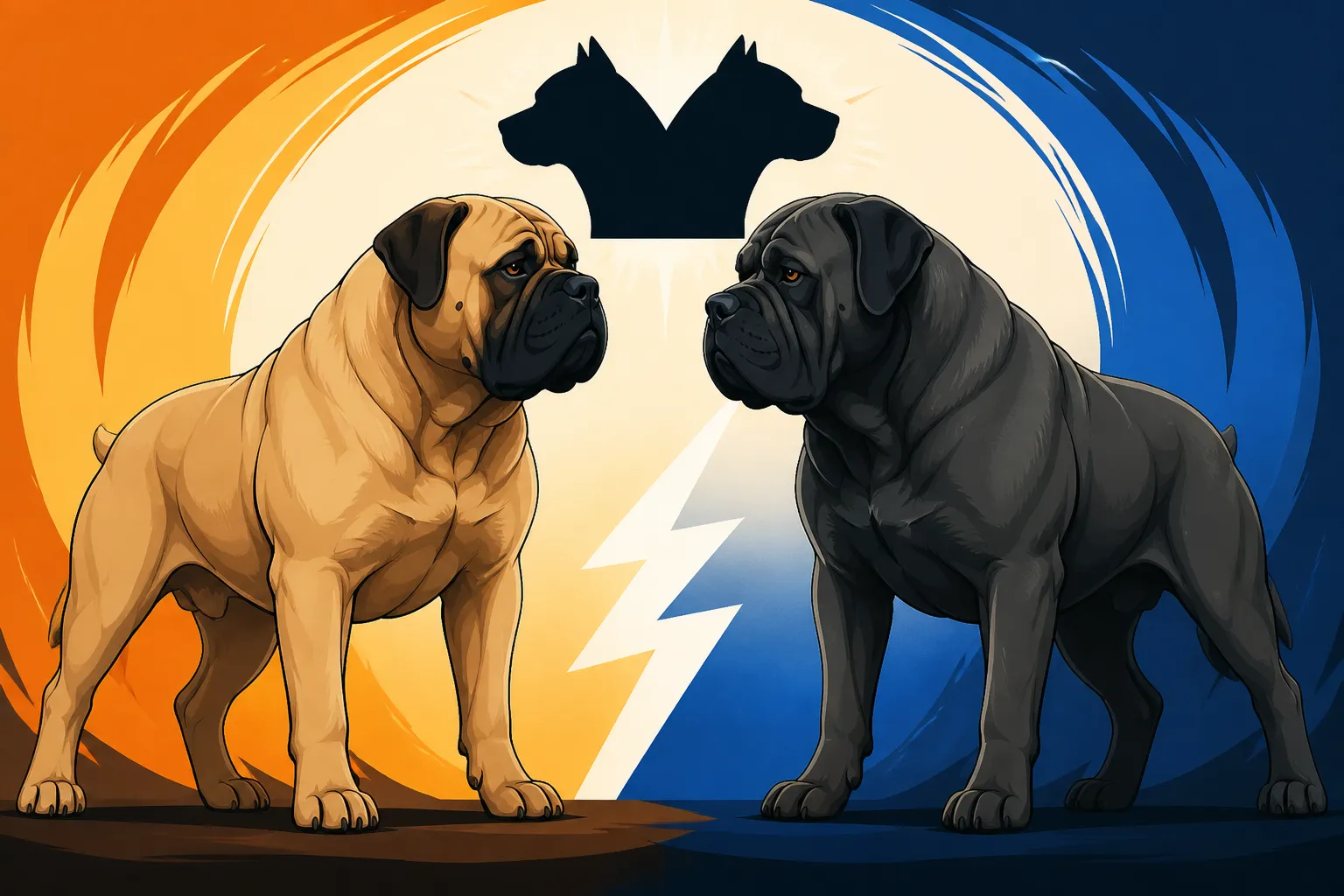
When you picture a Mastiff, you might think of a gentle giant, a laid-back couch potato. And while that's often true for their overall demeanor, when it comes to same-sex interactions, especially with males, ancient instincts can rise to the surface. It's not about aggression in the vicious sense, but rather a deep-seated drive to establish who's in charge, who gets first dibs on the best sleeping spot, or who gets to greet you first.
The Nature of Mastiff Temperament
Mastiffs are known for their calm, protective, and often rather stoic nature. They aren't typically a highly reactive or outwardly aggressive breed, which can sometimes lull owners into a false sense of security when it comes to social dynamics. However, underneath that calm exterior lies a powerful dog with strong instincts. They are territorial and possessive of their family and property. When another male, especially one of similar stature and confidence, enters their sphere, it can trigger a quiet but firm need to define boundaries. They don't usually engage in flashy displays of aggression like smaller, more excitable breeds might; instead, their dominance might manifest as a stiff body, a low growl that vibrates through the floor, or a persistent block of space.
For many Mastiff owners, the biggest struggle isn't a dramatic fight, but a constant low-level tension or subtle power play that wears everyone down. It's about navigating that deep-seated need for order in their world without it boiling over into something more serious. A lot of these dynamics start early, so understanding The First Year With a Mastiff Puppy That Doubles in Size can be helpful in setting the stage for future interactions.
Instinctual Pack Behavior vs. Domestic Life
In a wild pack, hierarchy is crucial for survival. It determines access to food, mates, and safe resting places. While our domestic Mastiffs are far removed from truly wild canids, these instinctual drives still exist, albeit often softened and reshaped by centuries of selective breeding and living alongside humans. When two male Mastiffs live together, they will naturally seek to establish a pecking order. This isn't necessarily a bad thing; a clear hierarchy can actually lead to a more stable and less anxious household, as both dogs understand their roles. The problem arises when this hierarchy is unclear, or when one or both dogs are unwilling to accept a subordinate role.
The challenge in a domestic setting is that we often inadvertently interfere with this natural process, or we project human ideas of "fairness" onto what is, for dogs, a biological imperative. This isn't about one dog being "mean" or the other being "weak." It's about a negotiation that, left unchecked, can lead to serious conflict. Understanding this fundamental difference between human and canine social structures is the first step toward successful management.
Factors Influencing Hierarchy
Several factors can influence how two male Mastiffs work out their rank. Age, size (though most Mastiffs are big, there can still be subtle differences), previous socialization experiences, and even individual personalities play a significant role. A younger, more confident male might challenge an older, established resident. An intact male will often have stronger drives to assert dominance than a neutered one, though neutering isn't a magic bullet. Some Mastiffs are naturally more assertive, while others are more laid-back and conflict-averse.
The way you, as the human leader, manage resources and interactions also heavily influences this dynamic. Providing equal resources, separate spaces when needed, and consistent training are critical. Things like feeding routines and walk schedules can unwittingly become points of contention if not handled carefully. Consider how Teaching a Mastiff Before It Outweighs You plays a role here, as early, consistent training can help you establish your leadership.
Signs of Dominance and Subordination
It’s not always obvious when two Mastiffs are sorting out their hierarchy. They aren't likely to engage in the fast, flashy skirmishes you might see between smaller, more excitable breeds. Instead, their communication is often slow, deliberate, and sometimes even looks like simple posturing. But missing these subtle cues can lead to misunderstandings or, worse, an unexpected escalation.
Subtle Communication Cues
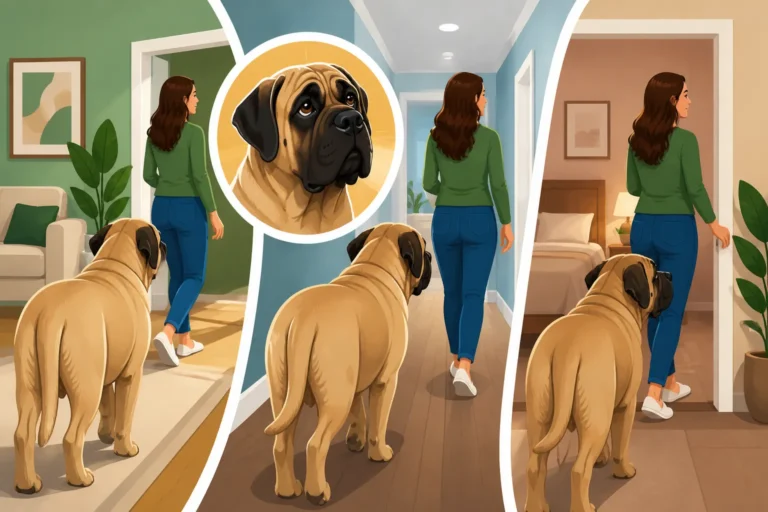
Mastiffs are masters of subtle communication. You might notice a dominant male standing stiffly, making himself appear larger, or holding direct eye contact. He might block the other dog from entering a room or passing through a doorway. There could be a slight lowering of the head, a slow tail wag that's more of a sway than a happy wag, or even a deliberate lean into the other dog's space, using their massive weight to assert their presence. The subordinate dog, on the other hand, might avert its gaze, offer a quick lip lick, lower its body, or try to create distance. Sometimes, the less dominant dog will simply avoid conflict, retreating to another room or lying down with a sigh.
These cues are often so subtle that new Mastiff owners, or those unfamiliar with canine body language, might miss them entirely. Yet, these small interactions are the building blocks of their social order. Ignoring them won't make them go away; it just means the dogs might feel the need to escalate their communication to be understood. Knowing The Sensitivity Nobody Expects in a Two Hundred Pound Mastiff can help you tune into these quieter signals.
Escalating Behaviors
If subtle cues aren't enough to establish rank, behaviors can escalate. This still doesn't always mean a full-blown fight. Instead, you might see more overt displays such as sustained staring, a low growl that rises in pitch or intensity, a baring of teeth (often a silent, almost "snarl-lip" rather than a full snarl), or a direct physical challenge like body-slamming or shoulder-to-shoulder pushing. Resource guarding, discussed below, is a major trigger for escalation. One dog might stand over a toy, bed, or even a particular person, daring the other to approach.
The crucial thing with Mastiffs is their sheer power. What might be a minor tussle between two terriers can cause serious injury between two large males. Therefore, it's paramount to intervene before these escalating behaviors reach a critical point. This often means separating them, redirecting their attention, or removing the contested resource.
Resource Guarding and Territory
Resource guarding is one of the most common and dangerous manifestations of rank disputes between male Mastiffs. This isn't just about food bowls; it can extend to toys, beds, favorite resting spots, access to you (their human), and even specific areas of the house or yard. A dominant Mastiff might stand over his food bowl even when he's finished, simply to prevent the other from getting near it. He might growl if the other dog approaches his bed.
Territoriality also plays a big part. An established male might view the entire house as his domain and perceive a new male as an intruder. He might block doorways or stand guard over "his" people. Managing these situations requires clear rules and diligent supervision. Never leave food bowls down for extended periods, provide plenty of high-value toys for each dog, and ensure everyone has their own dedicated, safe space. For larger items like beds or crates, consider durable options available from retailers like Amazon that can withstand the wear and tear of two giant dogs.
| Behavior | Dominant Dog's Role | Subordinate Dog's Role | Your Intervention Strategy |
|---|---|---|---|
| Stiff Body / Direct Stare | Initiate or maintain eye contact, tense posture | Avert gaze, lip lick, turn head | Redirect attention, break eye contact, create distance |
| Blocking Pathways | Stands in a doorway, restricts movement | Waits, attempts to detour, sighs | Assert human leadership, guide dominant dog away, use verbal cues |
| Low Growl / Lip Curl | Warning, asserting ownership | Retreat, whimper, look nervous | Identify trigger, remove resource, separate dogs |
| Mounting / Pushing | Physical assertion, testing boundaries | Tries to disengage, submits | Immediately separate, interrupt behavior, redirect energy |
| Resource Guarding | Stands over toy/food, growls | Avoids, tries to sneak, gives wide berth | Remove high-value items when unsupervised, feed separately |
| Leaning | Uses weight to displace or control space | Shifts weight away, tolerates reluctantly | Create personal space for each, teach 'place' command |
Introducing Two Male Mastiffs Safely
Introducing two large, powerful male dogs requires a calm, deliberate, and controlled approach. Rushing things or hoping they'll "just sort it out" can lead to serious consequences. The goal is a gradual, positive introduction that minimizes stress and potential conflict.
Neutral Territory First Meetings
Never introduce two male Mastiffs directly in one of their homes. This immediately puts the resident dog on high alert, as his territory is being invaded. Instead, choose truly neutral ground – a quiet park, an empty parking lot, or a friend's large, fenced yard that neither dog has visited before. Both dogs should be walked separately beforehand to burn off some energy and eliminate tension. They should approach each other on parallel walks, initially keeping a good distance.
Keep initial interactions very short and positive. The focus should be on calm co-existence, not immediate friendship. Leashes should be loose, but you need to be prepared to gently guide them apart if tension arises. A helpful tip is to walk them side-by-side with a person between them, so they can get used to each other's presence without direct confrontation. This takes time, often several sessions over days or weeks, gradually decreasing the distance between them.
Leash Management and Supervision
During these early stages, and often for a significant period after, vigilant leash management and supervision are non-negotiable. Both dogs should be on separate, sturdy leashes handled by separate, confident adults. Never tie them together or allow them off-leash in an uncontrolled environment until you are absolutely certain of their compatibility, and even then, only in secure, private spaces. A front-clip harness or head halter can offer better control without causing pain, which is especially important for Mastiffs whose necks are powerful. You want to be able to guide them away from potential conflict, not just pull them back.
Even when they seem to be getting along, always supervise their interactions closely. This means no leaving them alone together, even for a quick trip to the mailbox. Pay attention to those subtle cues we discussed earlier. If you see signs of tension, intervene calmly and redirect their attention. One resource that can be invaluable for consistent training and guidance on leash work, particularly with large breeds, is an online training program like BAXTER & Bella, which offers structured approaches to handling dogs in various situations.
Gradual Integration and Separate Spaces
Once they've shown calm acceptance in neutral territory, you can start bringing them into the home, but always with a barrier initially. This could be a sturdy baby gate or a crate. Allow them to see, smell, and hear each other without direct physical contact. Rotate them through different areas of the house so they can explore each other's scents. When they are together in the same room, keep interactions short, supervised, and positive. Reward calm behavior with praise and treats.
It is absolutely vital that each male Mastiff has his own designated safe space – a crate, a specific bed in a quiet room, or an area behind a gate where he can retreat and be undisturbed. This minimizes resource guarding and allows them to decompress. Feed them separately, in different rooms or securely crated. Provide separate water bowls, toys, and sleeping areas. These separate spaces aren't just for conflict prevention; they also reduce stress and give each dog a sense of security and ownership over their personal zone. Remember, How Long a Mastiff Copes Alone can vary greatly depending on their individual personality and how well they've adjusted to their environment and housemates.
Managing Established Male Mastiff Households
Even after your male Mastiffs have established their pecking order and seem to coexist peacefully, ongoing management is essential. Their dynamic isn't static; it can shift with age, health changes, or new stressors. Maintaining a stable, predictable environment is key to long-term harmony.
Maintaining a Stable Environment
Routine is a Mastiff's best friend. Consistent feeding times, walk schedules, and interaction patterns help reduce anxiety and uncertainty, which can be triggers for conflict. When dogs know what to expect, they are generally calmer and less likely to challenge the status quo. Avoid sudden changes in their environment or routine if possible. If changes are necessary, introduce them gradually. Ensure both dogs receive equal attention, affection, and exercise (within the appropriate limits for Mastiffs, considering The Walk Length That Damages a Mastiff Puppy and Why One Hour a Day Is Enough for a Mastiff). Unequal treatment can breed resentment and lead to challenges for dominance.
Provide plenty of high-value, durable chew toys and rotate them regularly to keep them interesting. Again, make sure there are always more toys than dogs to prevent guarding. Having multiple large, comfortable beds in different locations around the house, some possibly sourced from Amazon for variety and durability, ensures each dog can find a comfortable, personal space without infringing on the other.
Addressing Triggers and Preventing Conflict
The most effective way to manage a multi-male Mastiff household is to proactively identify and avoid potential triggers for conflict. Common triggers include:
- Arrival of guests: Some Mastiffs become more protective and assertive when strangers are present.
- High-value treats or toys: Always give these separately or at a distance.
- Attention from owners: Ensure you spend individual time with each dog, and when together, share affection equally.
- Narrow spaces: Hallways, doorways, and tight corners can create unavoidable close contact and tension.
- Excitement: Over-arousal, such as during playtime or after a long period of confinement, can lead to misdirected aggression.
If you know a situation is likely to cause tension, manage it. Put one dog in a crate or a separate room when guests arrive, or when you're giving a special treat. Never leave them unsupervised with things they might fight over. Learn to read their body language instantly so you can step in at the first sign of trouble, before it escalates.
The Role of the Human in the Hierarchy
You, the human owner, are the ultimate leader of the pack, regardless of what the dogs decide amongst themselves. Your consistency, fairness, and calm assertiveness are paramount. If you don't provide clear leadership, the dogs will naturally try to fill that void, leading to greater instability and potential conflict. This means:
- Establishing rules: Both dogs must follow the same rules, consistently enforced by everyone in the household.
- Controlling resources: You decide when and where food, toys, and attention are given.
- Intervening calmly: If a conflict begins, separate them without yelling or punishing. Your goal is to de-escalate, not add to the tension.
- Training reinforcement: Continue with basic obedience training for both dogs. Commands like "stay," "leave it," and "place" are invaluable for managing their interactions.
A strong, positive relationship with each dog individually, built on trust and clear communication, will naturally solidify your role as the benevolent leader. It's often said that Why Harsh Correction Ruins a Mastiff because of their sensitive nature, so positive reinforcement and clear boundaries are much more effective than punishment.
When to Seek Professional Help
There are times when even the most dedicated Mastiff owner needs an outside perspective and specialized expertise. Recognizing these moments is crucial for the safety and well-being of both your dogs and your family.
Recognizing Unsafe Situations
If you observe any of the following, it's a clear signal that you need professional help:
- Frequent or severe fights: Any physical altercation that results in injury, no matter how minor, is a red flag.
- Persistent tension: A constant state of low-level stress, growling, or posturing that doesn't resolve itself.
- Fear or anxiety in one or both dogs: If one dog is consistently hiding, showing extreme submissive behaviors, or developing new anxieties, it indicates a problem.
- Aggression directed at humans: If either Mastiff starts showing aggression towards family members, even in resource guarding situations, professional intervention is urgent.
- Inability to manage: If you feel overwhelmed, fearful of your dogs, or simply unable to control their interactions despite your best efforts.
Never hesitate to seek help. The larger the dogs, the greater the potential for harm. Addressing issues early can prevent them from becoming entrenched and more difficult to resolve.
The Value of Certified Professionals
When seeking help, look for a certified professional dog trainer or a veterinary behaviorist. A trainer can help you implement management strategies and refine obedience skills. A veterinary behaviorist, who is a veterinarian with specialized training in animal behavior, can diagnose underlying medical conditions that might contribute to aggression and prescribe medication if necessary, working in conjunction with behavior modification. They understand complex behavioral patterns and can develop a tailored plan for your specific situation.
Do your research. Look for professionals who use positive reinforcement and ethical training methods. Avoid anyone who suggests harsh punishment or "dominance" methods that involve physical intimidation, as Why Harsh Correction Ruins a Mastiff is particularly true for this sensitive breed and can exacerbate aggression. Ask for references and inquire about their experience with large or giant breeds, especially multiple male dog households.
Specialized Training and Behaviorists
A good behaviorist will conduct a thorough assessment of your home environment, observe your Mastiffs' interactions, and delve into their history. They can help you identify triggers you might have missed and teach you advanced management techniques. They might recommend specific environmental changes, structured training exercises, or even medication if anxiety or reactivity is a significant factor.
Online platforms like BAXTER & Bella can be a great starting point for foundational training and understanding canine behavior principles from the comfort of your home, and some offer one-on-one virtual consultations for specific challenges. However, for serious inter-dog aggression or complex behavioral issues, in-person help from a qualified professional is often irreplaceable. They can provide hands-on guidance and observe nuances that might be missed in a virtual setting. Sometimes, the problem might even stem from a health issue, so a vet might need to perform Which Four Tests the Mastiff Club of America Requires or other diagnostics.
Preventative Measures and Ongoing Support
Preventing serious rank issues is always easier than fixing them once they’ve become entrenched. For Mastiff owners, especially those considering adding a second male, proactive steps are invaluable.
Early Socialization
For a Mastiff puppy, early, positive, and diverse socialization is paramount. This means exposing them to a wide variety of sights, sounds, people, and well-mannered, vaccinated dogs from a young age. Puppy classes are an excellent way to introduce them to other dogs in a controlled, supervised environment. However, due to their size, it's important to choose classes where the interactions are appropriate and safe. Socializing a Mastiff Puppy Before It Gets Heavy is a critical window to shape a well-adjusted adult.
Introducing your Mastiff puppy to calm, adult male dogs who are known to be good role models can teach them appropriate canine social etiquette. These early experiences help them develop good bite inhibition, understand canine communication, and learn how to respectfully interact with other males without feeling the constant need to challenge. Just ensure that all interactions are positive and never force your puppy into uncomfortable situations.
Consistent Training and Rules
Consistent training, starting from puppyhood and continuing throughout their lives, reinforces your leadership and provides both dogs with a clear understanding of expectations. Commands like "sit," "stay," "down," "leave it," and "come" are not just tricks; they are vital tools for managing interactions and preventing conflict. Both Mastiffs should respond reliably to these commands from everyone in the household.
Having clear, unwavering house rules for both dogs is essential. This includes things like no jumping on furniture (or designated furniture only), waiting at doorways, and not demanding attention. When rules are consistent, the dogs are less likely to test boundaries, reducing potential points of contention. Remember, What Actually Motivates a Mastiff often isn't harshness, but praise, tasty treats, and genuine affection.
Enrichment and Exercise
While Mastiffs are not high-energy dogs, they still need appropriate mental and physical enrichment to prevent boredom and pent-up energy, which can manifest as undesirable behaviors or increased tension. Daily walks, even if they are moderate in length, are important. Puzzle toys, interactive feeders, and scent work games can provide mental stimulation without over-exerting their growing joints.
For two male Mastiffs, separate exercise sessions might be beneficial, especially if one is more energetic than the other, or if outdoor walks become a source of contention. Tug-of-war, for example, can be a great outlet for energy but should be done one-on-one to prevent resource guarding between dogs. Ensuring each dog feels fulfilled and engaged individually can greatly contribute to a calmer, more harmonious household overall. Just be mindful of how much activity is too much for their massive frames, particularly when young, as Why a Mastiff Puppy Must Not Be Exercised Hard.
Disclaimer
This article is for general informational purposes only and does not constitute professional advice. Laws, prices and regulations vary by location and change over time. Consult a qualified professional for guidance on your specific situation.