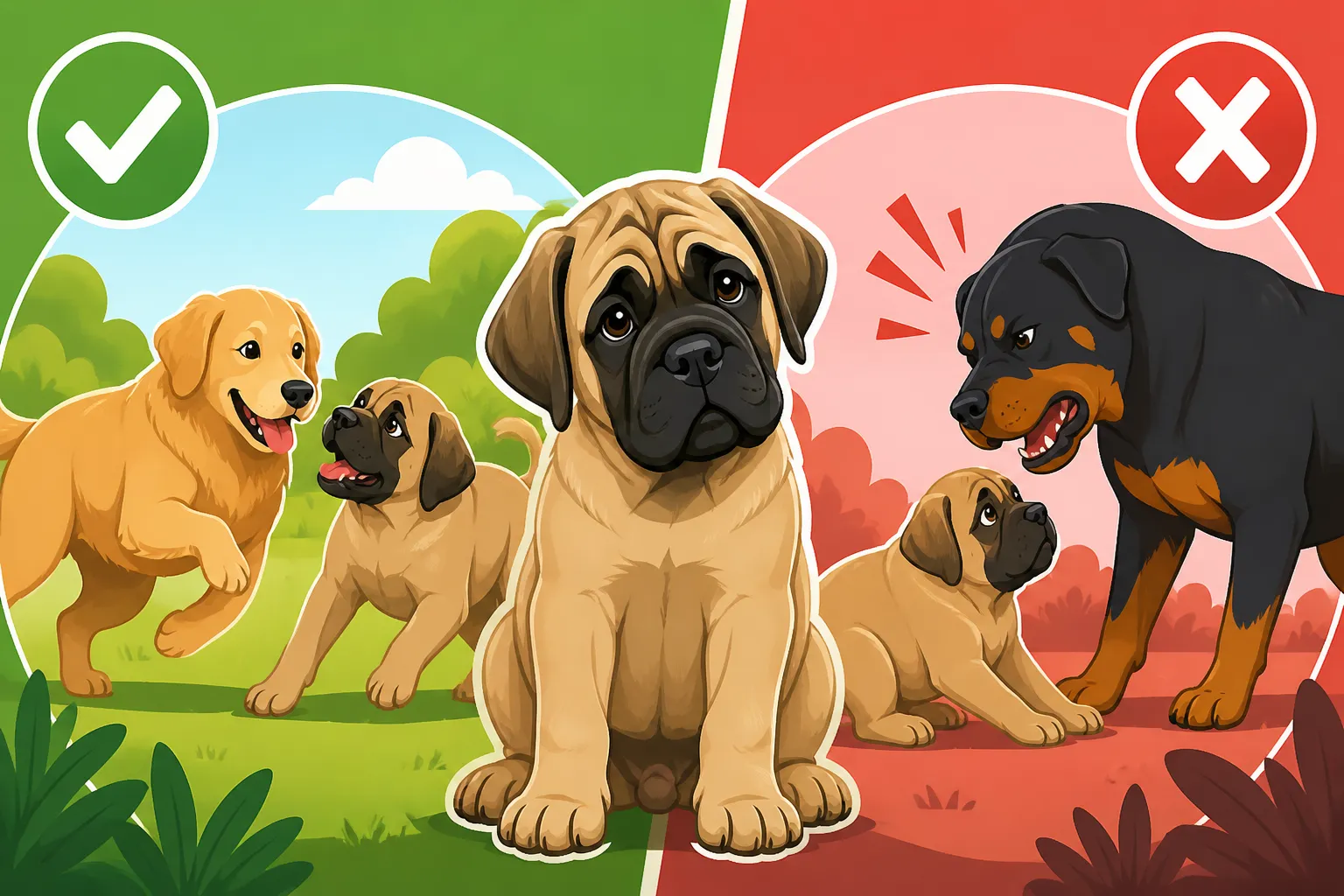
Whether a Mastiff Puppy Should Play With Bigger Dogs
It's a common dilemma when you bring home a Mastiff puppy: you want them to be well-socialized and confident, but their rapid growth and sheer size potential make you incredibly nervous about them playing with bigger, more rambunctious dogs. This guide will walk you through the delicate balance of safe socialization, the risks involved, and how to ensure your gentle giant puppy grows up well-adjusted without risking injury during playtime.
The Unique Vulnerabilities of a Growing Mastiff Puppy
Bringing home a Mastiff puppy is an experience unlike any other. You're not just getting a cute, clumsy ball of fur; you're nurturing a creature that will likely grow to well over a hundred pounds, sometimes pushing past two hundred. This incredible growth spurt, while awe-inspiring, comes with significant vulnerabilities, especially when it comes to physical activity and interaction with other dogs. Their bones, joints, and developing bodies are far more fragile than their eventual size might suggest, making rough play a serious concern.
Fragile Growth Plates and Developing Joints
The most critical aspect of a Mastiff puppy's vulnerability lies in their growth plates. These are areas of cartilage at the ends of long bones in young dogs, where new bone tissue is produced, allowing the bones to lengthen. They remain open until the puppy reaches skeletal maturity, which, for a giant breed like a Mastiff, can be as late as 18-24 months. During this time, growth plates are much softer and more susceptible to injury than the surrounding bone or ligaments. A seemingly innocuous tumble, a hard impact, or even sustained vigorous activity can damage these delicate structures.
Imagine a boisterous Labrador, already mature at 60-70 pounds, barreling into your 70-pound six-month-old Mastiff. While they might weigh roughly the same at that moment, the Mastiff's bones are still actively growing, while the Labrador's are already solidified. A playful bump that the Labrador shrugs off could cause a painful, potentially lifelong, injury to your Mastiff's growth plates or developing joints, leading to issues like Elbow Dysplasia Affects One Mastiff in Seven or hip problems down the line. It's not just about the weight difference, but the developmental difference.
The Problem of Rapid Growth and Body Mass
Mastiffs grow at an astounding rate. They can double their weight in just a few months, putting immense strain on their developing skeletal system. This rapid increase in body mass means that even a puppy is carrying a significant amount of weight, which amplifies the impact of any sudden stops, twists, or collisions during play. A 50-pound Mastiff puppy isn't as agile or coordinated as a 50-pound adult Border Collie, for example. Their bodies are literally playing catch-up with their size, often leading to a gangly, somewhat awkward stage where they are prone to missteps.
This disproportionate growth also means that even if a Mastiff puppy is playing with a dog its own age, if that other dog is a smaller breed, the sheer momentum and weight of the Mastiff can easily cause accidental injury to the playmate. Conversely, a larger, stronger adult dog (even a friendly one) could easily overpower a Mastiff puppy, leading to unintentional harm. It's a lose-lose situation if not managed carefully. This is why we often discuss The Walk Length That Damages a Mastiff Puppy and other restrictions on physical activity during their formative months.
Understanding Safe Play Dynamics for Mastiff Puppies
So, if rough and tumble play is a no-go, how do you ensure your Mastiff puppy gets the vital socialization they need without putting them at risk? The key is understanding safe play dynamics, selecting appropriate playmates, and maintaining vigilant supervision. It's about quality over quantity when it comes to interactions with other dogs.
Choosing Appropriate Playmates
The ideal playmate for a Mastiff puppy is often another puppy of a similar size and age, or a calm, gentle, and tolerant adult dog, preferably one that understands puppy cues and has a history of playing appropriately. Think of a well-adjusted Golden Retriever or a laid-back Basset Hound, rather than a high-energy Malinois or a super-athletic Great Dane. The adult dog should be experienced enough to correct the puppy gently if play becomes too boisterous, without being aggressive or overwhelming.
Crucially, the "bigger dog" in the query needs careful definition. If it's a giant breed adult who understands how to play gently with puppies, that can be a wonderful, educational experience. If it's a high-energy breed known for body slams or wrestling, regardless of size, that's a red flag. The maturity and temperament of the other dog are far more important than its exact weight. Always prioritize temperament and controlled interactions over simply letting them "figure it out." This careful selection extends to other aspects of their development, even considering The Age a Mastiff Puppy's Elbows Are First Filmed for early health screening.
Supervising Play Like a Hawk
Every interaction your Mastiff puppy has with another dog, especially one larger or more active, must be closely supervised. This isn't just about preventing fights; it's about preventing accidental injury. You need to be ready to intervene at a moment's notice if play escalates, or if you see signs of stress or discomfort in either dog. Look for natural breaks in play: do they disengage, shake off, or wander away? Or is it relentless wrestling?
Signs that play is becoming too intense for a Mastiff puppy include:
- Constant pinning: One dog is repeatedly holding the other down.
- Vocalizations: Excessive yelping, growling, or screaming that sounds distressed, not playful.
- One-sided play: One dog is clearly trying to disengage, but the other won't let up.
- Hard impacts: Body slams, head butts, or jumping on each other with full force.
- Puppy retreating: Your Mastiff puppy is trying to hide or get away.
If you observe these signs, it's time to calmly separate the dogs and give them a break. A good training regimen, even for a puppy, can give you the tools to call your Mastiff away. BAXTER & Bella's online puppy program, for instance, offers guidance on controlled introductions and teaching recall, which can be invaluable in these situations.
How to Introduce a Mastiff Puppy to Other Dogs Safely
Introducing your Mastiff puppy to other dogs should be a thoughtful, staged process, not a free-for-all. The goal is positive exposure and gentle interaction, building confidence without risking physical harm. Remember, a bad experience early on can lead to fear or reactivity later, especially in a breed known for its sensitive nature.
Controlled Environments and Short Sessions
The best place for initial introductions is a neutral, safe, and controlled environment. This could be a friend's fenced yard, a quiet park during off-peak hours, or even a dog training facility. Avoid crowded dog parks, especially those with many unknown dogs and uncontrolled play styles. Why a Dog Park Is Wrong for a Mastiff is a topic we delve into more deeply, but the uncontrolled nature is a primary reason to steer clear, especially with a young puppy.
Keep these sessions short – 5 to 10 minutes of gentle interaction is often plenty for a young Mastiff puppy. Their attention spans are limited, and you don't want them to become over-stimulated or overtired, which can lead to cranky, less appropriate behavior. End on a positive note, even if it means interrupting play before it gets too intense. Reward calm, polite interactions with praise and high-value treats.
Using Leashes, Barriers, and Tools for Safety
For initial introductions, especially with an unknown dog or one with a boisterous play style, consider keeping both dogs on leashes with loose leads. This allows you to quickly intervene if necessary. A secure long line (often found on Amazon for training) can give your puppy freedom to explore while you maintain control.
Barriers can also be useful. A baby gate or a sturdy exercise pen can allow two dogs to see, smell, and hear each other without physical contact, reducing the risk of accidental injury. This "parallel play" can be a great way to introduce them gradually, allowing them to acclimate to each other's presence. As they get comfortable, you can move to supervised, off-leash play in a safe, enclosed area.
Remember, socialization isn't just about playing with other dogs; it's about positive exposure to all sorts of sights, sounds, and experiences. Meeting How Many People a Mastiff Puppy Should Meet and experiencing new environments calmly are just as important.
When to Say "No" to Playtime
It's tempting to let your Mastiff puppy play to their heart's content, especially when they're so cute and seemingly indestructible. But as responsible owners of a giant breed, we have to be the guardians of their health and safety. Saying "no" to certain types of playtime, or certain playmates, is a crucial part of puppy parenthood for a Mastiff.
Recognizing Signs of Over-Exertion
A Mastiff puppy, especially due to its rapid growth, can tire more quickly and experience stress on its joints far sooner than a smaller breed. Watch for signs of over-exertion:
- Excessive panting: More than just normal post-play breathing.
- Lagging behind: If on a walk to the play area, they start to slow down significantly.
- Stumbling or clumsiness: Their coordination decreases.
- Reluctance to continue: They lie down or simply refuse to engage.
- Limping or favoring a leg: This is an immediate red flag and requires a break and possibly veterinary attention.
If you see these signs, it's time to call a halt to play. Don't push them to keep going, even if the other dog is still full of energy. Their long-term joint health is paramount, and rest is essential. This ties into the general advice about Why a Mastiff Puppy Must Not Be Exercised Hard.
| Play Scenario / Dog Type | Risk Level | Rationale | Management Strategy |
|---|---|---|---|
| Mature, Calm, Gentle Adult | Low to Medium | Understands puppy cues, less likely to injure. | Short, supervised sessions. Ensure adult is truly gentle. |
| Puppy of Similar Size/Age | Medium | Can match play style, but still prone to clumsy impacts. | Very close supervision. Frequent breaks. |
| High-Energy, Boisterous Adult | High | High risk of accidental injury due to force, speed, or body slams. | Avoid or extremely limited, highly controlled intros behind barrier. |
| Multiple Dogs (any size) | High | Can quickly escalate into chaotic, uncontrolled play. | Avoid group play for young puppies. Introduce one-on-one. |
| Fast-Paced Running/Chasing Games | Medium to High | High impact on developing joints and growth plates. | Keep short. Limit quick turns or abrupt stops. |
| Wrestling/Rough Tumble Play | High | Direct impact, twisting, pinning can cause injury. | Avoid. Redirect to calmer, gentler interactions. |
The Long-Term Impact of Puppy Injuries
An injury sustained during puppyhood, particularly to growth plates or joints, can have lifelong repercussions for a Mastiff. It can lead to early-onset arthritis, chronic pain, expensive surgeries, and a reduced quality of life. The temptation to let them "just be dogs" needs to be tempered with the reality of their unique physical development. This breed is already prone to joint issues, so protecting them during their most vulnerable stage is critical.
Consider the cost and emotional toll of dealing with a severe orthopedic injury. Preventative measures, though they might seem overly cautious at the time, are always preferable to reactive treatments. This care extends to their daily environment, such as ensuring What Bare Floors Do to a Growing Mastiff is minimized by providing traction. Your vigilance now can make all the difference to their comfort and mobility for the Six to Ten Years Is What a Mastiff Gets.
Remember, socialization is about positive experiences, not just about physical play. A Mastiff puppy can learn valuable social cues, body language, and appropriate manners from calm, controlled interactions with other dogs and people, without needing to wrestle or run at top speed. Focus on building their confidence in a variety of situations, at their own pace, and always with their long-term health in mind.
Disclaimer
This article is for general informational purposes only and does not constitute professional advice. Laws, prices and regulations vary by location and change over time. Consult a qualified professional for guidance on your specific situation.