Stopping a Mastiff That Plants Itself and Will Not Move
There's nothing quite like the feeling of being out for a peaceful walk with your magnificent Mastiff, enjoying the fresh air, when suddenly, without warning, your two hundred pound companion decides the walk is over. One minute you're moving, the next you're anchored to the spot, feeling utterly helpless as your giant dog transforms into a very large, very heavy, unmoving statue. This guide is here to walk you through understanding why your Mastiff might put on the brakes, and practical, force-free ways to get them moving again.
Understanding the "Mastiff Halt": Why They Do It
It's a familiar scenario for many Mastiff owners: you're out and about, and your gentle giant suddenly plants all four paws, becoming an immovable object. It's frustrating, often embarrassing, and can even be dangerous if you're in a busy area. But before you get too exasperated, it's crucial to understand that this isn't always simple stubbornness, although that can certainly play a part! Mastiffs are complex creatures, and their decision to stop can stem from a variety of physical, mental, or environmental factors.
More Than Just Stubbornness: The Mastiff Mindset
While it often feels like pure stubbornness, a Mastiff's sudden halt is frequently a sign of deliberation. These dogs are thinkers. They don't react impulsively like some other breeds. Instead, they observe, process, and then decide. Their immense size means they can't afford to be reckless; every movement, every decision, carries significant weight—literally. So, when they stop, they might genuinely be assessing a situation you haven't even noticed.
Perhaps they've spotted something unusual down the street that you've overlooked, heard a faint, distant noise that makes them pause, or simply decided that the current course of action isn't appealing to them anymore. This isn't necessarily defiance; it's often a deep-seated caution or a strong, independent opinion about the immediate circumstances. Forcing them usually doesn't work and can damage your bond. Instead, understanding their thoughtful, often cautious nature, which we delve into more in The Stubbornness That Is Actually a Mastiff Thinking, is the first step in addressing this behavior.
They might have a very strong preference for not walking through a particular puddle, or they've simply reached their mental limit for stimulation for the day. Imagine being led by someone who doesn't understand your subtle cues or your need to process the world around you; it's easy to see how a Mastiff might just decide to take matters into their own paws. Their physical presence makes it impossible to ignore their decision, forcing us as owners to pay closer attention to their non-verbal communication.
Physical Discomfort or Fatigue
Given their incredible size and rapid growth as puppies, Mastiffs are predisposed to a host of orthopedic issues. A sudden refusal to move, especially if it's accompanied by any subtle limping, stiffness, or reluctance to bear weight, should always raise a red flag. What might look like stubbornness could, in fact, be your dog trying to tell you they're in pain. Joint problems like hip and elbow dysplasia are unfortunately common in the breed, and even a mild ache can make a two hundred pound dog decide that taking another step is just not worth it.
Puppies, too, can experience growing pains, or simply reach their physical limit much faster than we anticipate. Their bones and joints are developing rapidly, and too much exercise or impact can be detrimental. It's vital to remember that a Mastiff puppy needs very controlled exercise, as discussed in Why a Mastiff Puppy Must Not Be Exercised Hard. An older Mastiff might be struggling with arthritis, a condition that can make every step uncomfortable, as explored in Arthritis in a Mastiff at Four. They can't tell you in words that their hips are aching or their elbows are stiff, so "planting" might be their only way to communicate their discomfort.
Always consider the physical well-being first. If your Mastiff is usually enthusiastic about walks and suddenly stops, especially if it’s a new behavior, a vet check is absolutely in order to rule out any underlying medical conditions. Don't assume it's behavioral until you've confirmed they're not hurting. Even subtle shifts in lameness can be an indicator, which is worth investigating as described in The Shifting Lameness of a Growing Mastiff.
Environmental Factors and Sensory Overload
Mastiffs, despite their imposing appearance, can be surprisingly sensitive to their environment. Loud noises, strange smells, unfamiliar people, or new objects can be overwhelming. What seems like a perfectly normal street to you might be a cacophony of frightening sounds and sights to your Mastiff. A sudden loud bang from a construction site, a group of boisterous children, or even a strange-looking trash can could be enough to make them freeze in their tracks.
Their response to these stimuli might be to simply shut down and refuse to move, rather than react aggressively or try to flee. This 'freeze' response is a common coping mechanism for fear or anxiety. If your Mastiff suddenly stops and appears watchful, with ears perked or slightly back, scanning the environment, it's a good bet they're reacting to something around them. Addressing their comfort level with new experiences is key, and understanding Whether a Mastiff Is Wary of Strangers can shed more light on this.
It's our job as owners to be attuned to these environmental cues and help our Mastiffs navigate them. Pushing them through a frightening situation will only increase their anxiety and reinforce their desire to stop in the future. Instead, patience and reassurance are critical. Sometimes, they just need a moment to process what's happening, or they need you to calmly guide them away from the source of their distress.
Prevention is Key: Setting Up for Success from Puppyhood
Dealing with a stalled two hundred pound Mastiff is a challenge no one wants to face daily. The best approach, by far, is prevention. Laying a strong foundation during puppyhood, when they're still small enough to manage, is absolutely critical. This involves consistent training, extensive socialization, and mindful exercise to ensure their physical and mental well-being as they grow into impressive adults.
Early and Consistent Positive Reinforcement Training
The moment you bring home your Mastiff puppy, even before they hit those growth spurts, is the time to start instilling good habits. Teaching commands like "let's go," "come," and a reliable "wait" or "stay" using positive reinforcement will be invaluable. Make moving forward a joyous, rewarding experience. Use high-value treats and enthusiastic praise every time they take a step with you on the leash. You want them to associate walking nicely with pleasant outcomes.
It's infinitely easier to teach a fifty-pound puppy to cheerfully move with you than it is to negotiate with a two-hundred-pound adult who's decided otherwise. Consistent short training sessions, repeated several times a day, will build those neural pathways and make good behavior a habit. Consider resources like BAXTER & Bella for structured online puppy training courses, which can provide guidance on these crucial early stages. They offer comprehensive programs that teach you how to build a strong foundation using positive, force-free methods, which are especially important for sensitive breeds like the Mastiff.
Remember, a Mastiff wants to please you, but they also respond best to gentle, clear direction and positive motivation. Harsh corrections or physical force will be counterproductive and can lead to a dog who digs in their heels even more. Focus on making walking with you the most rewarding activity they could possibly engage in. This early effort will pay dividends when you're walking an adult Mastiff who out-weighs you significantly, as discussed in Teaching a Mastiff Before It Outweighs You.
Proper Socialization and Exposure
A well-socialized Mastiff is a confident Mastiff, and a confident Mastiff is far less likely to freeze in unfamiliar situations. From a young age, gently expose your puppy to a wide variety of sights, sounds, smells, people, and places. This doesn't mean overwhelming them, but rather controlled, positive exposure. Take them to quiet parks to watch people and dogs from a distance, introduce them to different surfaces, let them hear various city noises (traffic, sirens) from a safe distance.
The goal is to teach them that the world is generally a safe and interesting place, rather than something to be feared. The critical socialization window closes relatively early, and given how fast a Mastiff puppy grows, as noted in The First Year With a Mastiff Puppy That Doubles in Size, it's important to make the most of that time. A Mastiff who has had positive experiences with new things is far less likely to become fearful and plant themselves when encountering something new on a walk.
Always ensure these exposures are positive experiences. If your puppy seems overwhelmed, remove them from the situation calmly and try again another day with less intensity. Gradual, positive exposure helps build resilience. This concept is further elaborated in Socializing a Mastiff Puppy Before It Gets Heavy, emphasizing the need to build confidence before their size becomes a factor.
Appropriate Exercise and Physical Conditioning
Mastiffs are not endurance athletes, and over-exercising them, especially as puppies, can lead to serious joint problems down the line. A Mastiff that is regularly pushed beyond its physical limits will quickly learn to stop and refuse to move, simply out of fatigue or pain. Understanding their exercise needs is crucial; for most adult Mastiffs, an hour of moderate exercise a day is often sufficient, as discussed in Why one hour a day is enough for a Mastiff.
For puppies, short, frequent walks are much better than one long, strenuous outing. Focus on mental stimulation and short bursts of play rather than forced marches. As they grow, gradually increase the duration and intensity of walks, always watching for signs of fatigue or discomfort. If your Mastiff is constantly stopping on walks, consider if your walks are too long or too intense for their current conditioning.
Keeping your Mastiff at a healthy, lean weight also contributes significantly to their comfort and willingness to move. Excess weight puts additional strain on their joints, making them more prone to pain and less likely to want to walk. A fit, healthy Mastiff is a happier, more cooperative walking companion. Regularly assess their body condition to ensure they are not carrying extra pounds.
Strategies for the Stalled Mastiff: Gentle Persuasion to Emergency Measures
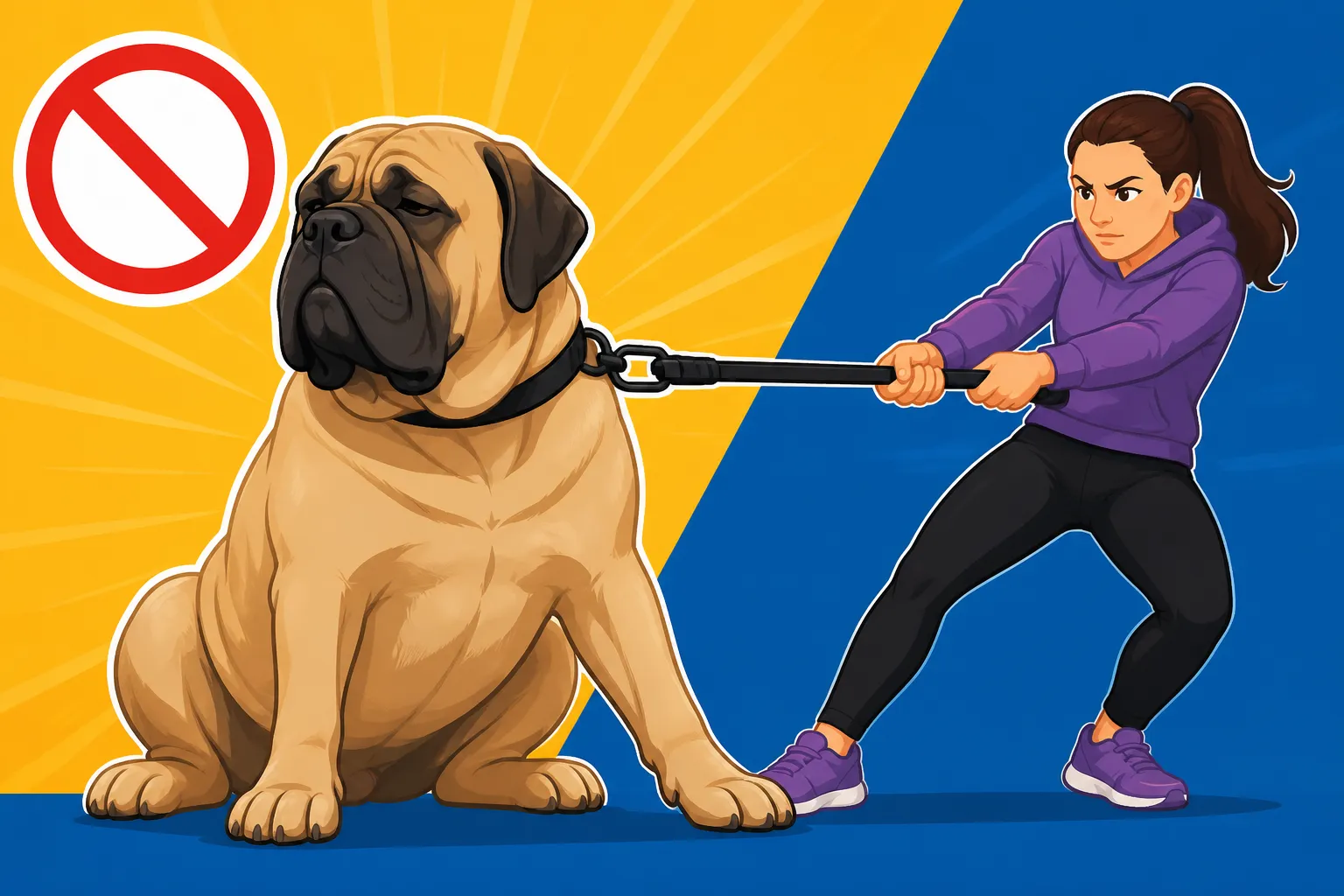
So, you've done your best with prevention, but your Mastiff has decided today is a "no-go" day. What now? Yelling, pulling, or physically trying to force a two-hundred-pound dog to move is rarely effective and can be dangerous for both of you. The key is to employ patience, positive motivation, and sometimes, a little ingenuity.
The Power of Positive Luring and High-Value Rewards
When your Mastiff plants itself, remember that you can't make them move, but you can usually convince them. This is where high-value treats come into play. Think cooked chicken, cheese, hot dogs—anything that your Mastiff considers irresistible. Hold a small piece just out of their reach, encouraging them to take a step forward to get it. As soon as they shift their weight or take a tiny step, even a wobble, praise them enthusiastically and give them the treat.
Repeat this process, taking one step at a time if necessary. Make encouraging noises, use a happy, upbeat tone of voice, and act like moving forward is the most exciting game in the world. Sometimes, the unexpected jingle of keys or a favorite squeaky toy can also break their focus and prompt a step. The trick is to associate movement with immediate, incredible rewards. You'll want to have a good stash on hand, and online retailers like Amazon offer a huge variety of high-value training treats, from liver bites to freeze-dried options, perfect for finding what motivates your big lug.
Avoid nagging or repeating commands without reward; this can desensitize them to your voice. Instead, keep it short, sweet, and highly rewarding. This method relies on their desire for positive reinforcement, leveraging their sensitive nature to encourage cooperation rather than resistance.
Strategic Changes in Direction and Environment
Sometimes, a complete change of scenery or direction can be enough to break the stalemate. If your Mastiff has stopped because of something ahead (a person, another dog, a loud noise), simply turning around and walking a few steps in the opposite direction might reset their focus. Once you've moved past the perceived threat or distraction, you can then try to resume your original path, or choose an alternative route.
Alternatively, a brief pause might be all they need. If they're genuinely tired or overwhelmed, allowing them to just sit or lie down for a minute or two can help them gather themselves. Offer some water if you have it. Once they've had a moment to rest or process, they might be more willing to continue. During this pause, avoid making a fuss; just be present and calm.
Sometimes, the issue isn't what's ahead but what's underfoot. If they've balked at a particular grate, a patch of rough pavement, or a puddle they'd rather avoid, a slight detour around it can resolve the issue immediately. Paying attention to these small environmental details can save you a lot of frustration. They might be telling you, in their own giant way, that they simply don't want to walk there.
Knowing When to Call for Backup or a Ride
There will be times when, despite your best efforts, your Mastiff remains firmly planted. This is not the time for stubbornness on your part. Trying to drag a two-hundred-pound dog is dangerous for your back, risks injury to your dog, and can severely damage your relationship. In these situations, safety and practicality must take precedence. If you're near home, try to coax them back with an irresistible treat trail. If you're further afield, it might be time to call for backup.
Consider calling a friend or family member with a vehicle large enough to transport your Mastiff. Many Mastiff owners have a plan for this very scenario. Some even know local pet taxi services that are equipped to handle giant breeds. Never leave your dog unattended, even if you run back for your car; this can be dangerous. It's an inconvenient truth of owning such a large dog that sometimes, the walk simply must end prematurely, and you need assistance getting home.
This isn't a failure on your part; it's being a responsible owner who prioritizes their dog's well-being and their own safety. Understanding Whether a Mastiff Can Be Lifted at All often leads to the conclusion that for most people, a plan B involving wheels is essential. It's better to end the walk gracefully, even if it's a bit undignified for you, than to create a stressful or harmful situation.
The Right Tools for the Job: Gear That Helps, Not Harms
Having the correct equipment can make a significant difference in managing a Mastiff on a walk, especially when they decide to stop. The right gear can provide better control, increase comfort for your dog, and even prevent injuries to both of you. Don't skimp on quality when it comes to tools for a dog of this size.
The Importance of a Well-Fitting Harness
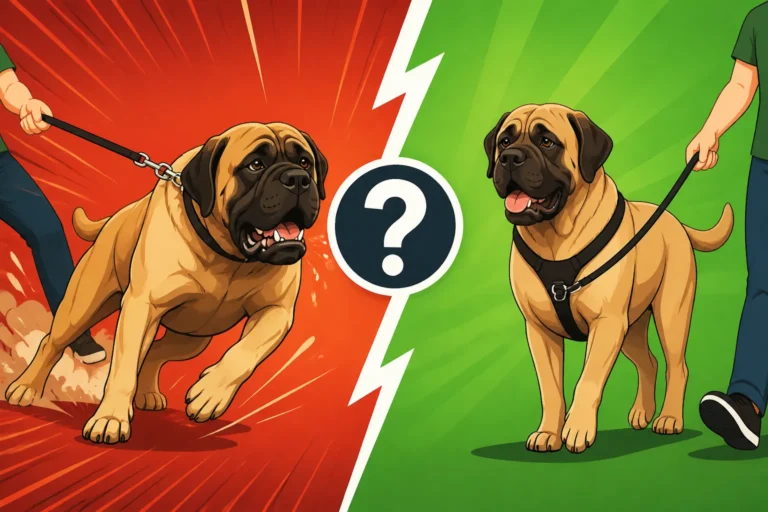
For a Mastiff, a harness is almost always preferable to a collar for walking, particularly if they're prone to pulling or stopping abruptly. A collar, especially on such a powerful neck, can put immense pressure on their trachea and spine if they pull or if you need to redirect them suddenly. A well-fitting, sturdy harness distributes pressure across their chest and shoulders, making it much more comfortable for them and giving you better control without risking injury.
Front-clip harnesses can be particularly effective. When your Mastiff pulls, the leash attached to the front clip gently redirects them to the side, discouraging pulling without causing discomfort. This gives you leverage without force. It's a game-changer for many owners of strong breeds. You can read more about the benefits in Whether a Front Clip Harness Stops a Mastiff Pulling. Choosing a harness that is broad and padded will also increase their comfort, making walks a more pleasant experience overall.
It's vital to ensure the harness fits correctly—snug enough that they can't slip out, but loose enough not to chafe. Poorly fitting harnesses can cause skin irritation or restrict movement, which could in turn contribute to a Mastiff's reluctance to move. When considering Whether a Mastiff Should Wear a Harness or a Collar, the advantages of a good harness for a Mastiff are clear.
Robust Leashes and Long Lines
Forget flimsy retractable leashes or thin nylon cords. A Mastiff requires a leash that can withstand their immense strength. Opt for a heavy-duty leash made of strong nylon webbing, leather, or climbing rope material. A good quality leash should have solid metal hardware that won't snap under pressure. A length of four to six feet is generally ideal for walks, providing enough slack for exploration without too much excess.
Having a robust leash means you have a reliable connection to your dog, which is paramount for safety. If your Mastiff suddenly stops, you need to know your leash won't break, especially if you're trying to gently encourage them forward or hold them steady while you assess the situation. You can find a wide array of heavy-duty leashes from online retailers like Amazon, ensuring you have options that can stand up to your Mastiff's power.
For training in safe, open areas, a long line (15-30 feet) can be incredibly useful. It allows your Mastiff more freedom to explore while still giving you control and the ability to practice recall or movement commands from a distance. This can help build their confidence in moving forward in various environments without the immediate pressure of a short leash.
Training Aids: Whistles, Clickers, and Treat Pouches
To make your positive reinforcement training as effective as possible, consider investing in a few simple training aids. A clicker, for example, is a fantastic tool for precisely marking the exact moment your Mastiff performs a desired behavior (like taking a step forward after being stalled). The click is consistent and clear, telling them exactly what they did right before they receive their reward.
A treat pouch is an absolute must-have. Fumbling in your pockets for treats when your Mastiff is stalled is inefficient and can lose their attention. A treat pouch clips to your belt or waist, keeping high-value rewards easily accessible for immediate delivery. This quick reward delivery reinforces the positive behavior much more effectively.
Additionally, a dog whistle can be useful for recall or gaining your Mastiff's attention from a distance, especially if they are prone to becoming fixated on something. These tools, while small, can significantly enhance your ability to communicate effectively and positively reinforce desired behaviors, making your walks smoother and more enjoyable for both you and your gentle giant.
When to Seek Professional Help: Recognizing Beyond Stubbornness
Sometimes, the "Mastiff halt" goes beyond typical stubbornness or a momentary distraction. If your dog's refusal to move becomes frequent, is accompanied by other concerning symptoms, or if you simply feel overwhelmed by the challenge, it's time to seek expert help. Recognizing when a problem is more than just a training issue can save your dog from prolonged discomfort or prevent behavioral problems from escalating.
Consulting Your Veterinarian for Health Concerns
As mentioned earlier, physical discomfort is a major reason a Mastiff might stop moving. If your dog's planting behavior is new, increasing in frequency, or comes with any signs of pain (limping, stiffness, reluctance to rise, groaning, changes in appetite or energy), your first stop should always be the veterinarian. Large breeds are susceptible to numerous orthopedic conditions, even at a young age, and prompt diagnosis and treatment can make a world of difference.
Your vet can perform a thorough physical examination, checking joints, muscles, and overall gait. They may recommend X-rays to look for conditions like hip or elbow dysplasia, What Degenerative Myelopathy Does to a Mastiff, or other musculoskeletal issues. Blood tests might be suggested to rule out metabolic or inflammatory conditions that could cause generalized discomfort. Sometimes, the issue isn't obvious; a Mastiff might be stoic about mild pain until it becomes unbearable, at which point they simply refuse to move.
Don't dismiss persistent stopping as just "being a Mastiff." It's better to rule out a medical cause first. Addressing any underlying health issues can resolve the problem entirely or, at the very least, allow you to manage the condition more effectively and ensure your dog is as comfortable as possible.
Working with a Certified Professional Dog Trainer
Once medical issues have been ruled out, or if the problem is clearly behavioral from the start, a certified professional dog trainer is your next best resource. A good trainer specializes in force-free, positive reinforcement methods and understands giant breed dynamics. They can observe your Mastiff's behavior in real-time, identify triggers you might be missing, and help you develop a tailored training plan to address the specific issue of stopping on walks.
They can guide you on refining your leash handling skills, improving your communication cues, and teaching your Mastiff a rock-solid "let's go" command that overcomes distractions. A trainer can also help you build your Mastiff's confidence in various environments, making them less likely to freeze due to fear or overwhelm. This individual guidance can be invaluable, especially when you're dealing with a dog that outweighs you significantly. Many trainers offer in-person sessions, or virtual consultations for those in remote areas.
If you're looking for professional guidance, platforms like BAXTER & Bella not only provide extensive online training resources but can also help connect you with trainers who align with their positive reinforcement philosophy. A professional trainer can truly bridge the communication gap between you and your Mastiff, as discussed in Whether a Mastiff Needs a Professional Trainer.
Understanding Behaviorists vs. Trainers
While a good dog trainer can handle many behavioral challenges, there's a distinction between a dog trainer and a veterinary behaviorist. A trainer focuses on teaching new behaviors and modifying unwanted ones through practical application. A veterinary behaviorist, on the other hand, is a veterinarian with specialized training in animal behavior, who can diagnose and treat behavioral disorders (like severe anxiety, phobias, or aggression) that may have a physiological or psychological component. They can prescribe medication in conjunction with behavior modification.
If your Mastiff's stopping behavior is rooted in severe fear, panic attacks, extreme anxiety, or has escalated to aggression when you try to move them, a veterinary behaviorist might be the more appropriate specialist. These deeper issues often require a more comprehensive approach, including medication to help manage anxiety alongside behavioral therapy.
Knowing the difference ensures you get the right level of help. For most cases of a Mastiff planting itself, a certified professional dog trainer is the ideal starting point. If they recommend a behaviorist, then you know the issue is more complex and requires a specialized approach. Ultimately, your goal is a happy, healthy, and cooperative Mastiff, and sometimes that means enlisting the help of experts.
| Reason for Stopping | Common Manifestations | Recommended Action | What to Avoid |
|---|---|---|---|
| Stubbornness/Deliberation | Plants feet, ignores cues, looks around | High-value lure, happy voice, change direction, brief pause, positive reinforcement | Yelling, tugging hard, dragging |
| Physical Discomfort | Limping, stiffness, hesitant steps, favoring a limb | Stop immediately, inspect paws/legs, offer a ride, consult vet | Forcing movement, long walks |
| Fear/Overwhelm | Ears back, tail tucked, wide eyes, shaking | Remove from trigger, comfort, re-direct attention, gradual desensitization | Punishing fear, forcing interaction with trigger |
| Fatigue | Slows pace, heavy panting, lies down | Offer water, rest, shorten walk, plan shorter routes, build endurance slowly | Pushing them to continue, ignoring signs of exhaustion |
| Environmental Distraction | Stares intently, perks ears, ignores you | Use a strong "look at me" cue, engage with high-value treat, gently redirect | Becoming frustrated, letting them fixate |
Disclaimer
This article is for general informational purposes only and does not constitute professional advice. Laws, prices and regulations vary by location and change over time. Consult a qualified professional for guidance on your specific situation.