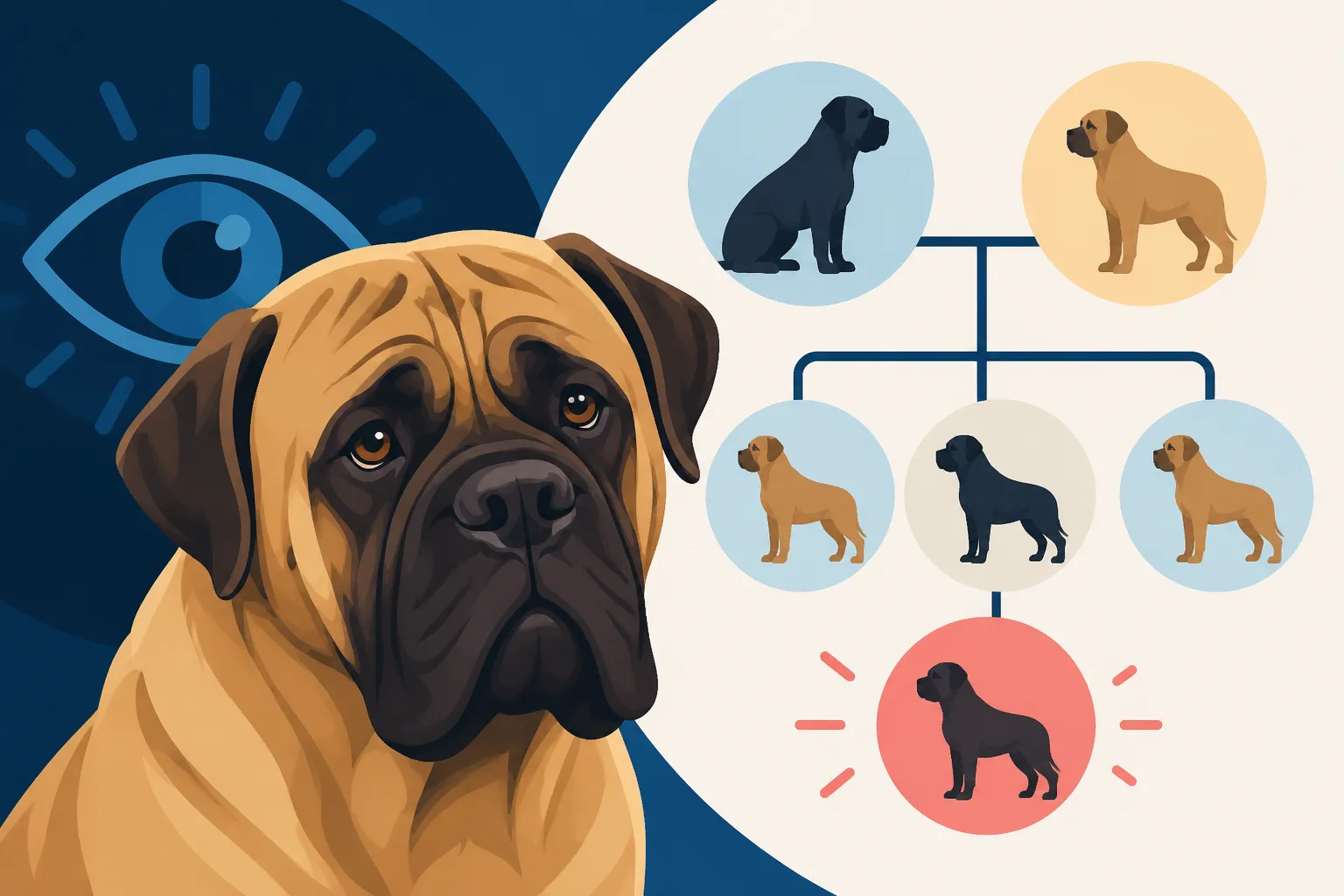
Whether Mastiff PRA Skips a Generation
It can be incredibly disheartening, and frankly, quite confusing, when a serious health issue like Progressive Retinal Atrophy (PRA) shows up in your beloved Mastiff, especially if you thought you had a clear lineage or were told it wasn't a concern in previous generations. Many of us have heard stories, or experienced firsthand, how a disease seems to "skip" a generation, only to resurface later. This guide will thoroughly explain why this phenomenon isn't truly "skipping" when it comes to Mastiff PRA, diving into the genetics and the crucial importance of proper testing and breeding practices.
Understanding Progressive Retinal Atrophy (PRA) in Mastiffs
Progressive Retinal Atrophy, often simply called PRA, is a group of genetic eye diseases that affect various dog breeds, including our magnificent Mastiffs. It's a condition that gradually leads to vision loss and, unfortunately, often complete blindness. For Mastiffs, we're primarily concerned with a specific form known as P.E.R.A. (Progressive Early-onset Retinal Atrophy). The word "progressive" is key here, meaning it gets worse over time, slowly dimming your dog's world.
The Genetic Basis of Mastiff PRA
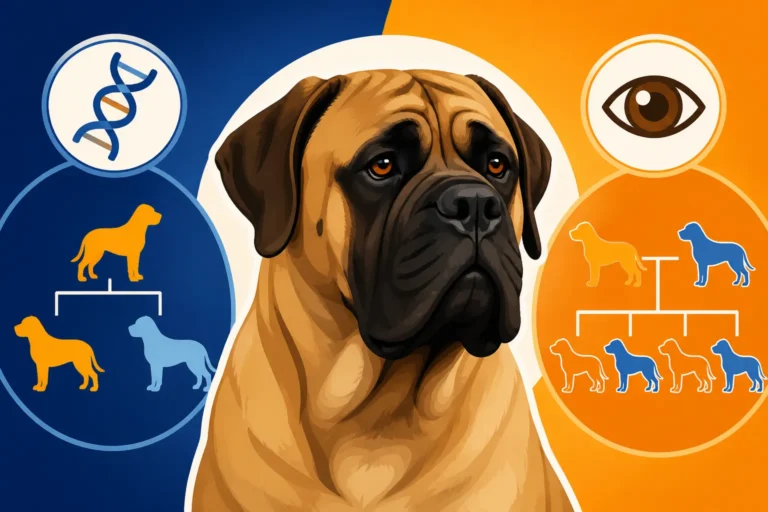
Unlike some other genetic conditions you might hear about, Mastiff PRA is inherited in an autosomal dominant fashion. Now, don't let those scientific terms scare you off; it's simpler than it sounds. "Autosomal" just means the gene isn't linked to sex chromosomes, so both males and females are equally susceptible. "Dominant" is the really important part here. It means that if a Mastiff inherits just one copy of the faulty gene from either parent, it will eventually develop the disease. This is a crucial distinction, as some diseases are recessive, meaning a dog needs two copies of the faulty gene (one from each parent) to be affected. Because Mastiff PRA only needs one copy, it's considered a dominant trait.
This direct inheritance means that the disease doesn't truly hide in a healthy dog as a carrier. If a Mastiff has the gene for P.E.R.A., it will be affected. You can delve deeper into how this works by reading Why Mastiff Retinal Atrophy Needs Only One Copy of the Gene and How Dominant Inheritance Works in Mastiff PRA. This dominant pattern also explains Why One Affected Mastiff Parent Is Enough to pass the condition to puppies. It's a sobering thought, knowing that just one parent can bring this challenge into a litter, even if that parent's symptoms were mild or unrecognized.
Why PRA Doesn't Truly "Skip" Generations
Here's where the common misconception of "skipping a generation" needs a closer look, especially for a dominant condition like Mastiff PRA. When people say a disease skipped a generation, they often mean that a seemingly healthy parent produced an affected offspring, despite the parent themselves not showing symptoms, and the generation before them also appearing clear. However, with dominant inheritance, this isn't truly possible in the way it is with recessive traits where 'carrier' dogs appear perfectly healthy.
For Mastiff PRA, if a dog carries the dominant gene, it will be affected. The "skipping" illusion usually stems from a few scenarios, none of which involve the gene actually bypassing a generation:
- Undiagnosed Affected Ancestors: The most common reason for this perception is that a Mastiff in a previous generation was affected by PRA, but it was simply never diagnosed. Perhaps their symptoms were very mild, or they developed late in life after the dog had already been bred and passed away from other causes. Without comprehensive eye exams or genetic testing, it’s easy for an affected dog to be unknowingly present in a lineage. This is particularly relevant if the dog's vision loss wasn't immediately obvious, or if they adapted well to their declining sight, leading owners to believe they were "normal."
- Late Onset of Symptoms: While P.E.R.A. is often described as "early-onset," the exact age of onset and progression can vary. A dog might be bred before clinical signs become apparent, especially if the owner isn't actively looking for subtle changes in vision or hasn't had specialized veterinary ophthalmology exams. So, a parent could unknowingly pass on the gene before their own symptoms manifest.
- Confusion with Recessive Traits: Many people correctly understand that recessive diseases can "skip" generations because healthy carriers (dogs with one copy of the gene who show no symptoms) can exist. They might then mistakenly apply this understanding to dominant traits. It's vital to remember that dominant means expression; no true "healthy carrier" exists in the sense of a dog being genetically affected but physically normal for its entire life. The Mastiff Club of America emphasizes the importance of understanding specific inheritance patterns to avoid such confusion.
Therefore, if Mastiff PRA appears in a litter, it means at least one of the parents must carry the gene and is affected, even if that affection was subtle, undiagnosed, or developed later. It never truly bypasses an animal that carries the gene.
Identifying and Managing PRA in Your Mastiff
Navigating a potential or confirmed diagnosis of PRA in your Mastiff can be an emotional journey. Understanding how to identify the condition and what managing it entails is key to providing the best possible care for your companion.
The Importance of Genetic Testing
The absolute best way to definitively understand if a Mastiff carries the gene for PRA, and thus is affected, is through genetic testing. This isn't just for breeders; it's vital information for any Mastiff owner. A simple DNA test, often done via a cheek swab, can identify the presence of the specific gene mutation responsible for P.E.R.A. in Mastiffs. This means you don't have to wait for symptoms to appear; you can know your dog's status early. For new puppy owners, knowing Whether a Mastiff Puppy Can Be Tested Before Purchase is invaluable, as it provides peace of mind or prepares you for future care needs.
Several reputable laboratories offer these tests, such as Embark and OptiGen. These tests can reveal if your Mastiff is genetically clear (meaning two normal copies of the gene), a carrier (meaning one normal and one affected copy, which, for a dominant trait, means they are affected themselves, but perhaps with variable expression), or affected (meaning two copies of the affected gene, which is rare for dominant and usually means severe, early onset disease). Knowing the genetic status helps immensely. Without this definitive test, identifying the condition can be tricky, as early signs might be subtle. You can learn more about this by looking into The DNA Test That Finds Mastiff PRA. Responsible breeders often perform these tests on their breeding stock and share the results transparently.
What an "Affected" Diagnosis Means
If a Mastiff is genetically identified as affected with PRA, or if clinical signs confirm it, it means they will experience progressive vision loss. Often, the first noticeable symptom is night blindness, where your Mastiff might become hesitant in dim light or bump into furniture at dusk. This can begin quite early in life for P.E.R.A., though the exact age can vary. Over time, their daytime vision will also deteriorate, eventually leading to complete blindness. It's a slow process, giving both you and your Mastiff time to adapt.
The prospect of your Mastiff losing its sight is undeniably heartbreaking. However, many blind dogs, especially those who lose their vision gradually, adapt remarkably well to their environment. They rely more heavily on their other senses – smell, hearing, and touch – to navigate their world. Keeping furniture in consistent locations, maintaining routines, and using scent markers can significantly help your Mastiff cope. They often learn the layout of their home by memory, moving confidently in familiar surroundings.
Regular veterinary ophthalmologist visits are crucial to monitor the progression and rule out any secondary eye issues. While there's no cure for PRA, managing their environment and offering unwavering support can ensure a good quality of life. For more detailed information on the visual progression, you might want to read The Age a Mastiff's Vision Starts to Go and Whether a Mastiff Goes Fully Blind From PRA. In such cases, having pet insurance like a comprehensive plan from Healthy Paws can be a real lifesaver, helping to cover the costs of specialist vet visits, diagnostics, and ongoing supportive care, easing some of the financial burden during an already stressful time.
Responsible Breeding Practices and PRA Prevention
The cornerstone of reducing the incidence of genetic diseases like PRA in Mastiffs lies squarely with responsible breeding. It's a serious commitment that goes far beyond simply pairing two dogs; it involves extensive health testing, transparent communication, and a deep understanding of genetic inheritance.
Ethical Considerations for Breeders
For any Mastiff identified as affected with PRA through genetic testing or clinical diagnosis, the ethical imperative is clear: they should absolutely not be bred. Breeding an affected dog, even one with mild symptoms or late onset, guarantees the passing of the faulty gene to their offspring, continuing the cycle of the disease. This is a non-negotiable standard for responsible Mastiff breeders who are committed to the health and longevity of the breed.
Furthermore, responsible breeders are transparent about the health testing results of their breeding stock. They will gladly share genetic test results for PRA, along with other essential health certifications such as those for hips, elbows, and cardiac health, which contribute to the overall health profile of the breed. This level of transparency helps prospective puppy buyers make informed decisions and reduces the likelihood of "surprise" diagnoses down the line. It's also worth understanding Whether a Mastiff With PRA Should Be Bred, as the answer is a resounding no if we want to improve the breed's health.
A common question that arises is Whether Two Clear Mastiffs Can Produce an Affected Puppy. For a dominant gene like P.E.R.A., if both parents are truly genetically clear (meaning they have two normal copies of the gene), then no, they cannot produce an affected puppy. The gene simply isn't present to be passed on. This underscores why accurate genetic testing of all breeding stock is paramount, ensuring that no unknowingly affected individuals are part of the breeding program.
The Role of Eye Exams in Litters
Beyond genetic testing of the parents, regular eye exams are a vital component of responsible breeding, especially for puppies. While genetic testing tells us the potential for a disease, an actual eye exam by a board-certified veterinary ophthalmologist can detect early physical signs of eye conditions. Even if both parents are genetically clear for PRA, other eye issues can arise, making routine checks important.
For instance, a comprehensive eye exam can detect conditions like retinal folds, cataracts, or signs of other inherited eye diseases. Many reputable Mastiff breeders will have their entire litter examined by an ophthalmologist, particularly if there's any uncertainty about the lineage or if required for specific certifications. This practice gives buyers an extra layer of assurance about their puppy's eye health from the start. You might find it useful to read Why a Mastiff Litter Needs an Eye Exam for a deeper understanding of this process.
Such thorough health screening, including eye exams, can be a significant investment for breeders and owners alike. This is where pet insurance, like plans offered by Healthy Paws, becomes incredibly valuable. It can help mitigate the financial impact of diagnostic tests, specialist consultations, and ongoing care for hereditary conditions, allowing owners to focus on their Mastiff's health without undue financial stress. Investing in a robust pet insurance policy early can provide peace of mind throughout your Mastiff's life, especially given their predisposition to various health concerns.
| Inheritance Pattern | Copies of Faulty Gene Needed for Disease | Does it "Skip" Generations (via healthy carriers)? | How it Appears to "Skip" (Dominant PRA) |
|---|---|---|---|
| Dominant | One | No (Affected individuals will show trait) | Undiagnosed/mildly affected ancestors, late onset of symptoms, or misidentification. |
| Recessive | Two (one from each parent) | Yes (Healthy carriers can pass gene) | Healthy carriers unknowingly pass the gene, and offspring are affected when mating with another carrier. |
Disclaimer
The information provided in this article is for general informational purposes only and is not a substitute for professional veterinary advice. Always consult with a qualified veterinarian or veterinary specialist for any health concerns or before making any decisions about your Mastiff's health or breeding. Genetic testing and veterinary ophthalmology exams are essential for accurate diagnosis and management of conditions like Progressive Retinal Atrophy.