What Degenerative Myelopathy Does to a Mastiff
Seeing your magnificent Mastiff, a breed known for its stoic presence and gentle giants, begin to struggle with its powerful hind legs is one of the most heartbreaking experiences any owner can face. The initial stumble, the slight drag of a paw, can fill you with dread, wondering what silent illness is slowly stealing their mobility. This comprehensive guide is dedicated to shedding light on Degenerative Myelopathy (DM) in Mastiffs, detailing exactly what this progressive neurological condition entails, how it impacts your beloved companion, and the ways you can offer support and maintain their quality of life.
Understanding Degenerative Myelopathy in Mastiffs
Degenerative Myelopathy is a cruel, progressive neurological disease that affects the spinal cord, particularly in the thoracic (mid-back) region. It's often compared to ALS in humans because of its relentlessly progressive nature, slowly robbing dogs of their ability to walk. For Mastiff owners, the thought of their massive, loving dog losing control of its hindquarters is a heavy burden, made even heavier by the sheer size and weight of these incredible animals. It's not a condition that comes on suddenly like an injury; rather, it’s a gradual deterioration that requires careful observation and a deep understanding to manage effectively.
What Degenerative Myelopathy Actually Is
At its core, Degenerative Myelopathy involves the degeneration of the white matter in the spinal cord, which is responsible for transmitting nerve signals between the brain and the body. Imagine the spinal cord as a superhighway for information; DM causes that highway to slowly break down, leading to a loss of communication. This breakdown primarily affects the nerves that control movement and sensation in the hind limbs. As the disease progresses, these vital nerve fibers become demyelinated—meaning the protective sheath around them is damaged—and eventually, the axons themselves (the main part of the nerve cell) begin to die. This neurological damage leads to weakness and eventual paralysis, a truly devastating trajectory for any dog, let alone a colossal Mastiff.
The scientific community has made significant strides in understanding this disease, identifying a genetic mutation in the superoxide dismutase 1 (SOD1) gene as a primary cause. This genetic marker is present in many breeds, and while not every dog with the mutation will develop DM, it significantly increases their risk. For Mastiff owners, understanding this genetic component is crucial, especially when considering breeding or assessing a puppy's potential predisposition. It's a silent threat, often not showing its hand until a dog is well into its senior years, typically after the age of eight, though we’ll delve more into The Age Degenerative Myelopathy Starts in a Mastiff later.
The Genetic Link to Mastiffs
The presence of the SOD1 gene mutation is a significant factor in a Mastiff's susceptibility to Degenerative Myelopathy. This mutation is inherited in an autosomal recessive pattern, meaning a dog must inherit two copies of the mutated gene (one from each parent) to be at risk of developing the disease. Dogs that inherit only one copy are considered carriers and typically do not develop DM themselves, but they can pass the gene on to their offspring. This genetic component underscores the importance of responsible breeding practices and pre-breeding health screenings. Knowing Whether a DNA Test Predicts Mastiff DM can provide breeders and prospective owners with invaluable information.
Reputable Mastiff breeders will often screen their breeding stock for the SOD1 mutation, offering transparency about their dogs' genetic status. They classify dogs as "clear" (no copies of the mutation), "carrier" (one copy), or "at-risk" (two copies). While an "at-risk" status doesn't guarantee a Mastiff will develop DM, it means they are genetically predisposed, and the chances are significantly higher. The disease itself is complex, and other environmental or genetic factors might play a role in its manifestation, but the SOD1 mutation is currently the most well-understood piece of the puzzle. This knowledge empowers owners to make informed decisions about their dog's health and future care, allowing them to be proactive rather than reactive.
Early Signs and Subtle Changes
Recognizing the very first signs of Degenerative Myelopathy in a Mastiff can be incredibly challenging because they often mimic other common ailments of aging, such as arthritis or general hind-end weakness. However, DM tends to manifest as an asymmetry in the hind limbs initially. You might notice one hind paw dragging more than the other, or a slight, almost imperceptible scuffing of the nails on one side. Your Mastiff might stumble more frequently, especially when turning, or seem a little wobbly when standing up from a resting position. These are not signs of pain, which is a key differentiator from conditions like hip dysplasia or arthritis; Whether Degenerative Myelopathy Is Painful for a Mastiff is a common concern for owners, but DM itself is not painful.
Another subtle early indicator can be proprioceptive deficits. This is a fancy way of saying your Mastiff loses awareness of where its paws are in space. You might see them 'knuckling over,' walking on the tops of their back paws, or taking unusually wide stances to maintain balance. The massive size of a Mastiff can sometimes mask these early signs, as their sheer bulk and deliberate movements might make small stumbles seem less alarming than they would in a smaller, more agile dog. It’s imperative to pay close attention to these minor changes, as early recognition, while not changing the prognosis, can help you prepare and adapt your home environment to support your dog as the disease progresses.
The Progression of Hind End Weakness
The progression of Degenerative Myelopathy is unfortunately relentless and generally follows a predictable pattern, though the speed can vary greatly between individual Mastiffs. What begins as subtle weakness gradually escalates, impacting their ability to walk, stand, and ultimately, control their bodily functions. As an owner, witnessing this slow decline in a dog that once bounded through the yard can be incredibly tough. It’s a journey that demands patience, adaptability, and unwavering commitment to your Mastiff’s comfort and dignity. Understanding How a Mastiff's Hind End Fails With DM can help you anticipate needs and provide the best possible care.
Initial Stumbling and Unsteady Gait
The very first obvious signs often center around an unsteady gait and noticeable stumbling. Your Mastiff might start to exhibit a peculiar, drunken-like walk, especially in their back legs. They may sway excessively, particularly when standing still or trying to navigate uneven terrain. Getting up from a lying position, something they once did with a powerful push, becomes a slower, more deliberate, and often shaky process. You might see them struggle to maintain their balance, sometimes overcompensating with their front legs, leading to an awkward, almost stiff-legged movement in the rear. It's a heartbreaking sight, especially for such a majestic and powerful breed.
These initial stumbles are not due to pain, which is crucial to remember for DM, but rather a loss of neurological signals reaching the muscles. The muscles themselves are still healthy at this stage, but the brain isn't effectively communicating with them. Imagine trying to walk with numb feet – you know they're there, but you can't feel exactly where you're placing them or how much pressure to apply. For a Mastiff, this means an increased risk of falls, particularly on slick surfaces like hardwood floors, which are already challenging for them. Providing traction, such as through runners or rugs, becomes even more important.
Progressive Muscle Atrophy and Coordination Loss
As DM progresses, the nerve signals diminish further, leading to more pronounced weakness and a visible loss of muscle mass in the hindquarters. The muscles, no longer receiving adequate stimulation, will start to atrophy. You might notice their thighs becoming thinner, and their rear end looking less robust than before. This muscle wasting, combined with increasing coordination loss, makes walking an even greater challenge. They may drag their feet extensively, scraping their paw tops raw, and struggle immensely with stairs or inclines. The effort required to simply stand or take a few steps becomes immense, and they may pant from exertion.
At this stage, your Mastiff’s gait will become distinctly uncoordinated. They might cross their back legs, scuff their nails, and have difficulty tracking their hind paws. Imagine a giant puppet with tangled strings controlling its back legs – that’s often what it looks like. Activities they once enjoyed, like a gentle stroll around the block or playing in the yard, become impossible or highly dangerous. This is where external support, like a rear-support harness, can become invaluable. Assisting them with standing and walking, even just a few steps, can help maintain some muscle tone and independence for a little longer. This is also a point where consulting with a rehabilitation vet can be beneficial to explore options like physical therapy. Whether Physical Therapy Slows a Mastiff's DM is a question many owners grapple with, and while it can't cure DM, it can certainly improve quality of life.
Loss of Bladder and Bowel Control
In the later stages of Degenerative Myelopathy, the degeneration of nerve signals can extend to the nerves controlling bladder and bowel function, leading to incontinence. This is one of the most challenging aspects of caring for a Mastiff with DM, both for the dog's dignity and the owner's practical capabilities. Initially, it might present as small leaks or accidents, but over time, they may lose complete control. This is not due to a lack of effort on their part; it’s a direct consequence of the neurological damage preventing them from sensing the need to eliminate or from consciously holding it.
Managing incontinence in a massive breed like a Mastiff requires diligent care and can be emotionally taxing. Frequent potty breaks, even if it means carrying them outside with a sling, become essential. Dog diapers or male wraps, though sometimes challenging to fit properly on a Mastiff’s unique anatomy, can help manage messes inside the house. Regular cleaning and hygiene are paramount to prevent urine scald or skin infections, especially in their voluminous skin folds. This stage often marks a significant turning point for many owners, prompting difficult discussions about their Mastiff's overall quality of life and what is truly best for them.
Beyond Physical: The Emotional Toll on Your Mastiff and You
Degenerative Myelopathy isn't just a physical battle; it exacts a profound emotional toll on both your Mastiff and you. These gentle giants are incredibly attuned to their human companions and their own capabilities. Watching them lose their independence, struggle with basic movements, and potentially experience frustration or confusion can be agonizing. As an owner, the constant care, emotional strain, and eventual reality of saying goodbye weigh heavily. It’s crucial to acknowledge and address these emotional dimensions, providing not just physical comfort but also mental and emotional enrichment for your Mastiff throughout their journey.
Maintaining Mobility and Comfort
As your Mastiff's mobility declines, maintaining their comfort becomes paramount. Their enormous size means that simply lying down for extended periods can lead to pressure sores, especially on prominent joints like elbows and hips. What an Orthopedic Bed for a Mastiff Costs is a significant consideration, but it is an absolute necessity. Investing in high-quality orthopedic bedding with dense, supportive foam can make a huge difference, distributing their weight evenly and providing cushioning for their joints. Having multiple beds around the house in their favorite resting spots can encourage them to move slightly and change positions.
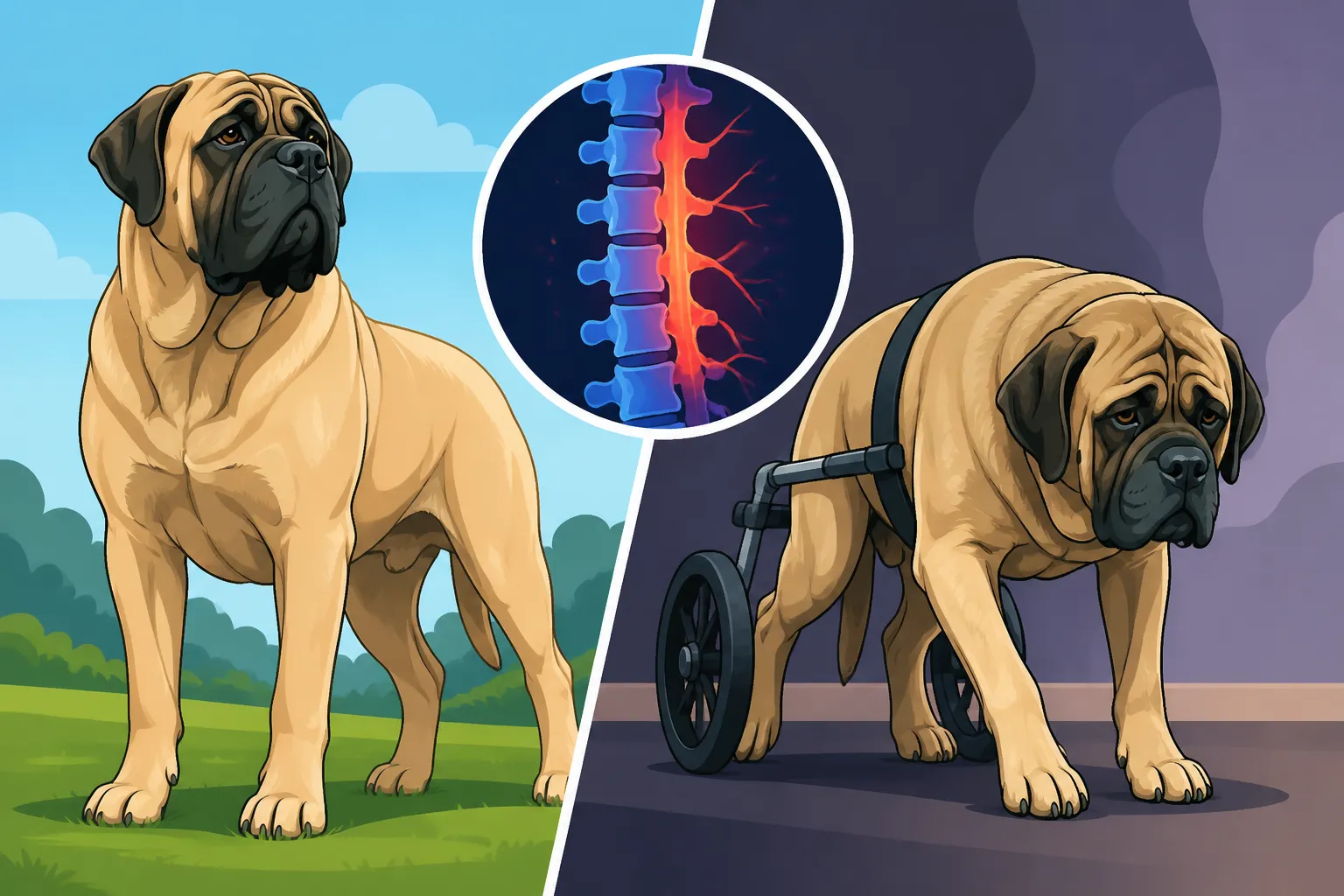
Beyond bedding, assistive devices become invaluable. Rear-end support slings or full-body harnesses, like those from brands such as GingerLead or Help 'Em Up, can help you lift and support your Mastiff’s hindquarters, allowing them to walk or simply get outside to relieve themselves. For more advanced stages, Whether a Mastiff With DM Can Be Fitted With a Cart is a hopeful question for many. A custom-fitted wheelchair or cart can restore a surprising amount of independence and joy, allowing them to move about and explore, albeit with assistance. However, due to their sheer bulk, a Mastiff in a cart still requires significant strength from the handler to navigate doorways and obstacles. Remember, even short, assisted walks can boost their spirits and help maintain circulation.
The Importance of Mental Stimulation
While their body may be failing, a Mastiff’s mind often remains sharp and engaged for a long time. It’s absolutely vital to provide plenty of mental stimulation to prevent boredom, frustration, and a decline in their overall well-being. This might involve interactive puzzle toys that dispense treats, engaging in gentle sniffing games in the yard (perhaps from a comfortable wagon or supported with a sling), or simply spending quality time with you. Continued praise, affection, and positive reinforcement are critical. Reading aloud to them, gentle grooming, or simply having them lie near you while you work can provide immense comfort and connection.
Keeping their minds active helps to distract them from their physical limitations and reinforces their sense of purpose. Food puzzles, like those offered by Outward Hound or KONG, can be adapted for limited mobility, allowing them to use their powerful noses and problem-solving skills without needing to stand or move much. Even something as simple as rotating their toys or offering novel scents to sniff can be profoundly enriching. Remember, a Mastiff's world shrinks as their mobility declines, so bringing the world to them in safe and engaging ways is a true act of love.
Coping with the Emotional Weight
Caring for a Mastiff with Degenerative Myelopathy is an emotional marathon. There will be days filled with profound sadness, frustration, and exhaustion. It’s okay to feel these things. The bond you share with your Mastiff is deep, and watching them lose their ability to move freely is a grief process. Lean on your support system—friends, family, or even online communities dedicated to giant breed owners or those caring for dogs with DM. Sharing experiences and advice can be incredibly validating and helpful.
Many owners find comfort in knowing they are doing everything possible to provide comfort and quality of life. Celebrate the small victories: a wagging tail, a happy sigh, a successful potty break. Focus on the moments of connection and joy you still share. It's also important to be mindful of your own well-being. Caregiver burnout is real, and it’s okay to ask for help or take short breaks when needed. Organizations like the Old English Mastiff Club of America often have resources or community forums where you can connect with others who understand your unique challenges. Ultimately, this journey requires immense strength and a deep, unconditional love for your gentle giant.
Diagnostic Journey and Management Strategies
The diagnosis of Degenerative Myelopathy is often one of exclusion, meaning veterinarians rule out other conditions first before confirming DM. There's no single definitive test for DM in a living dog, making the diagnostic journey a process of careful elimination. Once diagnosed, the focus shifts entirely to management—there is currently no cure, but there are many ways to support your Mastiff and maintain their comfort and quality of life for as long as possible.
Ruling Out Other Conditions
When your Mastiff begins to show signs of hind-end weakness, your veterinarian will likely start by performing a thorough physical and neurological exam. They’ll be checking reflexes, proprioception, and muscle tone. The next step is usually a series of diagnostic tests to rule out other common causes of hind limb weakness in large breeds. This often includes X-rays of the spine and hips to look for orthopedic issues like hip dysplasia, intervertebral disc disease (IVDD), or other spinal abnormalities. Blood tests may also be run to check for inflammatory markers or other systemic diseases that could affect neurological function.
More advanced imaging, such as an MRI or CT scan, might be recommended, particularly if there's suspicion of a treatable spinal compression or tumor. These tests can be expensive, especially for a Mastiff whose size often requires specialized equipment and higher anesthetic doses. However, they are crucial for ruling out conditions that are treatable, such as a slipped disc. If all other causes are ruled out, and the clinical signs are consistent with DM, a presumptive diagnosis of Degenerative Myelopathy is made. While a DNA test can indicate if a dog is "at-risk," it cannot definitively diagnose the presence of active DM. The only definitive diagnosis for DM is made post-mortem by examining spinal cord tissue.
Supportive Care and Lifestyle Adjustments
Once a presumptive diagnosis of DM is made, the focus shifts entirely to supportive care aimed at preserving mobility and quality of life. This is where you, as the owner, become your Mastiff's most important advocate and caregiver. A major part of this involves making lifestyle adjustments around the home. Ensure your Mastiff has excellent traction on all surfaces; if you have hardwood or tile, consider laying down non-slip runners or rugs throughout the house. This prevents slips and falls that can cause injuries or exacerbate their instability. Also, ensure their food and water bowls are easily accessible without requiring them to stoop excessively, which can be hard on their failing hindquarters.
Physical therapy and rehabilitation exercises, often recommended by a veterinary rehabilitation specialist, can be incredibly beneficial. These might include gentle range-of-motion exercises, passive stretches, and controlled, short walks on varied textures. Underwater treadmill therapy can be a game-changer, allowing your Mastiff to exercise their limbs with reduced weight-bearing stress, which can help maintain muscle mass and coordination. While these therapies cannot halt the progression of DM, they can significantly slow muscle atrophy and improve comfort. Regular veterinary check-ups will also be important to monitor their condition and address any secondary issues that arise.
Considering Mobility Aids and Quality of Life
As the disease advances, mobility aids will become increasingly necessary. We've already touched on slings and harnesses, which are excellent for providing temporary support. Eventually, many Mastiff owners consider a dog wheelchair or cart. Whether a Mastiff With DM Can Be Fitted With a Cart is a very practical question, and the answer is often yes, but it requires careful measurement and selection of a robust, custom-built cart designed for their immense weight and stature. Brands like K9 Carts or Walkin' Wheels offer durable options, but selecting one is a significant investment and requires professional guidance.
| DM Stage | Common Symptoms | Management Strategies |
|---|---|---|
| Early | Slight paw dragging, mild stumbling, wobbliness | Non-slip rugs, gentle exercise, muscle supplements |
| Mid-Stage | Hind limb weakness, knuckling, muscle atrophy | Rear-support harness, physical therapy, regular potty breaks |
| Advanced | Unable to stand/walk unaided, incontinence | Dog wheelchair/cart, orthopedic bedding, diapers, slings |
Beyond physical aids, assessing your Mastiff's overall quality of life becomes a continuous, often agonizing, process. It's about balancing their comfort and happiness with the increasing challenges of their condition. Are they still enjoying their food? Do they light up when you speak to them? Can they still interact with the family in meaningful ways? These are questions that will guide your decisions. Caring for a Mastiff Past Five often involves proactive health monitoring, and with DM, this care becomes even more intensive. Open, honest conversations with your veterinarian about your Mastiff’s well-being are paramount.
Looking Ahead: Resources and Support
Navigating life with a Mastiff affected by Degenerative Myelopathy is a journey that no one should undertake alone. The physical demands of caring for a giant breed with mobility issues, combined with the emotional weight of a progressive disease, can be overwhelming. Fortunately, there are many resources and support systems available to help you and your Mastiff. Connecting with professionals and finding a community of fellow owners can make a profound difference in coping with this challenging diagnosis.
Connecting with Veterinary Specialists
Your primary veterinarian will be your first point of contact, but as DM progresses, connecting with veterinary specialists can provide invaluable expertise. A veterinary neurologist can offer the most accurate diagnosis and guidance on the disease’s progression, helping you understand what to expect. They can also advise on any new research or emerging treatments, though unfortunately, there are no cures for DM at this time. For the physical aspects, a board-certified veterinary rehabilitation specialist or physical therapist can develop a tailored exercise program, including hydrotherapy (underwater treadmill), therapeutic exercises, and massage, to help maintain muscle mass and flexibility for as long as possible.
These specialists are also adept at recommending and fitting appropriate mobility aids, from slings to custom wheelchairs, ensuring they are safe and effective for your Mastiff's unique needs. Don't hesitate to seek out these experts; their specialized knowledge can significantly improve your Mastiff's comfort and extend their quality of life. Many of these clinics are equipped to handle the immense size of Mastiffs, which is a crucial consideration when seeking specialized care. Also, discussing financial aspects with your vet and looking into pet insurance, such as Healthy Paws, early in your Mastiff's life can help mitigate The Mastiff's Short Life Buys the Biggest Bills associated with chronic conditions.
Finding Community and Emotional Support
Perhaps one of the most powerful resources for owners navigating DM with their Mastiff is community. Connecting with other giant breed owners or those who have experience with DM can provide a lifeline of emotional support, practical advice, and shared understanding. Online forums, social media groups (like Facebook groups dedicated to Mastiffs or DM support), and local breed clubs often have members who have walked this path before. They can offer tips on everything from managing incontinence in a large dog to recommending the best type of lifting harness.
Sharing your struggles and triumphs with people who genuinely understand can alleviate feelings of isolation. They can offer empathy, validate your emotions, and provide encouragement when you feel overwhelmed. Remember, you are doing an incredible job caring for your Mastiff, and it’s okay to seek support for yourself too. This journey is a testament to the profound bond you share, and with the right resources and support, you can ensure your Mastiff lives their remaining time with as much comfort, dignity, and love as possible.
Disclaimer
Please remember that the information provided in this guide is intended for educational purposes only and should not be considered a substitute for professional veterinary advice. Always consult with a qualified veterinarian for any health concerns or before making any decisions about your Mastiff's medical care.