Whether a Mastiff Suits a Hot Climate
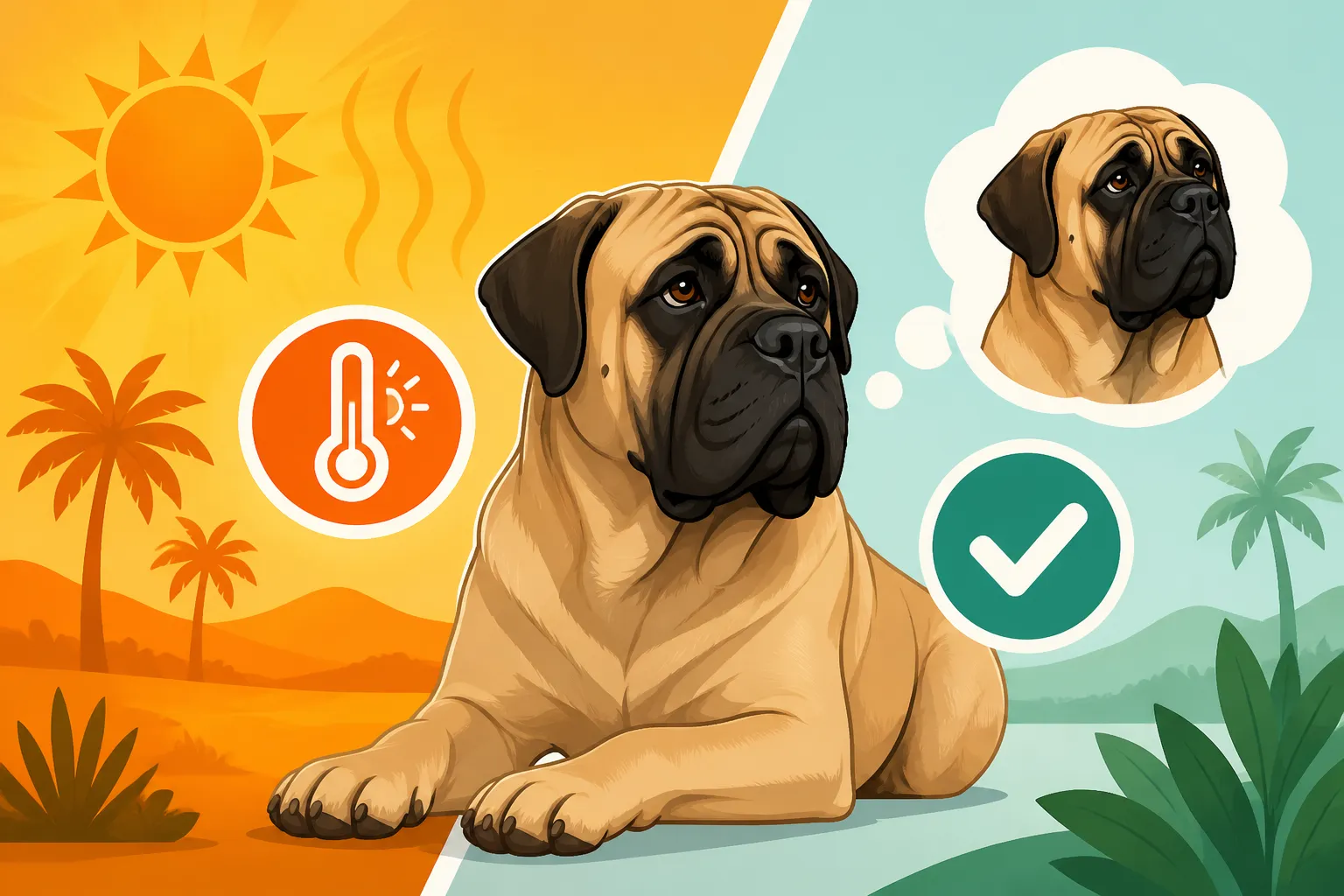
A Mastiff can live in a hot climate, but its size makes heat management a daily responsibility, not an occasional precaution. In places such as Phoenix, Houston, and Miami, hot pavement, humid nights, and long warm seasons can quickly complicate walks and outdoor time. This guide explains how to make a warm-weather home safer and how to spot trouble early.
Can a Mastiff live comfortably in a hot climate
Why heat can be harder on a Mastiff
A Mastiff’s short coat may look as if it should make hot weather easy, but coat length is only part of the picture. A large, heavy body holds heat, and a dog cools itself mainly through panting. When the air is hot or humid, panting may be less effective at releasing heat. A Mastiff that seems content to lie in the shade can still be getting uncomfortably warm.
That risk is not identical for every dog. Age, weight, fitness, health, and breathing all matter. An overweight Mastiff or one with heart or airway problems may have a harder time coping than a lean, healthy dog. Puppies and older dogs also need extra care. If you are unsure how your dog handles warm weather, ask your veterinarian to help you make a plan based on the dog in front of you—not just the forecast.
Climate matters, too. Dry heat in Phoenix can make outdoor surfaces dangerously hot even when the air feels manageable. In Houston or Miami, humidity can make it harder for a panting dog to cool down. Warm evenings may also limit the hours when a long walk feels comfortable. For a broader look at the practical considerations, see Whether a Mastiff Can Live in the South and Why Bulk Makes a Mastiff Overheat.
The home matters more than the yard
A fenced yard is not a substitute for a cool indoor space. In hot weather, a Mastiff needs reliable access to shade, fresh water, and a temperature-controlled area where it can rest. A doghouse, porch, or patch of shade may offer some relief, but it can become hot or humid itself, and shade moves as the sun shifts.
Think through the hottest part of the day. Can your dog come inside whenever it wants? Is the room comfortable with the doors and windows closed? Can the dog lie on a nonslip surface without being trapped in direct sun? If the cooling system fails or the power goes out during a heat wave, know where you can take your dog. Planning ahead is much easier than trying to move a distressed giant-breed dog in an emergency.
A Mastiff that lives in an air-conditioned home may do well in a warm region, even if outdoor activity has to be limited. The challenge is a household where the dog is expected to spend hours outside, or where indoor cooling is unreliable. The right question is not simply whether Mastiffs can live somewhere hot. It is whether you can consistently provide a cool refuge and adjust the dog’s routine when conditions turn uncomfortable.
Build a warm-weather routine around safe hours
Choose walk times by conditions, not the clock alone
Early morning and later evening are often more comfortable times for walks, but “after sunset” does not automatically mean safe. Pavement can retain heat after the sun goes down, and a humid evening may still feel oppressive. Before you set out, check the route and the dog’s behavior. If the ground feels hot to your hand, choose grass or postpone the walk. See Whether a Mastiff Should Walk at Midday for more on timing walks.
Keep outings shorter during hot spells, and let your Mastiff set the pace. A slow, sniff-focused stroll is generally a better choice than trying to maintain a distance or speed the dog manages in cool weather. Bring water and take breaks in shade. If your dog starts lagging, seeking cool surfaces, or panting harder than usual, turn back. Don’t wait for a scheduled finish point to decide the outing is over.
For exercise, consider indoor play or quiet training when outdoor conditions are poor. A few minutes of gentle practice or scent work can give your dog something to do without turning exercise into a heat challenge. Avoid vigorous games that encourage repeated sprinting, especially in a yard with limited shade. Warm-weather activity should feel easy enough that you can stop before your dog is struggling.
Be careful around cars, water, and hot surfaces
Never leave a Mastiff in a parked car, even briefly or with the windows cracked. A vehicle can heat up quickly, and a dog cannot leave if it begins to overheat. If errands require leaving the dog unattended in the car, leave the dog at home instead.
Pools, lakes, and beaches are not automatic cooling solutions. Some Mastiffs may enjoy water, but their weight, build, and swimming ability vary. Supervise closely, provide an easy way to get out, and don’t force a dog into water or assume it can manage a long swim. Read Whether a Mastiff Can Swim at All before treating swimming as exercise. A shaded spot with fresh drinking water and a comfortable indoor retreat is usually a more dependable plan.
Hot pavement is another easily missed hazard. Paw pads can be burned by a surface that seems merely warm to a person wearing shoes. Choose grassy routes where possible, and check the ground before walking. If your Mastiff is reluctant to walk, lifts a paw, or tries to turn back, take that seriously rather than coaxing it across a hot stretch.
Set up the house for heat and humidity
Make cooling and water easy to reach
Keep clean, fresh water available in more than one place if your home has several rooms or floors. That way, your Mastiff does not have to cross a hot area or climb stairs just to drink. Wash bowls regularly and refill them before heading out. If your dog tends to gulp water after activity, offer access calmly and keep an eye on its comfort rather than encouraging strenuous play in the heat.
Indoors, provide a cool resting place away from direct sun. A fan can help air circulate, but it should not be the only cooling measure in a very hot room. Watch the room itself: a sunny conservatory, upstairs bedroom, or enclosed porch may become much warmer than the rest of the house. If you use cooling mats, raised beds, or other gear, make sure your dog can move away from them and that the setup is stable and comfortable.
If you’re comparing supplies, Chewy may be one place to look for items such as water bowls or cooling mats. Focus on whether a product suits your dog’s size, habits, and home setup rather than assuming any item marketed as “cooling” will solve overheating. A mat cannot replace shade, access to a cool room, or a change in activity. For a practical checklist, see How Much Cooling a Mastiff Household Needs and Which Cooling Gear Works on a Mastiff.
| Warm-weather need | Practical approach | What not to rely on |
|---|---|---|
| A cool place to rest | Keep an indoor, temperature-controlled area available | A shaded yard or doghouse alone |
| Drinking water | Provide fresh water in accessible locations | A single bowl far from the dog |
| Exercise | Choose cooler periods and shorten walks when needed | The usual route or schedule regardless of conditions |
| Cooling equipment | Use it as one part of a broader plan | A cooling mat or fan as the only safeguard |
| Outdoor surfaces | Check pavement and favor cooler, grassy areas | Assuming evening pavement has cooled |
Keep coat and routine simple
A Mastiff’s short coat does not need to be shaved for summer. Shaving can remove the coat’s natural protection from sun and may leave skin exposed. Regular brushing can help remove loose hair and gives you a chance to notice skin irritation, ticks, or changes in your dog’s condition. Keep grooming calm and avoid turning it into a long, strenuous session on a hot day.
Plan errands, visitors, and outdoor chores with your dog’s comfort in mind. If you are gardening in the yard, for example, your Mastiff may follow you into the sun and stay there because it wants to be near you. Offer a cool indoor spot and check in rather than assuming the dog will move away when it gets too warm. If you are considering equipment or routine changes, Chewy can be a convenient place to compare basic pet-care supplies, but your veterinarian is the better person to ask about a cooling product for a dog with a medical condition.
Recognize overheating and respond promptly
Know the warning signs
Heavy panting after activity can be normal, but panting that is intense, persistent, or out of proportion to the effort is concerning. Other warning signs can include excessive drooling, weakness, unsteady movement, vomiting, confusion, or collapse. A dog may also seem unusually restless or may stop responding normally. These signs warrant prompt attention, particularly if the dog has been in heat or humidity.
Do not wait for your Mastiff to become visibly distressed before moving it to a cooler place. Stop activity, get the dog out of the sun, and contact a veterinarian or emergency clinic for guidance if you suspect heat illness. Follow professional instructions about cooling and transport; don’t delay seeking help to see whether the dog will “sleep it off.” For a fuller list of symptoms and what to watch for, see Signs a Mastiff Is Overheating and The Temperature at Which a Mastiff Should Stay Indoors.
If your dog collapses, seems confused, vomits, or has trouble breathing, treat the situation as urgent. Call a veterinary clinic while arranging safe transport, and explain that the dog may be overheated. A Mastiff’s size can make handling difficult, so it helps to know in advance which nearby clinic can accommodate a giant-breed dog and how you would move your dog if it could not walk.
Make a plan before a heat wave
Write down your veterinarian’s contact details and the location of an emergency clinic that can handle a large dog. Keep a leash and water ready, and think about how you would move your Mastiff into a vehicle if it became weak. If you live in a hot area, ask your veterinarian what signs should prompt an immediate call and whether your dog has health factors that call for extra precautions.
Review the plan when the weather shifts. A routine that works during a mild spring week may not be appropriate during a spell of high temperatures or humidity. In places where warm nights are common, make sure your dog has a cool place to sleep rather than assuming the house will cool down on its own. Chewy may be useful for comparing practical supplies, but preparation is about the whole routine: shade, indoor cooling, water, safe surfaces, and knowing when to stop outdoor activity.
A Mastiff can share a home with you in a hot region when its environment and daily schedule are adapted to the weather. The safest approach is to make indoor cooling readily available, avoid hot surfaces and strenuous outdoor activity, and act quickly if your dog shows signs of distress. That routine—not the breed’s short coat—is what makes warm-weather living more manageable.
Disclaimer
This article is for general informational purposes only and does not constitute professional advice. Laws, prices and regulations vary by location and change over time. Consult a qualified professional for guidance on your specific situation.