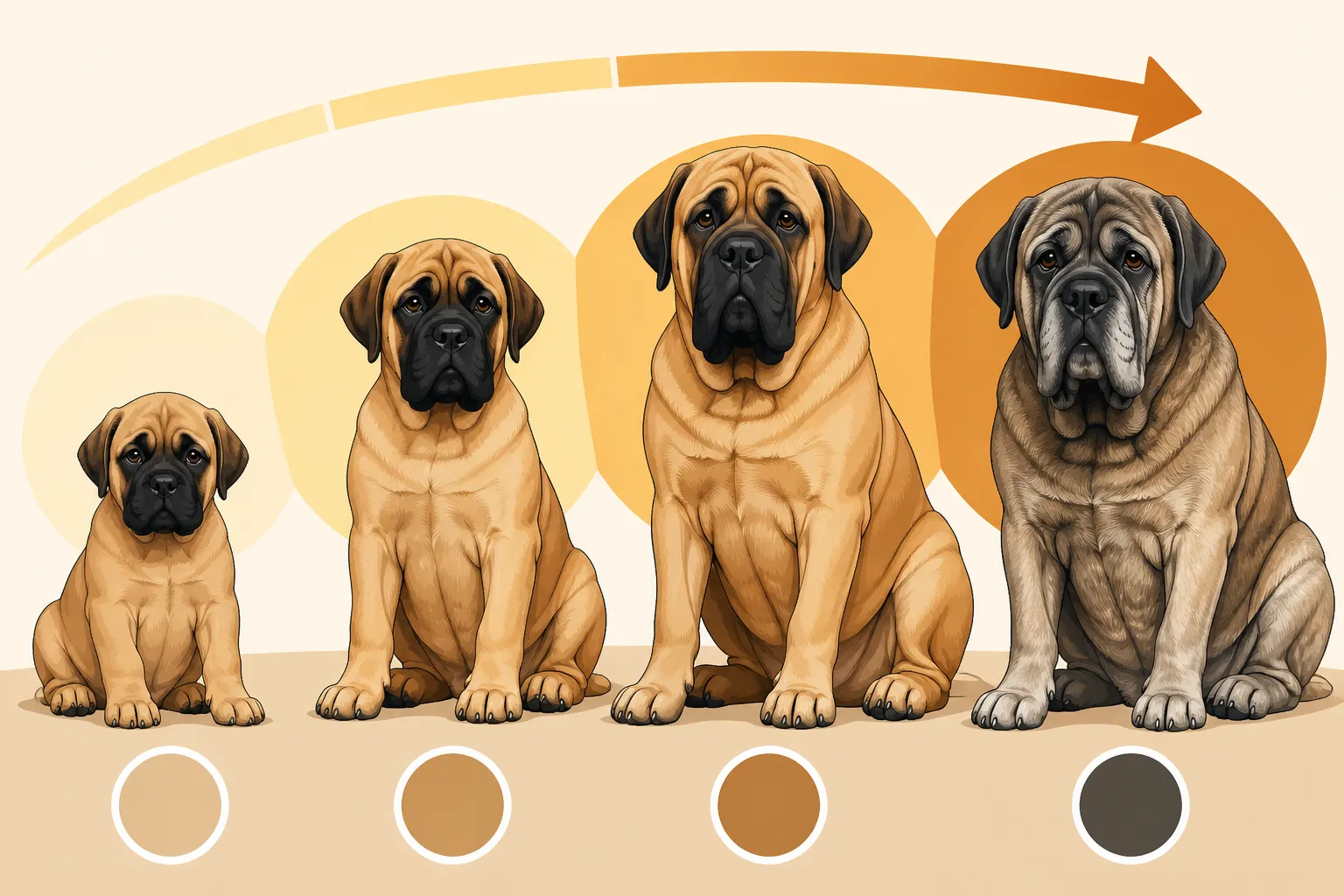
How a Mastiff’s Color Changes With Age
A Mastiff puppy can look noticeably different from the dog standing beside you a year later, and changing photos can make it hard to tell what is normal. Fawn may deepen, brindle markings can become more or less noticeable, and a black mask may look different as the coat matures. This guide explains what tends to change with age, what usually stays the same, and when a coat change deserves attention.
Why a Mastiff's coat can look different as it grows
Puppy coat and adult coat are not identical
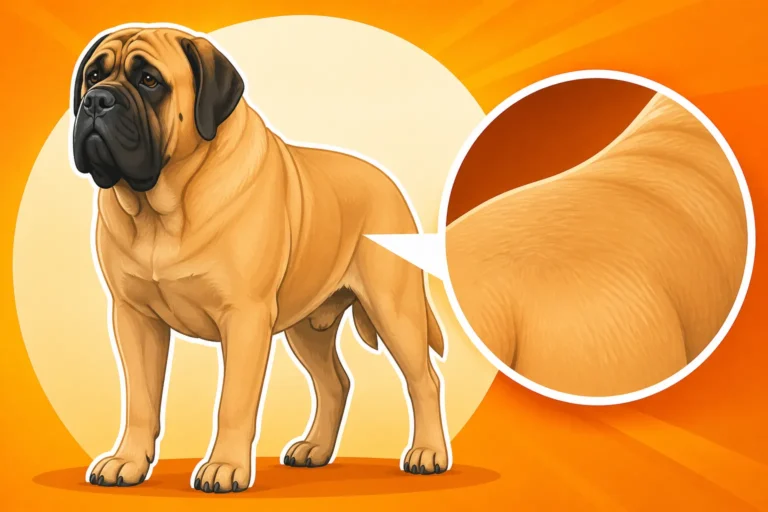
Mastiff puppies often have a softer, shorter-looking coat than they will carry as adults. As the dog grows, its coat fills out and develops a more mature texture. That change can make the color seem richer, flatter, darker, or more defined, even when the underlying pattern has not changed.
Lighting and coat condition add to the confusion. A puppy photographed in bright sunlight may appear much lighter than the same dog indoors, while a clean, brushed coat can reflect light differently from one carrying loose hair or dust. It is easy to compare two photos and conclude that the color itself changed when some of the difference is really age, season, or lighting.
Mastiffs do shed, and a coat can look uneven while old hair is coming out and new hair grows in. Seasonal shedding may also make the coat appear thinner or less saturated for a while. If you are trying to track a puppy’s color, take occasional photos in similar natural light and from the same angle. That is more useful than comparing a sunny breeder photo with a close-up taken under warm indoor bulbs.
The colors and patterns have different visual effects
Mastiffs are commonly seen in fawn, apricot, and brindle. Fawn can range from pale to deeper shades, while apricot tends to read as warmer or more orange-toned. Brindle describes a pattern of darker stripes over a lighter base; depending on the stripe density and contrast, the dog may look quite dark or mostly light.
The breed’s dark facial mask is another feature that can shape how the whole coat appears. A strong mask creates a sharp contrast with the body, while a softer or less visually prominent mask can make the face look less dark. For a broader look at accepted shades and markings, see The Colors a Mastiff Comes In and Which Colors the Mastiff Standard Allows.
A puppy’s markings may become easier to read as the coat matures, but a fundamental pattern does not normally turn into a completely different one. A brindle puppy does not usually become a solid fawn adult. Instead, changes in coat length, contrast, shedding, and body proportions can make the pattern seem to recede or stand out.
What usually changes and what usually stays stable
| Coat feature | What may look different with age | What generally stays consistent |
|---|---|---|
| Fawn or apricot body coat | Shade may appear richer or less bright as the coat matures | The dog’s basic color family |
| Brindle pattern | Stripes may seem more or less distinct as the coat fills in or sheds | The presence of the brindle pattern |
| Black mask | Its contrast may look different in changing light or against a maturing coat | The basic facial marking |
| White markings | Their appearance may be easier to see as the dog grows | The location of the markings |
| Muzzle hair | Gray or pale hairs may become more noticeable with age | The original coat pattern elsewhere |
This table describes common visual changes, not a guarantee for every dog. A Mastiff’s genetics, coat condition, age, and individual pigment all influence what you see. To understand the dark facial markings more closely, read Why a Mastiff Must Have a Black Mask and How a Mastiff Puppy's Mask Changes.
How color can shift across a Mastiff's life
From puppyhood into adulthood
During puppyhood, the coat can change in appearance as the dog’s body grows and the adult coat develops. The color may seem more intense in one area and softer in another. Brindle stripes can be easier to notice at some stages than others, especially if the puppy’s coat is short or the base color and stripes have low contrast.
The dog’s proportions change quickly, too. A puppy’s face, ears, and body do not yet have the same visual balance as an adult Mastiff’s. As the head broadens and the coat settles into its mature appearance, the same facial markings can seem more prominent or less dominant. This is one reason puppy photos are not always a reliable guide to the exact look of the adult coat.
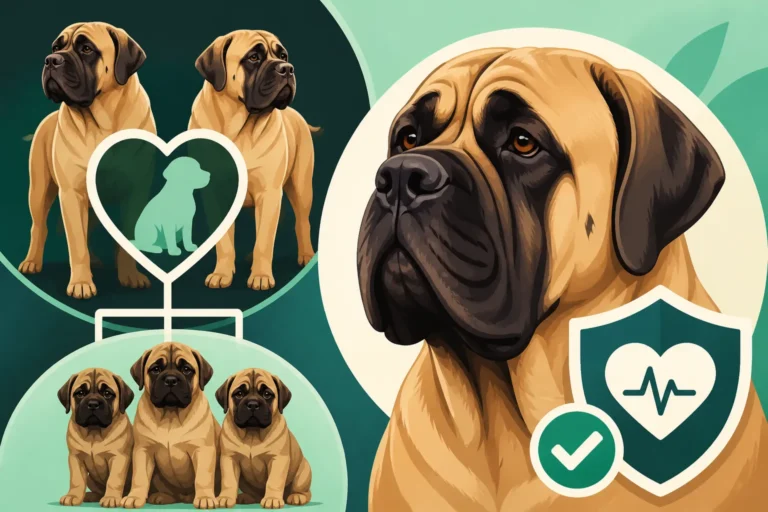
If you are choosing a puppy based on color, ask the breeder for photos of relatives at different ages, while remembering that relatives are not a promise of an identical adult coat. A comparison with a parent or older sibling may give you a sense of the family’s coat tendencies, but it cannot predict every detail. For more context on shade variation, see What Fawn Looks Like on a Mastiff and What Apricot Means on a Mastiff.
Through adulthood and seasonal shedding
Once a Mastiff has an adult coat, the basic color and pattern are usually more stable than they were during puppyhood. Still, the coat can look different throughout the year. Shedding may reduce the coat’s fullness, while fresh growth can make it look smoother or more even. A dog who has spent time outdoors may also look dustier or sun-faded than one whose coat has recently been cleaned and brushed.
Sun exposure can affect how hair looks, especially on areas that receive more direct light. That does not necessarily mean the dog’s underlying pigment has changed. A coat that appears lighter on the back or shoulders than on shaded areas may reflect exposure and hair condition rather than a new color pattern.
A simple routine makes these changes easier to interpret: take a photo every month or two, note the season, and keep the coat dry and brushed before photographing. If you need to replace a basic rubber curry brush or grooming mitt, Chewy is one place owners may browse for general grooming supplies; choose a tool that suits your dog’s skin and coat rather than buying one based only on a color concern. Whether a Mastiff Sheds explains what routine shedding can look like.
In older Mastiffs
As a Mastiff gets older, pale hairs may appear around the muzzle or elsewhere on the face. This is a familiar aging change in many dogs and can make a dark mask seem less solid. The body coat may also look less glossy if the dog is shedding, has dry skin, or is not being groomed as regularly because movement has become uncomfortable.
Age-related graying is different from a sudden, patchy loss of color. A few pale hairs appearing gradually are not the same as a sharply defined bald spot, inflamed skin, or a large area of coat turning pale over a short period. If a senior dog’s appearance changes alongside reduced appetite, itching, discomfort, or a change in energy, take note of the whole picture rather than treating it as a cosmetic issue.
For a dog whose coat is changing as the years pass, gentle grooming can help you spot the difference between ordinary gray hairs and a skin problem. If you use Chewy to restock grooming basics, keep the routine simple and avoid introducing new shampoos or topical products just to alter the coat’s appearance. A natural change in color does not need cosmetic correction.
When a coat change is ordinary and when to check it
Changes that are usually visual rather than alarming
A gradual shift in how a shade appears is often related to coat maturity, shedding, lighting, or age. A brindle pattern that looks more obvious after a bath, for example, may simply be cleaner and easier to see. A fawn coat that looks warmer in afternoon sunlight may look muted under cloudy skies or indoor lighting.
White markings can also seem more obvious as a dog grows, especially when the surrounding coat changes in length or contrast. Their visibility does not necessarily mean they are spreading. To learn more about markings, see Whether a Mastiff Can Have White Markings and How Much White a Mastiff May Carry.
When comparing photos, try not to judge from a single image. Check whether the camera used flash, whether the dog was wet, and whether the photo was taken in a different season. If the change is gradual and the dog’s skin and behavior appear normal, the variation may simply be part of how the coat looks at that stage of life.
Signs that call for veterinary advice
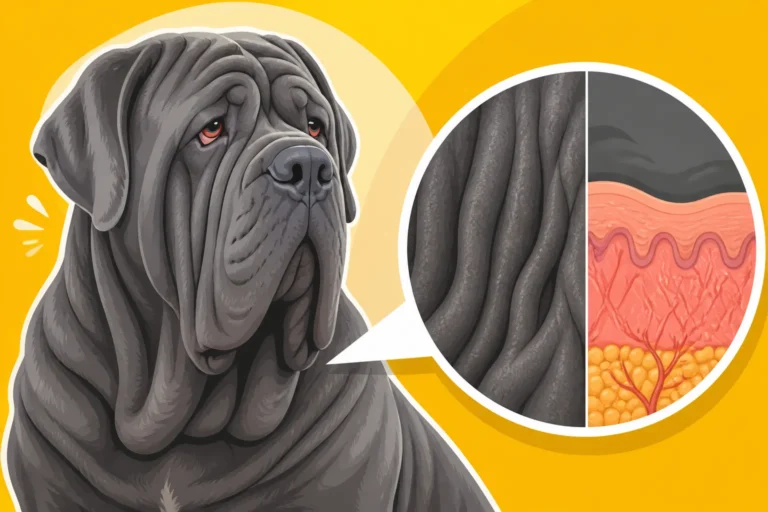
A coat change deserves closer attention if it arrives suddenly, affects a distinct patch, or comes with itching, redness, scabs, odor, hair loss, or skin thickening. Those signs do not identify a particular cause on their own, but they can point to a skin or health issue that needs assessment. Do not assume a new bare or discolored area is just a normal aging change.
Notice whether the dog is licking or scratching one spot, whether the skin looks irritated, and whether the hair is breaking or falling out. Photos taken over several days can help you explain how quickly the change appeared. Avoid using human hair products, bleach, dyes, or unprescribed treatments; a Mastiff’s skin can be irritated by products that seem harmless in a household routine.
If the coat changes alongside other symptoms, such as unusual tiredness or a marked change in appetite, mention those details when seeking veterinary guidance. Chewy may be convenient for replacing ordinary grooming supplies, but a retailer cannot determine why a dog’s skin or coat has changed. For an individual dog’s symptoms, the right next step is a veterinary examination.
How to track your Mastiff's coat without overthinking it
Make photos useful for comparison
Choose one spot with indirect daylight and take pictures from a few consistent angles. Include the face, sides, and back, and try to photograph the dog when the coat is dry and reasonably clean. A date and short note—such as “winter shedding” or “after bath”—can prevent a seasonal variation from looking like a permanent color change later.
There is no need to photograph every week. A monthly or occasional record is enough for most owners who are curious about coat development. If a change worries you, take closer photos of the affected area and keep a record of when you first noticed it, whether it is spreading, and whether the dog seems itchy or uncomfortable.
Keep grooming gentle and consistent
Regular brushing helps remove loose hair and gives you a chance to notice changes in the skin beneath it. Use light pressure, especially over folds and sensitive areas, and stop if the dog seems sore or tries to move away. A coat does not need special treatments to preserve its natural shade.
If you are shopping for basic grooming supplies, you may find options through local pet shops or Chewy. The important part is choosing a suitable brush and a mild routine, not a product that promises to darken, brighten, or otherwise transform the coat. When an unusual change persists, make a note of the grooming products used and share that information with your veterinarian.
Most Mastiffs keep their basic color and pattern as they grow, even though the coat can look different from puppyhood through old age. A changing shade, more visible brindle, or gradual muzzle graying is often a matter of coat maturity, shedding, light, or age. Sudden hair loss, irritation, or patchy discoloration is a different situation and deserves attention rather than a guess.
Disclaimer
This article is for general informational purposes only and does not constitute professional advice. Laws, prices and regulations vary by location and change over time. Consult a qualified professional for guidance on your specific situation.