How Roman Troops Brought Mastiffs to England
It's easy to look at our magnificent Mastiffs today, lounging on the sofa or gracefully moving through the house, and forget that their lineage stretches back thousands of years. We often wonder about their ancient origins, especially how such powerful dogs found their way to the misty shores of England. This guide will take a fascinating journey back in time, tracing the historical path of these incredible canines as they accompanied the mighty Roman legions to Britannia, fundamentally shaping the future of the breed we adore.
The Molossus: Ancestor of the Roman War Dog
Before the roar of the Roman legions echoed across Europe, there was an even older, more primal rumble: the deep chest of the Molossus. This ancient dog, originating from the mountainous region of Molossia in Epirus (modern-day Albania and Greece), was not just a dog; it was a force of nature, a living, breathing testament to power and loyalty. Its descendants would eventually travel the world, including the journey with Roman troops to England, carrying with them a formidable legacy.
Tracing the Ancient Lineage
The history of the Molossus isn't neatly written in a breed standard, but rather etched into ancient stone and whispered through classical texts. Imagine towering, heavily muscled dogs, used for guarding livestock against wolves and bears, and for warfare. These dogs were revered for their strength, courage, and protective instincts. Evidence of similar large, powerful dogs can be found in the ancient world, depicted on Assyrian carvings dating back thousands of years. These carvings show dogs with broad heads, strong jaws, and a solid build, often seen assisting in hunting or guarding fortifications. The Assyrian Carvings That Show Mastiff Type Dogs offer us a visual glimpse into this distant past, illustrating the consistent appreciation for such robust canines.
These early 'Molosser' types were far from the pampered pets we know today. They were working animals, vital for the survival and defense of their human companions. Their formidable presence alone was often enough to deter threats, a trait that would make them invaluable to armies and settlers alike. This established a foundation of utility and steadfastness that continues to resonate in the Mastiff's character, even as their duties have evolved from ancient battlefields to modern-day family guardianship.
Alexander the Great and the Molossian Hounds
One of the most enduring legends linking these powerful dogs to ancient military might involves Alexander the Great. It is said that Alexander, during his sweeping conquests, encountered enormous war dogs in India or Persia. Impressed by their ferocity and size, he brought some of these dogs back, where they were crossbred with the native Molossian hounds. This fusion created an even more fearsome canine, a powerful ally on the battlefield capable of tackling formidable foes. Alexander the Great's Mastiff Type Dogs highlights how these formidable creatures played a part in military lore.
These dogs weren't just morale boosters; they were strategic assets. Unleashed against enemy lines, they could break formations, create chaos, and sow terror among soldiers unaccustomed to such canine adversaries. Their sheer physical presence and unwavering courage made them legendary, and their reputation spread throughout the ancient world. This direct link between these colossal dogs and military prowess certainly caught the attention of the rising Roman Empire, who were always looking for any advantage to secure their dominion. This early history sets the stage for the Molossus to become an integral part of the Roman war machine.
Roman Adoption and Adaptation of the Molossus
As the Roman Empire expanded its reach, its legions encountered many different cultures and their animals. It was inevitable that they would come across the formidable Molossian-type dogs, recognizing their immense potential. The Romans, ever practical and efficient, quickly adopted and adapted these magnificent beasts into various roles, from fierce combatants to loyal guardians and even participants in public spectacle.
The Roman War Machine and Its Dogs
The disciplined Roman army was a force to be reckoned with, but they were always open to incorporating new tactics and tools. When they encountered Molossian dogs, they immediately understood the strategic value of such powerful animals. These dogs were integrated into legionary units, primarily for guarding encampments, supply trains, and prisoners. Imagine a Roman camp at night, protected not just by watchful sentinels, but by massive, vigilant dogs whose deep growls could alert the entire legion to an approaching threat. Their presence added another layer of security and intimidation.
Training these colossal dogs for battle was a meticulous process. They were taught to attack on command, to be fearless in the face of conflict, and to protect their handlers above all else. Accounts describe them wearing spiked collars or even light armor, deployed in waves to disrupt enemy formations or to hunt down fleeing combatants. This was not just about brute force; it was about leveraging the dogs' natural instincts for protection and territoriality in a highly organized military context. The effectiveness of these Roman war dogs cemented their place within the empire's formidable arsenal, becoming another tool in their relentless expansion.
Beyond the Battlefield: Guarding and Sport
While their military application was undeniably significant, the Roman appreciation for Molossian dogs extended far beyond the battlefield. Wealthy Romans quickly recognized their value as guardians for their sprawling villas and vast estates. A dog of this size and temperament was a powerful deterrent against thieves and intruders, ensuring the safety of property and family. These dogs became symbols of status and security, embodying the protective spirit that would define their descendants for centuries to come.
However, the Romans also had a darker fascination with these powerful creatures. They were often pitted against other wild animals, and even gladiators, in the brutal spectacles held in arenas like the Colosseum. These public displays of strength and ferocity entertained the masses and served as a stark reminder of Roman power and control. The Mastiffs That Fought in the Arena provides a glimpse into this often disturbing aspect of their history, highlighting the incredible strength and resilience these dogs possessed. This dual role—both protector and performer—showcases the multifaceted way in which the Romans incorporated these impressive dogs into their society. It's a reminder that even today, when we source modern pet supplies from trusted places like Chewy, our dogs' history is steeped in ancient human needs and desires, from protection to companionship.
The Journey to Britannia with Caesar's Legions
The story of the Mastiff arriving in England is intrinsically linked to the Roman conquest of the island. While the initial expeditions were fleeting, they marked the beginning of a profound cultural and canine exchange that would forever alter the landscape of British dog breeds.
Caesar's Expeditions to Britain
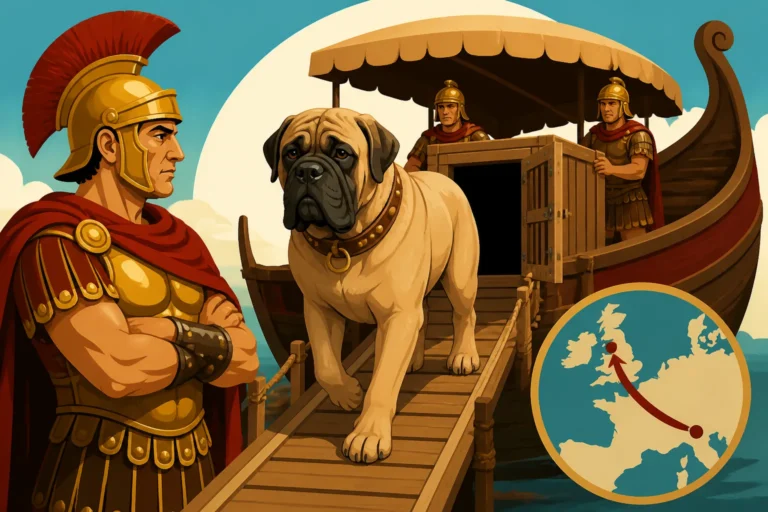
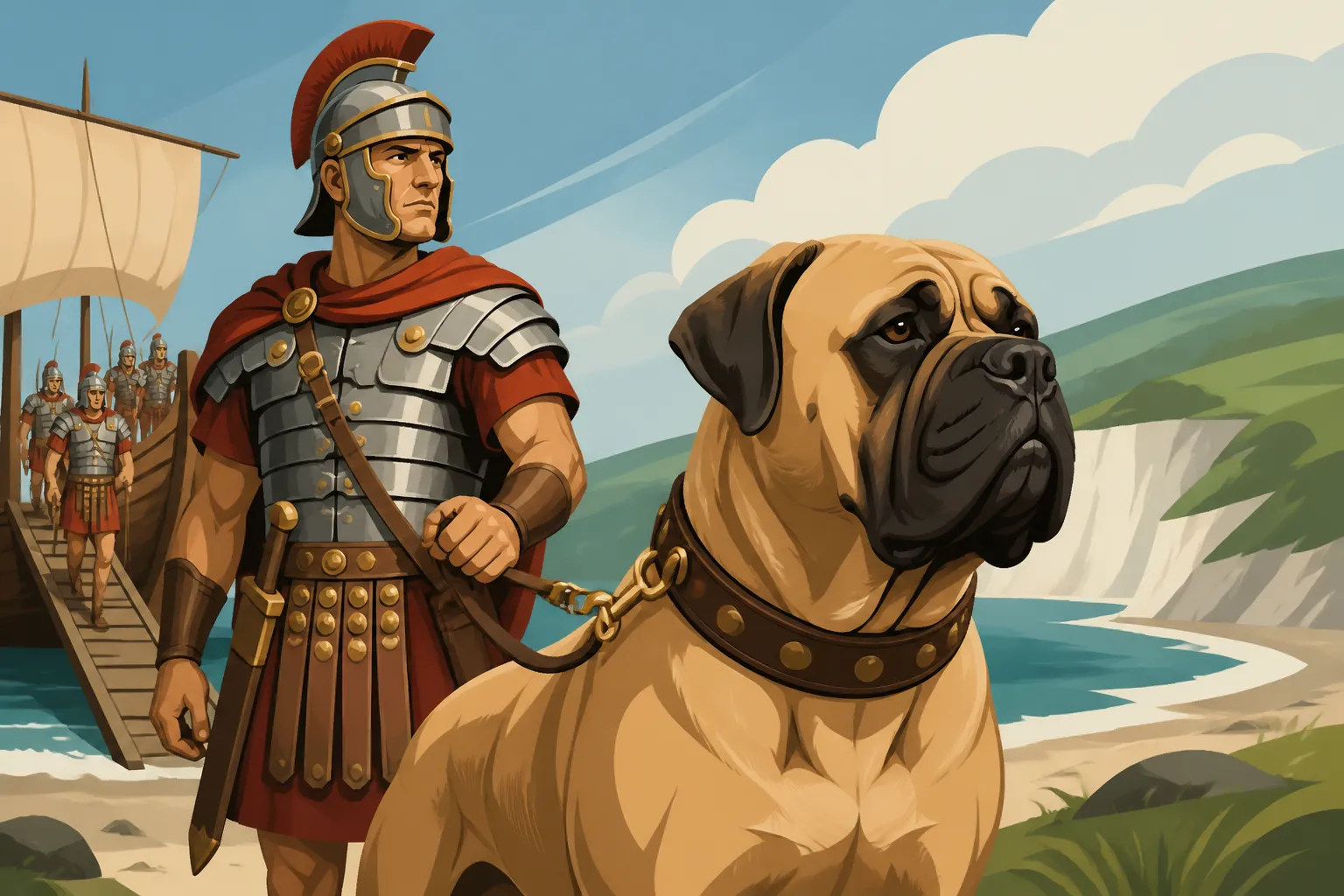
Julius Caesar led two expeditions to Britain, first in 55 BC and then again in 54 BC. His primary motivations were political and military: to punish tribes who had aided his Gallic enemies and to deter future interference. The logistical challenges of these campaigns were immense, involving the transportation of thousands of legionaries, horses, siege equipment, and vast quantities of supplies across the turbulent English Channel. It's often overlooked that among these crucial provisions would have been their working dogs. Why bring such large, demanding animals on a difficult overseas campaign? The answer lies in their proven utility as guards, scouts, and psychological deterrents in unfamiliar and potentially hostile territory.
The dogs were not merely pets; they were integral to military operations. They would have accompanied the legions to guard encampments, track enemies, and provide an extra layer of defense against surprise attacks by the native Celtic tribes. While direct written accounts of specific Roman dogs landing on British soil with Caesar are scarce, it stands to reason that the Roman military, relying heavily on these Molossian-type dogs for security elsewhere in their empire, would not have left them behind when venturing into an unknown land. How Rome Shipped British Mastiffs Home details the methods used for animal transport across the vast Roman Empire. The strategic value of these formidable dogs outweighed the logistical difficulties of their transport, ensuring their presence among the conquering forces.
First Encounters: British Dogs vs. Roman Dogs
Upon arriving in Britain, the Romans would have encountered the native British dogs. These indigenous canines, often described as large, fierce, and well-suited for hunting and guarding, were formidable in their own right. They were likely ancestors of some of Britain's own powerful breeds. Caesar himself, in his Commentaries on the Gallic War, made observations about the local fauna and people, and it's plausible his legions would have noted the local dogs. What Caesar Wrote About British Mastiffs offers insight into his perspective on Britannia. While the British dogs were formidable, the Roman Molossian types brought a different kind of discipline and specific military training.
The interaction between these two distinct dog populations would have been inevitable. Whether through accidental crossbreeding or intentional introductions by Roman soldiers settling in Britannia, the genes of the Roman war dogs began to mingle with those of the native British canines. This mixing of bloodlines laid the crucial groundwork for the development of new, larger, and more powerful dog types in Britain over the centuries that followed. It wasn't an overnight transformation, but a gradual, organic process that began with Caesar's landings and continued throughout the Roman occupation, irrevocably changing the genetic makeup of Britain's large dogs.
Establishing a Foothold: Roman Mastiffs in England
While Caesar’s initial forays were more reconnaissance and punitive raids, the true Roman influence on England, and its canine population, began with the full-scale invasion under Emperor Claudius in 43 AD. This marked the start of nearly four centuries of Roman rule, a period during which their dogs became a permanent fixture in the British landscape.
Roman Settlements and the Spread of the Breed
With the establishment of permanent Roman control, legionaries and colonists set up forts, towns, and villas across Britain. These settlements, from bustling Londinium (London) to military outposts on Hadrian's Wall, all required security. The Molossian-type dogs, brought over en masse with the advancing armies and subsequently with civilian settlers, became indispensable guardians for Roman property, livestock, and families. They patrolled fort perimeters, stood watch over granaries, and protected the homes of Roman citizens. This widespread distribution across the newly conquered province ensured that their genetic material would interact frequently with the local dog population.
Over generations, the distinction between "Roman dog" and "British dog" would have blurred. Interbreeding was a natural consequence of coexistence, leading to a gradual assimilation of the Molossian characteristics into the native canine stock. This wasn't necessarily a formal breeding program but a natural evolution in a shared environment. The sheer prevalence of Roman dogs, particularly in areas of dense Roman settlement like cities and agricultural estates, meant that their physical traits—their size, powerful build, and protective instincts—would increasingly manifest in the local canine population. This foundational influence cemented the characteristics that would eventually define the early ancestors of the modern Mastiff.
From Roman Empire to English Heritage
As the Roman Empire began its long decline and eventually withdrew its legions from Britain in the early 5th century, the dogs they left behind didn't vanish. Instead, they became part of the enduring fabric of post-Roman Britain. The "Mastiff type" had firmly established itself, its lineage now intertwined with the native dogs. These powerful canines continued their roles as guardians, adapted to the changing social and political landscape of the emerging Anglo-Saxon kingdoms. They protected homes, farms, and manor houses from both human and animal threats, their imposing presence remaining a valuable asset.
The name "Mastiff" itself is believed to derive from Old French "mestif" (meaning "mongrel" or "mixed breed") or Vulgar Latin "mastinus" (from "mansuetinus", meaning "tamed" or "domesticated"), suggesting their role as house-dogs or watchdogs rather than wild animals. This etymology highlights their integration into domestic life and their specific function within the household. Over the subsequent centuries, through selective breeding and natural selection, these large, protective dogs continued to evolve, eventually leading to the distinct breed recognized today. How Old the Mastiff Is as a British Breed explores this fascinating timeline, emphasizing how deep the roots of this noble breed truly run in English history.
The Enduring Legacy of the Roman Mastiff
The echoes of Rome's military might and cultural influence still resonate throughout England, and nowhere is this more apparent than in the magnificent Mastiff. The journey of these dogs from the ancient world, across continents and seas, directly shaped the very essence of the breed we cherish today. Their legacy is one of resilience, adaptation, and an unwavering spirit.
Bloodlines and Genetic Contribution
The initial introduction of Roman Molossian dogs into Britain provided a crucial influx of genetic material that significantly influenced the developing canine population. This wasn't just about adding size; it was about introducing traits like profound protective instincts, formidable strength, and a certain stoicism that characterizes the modern Mastiff. Over many centuries, these characteristics were reinforced through various forms of selective breeding, often informal at first, as farmers and estate owners sought to cultivate the most effective guard dogs. The dogs that survived and thrived were those best suited to protect property and livestock.
This genetic contribution from the Roman ancestors forms the very backbone of the Mastiff breed. Even as other large dog types, like the Alaunt, also made their way to Britain and influenced the local dogs, the original Molossian foundation remained dominant. It speaks to the incredible strength and adaptability of these ancient bloodlines that their impact can still be seen and felt in the Mastiffs of today. When we look at the immense head, the powerful neck, and the deep chest of a modern Mastiff, we are seeing the direct genetic inheritance of those ancient dogs who marched with the legions. This history adds a profound depth to the breed, making them more than just big dogs.
Historical Evidence and Modern Understanding
While much of this history is pieced together from classical writings, archaeological finds, and linguistic analysis, our understanding of the Mastiff's journey is constantly evolving. From the discovery of large dog bones in Roman forts to artistic depictions in medieval tapestries, each piece of evidence adds to the rich tapestry of their past. The enduring impact of these Roman dogs is a testament to their utility and formidable presence, ensuring their survival through countless historical shifts.
Today, while our Mastiffs might be more accustomed to plush beds purchased from a convenient retailer like Chewy than Roman battlefields, the essence of their ancestors remains. They are still the steadfast guardians, the loyal companions, and the impressive figures that command respect. Understanding The Molossus in the Mastiff's Ancestry helps us appreciate not just their history but their inherent traits. Their past as Roman war dogs, guardians of the empire, and eventually integral members of the British landscape, paints a vivid picture of a breed deeply entwined with human history, demonstrating an unbroken lineage of strength, courage, and unwavering devotion that continues to captivate us.
| Era/Group | Dog Type | Primary Role | Key Traits | Geographic Influence |
|---|---|---|---|---|
| Ancient Molossians | Molossian Hounds (Proto-Mastiff) | Warfare, livestock guarding, personal protection | Large, muscular, fierce, loyal, courageous | Epirus, Persia, India |
| Roman Empire | Roman War Dogs (Molossian descendants) | Military guard, battlefield combatant, estate guardian, arena combatant | Disciplined, intimidating, strong, protective | Roman Empire (Europe, Near East, North Africa) |
| Roman Britain | "Mastiff type" (Roman x Native British) | Guarding Roman settlements, interbreeding with local dogs | Large, territorial, powerful, adaptable | Britannia (England, Wales) |
| Post-Roman Britain | Early British Mastiffs | Estate guardianship, hunting large game, protection | Strong, heavy-boned, calm yet formidable | Anglo-Saxon Kingdoms (England) |
Disclaimer
This article is for general informational purposes only and does not constitute professional advice. Laws, prices and regulations vary by location and change over time. Consult a qualified professional for guidance on your specific situation.