How Lyme Hall Mastiffs Appear in Modern Pedigrees
A Mastiff pedigree may mention Lyme Hall and leave you wondering whether your dog descends directly from a famous historic kennel—or whether the name signals something broader. The distinction matters: old breeding records, modern registrations, and genetic ancestry do not always tell the same story. This guide explains how Lyme Hall Mastiffs appear in modern pedigrees and how to assess those claims without overstating them.
What the Lyme Hall Mastiffs Represent
A celebrated kennel, not a modern breed label
Lyme Hall is an estate in Cheshire, England, associated with a long-standing Mastiff-breeding tradition. Its dogs became renowned as examples of the English Mastiff, and accounts of the kennel are often woven into the breed’s history. The Lyme Hall name therefore carries historical weight, but it is not a separate breed or a formal variety recognized in today’s pedigree system.
When people refer to a “Lyme Hall Mastiff,” they may mean a dog bred at the estate, a dog believed to descend from that kennel, or a Mastiff that reflects the type associated with its dogs. Those meanings are not interchangeable. A modern dog described as having Lyme Hall ancestry is not automatically a direct, fully documented descendant of a particular historic dog.
The kennel’s location and legacy are part of the story, but they do not establish an individual dog’s pedigree by themselves. For background, see Where the Lyme Hall Mastiff Kennel Was and How Long Lyme Hall Bred Mastiffs. The historical reputation helps explain why the name appears in discussions of the breed; the family tree is what determines whether a specific ancestry claim is supported.
Why the name remains important
Historic kennels can matter even after their original breeding programs have ended. Their dogs may have influenced the type breeders admired, the animals they selected, and the lines later used to rebuild or develop a breed. A kennel’s reputation may also preserve stories and records that would otherwise be scattered across family papers, show accounts, and breed histories.
That influence can be real without meaning that a modern pedigree contains an uninterrupted chain of well-documented descendants. A kennel may shape a breed through direct descendants, through dogs related to its stock, or through the standards and ideals breeders adopted. These are different kinds of influence, and only the first is a direct genealogical claim.
That is why careful wording matters. “The Lyme Hall dogs influenced the Mastiff’s history” is a broad historical statement. “This individual Mastiff descends from a named Lyme Hall dog” is a specific pedigree claim that needs records supporting every link in the chain.
How the Lyme Hall Name Can Appear in a Modern Pedigree
Pedigree records show recorded parentage
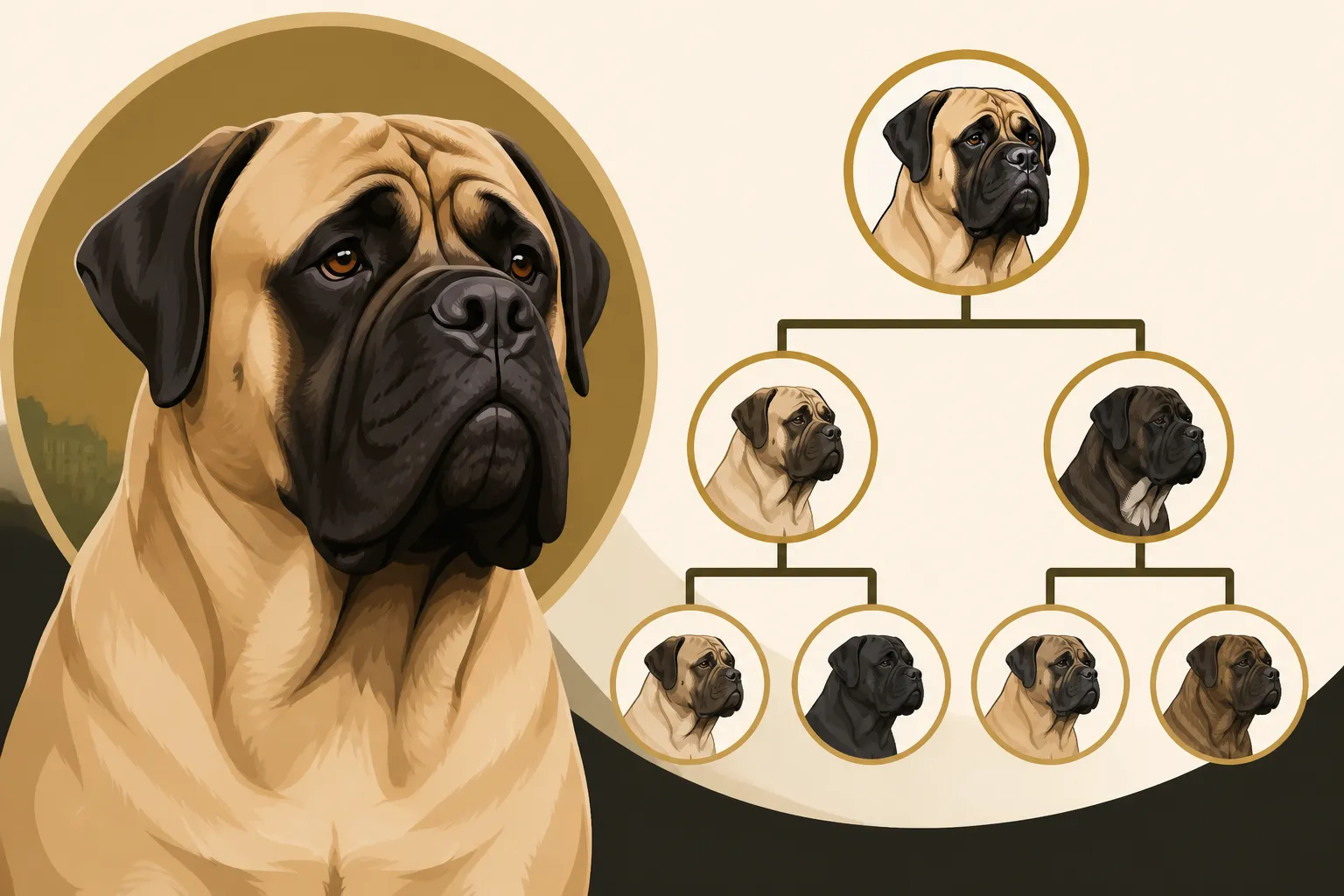
A pedigree is a record of reported ancestry. It lists a dog’s parents and, where records extend far enough, earlier generations. In a modern registered pedigree, the Lyme Hall connection may appear through an ancestor’s name, a kennel reference, or a historical dog that is recorded farther back in the family tree.
But a pedigree can only show what was recorded. The farther back you go, the more likely it is that details become incomplete, sources differ, or a name is repeated. Older breeding histories were not necessarily compiled using the same consistent registration practices used by modern kennel organizations. A name in a written account may also not match the name used in a later registry or database.
Here is a practical way to separate common claims:
| Claim about Lyme Hall ancestry | What it usually means | What would support it |
|---|---|---|
| “Lyme Hall influenced the breed” | The kennel contributed to the Mastiff’s historical reputation or breeding tradition | Reliable breed histories and records about the kennel |
| “Lyme Hall appears in the pedigree” | A named ancestor or kennel connection is listed in the recorded family tree | A pedigree that identifies the ancestor and the path to the modern dog |
| “The dog is a direct Lyme Hall descendant” | A documented chain links the dog to a specific Lyme Hall dog | Traceable records for each generation in the claimed line |
| “The dog carries Lyme Hall blood” | The speaker is making a broad ancestry claim, sometimes informally | A clear explanation of which ancestor and records are meant |
The table is not a substitute for checking a particular pedigree. It is a way to spot when a statement shifts from broad historical influence to a claim about direct descent.
A kennel name is not a genetic test
A recorded pedigree can help explain a dog’s ancestry, but it does not measure how much DNA came from a particular historic kennel. Nor does a famous name guarantee that a modern dog will have a particular appearance, temperament, size, or health profile.
Over many generations, descendants inherit different combinations of their ancestors’ DNA. Two littermates can share the same recorded pedigree yet inherit different traits. The farther back a specific ancestor appears, the less useful it is to treat that ancestor’s name as a promise about what the dog will be like.
Pedigrees are still valuable. They can help breeders and owners understand family relationships, avoid overly close matings, and investigate recurring traits across related dogs. But ancestry should be considered alongside health testing, temperament, structure, and the dog’s own needs. The historical name alone cannot answer those questions.
For a broader look at the breed’s postwar rebuilding, see How American and Canadian Dogs Rebuilt the Mastiff. That context helps explain why modern pedigrees may include dogs from different countries and breeding programs rather than a simple, uninterrupted line from one historic kennel.
Why Modern Pedigrees Do Not Always Show a Simple Line
War, small populations, and breed rebuilding
Mastiff breeding has not taken place in a vacuum. Periods of hardship, changing resources, and disruptions to breeding programs affected the number of dogs available and the relationships among surviving lines. The breed’s history around the Second World War is especially important when considering how modern pedigrees came together. Fewer Than Twenty Mastiffs Survived the Second World War describes that difficult period, while The American Kennels That Sent Mastiffs Back to Britain explores part of the international recovery that followed.
When a breed population becomes small, breeders may have fewer unrelated dogs to choose from. Rebuilding can involve dogs from different countries and lines, with careful decisions about which animals can contribute to future generations. The resulting pedigrees may preserve some historic ancestry while also recording newer contributions that helped maintain the breed.
This does not mean that every modern Mastiff has the same ancestry or that every line can be traced neatly to Lyme Hall. It means the breed’s history is better understood as a network of related breeding lines, shaped by survival and deliberate choices, than as one unbroken family tree.
Pedigree depth and the limits of database searches
Online pedigree databases make it easier to search names and compare family trees, but they can create a misleading sense of certainty. A database entry may be incomplete, may rely on information submitted by users, or may combine records that need independent confirmation. Different dogs may also share similar names, especially when names include familiar kennel terms or titles.
If you encounter a Lyme Hall reference, look at the actual path shown in the pedigree. Identify the ancestor named, note how many generations separate that dog from the Mastiff you are researching, and check whether each parent-child link is recorded. If the claim stops at a general statement such as “from old Lyme Hall blood,” ask what specific dog or record the person means.
It is also helpful to distinguish a pedigree database from an official registration record. A database can be a useful research starting point, but it is not automatically proof that every entry has been verified by a registry or supported by original documentation. A breeder or breed historian may be able to explain the source of a particular claim.
How to Evaluate a Lyme Hall Ancestry Claim
Ask for the specific ancestor and documented path
Start with a simple question: which Lyme Hall dog is being referenced? If the answer names a particular ancestor, ask to see the generations connecting that dog to the Mastiff in question. A credible explanation should make the path understandable, even if some older links are uncertain.
Look for dates, registered names, kennel affiliations, and consistent parentage records. If the claim is based on a published history or an archival record, find out what the source actually says. A historical account may establish that a dog belonged to the Lyme Hall kennel without proving that the dog appears in a particular modern Mastiff’s direct pedigree.
If the person making the claim uses “Lyme Hall type” instead of asserting descent, clarify what they mean. They may be describing appearance, historical influence, or a general sense of breed tradition. Those can be meaningful points, but they are not the same as a traceable pedigree connection.
Keep ancestry in perspective when choosing a Mastiff
For a prospective owner, a historic kennel connection should be one small part of the decision. It can make a dog’s family history more interesting, but it cannot replace practical questions about the parents’ health, temperament, and living conditions. Ask about health screening, how adult relatives behave, and whether the breeder can explain the strengths and challenges in the line.
A pedigree also does not guarantee that a dog will match a particular historical image of the breed. The modern Mastiff has developed through generations of breeding and changing expectations. To understand those changes, see How the Modern Mastiff Differs From the Prewar Type and Whether the Mastiff Standard Has Changed Since 1900.
Finally, remember that “old blood” is not automatically better or healthier. A celebrated historical connection does not make a dog immune to inherited conditions, nor does a less famous pedigree make a dog less worthy. The most useful pedigree is one that is clear enough to inform responsible breeding and ownership decisions—not one that relies on a legendary name to do all the explaining.
Disclaimer
This article is for general informational purposes only and does not constitute professional advice. Laws, prices and regulations vary by location and change over time. Consult a qualified professional for guidance on your specific situation.