The Weight Range a Female Mastiff Should Hold
It's incredibly challenging, isn't it, to figure out the "just right" weight for your female Mastiff? They are such massive dogs that sometimes it feels like "big" is good enough, but we all know that big can quickly tip over into unhealthy. This guide is here to help you navigate the nuances of what a healthy female Mastiff's weight range truly means, focusing on their unique build and how to keep them thriving without overburdening their joints and overall health.
Understanding the Official Breed Standard for Female Mastiff Weight
When you first look at the Mastiff breed standard, you might notice that it doesn't give you a neat, tidy number like, say, a Beagle's standard might. For female Mastiffs, the weight is often described in terms of "proportion" and "substance." This isn't just because breeders are being vague; it's because Mastiffs are truly giant dogs with a huge range of healthy variation. A perfectly sound, healthy female Mastiff might weigh significantly more or less than another perfectly sound, healthy female Mastiff, depending on her overall height and bone structure.
Why "Weight Range" is More Complex Than a Single Number
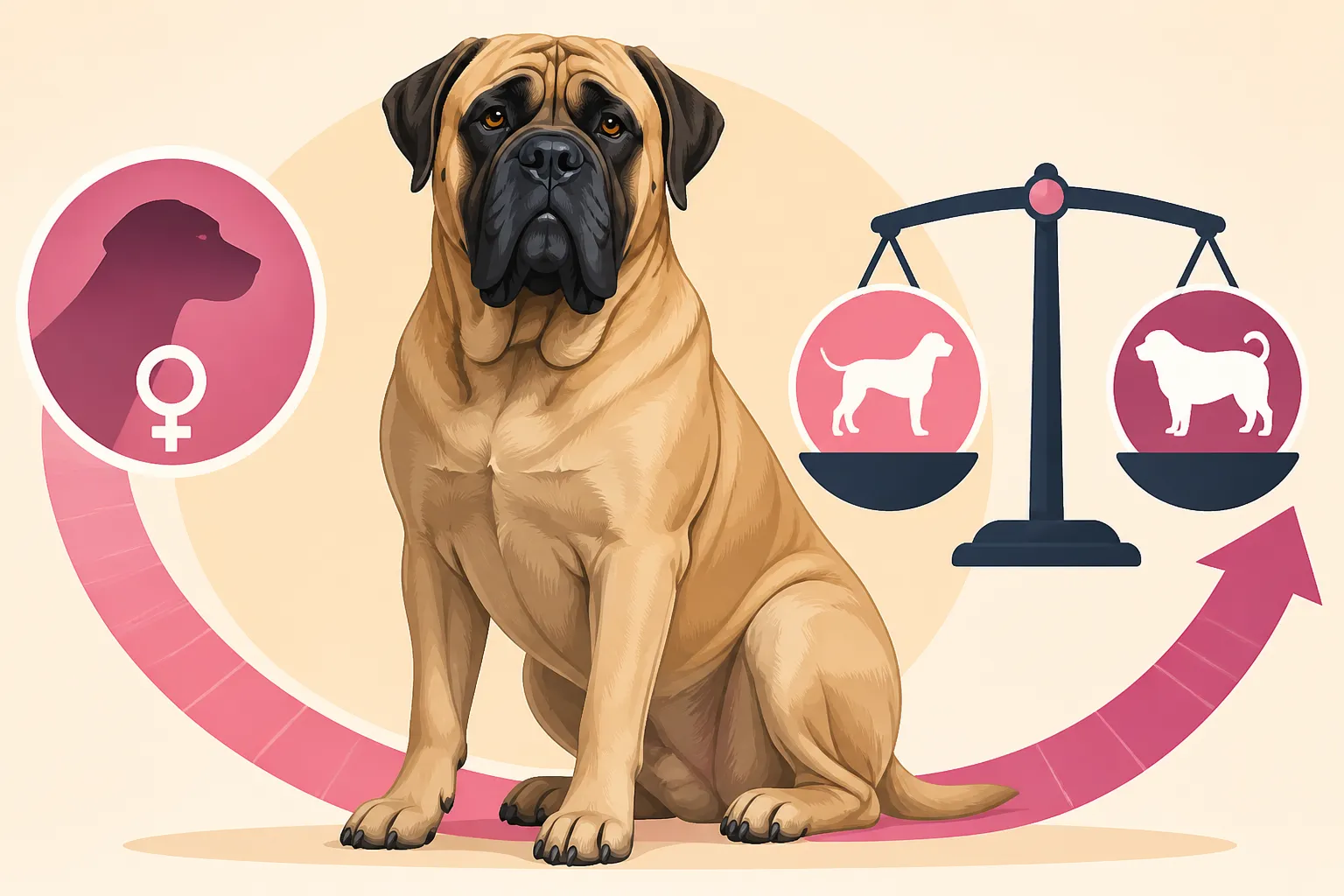
Imagine two sisters from the same litter. One might be a bit taller, with a longer frame, naturally carrying more muscle and bone mass. Her ideal healthy weight will naturally be higher than her sister, who might be a bit shorter and more compact. Both can be absolutely perfect examples of the breed, yet their numbers on the scale will differ. The breed standard understands this, emphasizing that a Mastiff should be "symmetrical" and "powerful" without being "clumsy." For a female, this means she should embody strength and majesty, but still retain a certain feminine elegance and proportion. You shouldn't see her as a scaled-down version of a male, but rather a substantial female in her own right. The key takeaway here is that focusing solely on a number can lead you astray; it's about the overall picture. Healthy female Mastiffs demonstrate a clear musculature and bone structure, not just a blob of mass. It's truly a testament to why simply asking "How much should she weigh?" isn't enough, and why understanding her individual build is paramount.
The Importance of a Balanced Build, Not Just the Scale
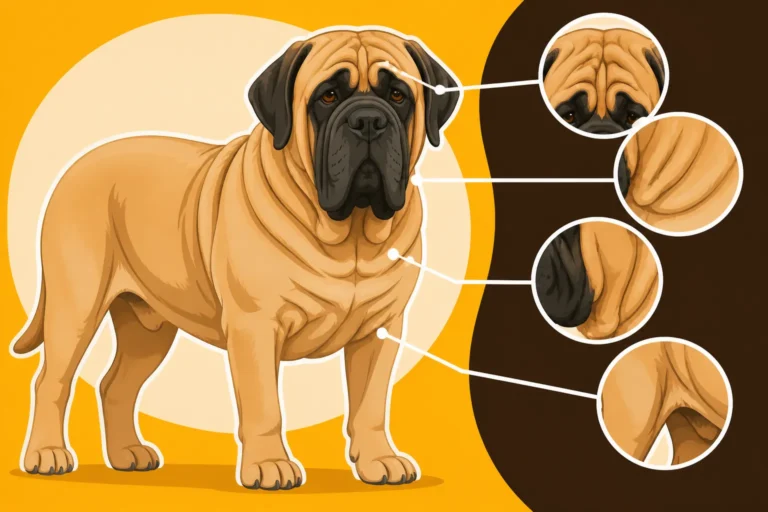
Instead of chasing a specific number, think about your Mastiff's body condition. This is where the real wisdom lies. A healthy female Mastiff should have a noticeable waist when viewed from above, like a gentle hourglass shape. When you look at her from the side, you should see a discernible tuck-up in her abdomen, where her belly scoops up towards her flanks, not hangs low or straight. Perhaps the most crucial check is feeling for her ribs. You should be able to easily feel her ribs when you run your hands along her side, just behind her shoulder blades, without having to press hard. You shouldn't see them protruding, but you should definitely be able to feel them under a light layer of muscle and skin. This balance of being able to feel the ribs but not see them is a golden rule for many breeds, and it's especially vital for a Mastiff.
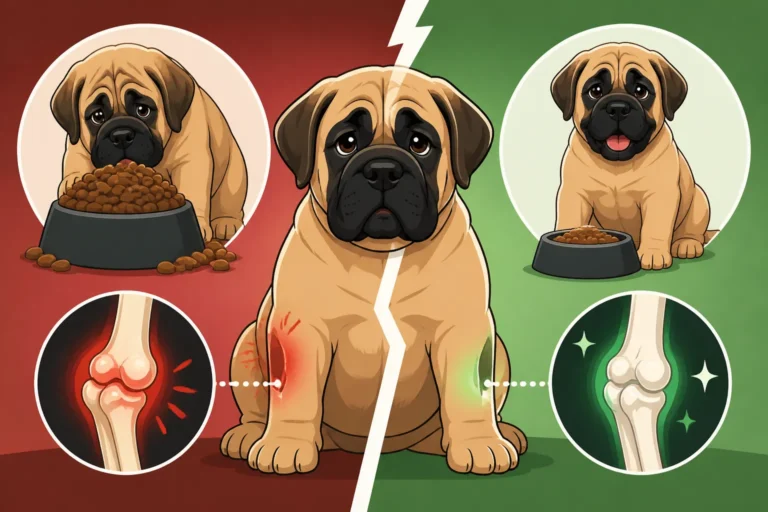
An overweight Mastiff is a Mastiff destined for a shorter life and significantly more health problems. Their immense size already puts stress on their joints, and excess weight compounds this exponentially. We're talking about conditions like hip and elbow dysplasia, which can be exacerbated by carrying extra pounds. Beyond the orthopedic issues, an overweight Mastiff is at higher risk for heart problems, diabetes, and even certain cancers. It might seem like a few extra pounds on a dog that weighs over a hundred pounds is negligible, but it truly isn't. Every single extra pound is a burden on their already hard-working frame. A lean Mastiff is a healthier Mastiff, even if it feels counterintuitive to keep such a big dog on the "skinny" side. This is why learning to Feeling for a Mastiff's Ribs Under Its Bulk is such a critical skill for any owner.
Factors Influencing a Female Mastiff's Ideal Weight
Determining the perfect weight for your individual female Mastiff isn't a one-size-fits-all equation. There are several significant factors that play into what her healthy range will be. Understanding these elements can help you and your veterinarian establish a realistic and achievable goal for her. It's a blend of nature and nurture, really.
Genetics and Lineage: The Role of Her Parents
Just like in people, a Mastiff's genetic background heavily influences her mature size and build. If your Mastiff comes from a line of exceptionally large, heavily boned individuals, she might naturally carry more substance and her ideal healthy weight will reflect that. Conversely, if her parents and their lineage tend to be on the more athletic, slightly leaner side of the breed standard, her healthy weight will likely be lower. Reputable breeders are often very transparent about the size and build of their breeding stock, which can give you a good idea of your puppy's potential adult size. They've put years into understanding the nuances of their lines. Sometimes, there can even be slight differences between what's considered "show quality" and a perfectly healthy "pet quality" Mastiff in terms of sheer bulk. A show Mastiff might be bred for maximum size and substance within the standard, while a pet Mastiff might naturally fall into a leaner, equally healthy range. This is also why knowing The Weight Range a Male Mastiff Should Hold in her lineage can be insightful, as male size can give clues about the overall size potential of the line.
Age and Maturity: From Puppy to Senior
A female Mastiff's weight journey is a marathon, not a sprint. As a puppy, controlled growth is absolutely paramount. You don't want her to grow too fast; rapid growth in giant breeds can lead to serious developmental orthopedic diseases. Therefore, a Mastiff puppy's weight will steadily but slowly increase, and often they'll look a bit gangly and "ribby" – and that's perfectly okay! This is often discussed when learning how to manage Restraining the Growth of a Mastiff Puppy. They don't finish filling out until they're quite mature, sometimes not reaching their full adult bulk until The Age a Mastiff Finishes Filling Out, which can be around 2 to 3 years old. During adolescence, they'll go through awkward phases, gaining height, then length, then slowly starting to add muscle and breadth.
Once she reaches adulthood, her weight should stabilize. The goal then becomes maintaining that healthy weight through proper diet and exercise. As she transitions into her senior years, typically starting around age five, you might notice changes. Caring for a Mastiff Past Five often involves adjusting their diet and activity. Older Mastiffs can start to lose muscle mass, and their metabolism might slow down. It's crucial to continue monitoring her body condition, as either unintentional weight loss due to age-related conditions or weight gain from reduced activity can impact her comfort and longevity.
Activity Level and Lifestyle
Even for a breed known for being couch potatoes, activity level plays a role in weight management. A female Mastiff who enjoys regular, moderate walks and has ample space to move around at her own pace in a yard will naturally have a different caloric need and muscle tone than one who lives a more sedentary life. While Mastiffs are not high-energy dogs, they do need consistent, gentle exercise to maintain muscle mass and joint health. A daily short walk, maybe 20-30 minutes, combined with some yard time, is often sufficient. However, remember the caveats for young puppies: The Walk Length That Damages a Mastiff Puppy is very short, and over-exercising can do more harm than good.
Consider the family dynamics too. Is she an only dog who gets all the attention and perhaps too many treats? Or does she have canine companions that might encourage a bit more movement throughout the day? Everything from the amount of playtime to whether she climbs stairs regularly (which isn't recommended for their joints anyway) will influence her energy expenditure. Owners need to be realistic about their Mastiff's activity level when planning their diet. If she's less active, her caloric intake needs to be carefully managed to prevent Whether an Overweight Mastiff Dies Younger.
Practical Tips for Maintaining a Healthy Weight in Your Female Mastiff
Keeping a giant breed like a female Mastiff at her ideal weight is a continuous effort, but it's one of the most important things you can do for her health and longevity. It involves a combination of mindful feeding, regular health checks, and being adaptable as she ages.
Calorie Management and Nutrition
Feeding a Mastiff isn't just about filling a bowl; it's about providing precise nutrition. Large breed dog food formulas are specifically designed with appropriate protein, fat, and mineral ratios to support their unique growth and maintenance needs. They usually have carefully controlled calcium and phosphorus levels, which are critical for giant breed puppy development to prevent bone growth issues. When selecting food, look for brands that focus on large and giant breeds. You can find many excellent options for large breed formulas on sites like Chewy, which often have a wide variety to choose from.
Portion control is absolutely non-negotiable for Mastiffs. Free-feeding, where food is left out all day, is a recipe for an overweight dog. As discussed in Why a Mastiff Puppy Is Never Free Fed, portioned meals are vital from the start. Most adult Mastiffs do well on two meals a day. Always measure her food accurately according to the guidelines on her food bag, then adjust based on her activity level and body condition. Treats, while wonderful for bonding and training, are calories too! Choose healthy, low-calorie options and factor them into her daily intake. Some owners even use a portion of her daily kibble as training treats. While fresh food options like Ollie are becoming popular, providing the sheer volume needed for a Mastiff can be a significant undertaking, but it's an option for some.
Regular Vet Check-ups and Body Condition Scoring
Your veterinarian is your best partner in ensuring your female Mastiff maintains a healthy weight. Regular check-ups are essential, not just for vaccinations and routine health screenings, but also for professional body condition assessment. Vets use a Body Condition Score (BCS) system, usually on a 1-5 or 1-9 scale, to objectively evaluate a dog's fat reserves. A score of 3/5 or 4-5/9 is generally considered ideal, meaning she's lean but not underweight.
During these visits, don't be afraid to ask your vet to demonstrate how to feel for her ribs, spine, and hip bones. This hands-on guidance is invaluable for you to learn what a healthy body condition feels like. They can also provide advice on How Much an Adult Mastiff Eats by Weight Each Day if you're unsure, or suggest adjustments if your Mastiff is starting to gain or lose weight inappropriately.
Here's a simplified look at the Body Condition Score (BCS) for Mastiffs:
| Score | Description | What it means for your Mastiff |
|---|---|---|
| 1-2 | Too Thin (Emaciated to Underweight) | Ribs, spine, pelvic bones easily visible from a distance. No discernible fat. Severe muscle loss. |
| 3 | Ideal (Lean) (On a 1-5 scale) | Ribs easily palpable but not visible. Waist easily noted. Abdominal tuck present. |
| 4-5 | Ideal (On a 1-9 scale, this is where most healthy dogs fall) | Ribs palpable with slight fat cover. Waist apparent. Abdominal tuck present. Well-proportioned. |
| 6-7 | Overweight (Heavy to Obese) | Ribs difficult to feel under moderate fat cover. Waist absent or barely discernible. No abdominal tuck. Broadening of back. |
| 8-9 | Obese (Severely Overweight to Morbidly Obese) | Ribs very difficult to feel. No waist or abdominal tuck. Heavy fat deposits over back, tail base. Visible abdominal distention. |
Adapting to Changes and Addressing Weight Issues
Life happens, and your Mastiff's weight may fluctuate. It's important to be vigilant and ready to adapt. If you notice she's starting to put on extra weight—perhaps her waist is less defined, or you're having trouble feeling those ribs—it's time for an intervention. This isn't just about vanity; it's about health. Reducing her caloric intake slightly and increasing her gentle exercise can help. Remember, taking weight off a giant breed like a Mastiff is much harder than preventing it in the first place, and it's slow work. Taking Weight Off a Mastiff That Barely Exercises requires patience and consistency.
Conversely, if she's losing weight unexpectedly, especially in her senior years, it's crucial to consult your vet. This could be a sign of an underlying health issue, dental problems making eating painful, or simply a need for a more calorie-dense diet. Your vet might recommend specific dietary changes or supplements. For joint support, which is critical for their size, products you can find on Amazon, like glucosamine and chondroitin, or fish oil, are often recommended, but always discuss with your vet first. Always ensure any adjustments you make are done gradually to avoid upsetting her digestive system.
Disclaimer
This article is for general informational purposes only and does not constitute professional advice. Laws, prices and regulations vary by location and change over time. Consult a qualified professional for guidance on your specific situation.