Feeling for a Mastiff’s Ribs Under Its Bulk
It's a truth universally acknowledged among Mastiff owners that our magnificent companions are, well, massive. Their sheer size and impressive bulk can make it incredibly challenging to figure out if they're at a healthy weight, especially when every other breed's advice seems geared towards dogs you can easily pick up. You want to do right by them, but how do you even begin to tell if that impressive chest is muscle or just a little too much cushion for the pushing? This guide is here to walk you through the practical, hands-on methods for assessing your Mastiff's condition, ensuring they stay healthy and happy.
The Challenge of the Mastiff Physique
Living with a Mastiff means constantly recalibrating your understanding of "big." What looks like a healthy, robust dog in a Labrador might be underweight for a Mastiff, and what appears to be a little extra fluff on a poodle could be perfectly normal muscle mass on our giants. Their unique build, deep chests, and heavy bone structure often obscure the very visual cues we're taught to look for in other breeds. It’s easy to feel lost, wondering if you're doing enough, or perhaps too much, when it comes to their diet and exercise.
Why Traditional Methods Fall Short for Giants
When you read advice about checking a dog's weight, it almost always starts with "look for a tucked waist" or "you should see the last two ribs." While these are excellent guidelines for many breeds, they often don't translate well to a Mastiff's body. A Mastiff's deep chest and broad rib cage mean that a noticeable "tuck" at the waist might actually indicate they are far too thin, rather than just lean. Their incredible musculature can also hide ribs that would be visibly prominent on a greyhound. It’s not uncommon for a well-meaning owner to think their Mastiff looks just right, only to discover during a vet visit that they’ve been carrying a few too many pounds. The standard charts and visual cues are simply not designed for a dog that can easily outweigh an adult human, leading to a lot of confusion and unintentional misjudgment.
Furthermore, a Mastiff's skin can be quite loose, especially around the neck and chest, a characteristic that further camouflages their underlying structure. This elasticity, while charming, means that even if their ribs are perfectly palpable underneath, the loose skin might smooth over any visible definition. This means relying solely on sight can be misleading and can cause owners to either overfeed, thinking their dog looks too skinny, or underfeed, mistaking a healthy weight for being overweight if they're trying too hard to see a defined waist. It takes a different approach, one that prioritizes touch over sight, to truly get a sense of their condition.
The Illusion of "Big Boned"
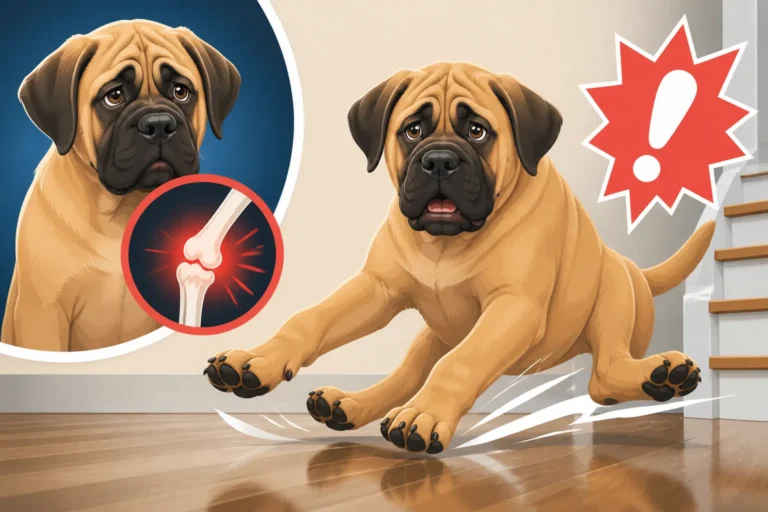
We've all heard the phrase, "Oh, he's just big-boned!" often used to excuse a dog carrying a bit too much weight. While Mastiffs are undeniably big-boned – their skeletal structure is truly impressive – this isn't a free pass for them to be overweight. In fact, their heavy bone structure makes maintaining a lean body condition even more critical. Carrying extra weight puts immense strain on those already large joints, exacerbating issues like hip and elbow dysplasia, which are unfortunately common in the breed. It’s a delicate balance, and understanding that "big-boned" doesn't mean "can carry extra fat" is crucial for their long-term health. Why a Mastiff's Hips Fail Under Its Own Weight and Elbow Dysplasia Affects One Mastiff in Seven are excellent resources to understand these challenges further.
The "big-boned" perception often leads owners to believe their Mastiff needs more food than is truly necessary to maintain a healthy weight. They see a dog that looks robust and equate that with being well-fed, without realizing that beneath the impressive bulk, there might be layers of excess fat putting stress on their system. It’s a subtle difference, but an important one. A truly healthy Mastiff should be muscular and powerful, not soft and heavy. Dispelling this myth is the first step towards a proactive approach to their weight management, ensuring their impressive frame is supported by strong muscle, not extra padding.
Mastering the Rib Check: A Hands-On Guide
Since visual cues can be deceptive with a Mastiff, the most reliable way to assess their body condition is by touch. This isn't about digging your fingers into their sides, but rather a gentle, consistent method that allows you to feel what's truly beneath their impressive coat and muscle. It’s a technique that requires practice, but once you get the hang of it, you’ll have a much clearer picture of your Mastiff’s health.
The Gentle Touch: How to Feel for Ribs
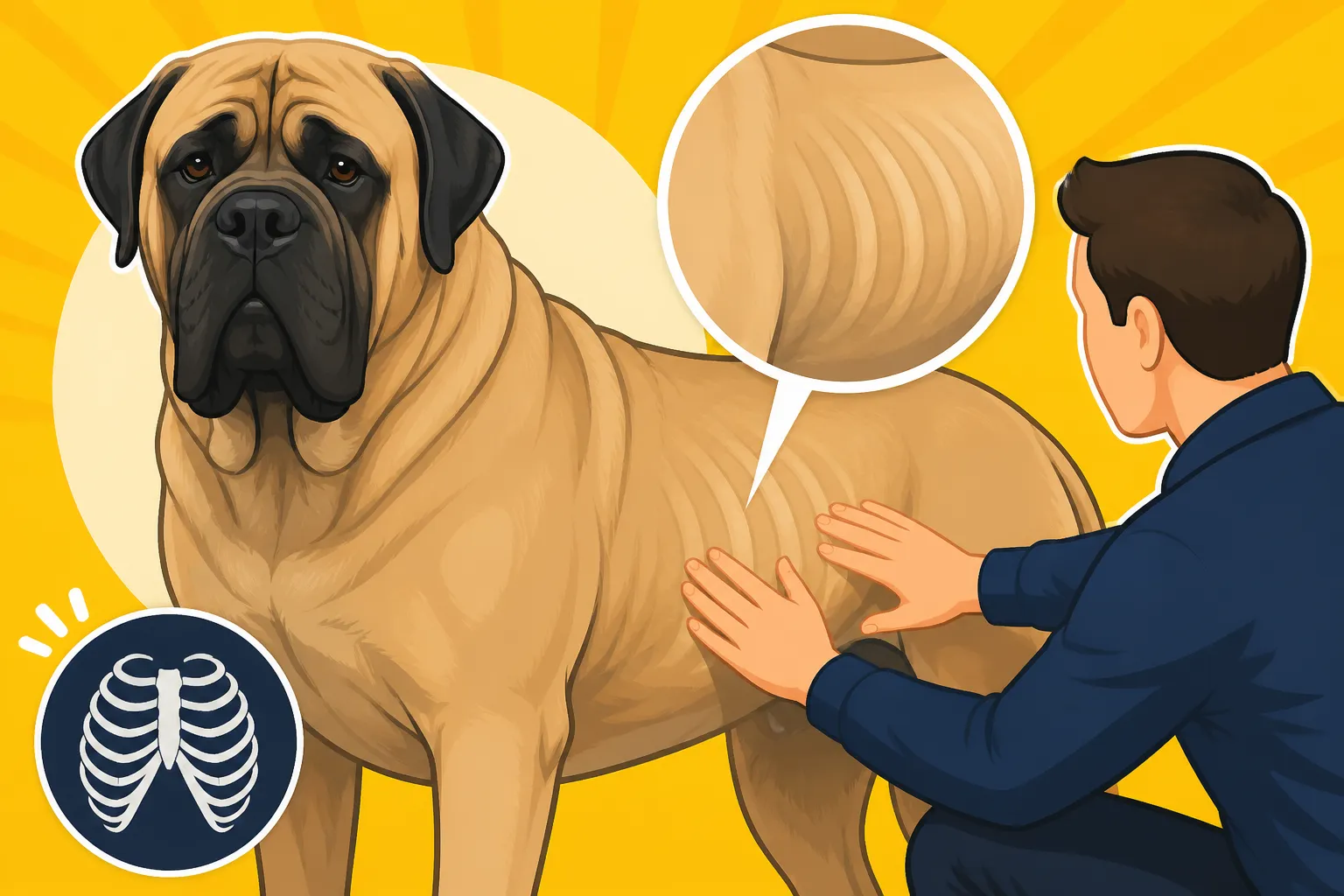
To properly check your Mastiff's ribs, start by placing both palms flat against their side, just behind their shoulder blades. Gently run your hands backwards along their rib cage, applying light pressure, much like you would if you were feeling for the contours of a thick book through a blanket. You should be able to feel each individual rib bone as you glide your fingers across them, without having to press hard. Think of it like feeling the keys on a keyboard – you know they're there, and you can distinguish each one, but you're not mashing them down.
If you can easily see your Mastiff's ribs, they are likely too thin, which is also a concern. Conversely, if you have to press firmly to feel the ribs, or if they feel completely obscured by a thick layer of fat, then your Mastiff is probably overweight. The ideal is to feel them distinctly but not sharply. This tactile assessment is far more accurate for a Mastiff than just looking at their profile. Do this regularly, perhaps during a relaxed petting session, so you get used to what a healthy feel is for your specific dog. Consistency is key to noticing subtle changes over time.
Interpreting What You Feel
Once you've felt for the ribs, it's time to interpret what your fingers are telling you. This isn't just a pass/fail test; there's a spectrum, and understanding it is vital.
-
Ideal (Lean and Muscular): You can easily feel each rib individually with light pressure, almost like feeling the knuckles on your hand. There's a thin layer of muscle and perhaps a tiny bit of fat over them, but no thick padding. The ribs feel distinct, not sharp, and not buried. Your dog should still have substantial muscle mass covering their frame, giving them that powerful Mastiff look without being fleshy. This is the goal for Keeping a Mastiff Lean on Purpose.
-
Underweight: The ribs are very prominent and feel sharp or bony with minimal to no pressure. You might even be able to see them visibly, especially if your Mastiff is not heavily coated. There’s a noticeable lack of muscle and fat cover. This is a serious concern, as it can indicate underlying health issues or insufficient nutrition. If your Mastiff is underweight, consult your vet immediately.
-
Overweight: You have to press quite firmly to feel the ribs, and even then, they might feel indistinct or muffled by a significant layer of fat. It feels more like pressing into a soft cushion than feeling individual bones. There's no definition, and the entire rib cage feels uniformly soft. This extra weight puts enormous strain on their bodies, and it's a sign that dietary adjustments or increased activity are needed. Whether an Overweight Mastiff Dies Younger delves into the serious implications of carrying too much weight.
| Body Condition Score | Rib Feel | General Appearance (Mastiff Specific) | Implications |
|---|---|---|---|
| Too Thin | Ribs easily visible or very prominent, sharp | Visible ribs, prominent hip bones, obvious waist tuck (too much) | Malnutrition, illness, muscle wasting. Consult vet. |
| Ideal | Ribs easily felt with light pressure, not sharp | Muscular, minimal waist tuck, solid but not bulky | Healthy, optimal for joints and organs. |
| Slightly Heavy | Ribs felt with moderate pressure, less distinct | Broader waist, softer feel over ribs, less muscle definition | Increased strain on joints, risk of future health issues. |
| Overweight | Ribs difficult to feel, requires firm pressure | No visible waist, bulky appearance, thick fat layer over ribs and spine | Significant health risks, joint damage, reduced lifespan. |
Beyond the Ribs: Other Key Areas to Check
While the ribs are a primary indicator, a comprehensive body condition assessment involves checking other areas of your Mastiff’s body. These spots can offer additional clues and help confirm your initial findings.
First, gently feel along your Mastiff's spine. In an ideal condition, you should be able to feel the tops of the vertebrae individually, again with light pressure, similar to how you’d feel the ribs. If the spine feels like a bumpy ridge, with each vertebra sharply distinct, your Mastiff might be too thin. If, however, you can barely feel the spine at all, and it feels like a smooth, cushioned surface, they are likely carrying too much weight. This area, like the ribs, needs that sweet spot where bones are palpable but not protruding.
Next, move to their hip bones and the base of their tail. On a Mastiff at an ideal weight, you should be able to feel the hip bones with gentle pressure, though they shouldn't be sticking out dramatically. Similarly, the bones at the base of the tail should be discernable without being overly bony or too cushioned. A thick layer of fat around the tail base, making it feel round and smooth, is a strong indicator of excess weight. Lastly, take a look at their overall profile when they’re standing relaxed. While a Mastiff won't have a sharp abdominal tuck, there should still be some upward curve from the bottom of the rib cage to the groin area, not a straight line or a sag. All these indicators together paint a full picture of your Mastiff's physical condition.
The Importance of a Healthy Weight for Your Mastiff
Maintaining an ideal body condition isn't just about aesthetics; it's perhaps one of the most critical factors in ensuring your Mastiff lives the longest, healthiest, and most comfortable life possible. Given their predisposition to joint issues and their already shorter lifespan, every extra pound matters. This isn't about chasing a super-lean, athletic look that's inappropriate for the breed, but about striking the right balance to support their enormous frame.
The Impact of Excess Weight on Joints and Lifespan
Let's be blunt: every extra pound your Mastiff carries is an extra pound of stress on their joints, especially their hips and elbows. These are breeds already prone to debilitating conditions like hip and elbow dysplasia, where the joints don't develop correctly. Why a Mastiff's Hips Fail Under Its Own Weight illustrates just how much burden their own body puts on these structures. When you add excess fat into the mix, it's like asking a building with a weak foundation to hold up an extra story – the collapse becomes inevitable and often comes sooner. An overweight Mastiff is far more likely to develop or worsen arthritis at a younger age, leading to pain, reduced mobility, and a significant drop in their quality of life. Arthritis in a Mastiff at Four is a somber reminder of how early these issues can begin.
Beyond joint health, excess weight contributes to a myriad of other health problems, just like in humans. It increases the risk of heart disease, diabetes, respiratory issues, and even certain types of cancer. It can also make them less tolerant to heat, which is already a concern for such a large breed. Ultimately, carrying extra weight directly shortens their already precious Six to Ten Years Is What a Mastiff Gets. As their owner, giving them every chance at a full, comfortable life means being diligent about their waistline. It means understanding that the kindness of an extra treat can, over time, become a burden on their body.
Tailoring Diet and Exercise to Maintain Condition
Once you've accurately assessed your Mastiff's body condition, the next step is to make appropriate adjustments to their diet and exercise routine. This isn't a one-size-fits-all approach; every Mastiff is an individual, with varying metabolism and activity levels. The goal is to find a balance that keeps them at that ideal, lean, and muscular condition.
When it comes to diet, focus on quality over quantity. A high-quality large breed dog food, formulated for giants, is usually a good starting point. How Much an Adult Mastiff Eats by Weight Each Day provides general guidelines, but remember these are just starting points. If your Mastiff needs to lose weight, gradually reduce their food intake by about 10-20% and swap high-calorie treats for healthier options like carrot sticks or green beans. For those exploring alternative feeding, options like fresh food subscriptions can be found from services like Ollie, though these come with their own considerations for giants. If you stick with kibble, finding suitable large breed formulas is easy on platforms like Chewy or Amazon. Remember to factor in all calories, including those from treats and dental chews.
Exercise for a Mastiff, especially one needing to lose weight, needs to be low-impact to protect their joints. Long, leashed walks at a steady pace are excellent. Avoid high-impact activities like jumping or prolonged running, which can stress their joints. Swimming can be a fantastic, low-impact exercise if your Mastiff enjoys it, but always supervise them closely. Short, frequent sessions are often better than one long, exhausting one. Joint supplements can also play a supportive role. Many owners start their Mastiffs on these at a young age to proactively support joint health, and you can find many options from pet retailers. Whether a Mastiff Needs Joint Supplements From a Year is a great article to consult for more detail. Always consult your vet before making significant changes to diet or starting a new supplement regimen, especially if your Mastiff is already dealing with joint issues like those discussed in The Shifting Lameness of a Growing Mastiff.
When to Seek Professional Guidance
Even with diligent at-home checks, there will be times when professional guidance is invaluable. Your veterinarian is your best partner in maintaining your Mastiff's optimal health and can offer insights and solutions that go beyond what you can do at home. Don't hesitate to reach out to them if you have concerns, or if your Mastiff's weight seems to be a persistent challenge.
Working with Your Veterinarian
Your veterinarian has the expertise and tools to provide an objective assessment of your Mastiff's body condition. During routine check-ups, they will perform a physical exam, palpate the ribs, spine, and hips, and may use a body condition scoring chart designed for canine breeds. They can also recommend appropriate weight ranges for your individual Mastiff based on their age, sex, and overall build. Sometimes, what feels "just right" to us might still be a bit heavy in their expert opinion, and vice-versa.
If your Mastiff is significantly overweight or underweight, your vet can help rule out any underlying medical conditions that might be contributing to the issue, such as thyroid problems or metabolic disorders. They can also formulate a personalized weight management plan, including specific dietary recommendations and a safe exercise regimen tailored to your Mastiff's unique needs and existing health status. This might involve special therapeutic diets that you can find through online pet supply stores or directly from your vet, and they can help calculate the exact amount of food needed. Don't be afraid to ask for their professional opinion; they are there to help you give your gentle giant the best possible care.
Utilizing Weight Management Tools
Beyond direct veterinary consultation, there are several tools and strategies you can employ to help manage your Mastiff's weight effectively. A good quality digital pet scale, if you can find one that accommodates a Mastiff's size and weight, can be an invaluable tool for tracking progress. Knowing their exact weight, rather than just guessing, allows for much more precise dietary adjustments. However, finding a scale large and robust enough for a true giant can be a challenge.
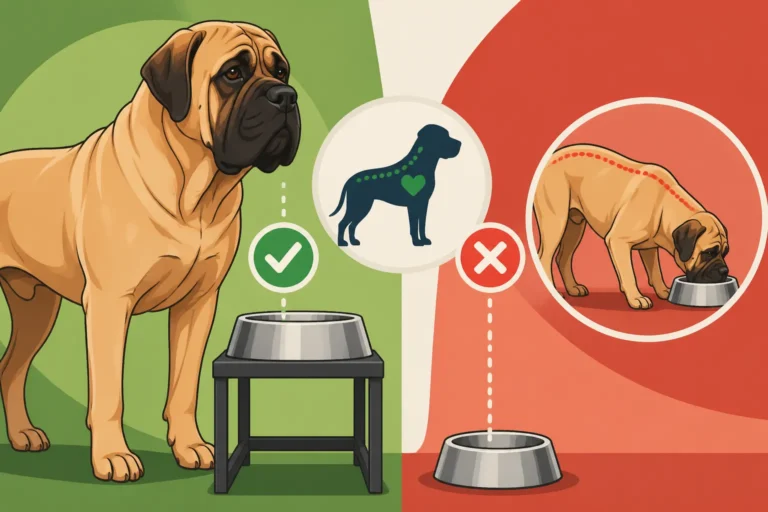
For meal planning, invest in an accurate measuring cup or, even better, a kitchen scale to weigh out their food. Eyeballing kibble can lead to significant overfeeding or underfeeding over time. Consistency in portion control is paramount. You might also consider food puzzles or slow-feeder bowls for meal times. These can help slow down enthusiastic eaters, making them feel fuller for longer and aiding in digestion, which is particularly important for deep-chested breeds. These items are readily available from online retailers like Chewy or Amazon. Ultimately, successful weight management for a Mastiff is a long-term commitment that combines careful observation, consistent effort, and professional support, ensuring your cherished companion thrives for years to come.
Disclaimer
This article is for general informational purposes only and does not constitute professional advice. Laws, prices and regulations vary by location and change over time. Consult a qualified professional for guidance on your specific situation.