Whether Trimming Paw Hair Improves a Mastiff’s Grip
It's a sight many Mastiff owners know all too well: that sudden, awkward splay of legs on a smooth floor, a momentary panic as your giant companion struggles to regain purchase. Whether it's your younger Mastiff getting a burst of zoomies or an older, arthritic gentle giant carefully navigating the kitchen, slippery floors are a real menace. This guide dives into one often-overlooked aspect of improving their footing: trimming the hair between their paw pads, and whether it truly makes a difference.
Understanding Your Mastiff's Paw Mechanics and Grip
Imagine trying to walk on ice while wearing furry slippers – that's often what it's like for a Mastiff with overgrown paw hair on smooth surfaces. Their sheer mass, combined with the natural slickness of fur, can turn a simple walk across the living room into a precarious balancing act. We need to understand the fundamental design of their paws to truly appreciate why this seemingly small detail can have such a big impact.
The Anatomy of a Mastiff's Paw Pads
A Mastiff’s paw is a marvel of natural engineering, designed to support an immense amount of weight while providing cushioning and grip across varied terrains. At the heart of this are the paw pads themselves. These are thick, rough, and elastic cushions made of specialized skin, filled with fatty tissue. They act as shock absorbers, protecting bones and joints from impact, especially crucial for a breed as heavy as a Mastiff. More importantly for our discussion, these pads are meant to make direct contact with the ground. Their slightly textured surface, much like the tread on a tire, is what provides natural traction.
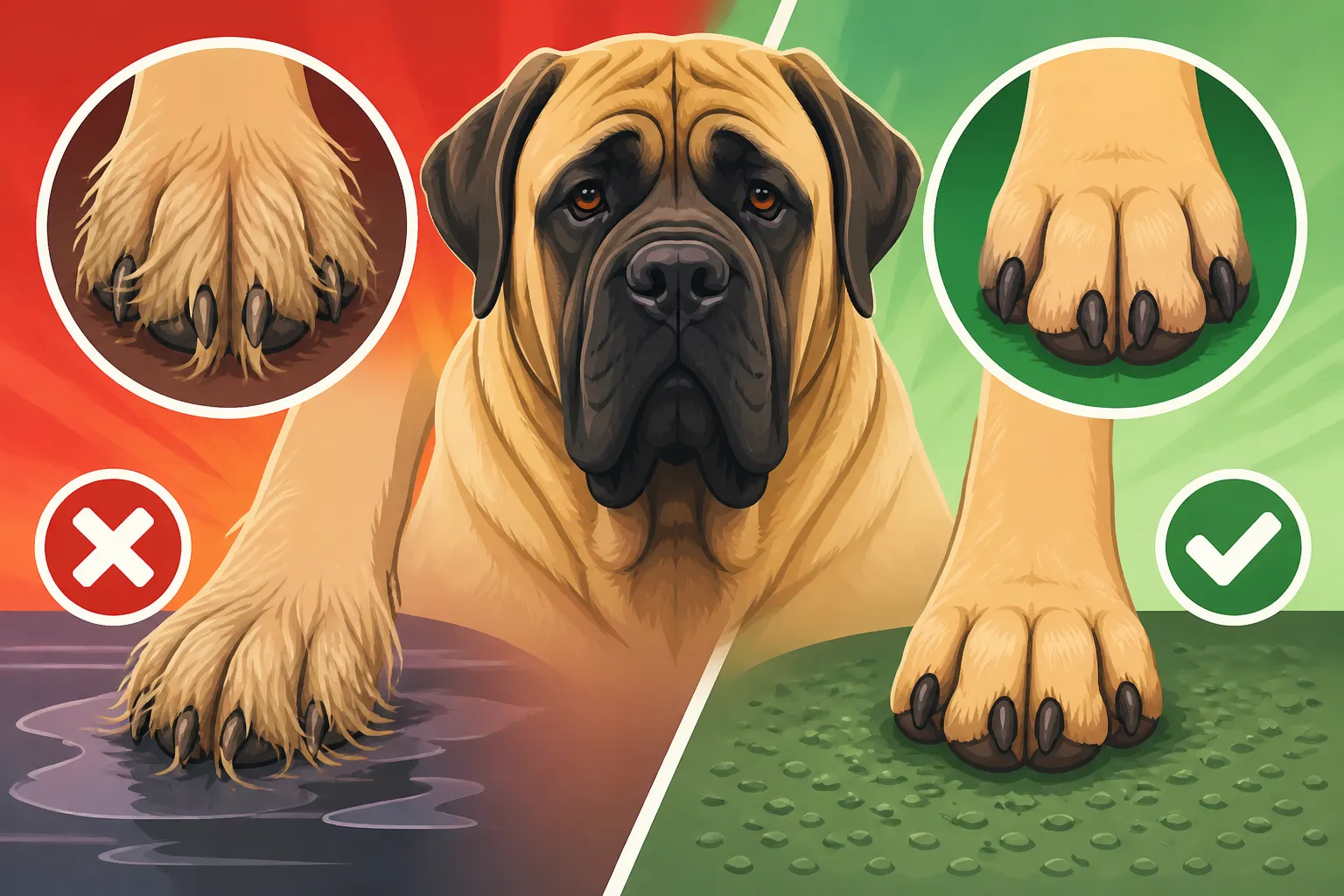
Between these prominent pads – the large metacarpal or metatarsal pad in the center, and the four digital pads for each toe – there are often tufts of hair. While this hair might offer some minor protection on rough, natural ground, or insulation in colder climates, it becomes a hindrance on smooth indoor surfaces. Think of it this way: if your foot has a thick layer of fur under it, that fur is what touches the polished hardwood or tile first, not the grippy pad. This creates a slippery barrier, diminishing the very function the pads are designed for. For a growing Mastiff puppy, this can even contribute to conditions that affect their joint development if they're constantly slipping, making it vital to ensure good traction. What Bare Floors Do to a Growing Mastiff
How Paw Hair Affects Traction
When a Mastiff walks or runs on carpet or grass, those tufts of hair between the paw pads don't really interfere with their grip. The carpet fibers provide plenty of friction, and grass offers natural texture. However, bring them inside onto a gleaming hardwood floor, slick vinyl, or smooth tile, and the problem becomes immediately apparent. The long hair acts like a cushion, lifting the paw pads just enough off the surface so that the pads can't properly engage. Instead, the dog is walking on a smooth, furry surface, which provides very little friction.
Consider an older Mastiff, perhaps one that's starting to show signs of Arthritis in a Mastiff at Four or simply experiencing the natural slowing down that comes with age. Their gait might already be a little less steady, their muscles weaker. If you add the challenge of slipping, it can lead to hesitant movements, falls, and even injury. A minor slip could strain a joint, exacerbate existing arthritis, or worse, cause a serious fall that's difficult for such a large dog to recover from. The goal is to maximize the direct contact between their textured paw pads and the floor, ensuring they have the best possible grip for their considerable weight. This isn't just about preventing slips; it's about confidence and overall joint health. Traction: Why a Mastiff Cannot Live on Bare Hardwood
The Case for Trimming Paw Hair
For many Mastiff owners, trimming paw hair isn't just a cosmetic choice; it's a vital part of their dog's care routine, aimed directly at improving their safety and mobility, especially indoors. It's about giving those big paws the best chance to do their job properly.
Practical Benefits of Improved Grip
The most immediate and obvious benefit of trimming your Mastiff's paw hair is enhanced traction. When the hair between their pads is short, the grippy, textured pads can make full contact with the floor. This significantly reduces instances of slipping and sliding, which is a huge relief for both you and your Mastiff. Imagine your Mastiff, perhaps 180 pounds of pure love, trying to stand up quickly after a nap on a tiled floor. Without proper grip, they might struggle, splay out, and perhaps even injure themselves. With trimmed paws, that powerful push-off is more stable and secure.
Beyond preventing falls, better grip can also boost your Mastiff's confidence. Dogs, especially large ones, can become anxious or tentative on slippery surfaces because they've learned that movement leads to instability. This hesitation can be particularly noticeable in older dogs or those with orthopedic issues, who might start to avoid certain rooms or activities. By providing them with better traction, you're essentially giving them back their footing, encouraging more natural movement and play. It's a small change that contributes to their overall well-being and willingness to engage with their environment. It also helps them on their walks, ensuring their nails, which also affect traction, are not the only thing providing grip. Keeping a Mastiff's Nails Short Enough for Traction
When to Consider Trimming
The best time to start thinking about trimming paw hair is usually when you first notice your Mastiff slipping. This might be a subtle slide when they round a corner, a more dramatic splay when they try to stop quickly, or difficulty getting up from a lying position on a smooth floor. Young, boisterous Mastiff puppies, who are still growing and learning coordination, often benefit from early paw hair maintenance to prevent injury during their playful antics. A sudden slip and fall for a rapidly growing pup can put undue stress on developing joints.
For older Mastiffs, trimming becomes almost essential. As they age, their muscles weaken, their joints stiffen, and their balance might not be what it once was. Every bit of extra traction helps them maintain their independence and prevents painful falls. You'll also want to consider trimming if your Mastiff frequently gets debris, mud, or snow packed into their paw hair. Long paw hair can collect all sorts of things, leading to discomfort, matting, or even infections between the pads. Regularly inspecting their paws and keeping the hair trimmed is a proactive step in preventing these common issues, making it part of their general hygiene routine. If you live in a climate with snow, this is particularly true, as ice balls can form between the pads and make walking excruciating.
How to Safely Trim Your Mastiff's Paw Hair
Trimming your Mastiff's paw hair doesn't have to be a scary ordeal, though it can feel daunting with such a large dog. With the right tools and a calm approach, it’s a manageable task that can make a huge difference to their comfort and safety. Remember, patience is key, especially if your Mastiff isn't used to having their paws handled.
Essential Tools and Preparation
Before you even think about picking up clippers, gather all your supplies. You'll need a good quality pair of dog clippers. Cordless models can offer more flexibility, but a corded model with a powerful motor can also work well, especially for thick Mastiff hair. Look for clippers that are relatively quiet to avoid startling your sensitive Mastiff. You'll also need a fine-toothed blade, like a #10 or #15, which is ideal for getting between the pads without cutting too short. A pair of blunt-nosed scissors is useful for any stray hairs that the clippers might miss or for carefully trimming around the edges.
Safety is paramount, so have styptic powder or cornstarch on hand in case of a minor nick. A high-value treat supply is absolutely non-negotiable for positive reinforcement! Find a comfortable, well-lit spot where both you and your Mastiff can be relaxed. For a very large Mastiff, this might mean having them lie down, or having a helper gently hold them if they're particularly wiggly. Getting them used to having their paws touched regularly will make this much easier. Start with short, positive sessions, just touching their paws and rewarding them, long before you introduce the clippers. This desensitization is crucial for a breed as discerning and sensitive as a Mastiff. The Sensitivity Nobody Expects in a Two Hundred Pound Mastiff Many of these supplies can be found readily online through retailers like Amazon or Chewy, making it easy to stock up.
Step-by-Step Trimming Guide
With your tools ready and your Mastiff calm, here's a step-by-step approach to trimming their paw hair:
- Inspect and Clean: First, gently lift your Mastiff's paw and examine it. Check for any debris, mats, or irritation between the pads. If there's mud or dirt, gently clean it off. If there are stubborn mats, you might need to carefully tease them out with your fingers or use blunt-nosed scissors before clipping, but always be cautious not to pull on the skin.
- Start Slow with Clippers: Turn on your clippers away from your Mastiff's paw so they can get used to the sound. Let them sniff the clippers, offer a treat, and praise them. Begin by gently pressing the clippers (turned off) against their paw pads to familiarize them with the sensation.
- Clip Between the Pads: With the clippers on, gently spread your Mastiff's toes to expose the hair growing between the pads. Hold the paw firmly but gently. Carefully run the clippers over the hair, always pointing the blade parallel to the pad, never directly into it. Think of it as skimming the hair off the top of the pads, aiming to make the hair flush with the pad surface. Work slowly and methodically, lifting the clippers after each small section. Be extra careful around the dewclaws, if your Mastiff has them. Take frequent breaks to offer treats and praise.
- Trim Around the Edges (Optional): Once the hair between the pads is trimmed, you can use the blunt-nosed scissors to trim any long hairs that stick out around the perimeter of the paw, making it neat and tidy. Again, always point the scissors away from the paw and keep them parallel to the ground.
- Finish and Reward: After you've finished one paw, examine your work. The pads should be clearly visible and the hair flush. Lavishly praise your Mastiff and give them a jackpot of treats! Repeat the process for the remaining paws. If your Mastiff gets stressed, do one paw at a time, or even spread it out over a couple of days. The goal is a positive experience.
| Step | Action | Key Considerations |
|---|---|---|
| 1. Preparation | Gather tools, treats; choose calm, well-lit area. | Clippers (quiet, #10/#15 blade), blunt scissors, styptic powder, high-value treats. |
| 2. Desensitization | Let Mastiff get used to clipper sound/feel. | Offer treats; short, positive interactions; don't rush. |
| 3. Inspect & Clean | Examine paw for debris, mats; clean as needed. | Remove anything that could snag clippers or hide injury. |
| 4. Clip Between Pads | Gently spread toes, clip hair flush with pads. | Hold paw firmly; blade parallel to pad; small sections; use extreme caution. |
| 5. Trim Edges | Use blunt scissors for stray hairs on paw perimeter. | Point scissors away from paw; optional for neatness. |
| 6. Reward | Praise and treat generously after each paw/session. | Reinforce positive association with paw handling. |
Alternatives and Additional Traction Aids
While trimming paw hair is a fantastic first step, sometimes a Mastiff needs a little extra help to navigate slippery floors. There are several excellent products available that can complement your grooming efforts. One popular option is paw balms or waxes, such as those made by Musher's Secret or paw-specific brands you might find on Chewy. These balms create a protective, slightly tacky layer on the pads, enhancing grip while also moisturizing and protecting the pads from drying and cracking.
Another effective solution, particularly for older Mastiffs or those with mobility challenges, are non-slip socks or boots. Brands like PawZ or even more heavy-duty indoor grip socks can provide immediate traction. However, getting a Mastiff to comfortably wear these can be a training process in itself! For a more permanent solution, consider investing in runners or large area rugs for your home. This provides a consistent, non-slip pathway for your Mastiff throughout the house, significantly reducing the risk of slips. What Flooring Suits a Mastiff Products like toe grips are also available, which are small rubber rings that slide onto your dog's nails to provide extra purchase, particularly helpful for dogs with Why an Old Mastiff Cannot Get Up on hard floors. Remember, a multi-pronged approach often works best for these big, beautiful dogs.
Potential Downsides and Considerations
While trimming paw hair generally offers significant benefits, it's not without its nuances. Being aware of potential downsides and other factors that influence your Mastiff's mobility is important for holistic care. It’s never just about one single fix.
Risks of Over-Trimming or Injury
The primary risk when trimming your Mastiff's paw hair is accidental injury. The skin between their paw pads is delicate and can be easily cut if you're not careful, especially if the clippers are dull or you're rushing. A cut can lead to pain, infection, and discomfort, making your Mastiff even more reluctant to have their paws handled in the future. Over-trimming, meaning cutting the hair too short or even shaving the pads completely, can also be problematic. While some might think shorter is better, completely bare pads can become more susceptible to rough surfaces, extreme temperatures (hot pavement or cold snow), and even irritation from everyday walking. The thin layer of hair is meant to offer a small degree of protection and insulation.
Another consideration is the potential for ingrown hairs or skin irritation if the hair is shaved against the grain or if clipper blades are dull and pull the hair. Always ensure your clippers are clean, sharp, and cool enough not to cause razor burn. If you’re unsure about performing the trim yourself, or if your Mastiff is particularly uncooperative, a professional groomer is an excellent option. They have the experience and specialized equipment to perform the task safely and efficiently, ensuring your Mastiff has the best possible experience and outcome. What Grooming a Mastiff Costs
Other Factors Affecting Mastiff Mobility
While paw hair definitely plays a role, it's crucial to remember that a Mastiff's grip and mobility are influenced by a host of other factors. Their sheer size and weight naturally put immense pressure on their joints, making conditions like hip and elbow dysplasia, or arthritis, common concerns. Keeping your Mastiff at a healthy, lean weight is perhaps one of the most impactful things you can do to support their joint health and mobility. An overweight Mastiff will struggle far more on slippery floors, regardless of paw hair, because of the extra strain on their joints and muscles. Keeping a Mastiff Lean on Purpose
Furthermore, the condition of their nails is equally, if not more, important than paw hair. Overgrown nails can act like stilts, pushing the paw pads up off the ground and reducing traction. Regular, short nail trims are essential to ensure the nails don't interfere with their natural grip. Whether a Mastiff's Nails Affect Its Traction Lastly, general muscle strength and underlying health conditions, such as neurological issues or pain, can all affect a Mastiff's gait and balance. If your Mastiff is consistently struggling with mobility, even after addressing paw hair and nails, it's always best to consult with your veterinarian to rule out any medical concerns that might require specific treatment or management, such as joint supplements or physical therapy.
Disclaimer
This article is for general informational purposes only and does not constitute professional advice. Laws, prices and regulations vary by location and change over time. Consult a qualified professional for guidance on your specific situation.