Whether a Mastiff’s Nails Affect Its Traction
One of the most insidious problems many Mastiff owners face, often without even realizing it, is how seemingly small details like nail length can dramatically impact their giant companion's mobility and overall comfort. When you have a two-hundred-pound dog, every aspect of their physical support system is critical, and overgrown nails can turn a steady, gentle giant into an unsteady, uncomfortable one, especially on slippery indoor surfaces. This guide will walk you through exactly why your Mastiff's nail length is so important for their traction and joint health, how to spot the signs of overgrown nails, and practical steps to ensure their paws are in prime condition.
The Silent Saboteur: How Long Nails Undermine Your Mastiff's Stability
It might seem counterintuitive that something as small as a dog's nail could have such a profound effect on an animal as massive as a Mastiff, but think of it like wearing shoes that are too small. While not overtly painful in the moment, they alter your gait, shift your weight, and eventually cause discomfort and potential injury. For a Mastiff, whose immense weight already places significant strain on their joints, long nails are a constant, low-grade source of biomechanical stress.
The Mechanics of a Mastiff's Gait on Long Nails
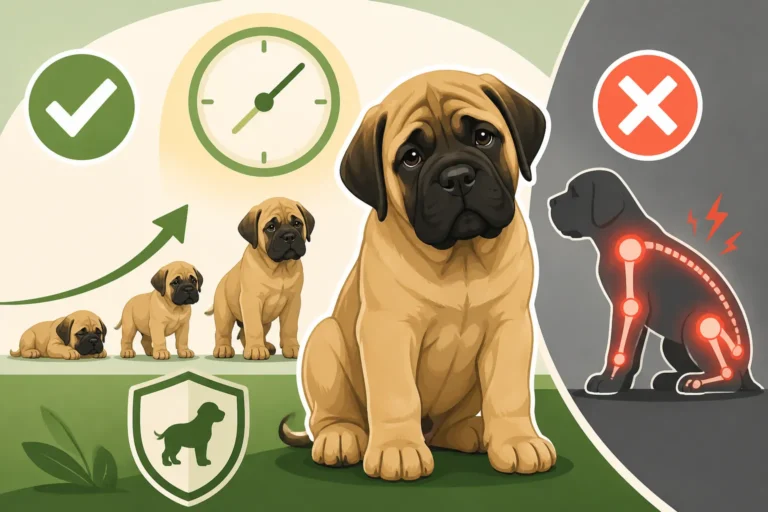
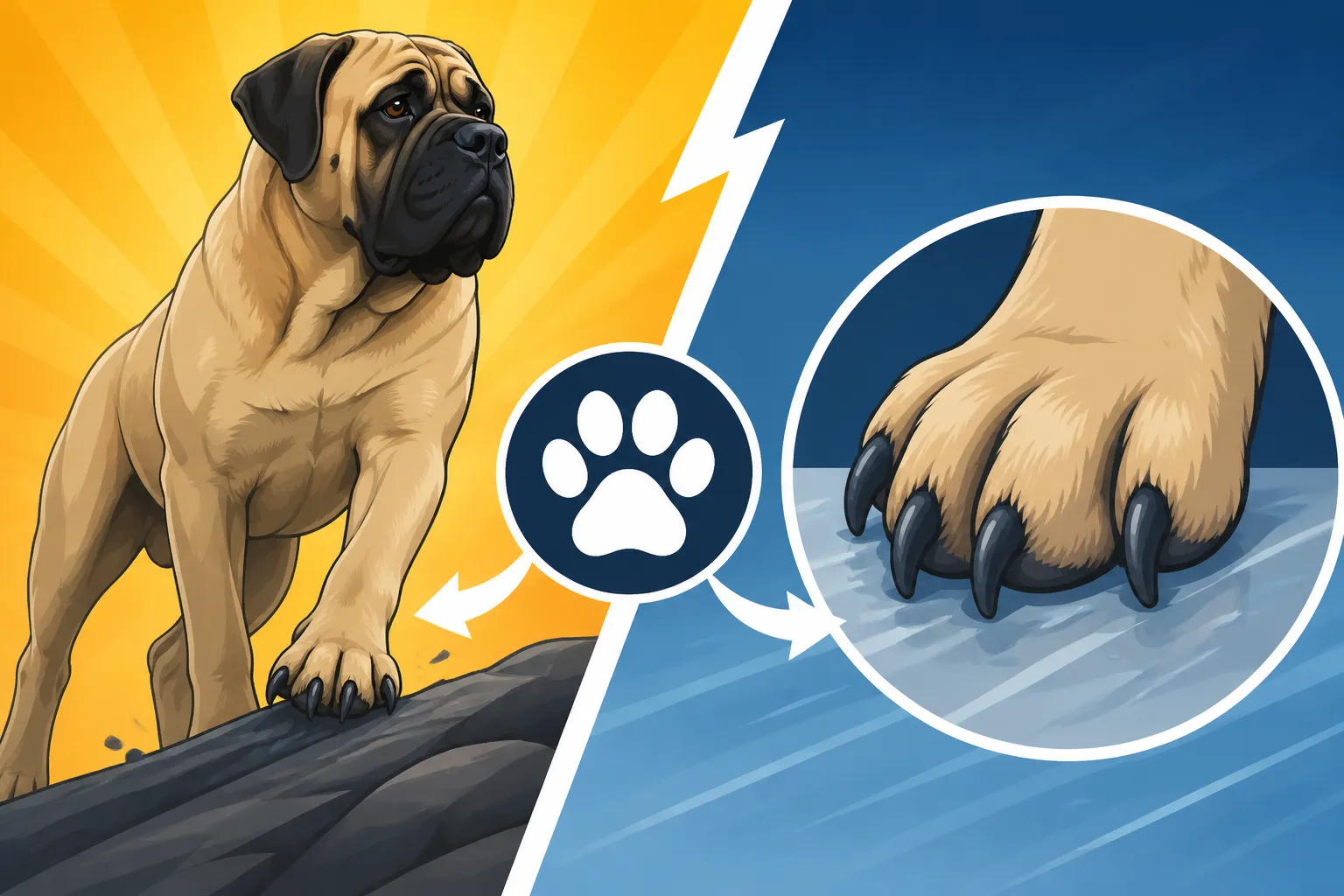
When a Mastiff's nails are too long, they push the toes upwards and backwards, forcing the paw to sit at an unnatural angle. Instead of the paw pads making full contact with the ground, the nails hit first, acting like tiny levers. This shifts the dog's weight further back onto their heels, away from the strong, shock-absorbing paw pads that are designed to grip and provide stability. Imagine trying to walk on your tip-toes all day; it's exhausting and throws off your balance. For a Mastiff, this altered weight distribution isn't just uncomfortable; it forces their leg joints – from the carpal joints (wrists) and elbows to the shoulders, hips, and hocks – to absorb impact and support weight in ways they weren't designed to.
Over time, this constant, subtle misalignment can contribute to or exacerbate existing joint conditions. Their body is constantly trying to compensate for the incorrect foot angle, leading to strain on ligaments, tendons, and muscles throughout their legs and back. This chronic stress can significantly impact their quality of life, making every step a little less stable and a little more taxing. It's an often-overlooked factor in the comfort of a heavy dog, especially when considering issues like A Mastiff Lying Two Hundred Pounds on One Elbow All Day.
The Slippery Slope: Traction Loss on Various Surfaces
The primary function of a dog's paw pads is to provide grip and cushioning. When nails are too long, they physically lift the paw pads off the ground, particularly on hard, flat surfaces. This means the dog loses the vital traction their pads would normally provide. Instead of sticky, soft pads, they are relying on hard, smooth nails to make initial contact with the floor. This is like trying to walk on ice skates on a regular floor – you're going to slip.
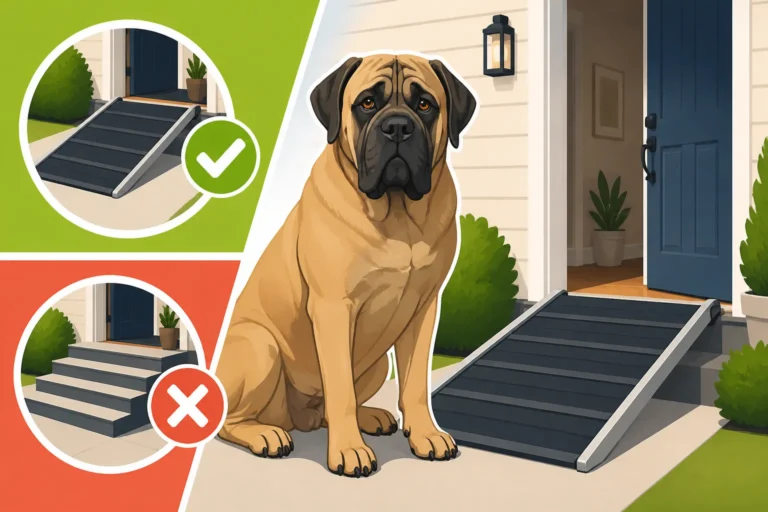
On softer surfaces like grass or carpet, the impact might be less obvious because the nails can sink in a little, allowing the pads to engage somewhat. However, indoors, on common surfaces like hardwood, laminate, or tile, the problem becomes critical. A Mastiff struggling for grip on these floors can easily slip, stumble, or even fall. This isn't just an inconvenience; a fall for a dog of this size can lead to serious injuries, from sprains and strains to torn ligaments or even fractures. This directly relates to the broader issue of Traction: Why a Mastiff Cannot Live on Bare Hardwood and highlights why proactive measures are essential.
Recognizing the Red Flags: Signs Your Mastiff's Nails Are Too Long
Catching overgrown nails early can save your Mastiff a lot of discomfort and potentially prevent more serious mobility issues down the line. It's easy to overlook something so seemingly minor, especially with a dog that's generally laid-back, but once you know what to look for, the signs become quite clear.
Audible Cues and Visible Changes
The most common and often the first sign of overgrown nails is an audible "clicking" sound when your Mastiff walks on hard floors. If you hear this rhythmic click-clack, it means their nails are hitting the ground before their paw pads, which is exactly what we want to avoid. Ideally, a dog's nails should barely, if at all, touch the floor when they're standing naturally.
Beyond the sound, you can observe visible changes in their paws. Their toes might appear splayed out, rather than compact and tight. When they stand, you might notice their weight rocking back onto their heels, or their feet appearing to "roll" outwards, trying to find better balance. Look at their nails when they're standing on a flat surface: if you can slide a piece of paper underneath the nail tips, they're likely a good length. If the nails are visibly pressing into the ground or pushing the toes up, it's definitely time for a trim. Keep in mind that the quick (the sensitive blood vessel and nerve within the nail) grows with the nail, so overgrown nails mean an overgrown quick, making future trims more challenging.
Behavioral Shifts and Mobility Issues
A Mastiff with overgrown nails might start exhibiting subtle behavioral changes. They might hesitate before stepping onto a smooth floor, or become noticeably more cautious when navigating turns or inclines. You might observe them slipping more frequently, stumbling over their own feet, or struggling to get up from a lying position. The effort it takes to simply stand or walk can increase their fatigue.
This reduced confidence in their footing can lead to a more sedentary lifestyle, which in turn can contribute to weight gain and further joint issues. In some cases, long nails can even be mistaken for more serious underlying conditions, or they can certainly exacerbate existing ones. For instance, an already arthritic dog, perhaps suffering from Arthritis in a Mastiff at Four, will experience even greater discomfort and difficulty moving if their nails are adding to their joint strain. Similarly, if your Mastiff shows signs of The Shifting Lameness of a Growing Mastiff, it's important to rule out overgrown nails as a contributing factor, as they can worsen any gait abnormalities.
The Path to Better Paws: Practical Steps for Mastiff Nail Care
Taking care of a Mastiff's nails can feel like a daunting task, given their size and strength, but with the right approach, tools, and consistency, it becomes a manageable part of their routine. The goal isn't just to make their nails look tidy, but to restore proper paw function and support their massive frame.
Tools and Techniques for Trimming a Giant
For a Mastiff, you'll need sturdy, sharp clippers designed for large breeds. There are two main types: guillotine-style and scissor-style. Many owners find the scissor-style clippers, often resembling garden shears, to be more robust and easier to handle for thick, strong Mastiff nails. Another popular and often preferred tool is a Dremel or a similar rotary tool with a sanding drum. This grinds the nail down gradually, reducing the risk of cutting into the quick and making the process less stressful for many dogs and owners. If you're considering a Dremel, you might want to look into Whether a Dremel Suits a Mastiff's Nails for more detailed guidance. You can find a good selection of these tools on platforms like Amazon or Chewy.
When trimming, always have styptic powder (like Kwik Stop) on hand. This is an essential safety net for quickly stopping bleeding if you accidentally cut too far into the quick. The key to successful nail trims, especially with a large dog, is patience and positive reinforcement. Start slow, trim only a tiny bit at a time, and offer plenty of high-value treats and praise. For a Mastiff, it’s often helpful to have a second person to help steady them or distract them with treats while you work on their paws. If your Mastiff is particularly anxious or has very thick, dark nails where the quick is hard to see, don't hesitate to seek professional help from your vet or a professional groomer. They can demonstrate proper technique and get your dog accustomed to the process.
Frequency and Consistency are Key
Establishing a regular nail care routine is paramount. For most Mastiffs, weekly or bi-weekly trims are ideal. Consistent, small trims are far better than infrequent, drastic cuts. Frequent trimming helps the quick recede over time, allowing you to gradually shorten the nails further without pain. Think of it like a treadmill for the quick – the more you trim the nail, the further back the quick is encouraged to withdraw, making future trims easier and allowing the nails to be kept shorter.
Make nail trims a positive, calm experience. Introduce the tools slowly, let your Mastiff sniff them, and associate them with treats. Even if you can only do one nail per session at first, that's progress. Over time, your Mastiff will learn to tolerate and even look forward to the routine, associating it with positive rewards. Remember, a massive dog like a Mastiff needs to feel secure and comfortable during any handling, and building that trust starts early. Consistent care, perhaps with the help of a favorite chew toy or treat dispenser also found on Chewy, can make a world of difference in their attitude towards nail care.
Beyond the Trim: A Holistic Approach to Mastiff Paw Health
While regular nail trims are fundamental, they are just one piece of the puzzle when it comes to ensuring your Mastiff maintains optimal traction and joint health throughout their life. A holistic approach considers their environment, diet, and overall well-being.
Environmental Adaptations for Optimal Traction
The surfaces your Mastiff walks on daily significantly impact their paw health and stability. Hardwood, tile, and laminate floors, while aesthetically pleasing, are often a nightmare for large dogs with heavy frames. Their immense weight combined with a lack of grip can lead to constant slipping and strain. To mitigate this, consider investing in non-slip runners or large area rugs, particularly in high-traffic areas where your Mastiff spends most of their time. This creates "traction highways" through your home, allowing them to move with more confidence and less risk of injury. Addressing home flooring is a crucial component of avoiding problems like What Bare Floors Do to a Growing Mastiff and supporting joint health in dogs of all ages. You can find durable, large rugs and runners on Amazon or through various home goods retailers. For very stubborn cases of slipping, some owners use anti-slip socks or paw waxes to provide extra grip, though these require regular reapplication.
Supporting Joint Health from the Ground Up
Good paw health is inextricably linked to overall joint health, especially for a breed prone to orthopedic issues. A high-quality diet that supports joint health is essential. Many Mastiff owners incorporate joint supplements from a young age, typically containing ingredients like glucosamine, chondroitin, and MSM, to help maintain cartilage health and reduce inflammation. Fish oil, rich in Omega-3 fatty acids, is another popular supplement known for its anti-inflammatory properties that can benefit joints. You can find a wide array of these supplements on trusted pet supply sites like Chewy.
Maintaining a lean body weight is perhaps the most critical factor in preserving joint health. Every extra pound your Mastiff carries puts exponentially more stress on their joints, amplifying the problems caused by poor traction. Regular, controlled exercise appropriate for their age and size – avoiding high-impact activities – also helps build muscle mass around the joints, providing natural support. Mobility issues, whether they stem from age, like Why an Old Mastiff Cannot Get Up, or from progressive conditions such as How a Mastiff's Hind End Fails With DM, will undoubtedly be worsened by inadequate nail care and environmental challenges. By addressing these factors comprehensively, you create the best possible foundation for your Mastiff's comfort and longevity.
| Aspect | Long Nails | Short, Well-Maintained Nails |
|---|---|---|
| Paw Contact | Nails hit ground first, lifting paw pads, especially on hard surfaces. | Paw pads make full, even contact with the ground, maximizing grip. |
| Traction | Significantly reduced, leading to slipping, sliding, and instability. | Optimal traction, providing confidence and stability on all surfaces. |
| Joint Stress | Increased strain on toes, ankles, wrists, elbows, shoulders, hips due to altered gait and compensation. | Minimized joint stress as weight is distributed correctly through the paw. |
| Gait/Posture | Splayed toes, rocking back on heels, uneven weight distribution, hesitant movement. | Natural, balanced gait with strong, aligned posture. |
| Injury Risk | Higher risk of slips, falls, sprains, torn ligaments, and exacerbation of existing orthopedic conditions. | Lower risk of acute injury from slipping, reduced chronic strain on joints. |
| Comfort & Confidence | Discomfort, reduced confidence in movement, reluctance to engage in activity. | Increased comfort, greater confidence in movement, improved willingness to be active. |
| Quick | Quick often overgrown, making proper trimming difficult and increasing risk of bleeding. | Quick recedes with regular trims, allowing nails to be kept shorter safely. |
Disclaimer
This article is for general informational purposes only and does not constitute professional advice. Laws, prices and regulations vary by location and change over time. Consult a qualified professional for guidance on your specific situation.