Whether Two Mastiffs Can Be Walked at Once
The dream of strolling calmly with your two magnificent Mastiffs side-by-side often bumps head-first into the colossal reality of their size and strength. Many owners struggle with the sheer logistics, feeling like they're being pulled in two different directions, literally. This guide will delve into the practicalities, challenges, and necessary preparations for successfully walking two Mastiffs at once, ensuring both your safety and your gentle giants' enjoyment.
The Unique Challenges of Walking Two Mastiffs
Walking one Mastiff is an exercise in management; walking two simultaneously introduces an entirely new set of complexities. It's not simply double the dog, but often an exponential increase in potential issues. Their immense size and strength mean that any uncoordinated movement or sudden decision can quickly overwhelm a handler.
The Sheer Physical Force Involved
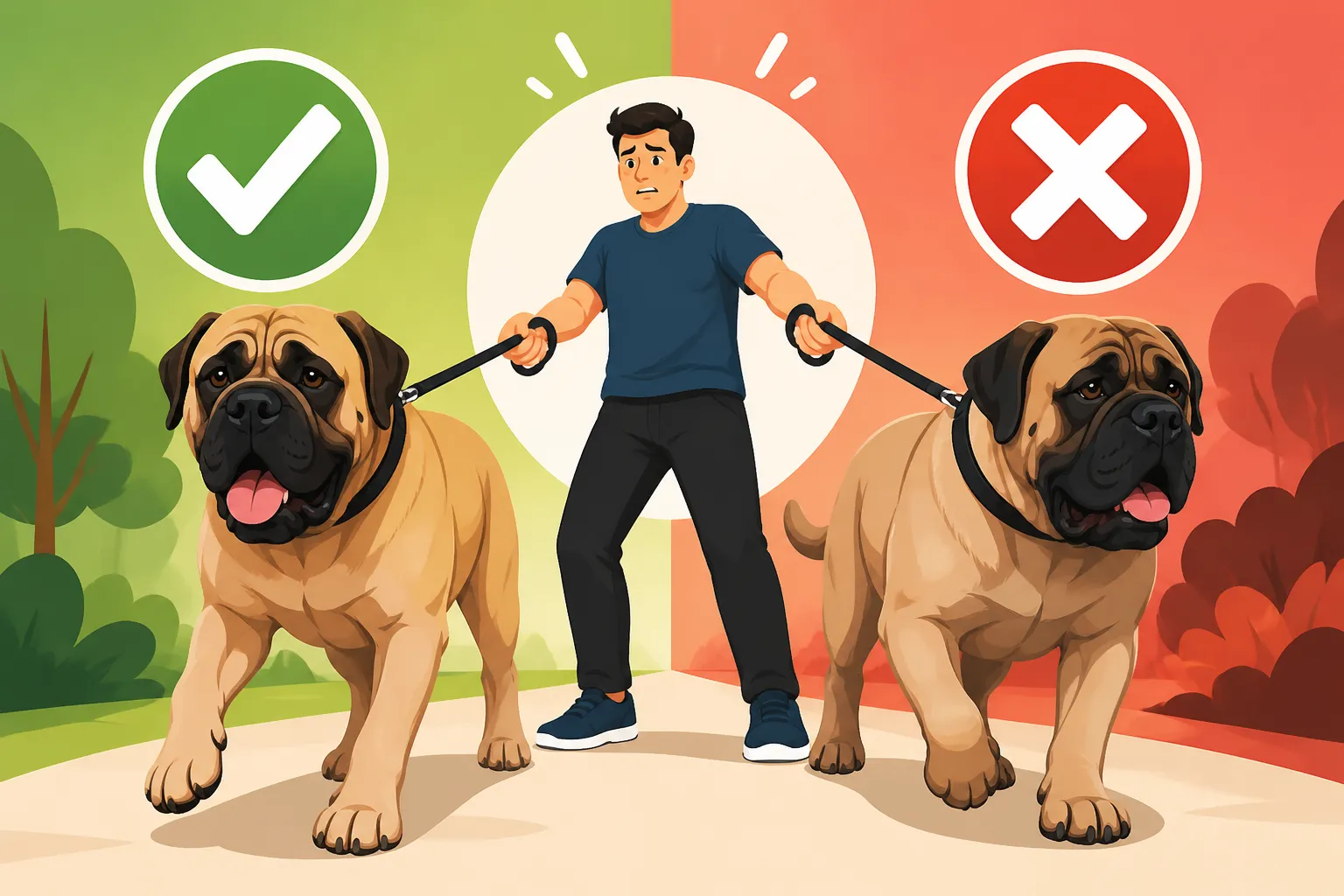
Imagine two freight trains, each weighing upwards of 150-200 pounds, suddenly deciding to explore separate but equally interesting smells. The combined force can easily exceed a person's ability to remain upright, let alone maintain control. A Mastiff's pulling power is legendary, and even if they aren't actively trying to pull, their sheer momentum if they lean into the leash can be enough to disbalance you. How Much Force a Mastiff Can Apply on a Leash is a stark reality that hits home when you have two working in tandem. This isn't just about strength; it's about inertia. If one spots a squirrel and the other spots a leaf, you're caught in the middle of a powerful tug-of-war.
Moreover, their low center of gravity combined with that bulk means they can brace themselves against a pull with incredible effectiveness. If one decides it's simply done walking and plants itself, you're now dealing with 150-200 pounds of immovable object, and its companion might be completely oblivious, ready to keep moving. This can lead to dangerous entanglement or a sudden jerk that can injure both you and your dogs. The scenario of Stopping a Mastiff That Plants Itself and Will Not Move becomes twice as complicated when you have another one still attached.
Coordinating Two Independent Minds
Even the most well-behaved Mastiffs have their own personalities and preferences. What one finds utterly fascinating, the other might ignore, or worse, react negatively to. One might want to sniff every blade of grass, while the other is keen to maintain a steady pace. These differing intentions, when combined, can lead to frustration for you and potential tension between the dogs themselves.
Think about encountering another dog on your walk. One Mastiff might be perfectly calm, while the other might have a stronger reaction, perhaps a curious lean or a low rumble. Managing both reactions simultaneously, preventing a tangled mess of leashes, and ensuring a polite encounter requires a level of focus and physical dexterity that is truly demanding. It's not just their size, but their independent thought processes that become the real challenge. You need to be acutely aware of both dogs' body language and anticipating their next moves. How a Mastiff Judges a Stranger at the Door gives you a glimpse into their discerning nature, and this extends to encounters on walks.
Essential Gear and Preparation for Dual Walks
Successfully walking two Mastiffs isn't just about brute strength; it's about having the right tools and laying the groundwork with consistent training. Without proper equipment and a solid foundation, you're setting yourself up for a struggle.
Harnesses and Leashes: Beyond the Basic Collar
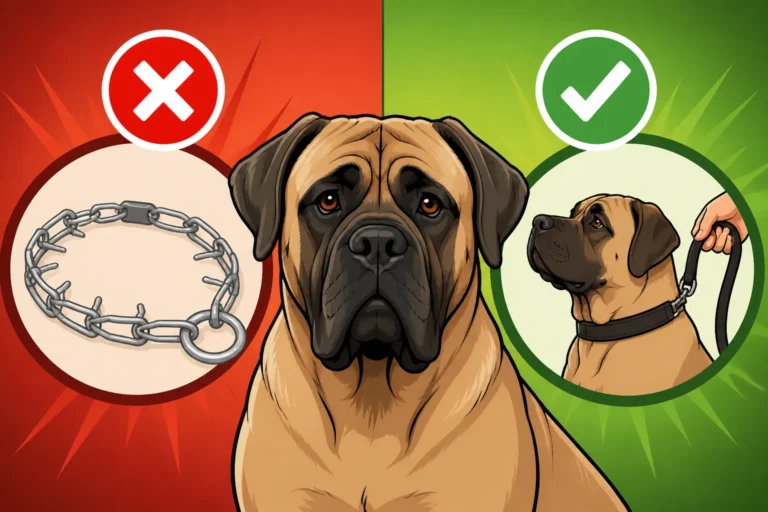
For a dog as large and powerful as a Mastiff, a collar-only setup, especially for walking, is often inadequate and potentially unsafe. The pressure a collar can exert on a Mastiff's neck, particularly if they pull, is significant and can lead to discomfort, damage to the trachea, or even respiratory issues for a brachycephalic breed. Harnesses distribute pressure across the chest and shoulders, offering much better control and comfort for the dog.
When choosing harnesses, look for options designed for giant breeds. Chest-clip or front-clip harnesses can be particularly effective for Mastiffs that tend to pull, as they redirect the dog's forward momentum sideways, making it harder for them to lean into the pull. This is a topic thoroughly explored in Whether a Mastiff Should Wear a Harness or a Collar. You'll want sturdy, well-padded harnesses from reputable brands that can withstand the strength of two Mastiffs. Checking online retailers like Amazon for heavy-duty, giant-breed specific harnesses can offer a wide range of choices and reviews from other large dog owners.
For leashes, you have a few options:
- Two Separate Leashes: This offers the most individual control over each dog. However, it requires two hands, making it challenging if you need to carry anything else or adjust something. The risk of tangling is also very high, especially if the dogs cross paths frequently.
- A Double Coupler/Splitter: This attaches to a single leash and then splits into two shorter leashes, one for each dog. This keeps the dogs closer together and allows you to use one hand, but it gives less individual control. If one dog pulls much harder than the other, the stronger puller might drag the weaker one. It's best suited for dogs that walk very well together and at a similar pace.
- Hands-Free Leashes: These leashes attach to a belt around your waist. While great for running with smaller dogs, a hands-free setup with two Mastiffs is generally not recommended. If either dog pulls suddenly or reacts strongly, you could easily be pulled off your feet and seriously injured. The safety risk far outweighs any convenience for such powerful animals.
Always prioritize safety. Even with the best gear, a Mastiff is still incredibly strong.
The Importance of Individual Leash Training
Before you ever try to walk two Mastiffs at once, both dogs must have impeccable individual leash manners. This isn't optional; it's foundational. If one Mastiff pulls you over when walked alone, imagine what two could do. Each dog needs to understand cues like "heel," "stop," "wait," and "leave it" without hesitation, and ideally, respond to these cues even with distractions.
Invest in positive reinforcement training from an early age. Puppy classes and advanced obedience are invaluable. Resources like BAXTER & Bella can provide structured online training programs that focus on teaching these critical skills in a positive, reward-based manner. Consistency is key, and it's far easier to teach good habits to a Mastiff puppy before they reach their full, formidable size. Teaching a Mastiff Before It Outweighs You is a concept that truly applies here. Remember, training is an ongoing process, not a one-time event, especially with Mastiffs who are thoughtful and sometimes deliberate in their responses.
| Leash/Harness Setup | Pros | Cons | Ideal Scenario |
|---|---|---|---|
| Two Separate Leashes | Maximum individual control; can separate dogs if needed. | Requires two hands; high risk of tangling; can be physically demanding. | Experienced handler; dogs with excellent individual leash manners. |
| Double Coupler/Splitter | Single hand control; keeps dogs together; reduces tangling of your hands. | Less individual control; stronger dog can impact weaker; still possible for coupler itself to tangle. | Dogs walk well together, similar pace, minimal pulling; low distraction areas. |
| Front-Clip Harness (each) | Redirects pulling; better control and comfort for the dog. | Requires proper fitting; some dogs may find it awkward initially. | Any Mastiff prone to pulling; excellent for teaching loose-leash walking. |
| Hands-Free Leash | Convenient for walking/running (smaller dogs). | EXTREMELY DANGEROUS FOR MASTIFFS – high risk of injury to handler. | NOT RECOMMENDED FOR MASTIFFS. |
Training and Technique for Dual Mastiff Management
Once your Mastiffs are individually proficient on a leash and you have the right gear, it's time to merge their walks. This stage requires patience, consistency, and a clear strategy.
Starting Slow and Steady
Don't jump straight into a bustling park. Begin in a quiet, low-distraction environment, like your backyard or a peaceful cul-de-sac. The goal is to build confidence and establish a rhythm before introducing more complex stimuli. Start with very short walks, focusing purely on walking nicely side-by-side.
- Practice with a Helper: If possible, have a second person help you initially. Each person walks one Mastiff on a separate leash, side-by-side. This allows you to observe how they interact and respond when walking in close proximity, and you can intervene more easily if issues arise.
- Reinforce Good Behavior: Lavishly reward both dogs for walking calmly together. Use high-value treats and praise. The moment they start to pull or get tangled, stop moving. Only resume once the leashes are loose and they've calmed down. This teaches them that calm walking gets them where they want to go.
- Consistent Cues: Use the same verbal cues you established during individual training. "Heel," "let's go," "wait." Your voice should be calm and authoritative, not frantic. Mastiffs are sensitive creatures, and a harsh tone can set them back or make them sulk. Why Harsh Correction Ruins a Mastiff is a principle to live by.
Managing Different Paces and Distractions
One of the most common issues is that two Mastiffs might have different energy levels or attention spans. One might be a sniff-enthusiast, while the other is more of a cruiser.
- Pacing: If one dog consistently walks faster or slower, use a double coupler that allows for some length adjustment, or be prepared to use your two separate leashes to gently guide them to a more uniform pace. Sometimes, the slower dog will eventually catch up, and the faster one will learn to adjust. This process takes time and consistency.
- Distractions: When one Mastiff is fixated on something – a bush, another dog, a person – the other can become a loose cannon. This is where your individual training pays off.
- Anticipate: Learn to read your dogs. If you see one starting to stiffen or gaze intently, proactively use your "leave it" or "focus" command before they fully engage with the distraction.
- Redirection: Carry high-value treats to redirect their attention back to you. A sudden delicious snack can often break a Mastiff's concentration on a distraction.
- Space: Don't be afraid to create distance. If you see a potential trigger ahead, cross the street or turn a corner. It's always better to avoid a confrontation or a struggle than to push through it.
Remember that What Actually Motivates a Mastiff often boils down to food and praise, so use these tools strategically.
Safety Considerations and Real-World Scenarios
Even with the best preparation, walking two Mastiffs presents unique safety challenges. Being prepared for the unexpected is paramount.
Unexpected Encounters
Life happens. You'll encounter other dogs, children, cyclists, or even just a sudden loud noise. How you react in these moments is crucial.
- Other Dogs: If your Mastiffs are generally friendly but large, be mindful of smaller dogs. A Mastiff's playful lean could easily knock over a tiny breed. If one of your Mastiffs is reactive, you must have a plan. This might mean avoiding busy areas, walking at off-peak hours, or having a dedicated "U-turn" cue. If you see another dog approaching and you're unsure of your Mastiff's reaction, create distance immediately. Leash Reactivity in a Two Hundred Pound Mastiff is a serious matter, and doubling it can be disastrous.
- Children: Mastiffs can be wonderful with children they know, but their size can be intimidating or even dangerous for unfamiliar children. A curious child running up to pet them could be accidentally knocked over. Maintain a respectful distance from children you don't know, and always advocate for your dogs.
- Sudden Noises/Movements: A car backfiring, a skateboarder whizzing by, or a sudden gust of wind can all spook even a calm Mastiff. Their instinct might be to jump, bolt, or brace. Your grip on the leashes (or the coupler) needs to be rock-solid. If they do jump or pull, try to absorb the shock with your body, plant your feet, and use their training to regain control. This is where having excellent core strength and sturdy footing becomes invaluable.
Handler Strength and Awareness
Let's be real: managing two giant dogs requires physical stamina and constant vigilance. You might be able to physically handle the force of one Mastiff, but two can push you past your limit.
- Know Your Limits: Be honest about your physical capabilities. Can you physically restrain both dogs if they decide to lunge? If the answer is no, consider having only one person walk one Mastiff at a time, or always walk with a partner. There's no shame in admitting that Whether a Mastiff Can Be Walked by One Person is a different equation when you have two.
- Stay Present: Avoid distractions like your phone. Your full attention needs to be on your dogs and your surroundings. Scanning ahead for potential issues, observing your dogs' body language, and being ready to act instantly are critical skills.
- Emergency Plan: What if one dog suddenly limps? The Shifting Lameness of a Growing Mastiff can be a concern at any age. What if you slip and fall? Having a plan for these scenarios is vital. Consider carrying your phone where it's easily accessible in case you need to call for help. Make sure your dogs wear ID tags and are microchipped.
Successfully walking two Mastiffs at once is a badge of honor, but it's one earned through diligent training, appropriate gear, and unwavering attention. It's a journey of partnership, requiring you to be both leader and advocate for your magnificent companions.
Disclaimer
This article is for general informational purposes only and does not constitute professional advice. Laws, prices and regulations vary by location and change over time. Consult a qualified professional for guidance on your specific situation.