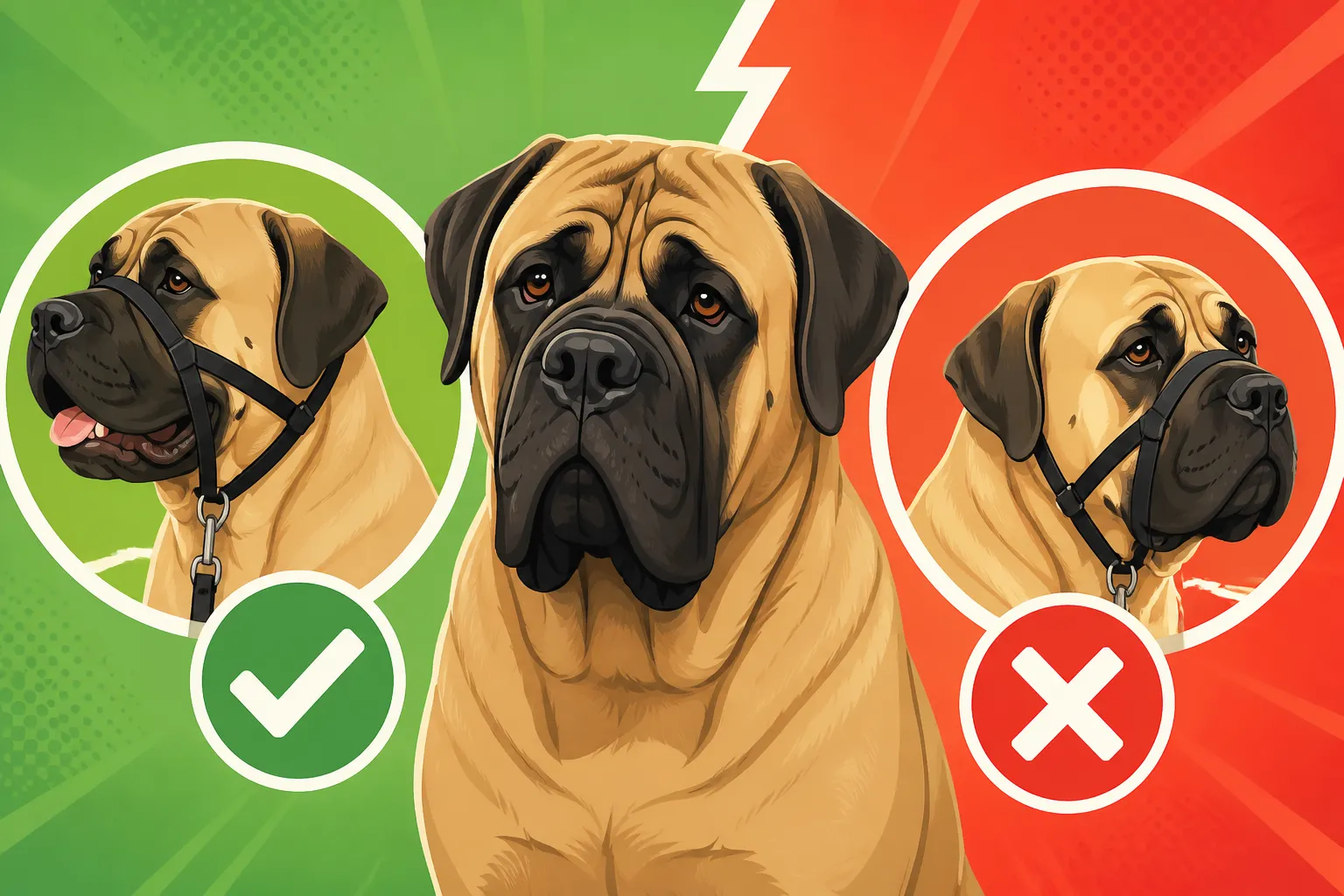
Whether a Head Halter Suits a Mastiff
Walking a Mastiff can sometimes feel less like a leisurely stroll and more like being a kite in a hurricane. Their sheer size and incredible strength mean that even a gentle pull can quickly turn into an unmanageable tug-of-war, leaving many owners feeling overwhelmed and searching for any tool that can provide a bit more control. This guide will delve into whether a head halter is a suitable and humane option for managing your powerful Mastiff, exploring its mechanics, benefits, and potential drawbacks.
Understanding What a Head Halter Is
First, let's clear up any confusion about what a head halter actually is, because it's often mistaken for a muzzle. A head halter, sometimes called a head collar, is a piece of training equipment that fits over your dog's muzzle and behind their ears, similar to a halter used on a horse. It has a loop that goes over the nose and another strap that buckles behind the head, usually with the leash attaching under the chin. The key difference from a muzzle is that a head halter allows your Mastiff to open their mouth to pant, drink, and eat treats freely. It’s designed for control, not restriction of movement.
How a Head Halter Works on a Large Dog
The principle behind a head halter's effectiveness lies in leverage and redirection. Imagine trying to lead a horse by a rope around its neck – difficult, right? But if you lead it from a halter on its head, you have much more control. The same applies to our massive Mastiffs. When your dog pulls forward with a regular collar, their entire body weight can be leveraged against you. With a head halter, the leash attachment point is under the chin. When your Mastiff pulls, the halter gently directs their head downwards or to the side, which naturally discourages forward momentum.
This redirection works because a dog's body tends to follow its head. If you can steer their head, you can largely steer the rest of their impressive bulk. It's not about applying painful pressure to the neck or throat, which traditional collars can do, especially if a Mastiff lunges. Instead, it applies mild pressure to the bridge of the nose and behind the ears, which are areas dogs are generally quite sensitive to. This allows you to communicate directions with minimal physical effort, a huge relief when you're dealing with a dog that outweighs you by a significant margin.
Head Halter vs. Other Training Equipment
When you're trying to find the right gear for a Mastiff, the options can feel endless: flat collars, martingale collars, front-clip harnesses, back-clip harnesses, and yes, head halters. A standard flat collar might be fine for identification, but for a determined puller, it offers little control and can put dangerous strain on the trachea. Martingale collars provide more security by tightening slightly when pulled, preventing escape, but they don't solve the pulling problem itself.
Harnesses, particularly front-clip harnesses, are often recommended as an alternative to head halters for dogs that pull. Front-clip harnesses work by redirecting the dog's forward momentum to the side when they pull, similar in principle to a head halter but without involving the head. For some Mastiffs, a well-fitting front-clip harness can be a fantastic solution, distributing pressure across the chest rather than the neck. However, even with a front-clip harness, a truly determined Mastiff can still exert significant force. A head halter often offers a finer degree of control, especially for quick turns or getting a dog's full attention in a distracting environment. The choice often comes down to individual dog preference and owner comfort.
Why a Head Halter Might Be Appealing for a Mastiff Owner
Let's be honest, living with a Mastiff is a unique experience. They are magnificent, loving giants, but their size presents challenges that smaller dogs simply don't. Managing their immense strength on a leash is often at the top of that list. Many Mastiff owners find themselves dreading walks, especially if their dog is still learning leash manners, or if unexpected distractions trigger a sudden lunge. This is where the head halter enters the picture as a potentially game-changing tool.
Managing Unpredictable Lunges and Pulling
Imagine you're walking your gentle giant down a quiet street, and suddenly, a squirrel darts across your path. Before you can react, your Mastiff lunges. That sudden jolt can pull you off balance, injure your shoulder, or even send you sprawling. This isn't just an inconvenience; it's a real safety concern for both the owner and the dog. A head halter offers a more immediate and effective way to interrupt these lunges. By gently turning their head, you can often break their focus on the squirrel and regain control before they apply their full force.
The primary appeal of a head halter for a Mastiff is the mechanical advantage it provides. It transforms a battle of wills into a more manageable interaction. For owners who might not have the physical strength to counter their Mastiff's brute force with a regular collar or harness, a head halter can be an empowering tool. It allows for a much lighter touch on the leash, reducing the strain on your body and, crucially, on your Mastiff's neck. This means walks can become more enjoyable and less stressful for everyone involved. How Much Force a Mastiff Can Apply on a Leash explores this challenge in more detail.
A Gentle Alternative to Harsh Corrections
One of the cornerstones of effective Mastiff training is positive reinforcement and gentle handling. These dogs are incredibly sensitive, despite their imposing appearance. Harsh corrections, yanking on a choke chain, or prong collar can easily damage their trust and lead to fear-based reactions, which is the last thing you want with a dog of this size. A head halter offers a humane alternative. It works on the principle of redirection rather than pain or discomfort. The pressure is distributed, and the sensation is novel, not punitive.
When properly introduced, a head halter doesn't need to be associated with negative experiences. It simply becomes part of the walking routine. For Mastiff owners dedicated to humane training methods, the head halter aligns well with a philosophy of teaching and guiding rather than forcing. It helps establish a clear line of communication without resorting to tools that could cause physical harm or psychological distress, ensuring your Mastiff remains a happy, confident companion. The Sensitivity Nobody Expects in a Two Hundred Pound Mastiff delves into their gentle nature.
Practicalities and Considerations for Using a Head Halter
While a head halter can be a powerful tool, it's not a magic bullet. Like any piece of training equipment, its effectiveness and safety depend entirely on proper introduction, fit, and consistent use. You can't just slap it on and expect miracles, especially with a discerning Mastiff.
Proper Introduction and Acclimation
This is perhaps the most crucial step for a Mastiff. Many dogs, especially those unaccustomed to anything on their muzzle, will react negatively at first. They might paw at it, try to rub it off, or simply freeze. For a Mastiff, this initial rejection can be quite dramatic due to their size. Patience is paramount. Start by simply showing your Mastiff the halter, letting them sniff it, and offering a high-value treat. Repeat this several times.
Next, briefly put the nose loop over their muzzle, immediately followed by a treat and praise, then take it off. Gradually increase the duration until they are comfortable wearing it for a few seconds, then minutes, then walking around the house. Use positive associations every single time. Feed meals with it on, or play their favorite game. Some owners find using a product like a lick mat smeared with peanut butter can distract a dog long enough to get them used to the sensation. Don't rush it. This acclimation period might take days or even weeks for a Mastiff, but it's essential for long-term success. If you push too fast, your Mastiff will develop a negative association, and trying to put it on will become a battle.
Ensuring a Correct Fit
A poorly fitting head halter is either ineffective or uncomfortable, or both. The nose loop should sit high on the bridge of the nose, close to the eyes, not down near the soft part of the muzzle where it could impede panting or cause discomfort. It should be snug enough that your Mastiff can't easily paw it off, but loose enough to allow them to fully open their mouth to yawn, pant, and drink. You should be able to comfortably slide one or two fingers under the nose loop.
The strap behind the head should also be snug, preventing the halter from twisting or slipping off. Different brands offer slightly different designs, so it might take trying a few to find the perfect fit for your Mastiff's unique head shape. Brands found on platforms like Amazon often have customer reviews with photos of various breeds, which can be helpful. A local pet store might also allow you to try different sizes or even offer fittings. A well-fitted head halter should look almost custom-made for your dog's face.
Potential Downsides and Training Considerations
While head halters are generally safe, there are a few things to keep in mind. First, some dogs never truly acclimate to them, and prolonged discomfort can lead to stress or even skin irritation if the fit is wrong. Second, if used improperly (e.g., yanking or jerking on the leash), it can cause neck strain or even injury, just like any other collar. It's crucial to always use a gentle, guiding hand. Why Harsh Correction Ruins a Mastiff emphasizes the delicate nature of these dogs.
Another consideration is that a head halter is a management tool, not a complete training solution. It helps control pulling while you're working on leash manners, but it doesn't teach your Mastiff not to pull. You still need to implement positive reinforcement training, rewarding loose-leash walking and redirecting attention away from distractions. Think of it as training wheels for a bicycle – they help you learn, but eventually, you want to ride without them. Many training programs, such as those from BAXTER & Bella, integrate equipment like head halters into a broader positive reinforcement curriculum, teaching owners how to use them effectively as part of a comprehensive training plan.
| Feature | Flat Collar & Leash | Front-Clip Harness | Head Halter (Head Collar) |
|---|---|---|---|
| Control Level | Low (relies on neck strength) | Moderate (redirects body) | High (steers head) |
| Pulling Effect | Neck/throat strain, no redirection | Redirects pulling to the side | Turns head, discourages forward movement |
| Comfort for Dog | Generally high (if no pulling) | High (distributes pressure) | Can be initial discomfort (novel sensation) |
| Safety Concerns | Tracheal injury from pulling | Minimal if fitted correctly | Neck strain if misused; eye poke if too loose |
| Ease of Use | Very easy | Easy to put on/off | Requires careful acclimation |
| Learning Curve | Low for dog, high for owner (to manage pulling) | Moderate for dog, moderate for owner | High for dog (acclimation), low for owner (to control) |
| Use Case | Identification, very light walkers | Moderate to strong pullers | Strong pullers, reactive dogs, attention redirection |
Alternatives and Holistic Approaches
Even if a head halter seems like a good fit, it's wise to consider a well-rounded approach to leash training and behavior management. Sometimes, what looks like a pulling problem is actually a deeper issue of over-excitement, lack of appropriate exercise, or simply not understanding what's expected.
Exploring Other Training Equipment
As mentioned, front-clip harnesses are a popular and effective alternative for many Mastiffs. They can offer excellent control without any equipment on the face, which some dogs simply prefer. Brands like Easy Walk and Freedom No-Pull Harness are widely available on platforms like Amazon and are designed specifically to discourage pulling by redirecting the dog. These harnesses often come with a D-ring attachment on the chest, which, when pulled, gently guides your dog's body to the side rather than allowing them to lean into the leash. They are generally easier for dogs to accept than head halters, requiring less acclimation time.
The choice between a head halter and a front-clip harness often depends on your Mastiff's specific needs and temperament. Some Mastiffs might find the pressure on their nose from a head halter unsettling, while others might find a harness cumbersome. It’s worth trying different options to see what your individual dog tolerates best and what gives you the most confidence and control. Remember, the goal is always comfort and effective communication, not just physical restraint.
Focusing on Positive Reinforcement and Engagement
No piece of equipment, no matter how effective, can replace solid, positive reinforcement training. The head halter is a tool to help you train, not a substitute for it. The real solution to a Mastiff that pulls is teaching them that walking on a loose leash is rewarding. This involves high-value treats, consistent praise, and stopping whenever the leash gets tight. If your Mastiff pulls, you stop. The moment the leash goes slack, even for a second, you reward and continue.
Engaging your Mastiff on walks is also key. Many Mastiffs are naturally observers, but a bored Mastiff can get distracted and start pulling. Bring toys, practice simple commands like "sit" or "watch me," and make yourself more interesting than the environment. Use every walk as a training opportunity. Reward eye contact, calm greetings, and choosing to walk beside you. For specific training guidance, consider online courses or resources that focus on positive reinforcement techniques for large breeds. Teaching a Mastiff Before It Outweighs You offers valuable insights into early training.
Professional Guidance and Support
If you're struggling to manage your Mastiff's pulling, don't hesitate to seek help from a certified professional dog trainer. They can observe your Mastiff's specific behaviors, assess the fit of any equipment you're using, and offer tailored strategies. A good trainer can teach you how to properly introduce a head halter or harness, demonstrate loose-leash walking techniques, and help you understand your Mastiff's motivations.
Sometimes, issues like pulling stem from underlying anxiety or over-arousal. A professional can help identify these root causes and develop a holistic plan that addresses both the symptom (pulling) and the cause. They can also ensure you're not inadvertently reinforcing unwanted behaviors. Finding a trainer who has experience with giant breeds like Mastiffs is particularly beneficial, as they understand the unique dynamics of training a dog of this size and sensitivity. They can help you transform those challenging walks into enjoyable adventures for both you and your beloved Mastiff. When a Mastiff Owner Should Hire Training Help delves into this important decision.
Disclaimer
This article is for general informational purposes only and does not constitute professional advice. Laws, prices and regulations vary by location and change over time. Consult a qualified professional for guidance on your specific situation.