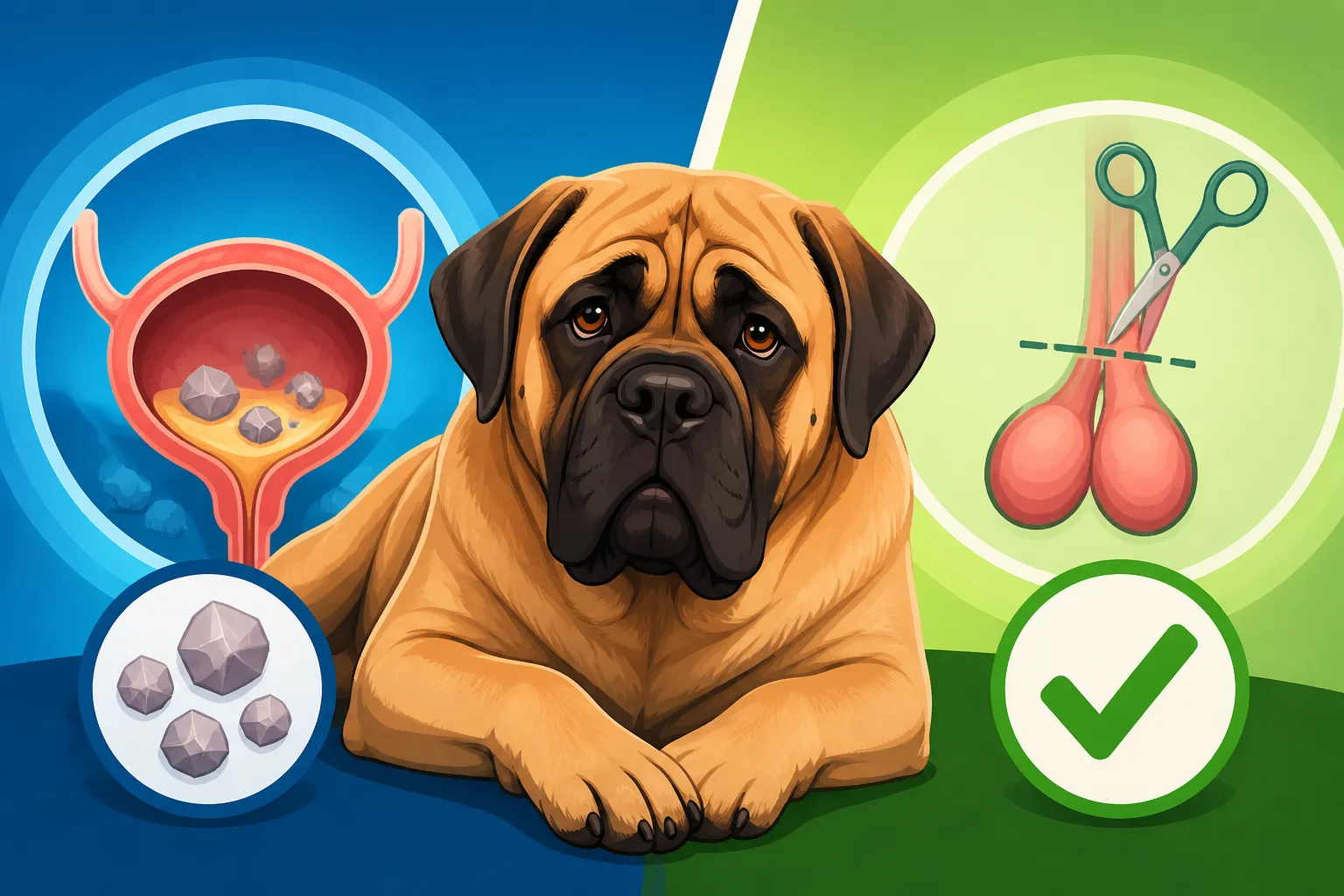
Whether Neutering Resolves a Mastiff’s Cystinuria
Finding out your beloved Mastiff has cystinuria can be incredibly distressing, especially when you learn about the agonizing blockages that intact males are prone to. It’s natural to wonder what your options are, and if something as seemingly straightforward as neutering can actually resolve this complex and often life-threatening condition. This guide will delve deep into the nuances of Mastiff cystinuria, exploring the critical role hormones play and whether neutering truly offers a solution, or if it's just one piece of a much larger puzzle.
Understanding Mastiff Cystinuria and its Unique Challenges
Cystinuria in Mastiffs isn't just a minor urinary issue; it's a serious genetic condition that can lead to severe health crises. It’s particularly heartbreaking because it often strikes young, otherwise healthy males, turning their lives and yours upside down with urgent vet visits and potential surgeries.
What Cystine Stones Are and Their Dangers
Cystine stones are a specific type of urinary calculus that forms when there's an excess of the amino acid cystine in a dog's urine. Unlike other types of stones, like struvite or oxalate, cystine stones are typically the result of a genetic defect in the kidneys that prevents the proper reabsorption of cystine, leading to its accumulation. These stones can range from tiny crystals to large, obstructing masses that block the flow of urine, primarily in the urethra of male dogs.
The real danger with cystine stones, especially in a large breed like a Mastiff, lies in their ability to cause a complete urinary blockage. When the urethra is blocked, urine cannot exit the body, leading to a rapid buildup of toxins in the bloodstream, kidney failure, and excruciating pain. This is an absolute emergency, requiring immediate veterinary intervention, often within hours. If left untreated, a blocked Mastiff can quickly succumb to the complications, making early detection and proactive management absolutely crucial.
The Genetic Predisposition in Mastiffs
Mastiffs, specifically, are known to carry a genetic mutation that makes them highly susceptible to Cystinuria Type III. This isn't a condition that just pops up randomly; it's inherited, meaning it's passed down from parent to offspring. Knowing this genetic link is vital for breeders and prospective owners, as it allows for responsible breeding decisions and early screening. The presence of this specific genetic marker means that even if a Mastiff hasn't shown symptoms yet, they might be at risk. This is why tests like those included in The CHIC Tests Both Mastiff Parents Must Clear are so important, as they provide critical information about a dog's genetic health.
For families bringing a Mastiff into their home, understanding this genetic predisposition can help them prepare for potential health challenges down the line. It's not about fear-mongering, but about being realistic and proactive. If you have an intact male Mastiff, especially one whose genetic history is unknown, vigilance for signs of urinary issues is paramount.
Why Only Intact Male Mastiffs Form Cystine Stones
This is perhaps the most critical aspect of Mastiff cystinuria and directly ties into the question of neutering. While both male and female Mastiffs can carry the gene for cystinuria, it is almost exclusively intact males that develop the painful and dangerous stones. The reason for this lies in the intricate interplay of hormones, particularly androgens, the male sex hormones like testosterone.
Androgens significantly influence the transport and excretion of cystine in the kidneys. In intact males, higher levels of these hormones lead to increased cystine excretion, creating a more concentrated environment for cystine crystal and stone formation in the urine. Females, with their lower androgen levels and higher estrogen levels, have a different hormonal profile that seems to offer a protective effect, making stone formation exceedingly rare, if not impossible, for them. This hormonal link is precisely why neutering becomes a central discussion point when managing cystinuria in male Mastiffs. It's a key factor in understanding Why Only Intact Male Mastiffs Form Cystine Stones.
The Hormonal Connection: Androgens and Stone Formation
To truly grasp why neutering might be a solution, we need to dive a bit deeper into the science behind the male hormones and their effect on cystine metabolism. It’s more than just a simple correlation; there's a direct physiological pathway at play.
Androgen's Influence on Cystine Excretion
Testosterone and other androgens, produced in abundance by the testes of intact male Mastiffs, have a direct impact on how the kidneys handle cystine. These hormones upregulate certain transporters in the kidney tubules that are responsible for moving cystine out of the body and into the urine. Essentially, the more androgens present, the more cystine is actively pushed into the urine, leading to higher concentrations.
Imagine a busy highway: androgens act like a traffic controller, directing more cystine-laden vehicles onto the urinary excretion highway. When there's too much traffic, and not enough fluid to keep things flowing, congestion (stone formation) is inevitable. This heightened excretion is the primary reason Why Mastiff Cystinuria Is Androgen Dependent. Without this androgenic push, the concentration of cystine in the urine tends to be much lower, reducing the risk of it crystallizing and forming stones.
The Biochemical Pathway of Stone Formation
The process of stone formation begins with the supersaturation of cystine in the urine. When there's too much cystine relative to the amount of water, it starts to precipitate out of solution and form microscopic crystals. These crystals then act as nucleation sites, attracting more cystine molecules and growing larger, eventually forming visible stones. This process is exacerbated by factors like urine pH and concentration.
The androgenic influence directly feeds into this pathway by increasing the initial cystine concentration, making supersaturation more likely. It’s a cascading effect: genetic predisposition leads to impaired cystine reabsorption, androgens increase cystine excretion, leading to supersaturation, crystallization, and ultimately, painful stone formation. This biochemical pathway explains What Cystinuria Type III Does to a Mastiff on a molecular level.
Estrogen's Protective Effect and Why It Matters for Females
While male Mastiffs grapple with cystine stones, their female counterparts, even those carrying the same genetic mutation, rarely, if ever, experience this problem. This striking difference is attributed to estrogen, the primary female sex hormone. Estrogen has been shown to have a protective effect, likely by counteracting the androgen-driven cystine excretion or by influencing other aspects of urinary chemistry.
In essence, female Mastiffs have a different hormonal environment that naturally mitigates the risk. This highlights the profound impact hormones have on metabolic processes and disease manifestation. It also underscores why neutering, which drastically alters the hormonal landscape in males, is such a focal point in managing cystinuria. Whether a Female Mastiff Ever Forms Cystine Stones is a question almost always answered with a resounding "no," precisely because of this protective hormonal shield.
How Neutering Impacts Cystinuria Management
Given the strong hormonal link, it stands to reason that removing the primary source of androgens – the testes – would have a significant effect on cystinuria. But is it a complete cure, or simply a crucial step in managing the condition?
The Reduction in Androgen Levels Post-Neutering
When an intact male Mastiff is neutered, his testes are removed, which means the vast majority of his circulating androgen hormones, including testosterone, are eliminated. This dramatic reduction in androgen levels directly impacts the kidneys' handling of cystine. Without the constant hormonal signal to push more cystine into the urine, the excretion rates tend to decrease significantly.
This reduction in urinary cystine concentration is the primary mechanism through which neutering helps manage cystinuria. With less cystine in the urine, the likelihood of supersaturation decreases, making it much harder for new crystals and stones to form. It's like turning down the spigot on a leaky faucet – you're reducing the amount of water (cystine) that's causing the problem.
Does Neutering Stop Stone Formation Entirely?
This is the million-dollar question for many Mastiff owners. The good news is that for many, if not most, Mastiffs with Type III cystinuria, neutering does effectively stop the formation of new cystine stones. By removing the androgenic influence, you're addressing the root hormonal cause of the problem. Studies and anecdotal evidence often show a significant, if not complete, cessation of new stone formation in affected males post-neutering. This is why Why Neutering Ends the Cycle in a Cystinuric Mastiff is a common explanation given by veterinarians.
However, it's vital to understand that neutering does not dissolve existing stones. If your Mastiff already has stones in his bladder or urethra, those will still need to be addressed, either through medical dissolution (if the stones are small and responsive to specific diets or medications) or surgical removal. Neutering is a preventative measure against future stone formation, not a retroactive cure for present ones. It's also important to remember that there can be individual variations, and while neutering is highly effective, it's not a 100% guarantee for every single dog, though it comes very close for Mastiff Type III.
Timing of Neutering and its Efficacy
The age at which a Mastiff is neutered can play a role in its efficacy and overall health outcomes. Historically, early neutering was common, but for giant breeds like Mastiffs, there's growing awareness of the importance of allowing them to mature physically before neutering, to support proper bone and joint development. However, with cystinuria, the calculus shifts. If an intact male Mastiff has been diagnosed with cystinuria or is known to be genetically at high risk, earlier neutering becomes a compelling consideration to prevent the first agonizing blockage.
The Age a Mastiff First Blocks can be as young as 6 months, and sometimes even younger, making early intervention critical. A discussion with your vet about the optimal timing, weighing the risks of orthopedic issues against the immediate, life-threatening danger of urinary obstruction, is essential. For a Mastiff that has already had one obstruction, neutering quickly becomes a non-negotiable part of the treatment plan, as the risk of recurrence is incredibly high as long as they remain intact.
Beyond Neutering: Comprehensive Management Strategies
While neutering is a cornerstone of managing Type III cystinuria in Mastiffs, it's rarely the only thing you'll do, especially if stones are already present or if there's any residual risk. A holistic approach that integrates diet, hydration, and medical support offers the best outcome for your big buddy.
Dietary Modifications for Cystine Stone Prevention
Even with neutering, dietary management remains a crucial tool, particularly for dissolving existing stones or minimizing recurrence risk. The goal of a cystine stone diet is typically two-fold: to reduce the amount of cystine precursors in the food (low-protein diet) and to make the urine less acidic (alkalinizing diet). Protein, especially methionine, is a precursor to cystine, so reducing it can lower the overall cystine load.
Many veterinary therapeutic diets, like those from Royal Canin Urinary SO or Hill's Prescription Diet u/d, are formulated for this purpose. These diets are typically low in protein and designed to produce alkaline urine, which makes cystine less likely to precipitate. It's not about cutting out all protein, which a giant breed like a Mastiff needs, but carefully managing the type and amount. Whether Diet Alone Controls Mastiff Cystinuria is a common question, and the answer is usually "no" for intact males, but "yes" for supporting management post-neutering or in conjunction with medication.
Increasing Water Intake and Urine Dilution
Dilute urine is your Mastiff's best friend when it comes to preventing stone formation. The more water your dog drinks, the more diluted his urine becomes, making it harder for cystine to reach the supersaturation levels needed to form crystals. This is a simple yet incredibly effective strategy.
Encourage water intake by providing multiple fresh water bowls around the house, adding water or low-sodium broth to his kibble, or even offering a water fountain. Some Mastiffs enjoy ice cubes as a treat. Every little bit of extra hydration helps. For a cystinuric Mastiff, paying close attention to How Much Water a Cystinuric Mastiff Needs is non-negotiable. It's also vital to ensure your Mastiff has frequent opportunities to urinate, especially after drinking a lot, to flush out his system regularly.
Medications to Prevent Stone Recurrence
In some cases, especially if your Mastiff has recurring issues despite neutering and dietary changes, or if dissolving existing stones is preferred over surgery, medications may be prescribed. The most common drug used for cystinuria is D-penicillamine or Thiola (Tiopronin). These medications work by chemically binding with cystine in the urine, making it more soluble and less likely to form stones. They essentially transform cystine into a more water-soluble compound that can be safely excreted.
These drugs can be highly effective, but they do come with potential side effects, including gastrointestinal upset and, less commonly, blood disorders or skin issues. Your vet will monitor your Mastiff closely if these medications are prescribed. The choice of Which Drug Dissolves a Mastiff's Cystine Stones will depend on the individual dog's condition, the size and number of stones, and tolerance to the medication. It's always a careful balance of benefits and risks, thoroughly discussed with your veterinary team.
Living with a Cystinuric Mastiff: Long-Term Outlook
Managing cystinuria is a commitment, but with proper care, your Mastiff can still live a full and comfortable life. The key is vigilance, consistency, and a proactive approach to their health.
Monitoring and Regular Vet Checks
Even after neutering and implementing dietary changes, regular monitoring is crucial for a Mastiff with a history of cystinuria. This typically involves periodic urinalysis to check urine pH and specific gravity (a measure of concentration), as well as to look for cystine crystals. Your vet might also recommend regular urine cultures to rule out urinary tract infections, which can complicate stone issues.
Imaging, such as X-rays or ultrasounds, may be performed periodically to check for the presence of new stones or to monitor the size of any existing ones. While cystine stones are often radiolucent (meaning they don't show up well on standard X-rays unless they have a mineralized component), special contrast studies or ultrasounds can be effective. How Often an Intact Male Mastiff's Urine Is Checked will become a much more frequent routine if your dog is affected or at high risk. These regular check-ups are essential for catching any potential problems early, before they escalate into an emergency.
Recognizing the Signs of a Blockage
Knowing the signs of a urinary blockage is paramount for any Mastiff owner, especially if your dog has a history of cystinuria. A blockage is a life-threatening emergency, and prompt action can literally save your dog's life. Signs to watch for include:
- Straining to urinate: Your dog may hunch, squat repeatedly, and produce little to no urine.
- Frequent attempts to urinate: He may go outside more often but achieve nothing.
- Licking at the genitals excessively.
- Pain or discomfort: Whining, restlessness, or sensitivity when touched around the abdomen.
- Bloody urine or dribbling urine.
- Lethargy, loss of appetite, or vomiting: These are signs that toxins are building up in his system.
If you observe any of these symptoms, particularly straining and inability to urinate, do not wait. Get your Mastiff to an emergency veterinary clinic immediately. As we know, Why a Blocked Mastiff Cannot Wait Until Morning is because the consequences of a complete obstruction can be fatal within 24-48 hours.
Quality of Life Considerations
With effective management, a Mastiff with cystinuria can enjoy an excellent quality of life. The goal is to prevent painful blockages and allow them to live without constant discomfort. While the need for specialized diets, medications, and frequent vet visits might seem daunting, it becomes a routine that integrates into your daily life.
Consider the physical implications of repeated procedures. If your Mastiff has to undergo stone surgery multiple times, the cumulative effect can be tough on his body, especially at his size. What Stone Surgery Costs on a Mastiff can also be a significant financial burden. Therefore, preventing these episodes through proactive management, including neutering, is always the best approach for long-term well-being. By minimizing the health crises, you maximize the time your Mastiff spends happy and comfortable.
Making the Decision: Weighing the Pros and Cons
Deciding on neutering or other management strategies for your cystinuric Mastiff is a significant choice. It involves medical, ethical, and financial considerations that are unique to each family and each dog.
Consulting with Your Veterinarian and Breeder
The first and most important step is to have an open and thorough discussion with your veterinarian. They can provide the most accurate diagnosis, explain the specific type of cystinuria affecting your Mastiff (if genetic testing has been done, as it's not always Type III in other breeds), and outline all available treatment options. Your vet will consider your dog's age, overall health, any existing stones, and your lifestyle when recommending a plan.
It's also highly advisable to communicate with your breeder, especially if your Mastiff came from a responsible, health-tested lineage. A good breeder will want to know about health issues in their lines and can offer insights into the genetic history of your dog. This feedback is invaluable for improving breed health overall, and responsible breeders are committed to understanding Why a Cystinuric Mastiff Is Removed From Breeding to prevent passing on the gene.
Financial Implications and Insurance Considerations
The costs associated with managing cystinuria can be substantial. Diagnosis, medication, specialized diets, emergency vet visits for blockages, and potential surgeries can add up quickly. A single stone surgery for a Mastiff can easily run into the thousands of dollars, making financial planning a critical part of ownership.
This is where pet insurance becomes incredibly valuable. Many pet insurance providers, such as Healthy Paws, offer comprehensive plans that can cover a significant portion of these veterinary expenses, from diagnostics to emergency surgeries and medications. Having a policy in place before any symptoms appear can provide immense peace of mind and ensure you can make treatment decisions based on what's best for your Mastiff, not just your wallet. When comparing providers, it’s worth checking if a specific plan has any exclusions for pre-existing or genetic conditions if your Mastiff hasn't been diagnosed yet but is known to be at risk. Companies like Healthy Paws understand the high costs associated with large breed care, which is why having robust coverage can be a game-changer. Don't forget to factor in the cost of long-term medications and prescription diets, which Healthy Paws or similar providers might also cover.
| Management Strategy | Pros | Cons | Cost Implications |
|---|---|---|---|
| Neutering | Significantly reduces/stops new stone formation (Type III), removes androgenic influence, generally a one-time procedure. | Does not dissolve existing stones, involves surgery and recovery, potential long-term orthopedic considerations for giant breeds if done too early. | Upfront surgical cost (few hundred to a thousand+), potential reduction in future emergency costs. |
| Prescription Diet | Reduces cystine precursors, alkalinizes urine, helps prevent new stones, can assist in dissolving small stones. | Requires strict adherence, can be more expensive than regular kibble, may not be palatable for all dogs, cannot dissolve all stone types/sizes. | Ongoing monthly cost (can be significant for a Mastiff's volume), often covered by pet insurance like Healthy Paws. |
| Medication (e.g., Thiola) | Can dissolve existing stones, effectively prevents new ones, non-invasive (oral). | Potential side effects (GI upset, skin issues), requires consistent dosing, often expensive, needs close monitoring. | Ongoing monthly cost (can be very high), requires regular vet check-ups, often covered by pet insurance. |
| Increased Water Intake | Simple, cheap, effective for diluting urine, supports overall urinary health. | Requires owner vigilance, may not be sufficient on its own, some dogs are naturally less inclined to drink large volumes. | Minimal, just cost of water. |
| Surgical Removal | Immediate removal of obstructing stones, provides immediate relief. | Invasive, carries anesthetic risks (especially for Mastiffs, see Why Anesthesia Is Riskier in a Mastiff), requires significant recovery, high cost. | High upfront cost (thousands), recovery care, often covered by pet insurance like Healthy Paws. |
Ethical Breeding Practices and Genetic Testing
For breeders, the discovery of cystinuria in a Mastiff line carries significant ethical responsibilities. Dogs diagnosed with cystinuria, or those identified as carriers of the Type III mutation, should be removed from breeding programs. Genetic testing has become an indispensable tool for responsible breeders to identify carriers and affected dogs before they are bred. This is part of a broader commitment to improving the long-term health of the breed and reducing the incidence of debilitating genetic conditions.
Prospective puppy buyers should always ask about genetic health testing for both parents, including screening for cystinuria. A responsible breeder will be transparent about their dogs' health clearances and genetic test results. While the initial investment in a well-bred, health-tested Mastiff puppy might be higher, it significantly reduces the likelihood of facing heartbreaking and expensive genetic health problems down the road. Understanding Whether the Cystinuria Marker Test Is Reliable in Mastiffs is important for making informed choices.
Disclaimer
This guide provides general information and should not be considered a substitute for professional veterinary advice. Always consult with a qualified veterinarian for diagnosis, treatment, and management of your Mastiff's specific health needs.