Whether a Mastiff Tolerates Rough Handling From Children
Bringing a magnificent Mastiff into a home with children is a dream for many, envisioning a gentle giant who will be a loyal, patient companion. However, the reality is that children, especially young ones, often don't understand appropriate boundaries with animals, and their "rough handling" can inadvertently put both the child and the dog at risk. It’s a common frustration, feeling caught between a child's natural curiosity and a Mastiff's undeniable size and potential for misunderstanding. This comprehensive guide will delve into how Mastiffs typically respond to the sometimes-clumsy affections of children, how to interpret their signals, and, most importantly, how to foster a safe and respectful relationship for everyone in the family.
The Mastiff's Temperament Around Children
It’s easy to fall in love with the idea of a Mastiff as the ultimate family dog, a massive, imposing protector with a heart of gold. And for many, this is absolutely true. But even the best-natured dog has limits, and understanding these boundaries is key to a harmonious household.
The Gentle Giant Reputation
Mastiffs are renowned for their calm, docile, and affectionate nature. They often seem to possess an almost inherent patience, enduring the antics of young children with remarkable grace. Many owners will tell you stories of their Mastiff patiently allowing a toddler to lean on them, or even attempting to "groom" a crying baby. This reputation isn't unfounded; their guardian instincts often extend to the youngest members of their human family, viewing them as fragile charges to be protected. They typically prefer to observe rather than participate in boisterous play, and their sheer bulk often makes them a stable, reassuring presence. They rarely engage in frantic, high-energy play with small children, which can be a huge relief for parents worried about accidental injuries. This calm demeanor is a huge part of their appeal for families, making them seem like a natural fit.
However, this patience is sometimes mistaken for an infinite tolerance for anything, and that's where trouble can brew. While a Mastiff might tolerate a surprising amount, it’s crucial to remember that they are still animals with their own instincts, comfort zones, and ways of communicating. This breed's remarkable sensitivity also plays a role. They often pick up on human emotions and can be quite sensitive to tone of voice and body language. The Sensitivity Nobody Expects in a Two Hundred Pound Mastiff touches on this in more detail. This deep connection can be wonderful, but it also means they can be easily upset by perceived threats or discomfort.
Patience Has Limits
No matter how gentle or patient your Mastiff is, every dog has a threshold. Imagine a large, comfortable couch that suddenly has a small, energetic human repeatedly poking its eyes or pulling on its stuffing. While the couch won't react, a living, feeling dog will eventually reach a point of discomfort, fear, or irritation. Children, especially toddlers, don't understand "personal space" in the same way adults or even other animals do. They might grab ears, pull tails, climb on backs, or try to "ride" the dog, all without any malicious intent. To them, the Mastiff might be just a giant, cuddly, furry toy.
A Mastiff, in its incredible patience, might endure these invasions for a long time. You might see a sigh, a shift in position, or a slight head turn, but no overt warning. This can lead owners to believe everything is fine, reinforcing the child's behavior. The danger here is that when the dog finally does react, it can seem sudden and out of character to the human observers, but it was often the culmination of many ignored signals. It’s like a quiet kettle slowly heating up; you don't hear much until it suddenly whistles. Understanding these subtle cues is paramount to preventing a negative interaction and maintaining a safe environment.
Size and Unintended Consequences
The sheer size and weight of a Mastiff means that even an accidental bump or clumsy movement from the dog can have significant consequences for a small child. A Mastiff weighing upward of 150-200 pounds (or more!) doesn't even need to be reacting aggressively to cause harm. A playful head shake could send slobber flying, a wagging tail could knock a toddler off balance, or a simple shift in position could pin a child against furniture. We often focus on what the dog might do intentionally, but with a Mastiff, the unintended physical impact is just as important to consider.
For instance, a Mastiff standing up quickly from a nap might accidentally step on a child's foot, or simply lean against them too heavily, causing them to fall. Their deep, resonant bark, while usually reserved for alerts, can also startle a young child even when it’s not directed at them. This means that managing interactions isn't just about preventing aggression; it's about managing a gigantic, living creature's presence in a space with tiny, fragile humans. This is why A Mastiff in a House With Small Children is such a critical read for new Mastiff families. You have to think ahead about spatial dynamics and potential hazards, things you might never consider with a smaller dog.
Understanding the "Rough Handling" Definition
What seems like innocent play to a child can be genuinely distressing or even threatening to a dog. It's crucial for adults to bridge this communication gap and understand interactions from the Mastiff's perspective.
What Constitutes Rough Handling from a Dog's Perspective
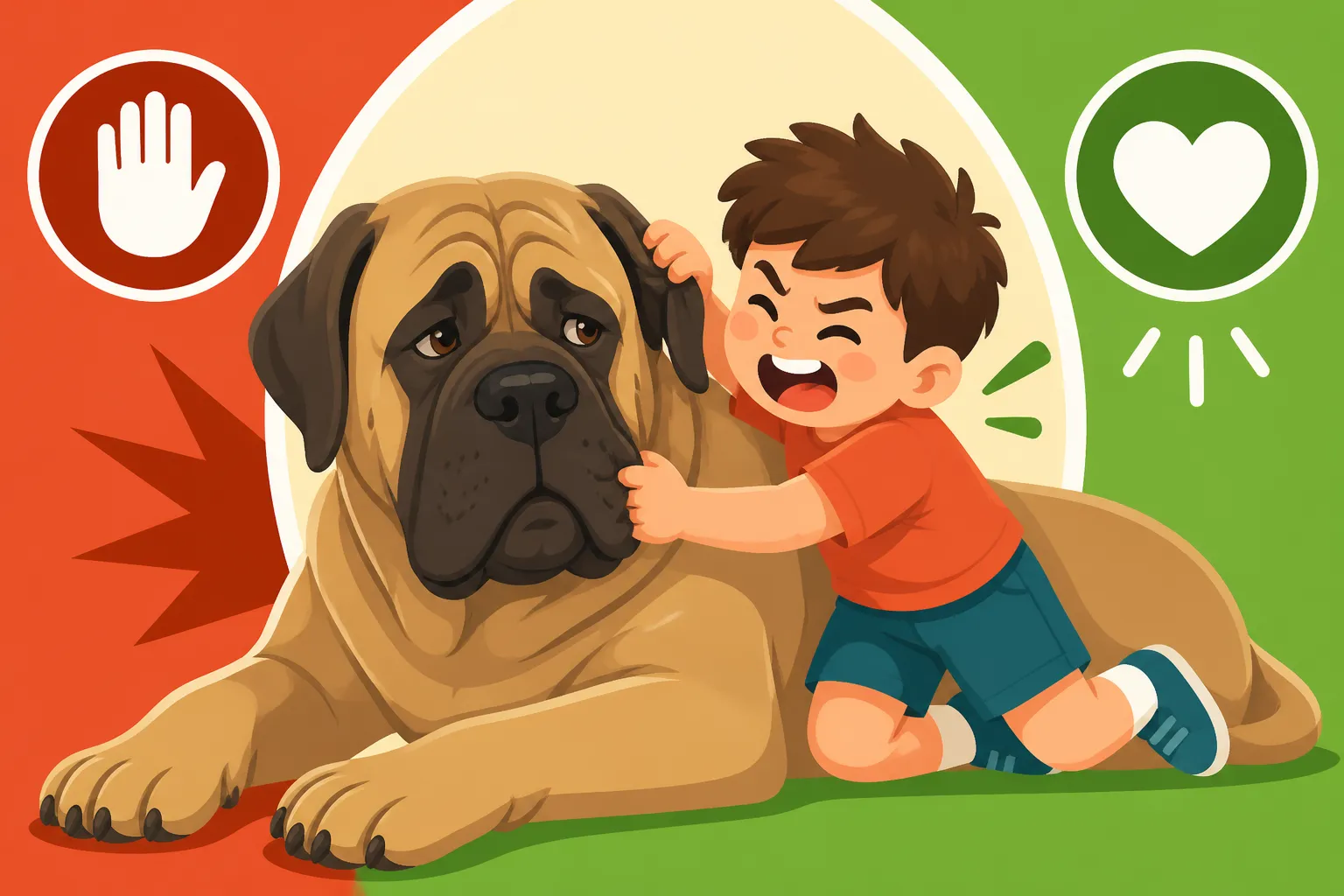
From a child's point of view, a large, fluffy dog is often an invitation for physical exploration. This can manifest in ways that are entirely inappropriate for the dog. Think about actions like:
- Ear pulling or pinching: Ears are sensitive.
- Tail grabbing or tugging: The tail is an extension of the spine and a key communication tool; pain or restraint here is highly unwelcome.
- Climbing on the dog's back: This can be painful, frightening, and feel like dominance or an attack.
- Hitting or slapping: Even if gentle, this is a clear sign of discomfort or threat.
- Poking eyes or nose: Extremely sensitive areas.
- Pulling fur: Can cause pain and fear.
- Startling the dog: Waking a sleeping dog abruptly or sneaking up on it can trigger a defensive reaction.
These actions, though often carried out by children without ill intent, violate a dog's personal space and can cause physical discomfort or emotional distress. A Mastiff might be patient, but it's not a toy. It's a living, breathing creature that deserves respect. Imagine a large, imposing stranger doing any of these things to you – even if they smiled while doing it, you'd likely feel uncomfortable or even threatened.
The Child's Intent vs. the Dog's Perception
This is a critical distinction. A child's mind is still developing. They might pull a Mastiff's ear because they are curious about how it feels, or they might climb on its back because they see horses in cartoons. Their intent is often playful, exploratory, or even affectionate, but the dog doesn't interpret intent in the same way a human adult does. The dog perceives the action.
For a Mastiff, an ear tug isn't "my human baby is curious," it's "my ear hurts" or "I feel restrained." Climbing isn't "playtime," it's "I'm being pinned down" or "I'm in pain." This mismatch in perception is where the danger lies. Because the child isn't being "mean" in their own mind, parents might underestimate the potential for a negative reaction from the dog. It’s a classic case of miscommunication, with potentially severe consequences given the Mastiff’s size. We need to be the translators, teaching both the child and understanding the dog's reaction.
Reading a Mastiff's Signals
Your Mastiff is constantly communicating, even if it's not barking or growling. It's vital for parents to learn to read these subtle signals of discomfort or stress, as these are the Mastiff's way of saying, "I'm not comfortable," long before a growl or snap. These signals are often very subtle and can be easily missed if you're not looking for them.
Here are some common signs:
- Lip licking: Not just after eating; can be a sign of stress or appeasement.
- Yawning: Also not just a sign of tiredness; can indicate stress or anxiety.
- Head turning or looking away: An attempt to avoid eye contact or disengage from a stressful situation.
- Body stiffening: The dog's muscles tense up, indicating discomfort or an impending reaction.
- "Whale eye": When the whites of the dog's eyes are visible, indicating stress or fear.
- Lowering head or body: An attempt to appear smaller and less threatening, often coupled with avoidance.
- Moving away/retreating: The most obvious sign; if the Mastiff tries to leave the interaction, it means it wants space.
- Shaking off: A full-body shake, often done after a stressful interaction to "reset."
If you see these signals, it's a clear indication that your Mastiff is not enjoying the interaction and needs space. Ignoring these early warnings can lead to an escalation of behavior. It's a spectrum of communication, and the Mastiff is trying to be polite before resorting to more overt warnings. Being fluent in these quiet messages can prevent a lot of problems. You can learn more about how they interpret visitors in How a Mastiff Judges a Stranger at the Door which gives additional insight into their body language.
| Child's Action | Mastiff's Potential Perception | Early Warning Signs (Mastiff) | Adult Intervention |
|---|---|---|---|
| Pulling ears or tail | Pain, restraint, threat | Lip lick, yawn, head turn, retreat | Immediately separate, redirect child, praise dog |
| Climbing on back | Pinned, threatened, uncomfortable | Body stiffening, whale eye, moving away | Gently remove child, offer dog a safe space |
| Poking eyes/nose | Pain, direct threat | Hard stare, subtle growl, avoidance | Prevent contact, teach child "gentle hands" |
| Grabbing face/muzzle | Restricted, anxious | Lip curl, showing teeth (briefly), freeze | Intervene immediately, never allow this contact |
| Startling from sleep | Alarmed, defensive | Jump, low growl, snap (rarely) | Teach child to always call dog's name first |
| Loud, sudden movements | Unpredictable, frightening | Ears back, cowering, seeking cover | Teach child calm movements, provide dog retreat |
How to Prevent Issues and Promote Safe Interactions
Preventing problems between children and Mastiffs isn't just about stopping negative interactions; it's about actively fostering positive ones. This requires consistent effort from adults to educate both parties.
Constant Supervision is Non-Negotiable
This cannot be stressed enough: children and Mastiffs should never be left unsupervised, even for a moment. This rule is paramount, regardless of how "good" your dog is or how "well-behaved" your child seems. Accidents happen in a blink of an eye. A phone call, a trip to the kitchen, or a quick bathroom break can be all it takes for a situation to escalate beyond control. Think of it like supervising a child near a swimming pool – you wouldn't leave them alone, even if they know how to swim. A Mastiff, despite its gentle nature, is a powerful animal, and the stakes are simply too high.
Active supervision means you are not just in the same room; you are engaged. You are watching their interactions, anticipating potential problems, and ready to intervene instantly. You are reading your Mastiff's body language and guiding your child's behavior. This means being present, not just physically but mentally. When you can't actively supervise, it's time to separate them, perhaps by using gates or crates. This isn't a punishment; it's a responsible safety measure. Whether a Mastiff Should Be Supervised With Toddlers delves into this in more detail, explaining the critical nature of constant vigilance.
Teaching Children Respectful Interaction
Children need explicit, consistent teaching on how to interact with dogs respectfully. It's not intuitive for them, and they won't learn it on their own. This education needs to start early and be reinforced constantly as they grow and their understanding develops.
Here are some key lessons:
- "Be a Tree": If a dog approaches them too enthusiastically or makes them uncomfortable, they should stand still like a tree, cross their arms, and look at their feet. This makes them less interesting to the dog and prevents accidental falls.
- "Gentle Hands": Teach them to pet the Mastiff gently on the shoulders or chest, avoiding the face, ears, and tail. Demonstrate with your own hand how to pet softly, using an open palm.
- "Ask First": Always ask an adult before approaching or petting any dog, even your own. This teaches respect for animals and ensures an adult can gauge the dog's receptiveness.
- No Climbing, Pulling, or Poking: These are hard rules. Explain that these actions hurt the dog, even if the child doesn't mean to. Use simple, direct language.
- Let Sleeping Dogs Lie: Teach children never to approach or startle a sleeping or eating dog. This is a common trigger for defensive reactions.
- Respect Their Space: If the Mastiff walks away, the interaction is over. Teach children not to follow or corner the dog.
For children old enough to understand, consider age-appropriate books or videos about dog safety. Consistency from all adults in the household is crucial. If one parent allows rougher play, it undermines the safety lessons.
Training Your Mastiff for Tolerance
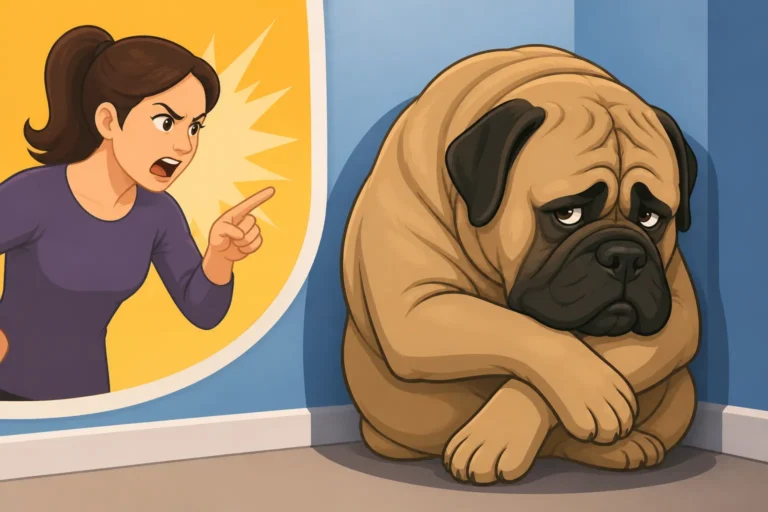
While children need to learn respect, your Mastiff can also be trained to cope better with the occasional chaos of a family home. Positive reinforcement is key here. Never punish your Mastiff for growling or showing discomfort; this can suppress the warning signs, making a bite more likely without precursor. Instead, use these warnings as information that the dog needs space, and intervene to give it to them.
Focus on:
- Basic Obedience: A Mastiff that knows "sit," "stay," "down," and "off" can be guided away from or into an interaction safely. Teaching a Mastiff Before It Outweighs You offers valuable insights into early training.
- Desensitization and Counter-Conditioning: Gradually expose your Mastiff to the sounds and sights of children (from a distance and always positive) while pairing it with high-value treats. For example, have a child walk calmly past the Mastiff's crate, dropping a treat inside.
- "Go to Mat" or "Place" command: Teach your Mastiff to go to a designated bed or mat and stay there, especially when children are active. Reward heavily for staying calm in their designated spot.
- Proofing behaviors: Practice these commands in increasingly distracting environments, including when children are present (but safely managed).
Online resources like BAXTER & Bella can offer structured training programs that focus on positive reinforcement and building a strong bond. Their step-by-step guides can be incredibly helpful for teaching your Mastiff good manners and how to comfortably exist within a busy family. Remember, consistency in training is paramount, especially with a breed known for its deliberate nature, as discussed in The Stubbornness That Is Actually a Mastiff Thinking.
Creating a Safe Space for Your Mastiff
Just as children need a safe space, your Mastiff needs a sanctuary where they can retreat and be undisturbed. This is critical for their mental well-being and for managing interactions with children. This space should be off-limits to children, a place where the Mastiff knows they can go for peace and quiet.
This could be:
- A Crate: A comfortable, appropriately sized crate can be a Mastiff's den. Ensure it’s large enough for them to stand, turn around, and lie down comfortably. Place it in a quiet area of the house. You can find many robust, large-breed crates on Amazon that can withstand a Mastiff's size.
- A Room with a Baby Gate: A utility room, a laundry room, or even a section of the living room partitioned off with a sturdy baby gate.
- An Elevated Bed: Some Mastiffs appreciate a raised bed where they can survey their surroundings but are less accessible to small hands.
Teach your Mastiff to go to their safe space on command and reward them for using it. Teach children that when the Mastiff is in their "house" or on their "bed," they are to be left completely alone. This empowers the dog to self-regulate and removes the burden of constant vigilance from the dog, shifting it back to the adult. This concept of a safe retreat is invaluable for preventing stress and potential incidents.
When to Seek Professional Guidance
Despite best efforts, sometimes behaviors develop that require expert intervention. Recognizing when to call for help is crucial for the safety of everyone.
Recognizing Warning Signs of Escalating Discomfort
While subtle cues are the first line of communication, sometimes a Mastiff will escalate its warnings if its initial signals are ignored. These are more serious and should prompt immediate intervention and a re-evaluation of your management strategies. These are not signs of a "bad" dog, but a dog that is feeling deeply uncomfortable or threatened and is attempting to communicate its distress more clearly.
More overt warning signs include:
- Growling: This is a serious warning. Never punish a growl, as it's the dog's way of saying, "Stop, or I will bite." Instead, remove the child and assess the situation.
- Snapping (air bite): This is a warning shot, a clear indication that the dog is close to making contact. It's often a last resort before a bite.
- Repeated retreating: If your Mastiff consistently tries to leave the room or hide when children are present, it indicates significant stress and a breakdown in trust.
- Showing teeth/lip curl: A clear visual signal of aggression or extreme discomfort.
- Prolonged hard stare: Unlike a soft gaze, a hard stare is often accompanied by stiff body language and can be a precursor to a more aggressive response.
- Resource guarding: If the Mastiff begins to guard its toys, food, or even its bed more intensely when children are near.
Any of these behaviors, especially if they are new or increasing in frequency, should be a red flag. Ignoring them is negligent and can lead to a serious incident. It’s a sign that the current approach is not working and something needs to change drastically.
The Role of a Certified Professional Dog Trainer or Behaviorist
If you observe any of the escalating warning signs, or if you simply feel overwhelmed and unsure how to manage the interactions safely, it's time to call in a professional. Do not try to solve serious behavioral issues on your own, especially with a dog as powerful as a Mastiff. A qualified professional can assess the situation objectively and provide tailored guidance.
Look for a:
- Certified Professional Dog Trainer (CPDT-KA): They can help with obedience, management, and establishing appropriate boundaries for both dog and child.
- Certified Applied Animal Behaviorist (CAAB) or a Veterinary Behaviorist (DACVB): These professionals have advanced degrees and can diagnose underlying behavioral issues (like fear or anxiety) and develop comprehensive behavior modification plans, often involving medication if necessary.
They can help you understand your Mastiff's specific triggers, teach you how to read its more subtle signals, and develop a safety plan that fits your family's unique dynamics. They might recommend specific training exercises, environmental changes, or even discuss the possibility of temporary separation until behaviors are reliably managed. Finding local, in-person help is often ideal, but some online platforms like BAXTER & Bella also have resources or recommendations for finding certified professionals in your area. Remember, investing in professional help is an investment in the safety and harmony of your home.
Management Strategies for High-Risk Situations
While you are working with a professional, or if you simply have days where supervision is challenging (e.g., you're sick, have guests over, or are moving furniture), strict management strategies are essential. These are not permanent solutions but rather temporary safety nets to prevent incidents.
- Physical Barriers: Baby gates are your best friend. Install them at doorways to keep children out of the Mastiff's designated safe space, or to keep the Mastiff in a separate area when children are playing rambunctiously. Double-gating critical areas provides an extra layer of security.
- Crate Training: A Mastiff comfortable in its crate can be safely housed there during high-risk times. Ensure the crate is in a quiet, comfortable location. As mentioned earlier, using a robust crate from a reputable seller on Amazon ensures it can withstand a Mastiff's size and strength.
- Leash Management: Even within the home, having your Mastiff on a leash and tethered to you or a sturdy anchor point can allow you to control its movements and provide immediate redirection. This is particularly useful when guests are visiting and your focus might be divided.
- "Separate and Rotate": If you have multiple children and your Mastiff is stressed, consider managing them in shifts. For example, one child plays while the Mastiff is in its crate, then they swap.
- Supervised "Still Time": During calm moments, encourage children to sit quietly on the floor (away from the dog) and read a book or play a quiet game while the Mastiff is nearby, perhaps on its mat. Reward the Mastiff for remaining calm and the child for respecting space.
The goal of these strategies is to prevent any negative interaction from occurring, giving you time to implement training and behavior modification. It reduces stress for both the dog and the children and creates a predictable environment. Remember, raising a Mastiff and children together requires diligence, education, and proactive management, but the rewards of a loving, safe relationship are immeasurable.
Disclaimer
This article is for general informational purposes only and does not constitute professional advice. Laws, prices and regulations vary by location and change over time. Consult a qualified professional for guidance on your specific situation.