Whether a Mastiff Should Be Supervised With Toddlers
Bringing a massive, magnificent Mastiff into a home with a tiny, unpredictable toddler can stir up a lot of anxiety and valid questions. It's not about trusting your dog's temperament, which might be as sweet as can be, but about understanding the sheer physical dynamics at play when you mix a giant breed with a small, uncoordinated human. This guide is here to walk you through the realities, offer practical advice, and ensure safety and peace of mind for everyone in your unique family.
The Gentle Giant Paradox: Why Supervision Is Non-Negotiable
It’s easy to fall in love with the image of a Mastiff – the stoic, loyal guardian, often called a "gentle giant." And while this breed absolutely embodies a calm and loving nature, especially with its family, the sheer size and weight of a Mastiff make supervision with toddlers not just a recommendation, but an absolute necessity. The challenge isn't usually about aggression; it's about the overwhelming physical presence of such a large animal.
Understanding the Mastiff's True Nature
Mastiffs are renowned for their mellow disposition and deep affection for their human families. They often tolerate a lot from children, sometimes even showing remarkable patience. This inherent gentleness is one of the reasons they can make wonderful family pets, but it can also lead owners to become complacent, assuming their dog's good nature negates the need for constant vigilance. Remember, even the most patient dog has limits, and a toddler's actions can be unpredictable and inadvertently painful.
Their low-energy, lounge-around nature might suggest they're always calm, but even a sleepy Mastiff can stir suddenly, stand up, or shake off a dream. It's in these moments of seemingly innocuous movement that the most risk lies, not in any aggressive intent. A Mastiff's slow, deliberate movements can be deceptive; a sudden shift of weight, even a small one, can have a huge impact on a tiny human.
The Scale of the Risk: It's About Weight, Not Malice
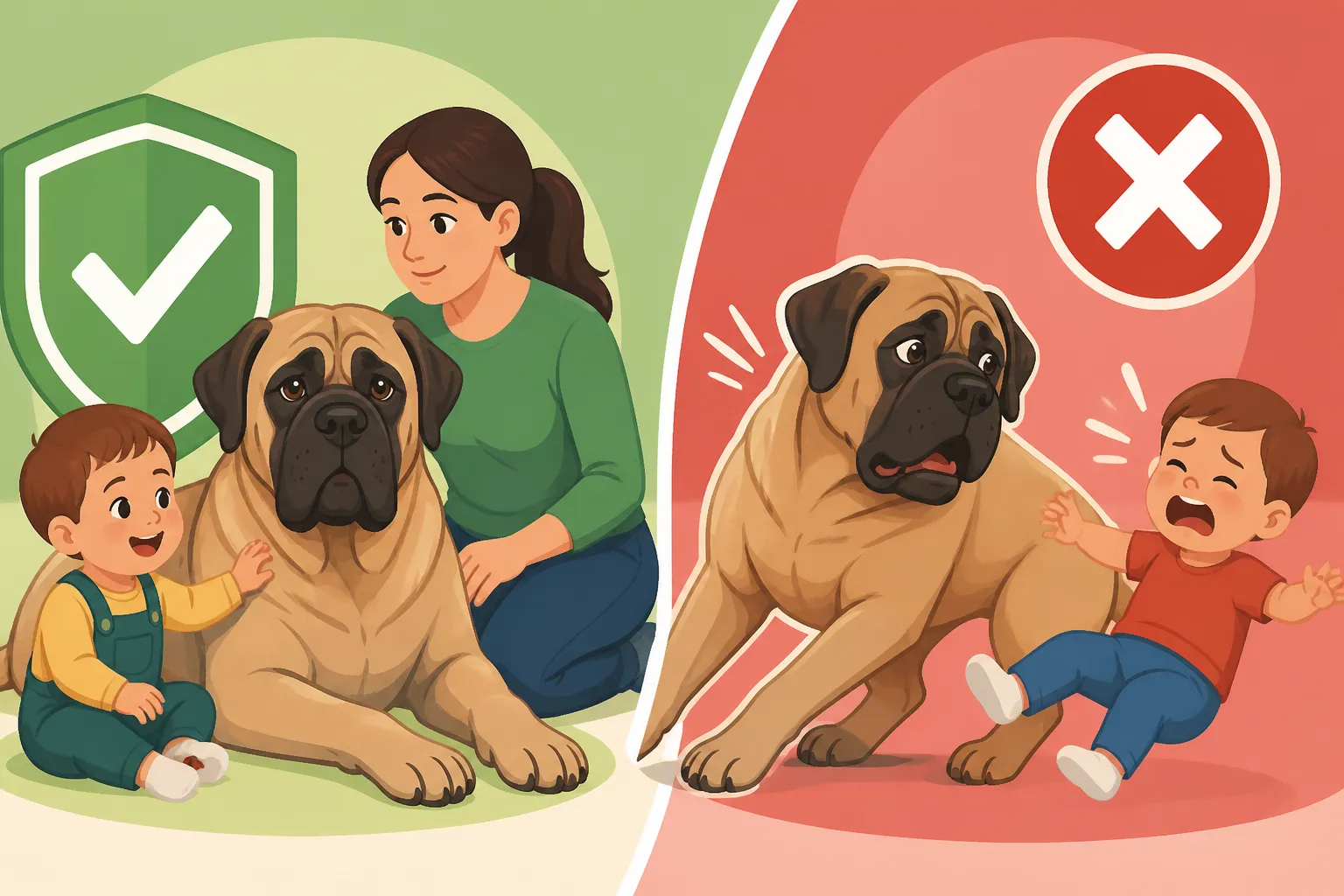
Imagine a 150-pound to 200-plus-pound dog simply trying to navigate a room, and compare that to a curious, unsteady toddler. The weight disparity is enormous, making even accidental contact potentially dangerous. A wagging tail at head height for an adult is a forceful, bone-jarring whip at a toddler's eye level. A Mastiff leaning into you for affection, a common and endearing trait, can easily knock a small child off their feet, or even pin them against furniture. Why a Mastiff Leans Its Weight on People is a behavior that’s sweet for adults but can be risky for little ones.
The crucial point here is that these incidents are almost always unintentional. Your Mastiff isn't trying to hurt your child; it's simply unaware of its own immense power and the fragility of a small human. This is why you, as the responsible adult, must be the bridge, constantly managing interactions and ensuring that the dog's size is always respected and mitigated. It's less about behavioral problems and more about physics.
Navigating the Physical Realities: When Accidents Happen
Even with the best intentions and the calmest dog, the sheer scale of a Mastiff means that everyday interactions carry a different level of risk when toddlers are involved. Owners must always be thinking several steps ahead, anticipating potential scenarios before they occur.
The "Happy Tail" and Other Unforeseen Bumps
One of the most common sources of unintentional injury is the "happy tail." A Mastiff's tail is thick, powerful, and can swing with incredible force. When your Mastiff gets excited to see you, or hears a favored phrase, that tail can become a blur, easily capable of knocking a toddler off balance, sending toys flying, or even leaving a nasty bruise or cut. A child running excitedly past a dog that's lying down might get a surprising, hard thump that leaves them crying, without the dog ever meaning harm. The Damage a Mastiff Does by Accident can range from simple bumps to more serious falls.
Beyond the tail, consider the simple act of a Mastiff walking through a doorway. If a toddler is lingering in the path, even a slow-moving Mastiff can accidentally bump them or step on a foot. Their large paws are heavy, and while they might lift them delicately, a misstep could cause significant pain. This is why careful spatial management is paramount; toddlers and Mastiffs should not be left to free-roam together in confined spaces.
Managing Your Mastiff's Natural Instincts Around Little Ones
Mastiffs, like all dogs, have natural instincts. They might not guard food aggressively, but a curious toddler reaching for a dropped treat could still put their hand in the wrong place at the wrong time. Dogs also need their space, especially when eating or sleeping. A toddler's boundless energy and lack of understanding about personal boundaries can easily infringe on a dog's need for quiet, leading to startled reactions. This doesn't mean aggression, but a sudden bark or movement from a startled giant can be terrifying for a small child.
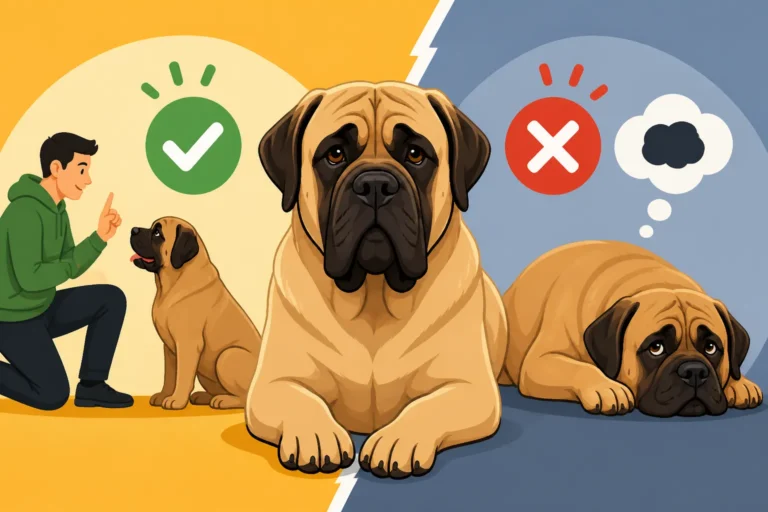
It's vital to create clear boundaries and teach your Mastiff polite manners around children from an early age, ideally long before a toddler is even in the picture. Training should focus on behaviors like "off" (not jumping), "stay," and a solid recall. For example, if you're working on "stay," ensure your Mastiff knows that command perfectly so you can direct them away from a situation before it escalates. While a professional trainer or online resource like BAXTER & Bella can be incredibly helpful for foundational obedience, consistency at home is key.
Proactive Measures: Creating a Safe Household Environment
Given the inherent risks posed by a Mastiff's size and a toddler's unpredictability, proactive environmental management and consistent supervision are the cornerstones of a safe home. You can't just hope for the best; you have to actively engineer safety.
Active Supervision Strategies for Every Day
"Active supervision" means you are constantly engaged and aware of the interactions between your Mastiff and your toddler. It's not scrolling through your phone while they're in the same room. It means being within arm's reach, ready to intervene instantly. This might sound exhausting, and honestly, it often is, but it's the reality of responsible ownership. Think of yourself as a referee, always anticipating the next move from both parties.
One effective strategy is the "umbilical cord" method for toddlers – keeping them physically tethered to you or within a playpen when you can't offer 100% focused attention. For your Mastiff, teaching a reliable "place" command is invaluable. Having a designated mat or bed where your dog can relax away from the action gives them a safe retreat and keeps them out of the toddler's immediate space. Teaching a Mastiff Before It Outweighs You is crucial for establishing these commands early. This also ensures your Mastiff gets adequate rest without interruption from curious little hands.
Leveraging Tools and Training for Harmony
Physical barriers are your best friends. Baby gates, especially sturdy, tall ones from brands you can find on Amazon, are essential for creating safe zones. A gate can separate your Mastiff from your toddler in various rooms, allowing both to coexist peacefully without direct, unsupervised interaction. This is particularly important during meal times for both dog and child, or when the toddler is napping and you can't be actively supervising. Think about using gates to keep your Mastiff out of a child's bedroom or play area, creating truly separate spaces.
Consistent, positive reinforcement training for your Mastiff is also non-negotiable. Focus on manners like not jumping on people (Whether a Mastiff Jumps Up on Visitors), walking politely on a leash, and having a solid "leave it" command. This helps your dog understand boundaries and respond to your cues, making it easier to manage their behavior around children. Don't underestimate the power of short, frequent training sessions – Mastiffs are intelligent, but they can be deliberate thinkers, so repetition and patience are key.
Here's a quick overview of key strategies:
| Strategy Category | Dog-Focused Actions | Toddler-Focused Actions | Environmental Controls |
|---|---|---|---|
| Direct Interaction | Teach "leave it" for dropped items; "place" command. | Teach gentle hands; no approaching sleeping/eating dog. | Use high-quality gates to separate spaces. |
| Movement & Space | Practice leash manners inside; no leaning on people. | Supervise all movements; keep toddler away from pathways. | Create designated "dog-free" zones for toddlers. |
| Anticipation | Understand your dog's cues for discomfort or excitement. | Recognize toddler's energy levels and potential triggers. | Ensure safe, chew-proof toys for both; no shared items. |
| Supervision Level | Active, within arm's reach always. | Never leave unattended, even for a moment. | Secure fragile items; anchor furniture that could be pulled over. |
Long-Term Harmony: Raising Both Child and Mastiff Together
The goal isn't just to survive the toddler years, but to foster a lifelong bond of mutual respect and safety between your Mastiff and your child. This takes ongoing effort, education, and adaptability as both your dog and your child grow and change.
Teaching Respect and Boundaries to Both Parties
It's a two-way street: your Mastiff needs to learn polite manners around children, and your children need to learn how to respectfully interact with a dog. Teach your toddler early that the dog is not a toy. No pulling ears, poking eyes, riding on their back, or disturbing them when they are sleeping or eating. Always supervise playtime, ensuring it's calm and appropriate. If your child is too rough, immediately remove them from the interaction, not the dog, and redirect their behavior. This reinforces that the dog is a living, feeling creature deserving of kindness.
For your Mastiff, continue to reinforce positive behaviors. Reward calm interactions, lying quietly when the toddler is active, and retreating to their "place" when asked. It's a constant process of management and training. Remember, Mastiffs are quite sensitive (The Sensitivity Nobody Expects in a Two Hundred Pound Mastiff), so harsh corrections are counterproductive and can damage trust. Positive reinforcement is the most effective approach for this breed.
When to Seek Professional Guidance
Sometimes, despite your best efforts, challenges arise. Perhaps your Mastiff is struggling with impulse control, or your toddler is particularly boisterous and difficult to manage around the dog. In these situations, don't hesitate to seek help from a certified professional dog trainer or a veterinary behaviorist. They can offer tailored strategies and identify subtle cues you might be missing. Early intervention is always better than waiting until a serious incident occurs.
A professional can help you troubleshoot specific issues, such as a Mastiff that consistently tries to steal food from a highchair, or one that gets overly excited during chaotic toddler play. They can provide tools and techniques to help both your Mastiff and your child learn to coexist safely and happily, allowing your gentle giant to truly thrive as a beloved family member for its Six to Ten Years Is What a Mastiff Gets. Remember, you're building a relationship, and sometimes an outside perspective is exactly what's needed to strengthen those bonds.
Disclaimer
This article is for general informational purposes only and does not constitute professional advice. Laws, prices and regulations vary by location and change over time. Consult a qualified professional for guidance on your specific situation.