What Percentage of Mastiffs Fail OFA Elbows
It's heartbreaking to imagine our beloved Mastiffs, these magnificent, gentle giants, struggling with pain, especially in their prime. One of the most common and concerning health issues we face as Mastiff owners and enthusiasts is elbow dysplasia. The thought of your massive, loving companion experiencing discomfort with every step is truly upsetting, and it naturally leads to questions about how prevalent this condition really is, especially when breeders talk about "OFA scores." If you're wondering what percentage of Mastiffs actually fail their Orthopedic Foundation for Animals (OFA) elbow evaluations, you've come to the right place. This guide will delve deep into the statistics, the causes, and what you can do to protect your gentle giant's joint health.
The Reality of Elbow Dysplasia in Mastiffs: The OFA Statistics
When we talk about elbow health in Mastiffs, the Orthopedic Foundation for Animals (OFA) is often the gold standard for evaluation. It’s a crucial tool for breeders aiming to reduce the incidence of elbow dysplasia in their lines, and for prospective owners looking for a healthy puppy. But what does an OFA evaluation actually mean, and what do the numbers tell us about the Mastiff breed?
Decoding the OFA Elbow Grading System
Before we get to the statistics, let's understand how OFA grades elbows. It's not just a pass/fail system; there's a spectrum of results. A veterinarian takes specific X-rays of the dog's elbows, which are then submitted to the OFA. Three independent, board-certified veterinary radiologists review these images without knowing the dog's identity. They're looking for signs of elbow dysplasia, which is a catch-all term for several developmental abnormalities of the elbow joint, including:
- Fragmented Coronoid Process (FCP): A small piece of bone breaks off the ulna.
- Ununited Anconeal Process (UAP): A growth plate in the ulna fails to fuse properly.
- Osteochondrosis (OCD): Cartilage in the joint doesn't develop correctly, leading to flap formation.
- Elbow Incongruity: The bones of the joint don't fit together perfectly.
Based on the presence and severity of these conditions, the elbows are graded:
- Normal:
- Grade I: Mild secondary osteoarthrosis (arthritis).
- Grade II: Moderate secondary osteoarthrosis.
- Grade III: Severe secondary osteoarthrosis.
- Dysplastic: Any evidence of the conditions listed above, or significant secondary changes.
It's important to know that for breeding purposes, only dogs with "Normal" elbows are typically considered suitable. Even a Grade I result, while technically "normal" by OFA's definition for screening, indicates some degree of mild arthritis and would ideally be avoided in breeding programs. This is why when people refer to "failing" an OFA elbow test, they usually mean receiving anything less than a clear, optimal "Normal" result, or certainly a dysplastic grade.
The Startling Numbers: How Many Mastiffs Receive Failing Grades
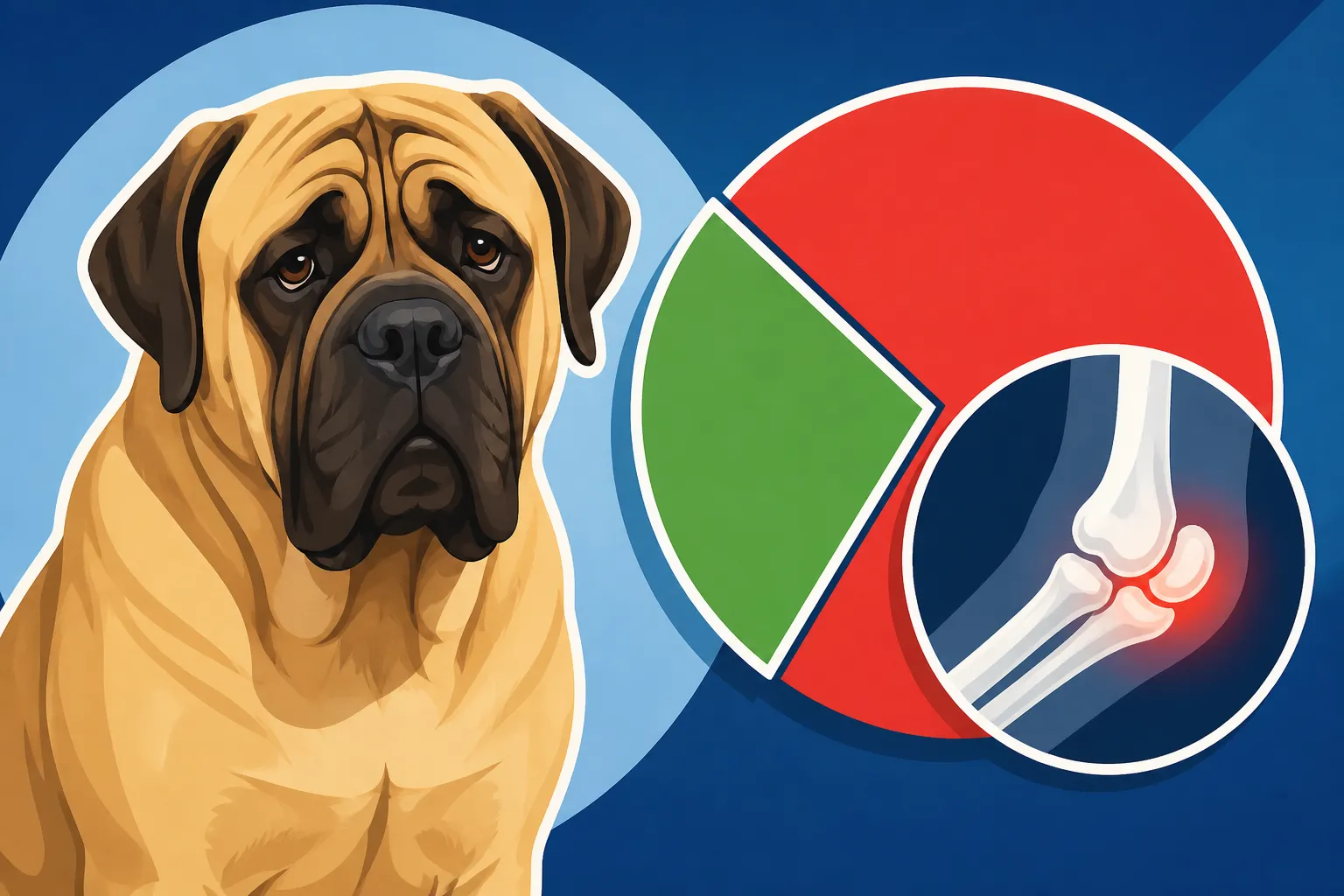
So, let's get to the crux of the matter: what percentage of Mastiffs fail their OFA elbow evaluations? According to OFA statistics, the Mastiff breed has a significant prevalence of elbow dysplasia. As of my last check on the OFA website's public data, Mastiffs rank fairly high among breeds susceptible to elbow issues. The numbers often indicate that around 15% to 20% of Mastiffs submitted for OFA elbow evaluations receive a dysplastic grade.
To put it more starkly, this means that for every five to seven Mastiffs whose elbows are x-rayed and submitted to the OFA, at least one of them is likely to be diagnosed with elbow dysplasia. You might have also heard the statistic that Elbow Dysplasia Affects One Mastiff in Seven, which aligns closely with these OFA findings. These aren't just abstract numbers; they represent real dogs who may experience pain, lameness, and a reduced quality of life. It’s a difficult truth for anyone who adores this breed to contend with.
It's also worth noting that these statistics only reflect dogs submitted for evaluation. Owners of dogs with obvious severe dysplasia might not even bother submitting X-rays, or conversely, only breeders with relatively healthy dogs might submit them. So, the true prevalence in the general Mastiff population could be even higher or slightly different depending on the submission bias. Regardless, the figures clearly show that elbow dysplasia is a serious concern within the Mastiff breed, underscoring the vital role of thorough health testing in breeding decisions.
Why Elbow Dysplasia Is So Prevalent in Our Gentle Giants
Understanding the statistics is one thing, but knowing why Mastiffs are so prone to elbow dysplasia helps us appreciate the complexity of the condition and the challenges faced by both breeders and owners. It’s rarely just one single factor but rather a perfect storm of genetics and environment.
Genetic Predisposition and Inheritance Patterns
Like many orthopedic conditions in large and giant breeds, elbow dysplasia has a strong genetic component. It's considered a polygenic trait, meaning multiple genes contribute to its expression, rather than just one simple recessive or dominant gene. This makes breeding out the condition particularly challenging. Dogs that are genetically predisposed may develop elbow dysplasia even if environmental factors are ideal, though severity can vary.
When you're looking into a puppy, asking a breeder about the OFA certifications of both parents is absolutely critical. They should be able to show you documentation that not only certifies their elbows as normal but also other essential health clearances. For instance, reputable breeders will ensure both parents have passed The Four CHIC Tests a Mastiff Breeder Must Clear before considering them for breeding. This includes not just elbows, but also hips, eyes, and cardiac health, forming a comprehensive picture of the dog's genetic soundness. Ignoring these genetic predispositions in breeding perpetuates the problem for future generations.
It's a huge frustration for committed breeders who strive to produce healthy puppies, as they can do everything right and still have a puppy develop issues if the genetic risk is lurking. This complex inheritance pattern is why selective breeding, using only OFA-cleared parents and ideally, grandparents and siblings with good scores, is the only long-term strategy to chip away at the incidence of elbow dysplasia.
Environmental Factors That Exacerbate Risk
While genetics lay the groundwork, environmental factors play a significant role in whether a Mastiff develops elbow dysplasia and how severe it becomes. This is where owners have a substantial impact, especially during the crucial rapid growth phase of a Mastiff puppy. These are not small dogs that can bounce around with abandon; their sheer size and rapid development make them uniquely vulnerable.
One of the biggest culprits is over-nutrition or excessively fast growth. Feeding a puppy too much, especially food high in calories, protein, or calcium, can cause bones and cartilage to grow too quickly, disrupting the delicate balance needed for proper joint formation. This is why giant breed puppy foods are specifically formulated to support slow and steady growth, not rapid bulk. You can learn more about this by understanding Why a Mastiff Puppy Must Not Be Exercised Hard. It's counterintuitive, perhaps, but a lean puppy is a healthier puppy in the long run.
Excessive or inappropriate exercise is another major environmental factor. While puppies need exercise for mental and physical development, strenuous activities like long runs, jumping, or repetitive stair climbing can put immense stress on rapidly developing, soft joints. Imagine the impact of a Mastiff puppy, already a hefty creature, repeatedly thudding down stairs. This can be devastating for their elbows and other joints. Owners need to understand that Why a Mastiff Puppy Must Not Run is not just a suggestion, but a crucial guideline to protect their growing bones. Controlled, short walks and gentle play on soft surfaces are far more appropriate than intense, unsupervised activity.
Lastly, trauma or repetitive stress to the joints during growth can also contribute. Slipping and sliding on slick floors, for example, forces a puppy's legs to splay, putting unnatural strain on their elbows. Providing good traction with rugs or runners on hard floors is a simple yet effective preventative measure. Even things like jumping in and out of cars repeatedly can add undue stress.
By controlling these environmental factors, even a genetically predisposed Mastiff might have a better chance of developing less severe elbow dysplasia, or perhaps even avoiding its clinical expression altogether. It's a delicate balance during those critical first two years.
Navigating Life with a Mastiff Diagnosed with Elbow Dysplasia
Finding out your Mastiff has elbow dysplasia can be devastating. It's a heavy blow, knowing your gentle giant might face chronic pain. However, a diagnosis isn't a death sentence for their quality of life. There are many ways we can manage the condition to ensure our dogs live as comfortably and happily as possible.
Early Detection and Diagnostic Pathways
The earlier elbow dysplasia is detected, the better the chances of managing it effectively. If you notice any signs of lameness, stiffness, or reluctance to move, especially after rest or exercise, it's crucial to consult your veterinarian. These signs might be subtle at first, perhaps just a slight limp after a long walk or difficulty getting up. Because Mastiffs are such stoic dogs, they often try to hide their pain, making keen observation on your part even more important.
Your vet will typically perform a physical examination, checking for pain, swelling, or reduced range of motion in the elbow joints. If elbow dysplasia is suspected, X-rays are usually the next step. These radiographs provide a detailed view of the bones and can reveal the characteristic changes associated with the condition. In some complex cases, or if surgery is being considered, more advanced imaging like a CT scan or MRI might be recommended for a clearer picture of the cartilage and soft tissues. It's generally recommended that large and giant breeds like Mastiffs have their official OFA screenings done around two years of age, as this is The Age a Mastiff Is Certified by OFA for mature joint development. However, if symptoms appear earlier, a diagnosis can certainly be made.
Management Strategies: From Conservative Care to Surgical Interventions
Once diagnosed, your veterinarian will work with you to develop a management plan tailored to your Mastiff's specific needs and the severity of their condition. This often starts with conservative management.
Conservative Care:
- Weight Management: This is paramount. Every extra pound puts immense pressure on already compromised joints. Keeping your Mastiff lean is one of the most impactful things you can do.
- Controlled Exercise: Low-impact activities like swimming or short, gentle walks on soft surfaces can help maintain muscle mass without stressing the joints. Avoid high-impact activities, jumping, or long strenuous hikes.
- Joint Supplements: Many vets recommend joint supplements containing ingredients like glucosamine, chondroitin, MSM, and omega-3 fatty acids. These can help support cartilage health and reduce inflammation. You can read more about Joint Supplements for a Mastiff to understand the options.
- Anti-inflammatory Medications: For flare-ups or chronic pain, non-steroidal anti-inflammatory drugs (NSAIDs) can be prescribed to manage discomfort. Your vet might also discuss other pain management options, including newer injectable medications.
- Physical Therapy: A certified canine rehabilitation therapist can provide exercises to strengthen supporting muscles, improve range of motion, and reduce pain.
Surgical Interventions:
For some Mastiffs, especially those with severe forms of elbow dysplasia or those not responding to conservative management, surgery might be an option. The type of surgery depends on the specific cause of the dysplasia:
- Arthroscopic Surgery: Minimally invasive, used to remove fragmented bone or cartilage (FCP, OCD) or to address UAP.
- Osteotomies: Procedures that involve cutting and realigning bones to improve joint congruity (e.g., BUEO – Biceps Ulnar Elbow Osteotomy).
- Elbow Replacement: In very severe, end-stage cases where arthritis is debilitating, a total elbow replacement can be considered, though this is less common than hip replacements and involves a significant recovery period.
The decision for surgery is a big one, given the size and recovery demands of a Mastiff. It's vital to discuss the pros, cons, and realistic outcomes with a board-certified veterinary orthopedic surgeon. You'll want to ask questions like Whether a Mastiff Recovers From Elbow Surgery and what the long-term prognosis looks like. Recovery involves strict rest, physical therapy, and a lot of patience, which can be challenging with a large, active dog.
Supporting Your Mastiff's Long-Term Joint Health
Beyond immediate treatment, living with a Mastiff that has elbow dysplasia requires ongoing commitment to their comfort and well-being. This often means adjusting your home environment and lifestyle to suit their needs.
Consider installing ramps for cars or steps to reduce jumping. Provide orthopedic beds in multiple locations around the house to encourage resting on soft, supportive surfaces, minimizing pressure on their joints. Ensuring your Mastiff has good traction on indoor floors, such as with rugs or runners, can prevent slips and falls that could exacerbate their condition. These small changes can make a huge difference in their daily comfort.
Financial planning is also a significant aspect. Treating and managing elbow dysplasia can be expensive, involving specialist vet visits, medications, supplements, and potentially surgery. This is where pet insurance can be an absolute lifesaver. Many owners find peace of mind with companies like Healthy Paws, knowing that a substantial portion of their veterinary bills for chronic conditions like elbow dysplasia will be covered. Investing in a good pet insurance plan early, before any conditions are diagnosed, is a wise decision for any Mastiff owner. If you're looking into options, it's worth checking Whether Pet Insurance Covers a Mastiff's Elbows specifically, as some policies might have limitations or exclusions depending on when you sign up.
Furthermore, recognize that chronic pain can impact your Mastiff's mood and behavior. They might become more irritable, withdrawn, or reluctant to engage in activities they once enjoyed. Provide mental stimulation through puzzle toys and gentle training to keep their minds active. Regular, gentle massage can also help soothe sore muscles. The goal is to maximize their comfort and enjoyment of life, even if it means some adjustments to your routine. After all, these dogs are family, and we want to ensure their golden years aren't overshadowed by constant discomfort, especially since Arthritis in a Mastiff at Four is not uncommon.
The Imperative of Responsible Breeding and Buyer Awareness
Given the prevalence of elbow dysplasia in Mastiffs, the role of responsible breeding and informed buyer decisions becomes absolutely critical. We, as enthusiasts and prospective owners, have the power to drive demand for healthier practices.
The Breeder's Role in Minimizing Risk
A truly responsible Mastiff breeder understands the genetic predispositions of the breed and makes every effort to minimize the risk of conditions like elbow dysplasia. This isn't just about love for the breed; it's about ethical responsibility. Here's what they do:
- Mandatory Health Clearances: They perform OFA elbow (and hip, eye, cardiac, etc.) evaluations on all breeding stock before they are bred. They will not breed dogs with dysplastic elbows, regardless of how otherwise beautiful or well-tempered the dog might be. This also extends to evaluating the health of siblings and offspring from previous litters to gain a more complete picture of genetic health. They understand that while What OFA Hip and Elbow Certification Costs a Mastiff Breeder might seem like an added expense, it’s a non-negotiable part of responsible breeding.
- Careful Pedigree Research: Good breeders delve deep into pedigrees, looking for patterns of health issues, even in dogs many generations back. They avoid lines known for significant orthopedic problems.
- Slow Growth Protocols: They educate puppy buyers on the importance of controlled feeding and appropriate exercise to prevent environmental factors from exacerbating any genetic predispositions. They'll emphasize why a Mastiff puppy needs to grow slowly and provide specific guidance.
- Transparency and Education: They are open and honest about the health of their breeding dogs and their lines. They don't shy away from discussing potential health challenges in the breed and are dedicated to educating prospective owners. They will provide copies of all health certifications and answer all your questions, even the uncomfortable ones.
A breeder who tells you they don't do OFA testing because "my dogs are healthy, I've never had a problem" or "it's too expensive" is a huge red flag. This approach is detrimental to the breed's future and puts future puppies at unnecessary risk. Choosing a puppy from a breeder who has diligently completed The CHIC Four Plus the DNA Stack Behind a Mastiff's Price and openly shares results is an investment in your puppy's future health.
What Prospective Owners Should Demand and Understand
As a prospective Mastiff owner, you hold significant power. Your choices directly impact breeding practices. Here’s how you can be an informed and responsible buyer:
- Demand Health Certifications: Don't just take a breeder's word for it. Ask to see official OFA certificates for both parents (and ideally grandparents). These are publicly verifiable on the OFA website. A reputable breeder will be proud to share them.
- Ask About OFA Numbers: Every dog with an OFA certification has a unique number. You can often look up these numbers on the OFA website to verify the results.
- Inquire About Siblings and Previous Litters: Ask if the breeder has tracked the health of puppies from previous litters by the same parents or related dogs. This gives a more comprehensive view of their lines' health.
- Understand the Health Guarantee: A responsible breeder will offer a health guarantee, often covering genetic health issues like elbow dysplasia, for a certain period. Make sure you understand its terms.
- Educate Yourself: Learn about proper nutrition and exercise for growing Mastiff puppies. Understand the importance of controlled growth and avoiding strenuous activity during their formative months. This knowledge will serve you well in preventing or mitigating joint issues.
- Consider Pet Insurance Early: As discussed, the costs associated with elbow dysplasia can be substantial. Research pet insurance options like Healthy Paws before your puppy develops any conditions. Once a condition is diagnosed, it often becomes a pre-existing condition and won't be covered. This is why getting insurance when your Mastiff is a young, healthy puppy is so critical.
- Be Patient: Waiting for a puppy from a truly reputable breeder who prioritizes health testing is always worth it. Don't rush into buying a puppy from the first available litter, especially if the breeder can't provide verifiable health clearances.
By being diligent and demanding transparency and proof of health testing, you contribute to the overall health and longevity of the Mastiff breed. You help ensure that fewer Mastiffs endure the pain and limitations of elbow dysplasia, allowing these magnificent dogs to live out their lives with the comfort and dignity they deserve.
Disclaimer
This article is for general informational purposes only and does not constitute professional advice. Laws, prices and regulations vary by location and change over time. Consult a qualified professional for guidance on your specific situation.