Whether Toe Grips Help a Mastiff
One of the most disheartening things for a Mastiff owner is seeing their beloved giant struggle where they once moved with lumbering grace. We've all watched our big dogs navigate smooth kitchen tiles or polished hardwood floors, sometimes with an exaggerated, almost cartoonish tiptoe, other times with a terrifying slip that sends their massive frame splaying. This guide is here to explore whether toe grips can truly offer a meaningful solution to your Mastiff's traction woes, helping them regain confidence and stability in your home.
The Unique Traction Challenges Faced by Mastiffs
When you have a dog that can weigh well over two hundred pounds, every step on a slippery surface becomes a significant event. It's not just an inconvenience; it's a real risk for injury, and it deeply impacts their quality of life. Understanding why Mastiffs struggle is the first step toward finding effective solutions.
The Anatomy of a Giant Paw on Smooth Surfaces
Let's think about a Mastiff's paw. It's designed for stability and power, built for gripping natural, uneven terrain. The paw pads are thick and resilient, offering cushioning and some natural friction. However, the nails are equally crucial. On soft ground, dirt, or grass, a dog's nails act like cleats, digging in to provide purchase. They flex and spread, maximizing contact and distributing weight.
But put that same paw on a perfectly smooth, hard surface like tile or laminate, and those nails become a liability. Instead of digging in, they often make the first contact, sliding across the surface before the paw pads can even engage. For a Mastiff, whose sheer weight and broad stance already put enormous pressure on their joints, this lack of natural grip is a recipe for disaster. Their heavy body means momentum is hard to stop once a slip starts, and their longer nails, even when properly trimmed, can become miniature ice skates on an unforgiving floor.
Why Hardwood Floors Are a Nightmare for Big Dogs
Many of us love the look of hardwood floors or the ease of cleaning tile, but for a Mastiff, these surfaces can be a cruel environment. Imagine trying to walk across a polished ballroom floor in socks – that's often how a Mastiff feels. The issue isn't just a lack of friction; it's also the mental toll. A dog that consistently slips becomes cautious, even fearful. They'll shorten their stride, hunch their back, and tense their muscles, which ironically can make them more prone to slipping because they're not moving naturally.
We frequently discuss Traction: Why a Mastiff Cannot Live on Bare Hardwood because it's such a fundamental issue. The constant struggle impacts their gait, their willingness to move around the house, and even their ability to stand up from a lying position without assistance. Over time, the repetitive stress of slipping and trying to correct themselves can exacerbate underlying joint conditions like hip or elbow dysplasia, turning a minor inconvenience into a chronic pain issue. It's a cascading problem, where poor traction leads to fear, which leads to compensatory movements, which then leads to physical strain.
Recognizing When Your Mastiff is Losing Its Grip
It's easy to dismiss a few slips here and there, especially in a clumsy puppy, but for an adult or senior Mastiff, it's a sign that they need help. Look for these indicators:
- Splaying Legs: When your Mastiff's legs slide out from under them, especially when turning corners, getting up, or simply walking at a normal pace.
- Hesitation: Do they pause before stepping onto a slick surface? Do they opt for rugs or carpeted areas even if it means a longer route? This is a clear sign they recognize the danger.
- Stiff Gait: A dog trying to avoid slipping will often walk with very short, stiff steps, tucking their tail and lowering their head. They might look like they're walking on eggshells.
- Difficulty Standing Up: Watching a huge Mastiff struggle to push themselves up from a resting position, especially on a hard floor, is heartbreaking. Their paws just can't get the leverage.
- Excessive Nail Clicking: While a certain amount of clicking is normal, if their nails are constantly clattering loudly on the floor, it's an indication that the nails are too long and making primary contact, reducing paw pad engagement. You might want to review Keeping a Mastiff's Nails Short Enough for Traction.
- Reluctance to Play: If your Mastiff, who once loved a good wrestling match or a game of fetch indoors, now seems less interested, it might be because the slippery floors make it too risky or uncomfortable.
If you're noticing any of these signs, it's time to seriously consider solutions that can provide the much-needed grip your Mastiff deserves.
Understanding Toe Grips: What They Are and How They Function
Toe grips might sound like a newfangled gadget, but they're a deceptively simple yet ingenious solution designed to address the very specific problem of a dog's nails sliding on smooth surfaces.
The Simple Mechanics Behind Enhanced Traction
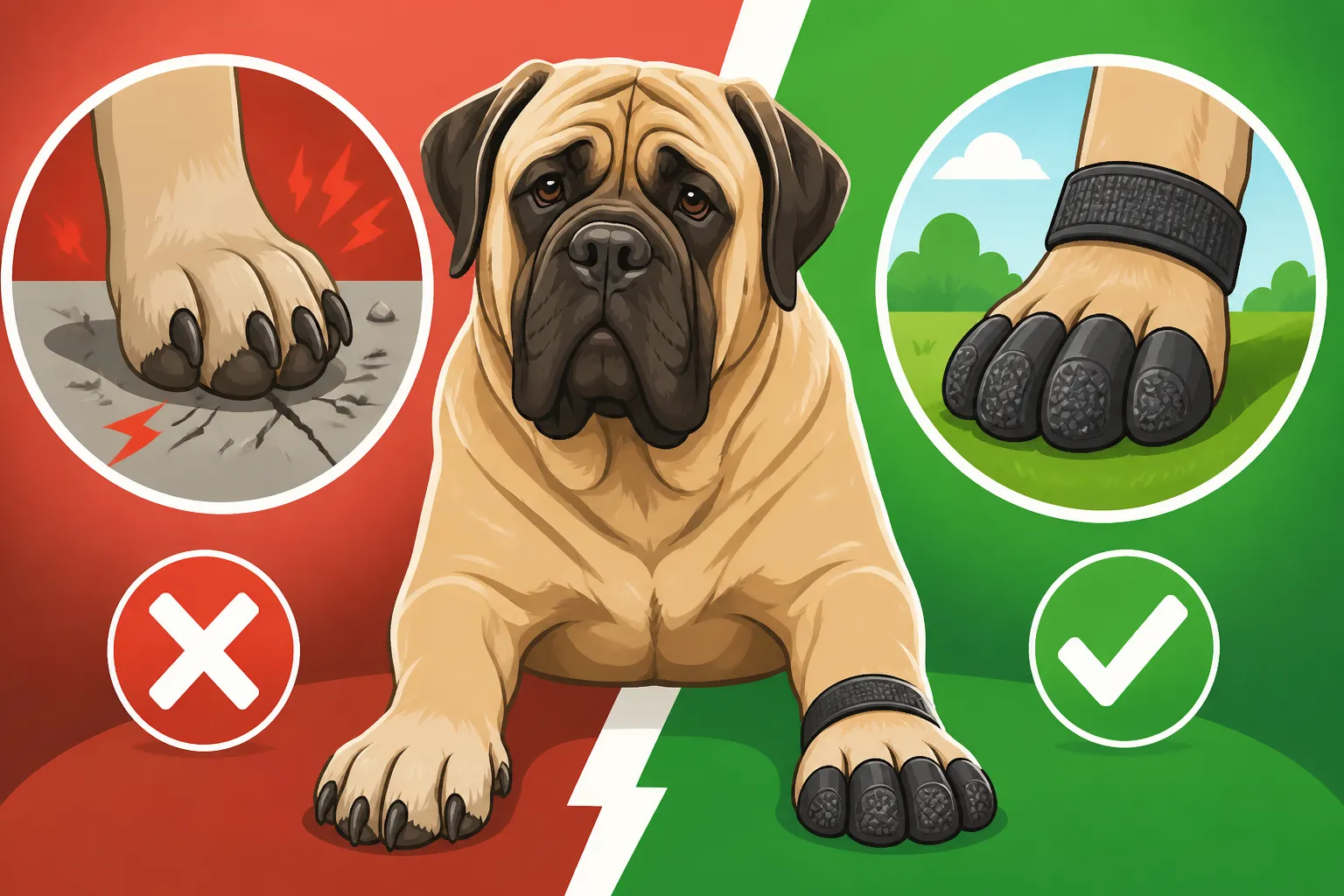
At their core, toe grips are small, rubber rings or caps designed to fit snugly onto your dog's toenails. They're typically made of a soft, non-abrasive material, often a medical-grade silicone or similar polymer. The magic happens when your dog walks. Instead of their hard, smooth nail making initial contact and sliding, the soft, grippy material of the toe grip provides immediate friction.
Think of it like this: when you walk barefoot, your skin provides grip. When you put on shoes with rubber soles, you get even better grip. Now imagine trying to walk on ice in hard-soled shoes versus soft, rubberized ones. The toe grips effectively transform your dog's nails from slippery points of contact into tiny, flexible traction pads. They allow the nails to engage with the floor in a way that provides purchase, rather than causing slippage, significantly enhancing your Mastiff's stability and confidence, particularly when they need to push off the ground to stand up or accelerate.
Varieties of Toe Grips and Their Materials
While the basic concept is the same, there are a few variations in toe grips available on the market. Most commonly, you'll find brands like Dr. Buzby's ToeGrips, which are a widely recognized option. These are typically made from a natural rubber-like material, designed to be soft enough to conform to the nail but durable enough to withstand daily wear.
- Standard Rubber Rings: These are the most common type, designed to slide up the nail and rest near the quick, providing consistent contact with the floor. They come in various sizes to fit different breeds and individual nail thicknesses.
- Adhesive-Backed Caps: Less common but available, these are often more like small thimbles that cover the entire nail and are secured with adhesive. While they might offer more secure attachment, they can be more challenging to apply and remove without damaging the nail or quick.
- Flexible Silicone: Some newer options explore highly flexible silicone compounds, which can offer a softer feel and potentially easier application, though durability might vary.
When choosing, the key is the material's coefficient of friction – how well it resists slipping on smooth surfaces. The rubbery texture is crucial for this. You'll often find these products available through specialized pet supply stores or online retailers like Chewy and Amazon, which carry a range of pet mobility aids.
How Toe Grips Differ from Other Paw Protection
It's important to differentiate toe grips from other paw protection products, as they serve distinct purposes.
- Paw Wax: Products like Musher's Secret or paw balms are designed to moisturize and protect paw pads from harsh elements (hot pavement, snow, ice). While they can offer a slight increase in friction on smooth indoor floors by preventing dry, cracked pads, their primary function isn't traction. They work directly on the pad, not the nail, and the effect is usually minimal compared to toe grips.
- Dog Booties/Socks: These cover the entire paw and are excellent for outdoor protection against extreme temperatures, rough terrain, or post-surgical wound care. Many also feature rubberized soles for traction. However, they can be cumbersome for a Mastiff, especially indoors, leading to overheating, difficulty finding the right fit, and potential irritation if worn constantly. Some dogs also simply refuse to tolerate them. Toe grips, by contrast, are much less intrusive, allowing the paw to move naturally and breathe.
- Nail Caps: These are typically vinyl caps glued onto the nails to prevent scratching furniture or to soften impacts. They don't offer any significant traction benefit; in fact, their smooth surface might even make slipping worse in some cases.
Toe grips are unique because they specifically target the nail-to-floor interface, which is where many dogs, particularly large and heavy breeds like Mastiffs, first lose their footing on hard, indoor surfaces. They address the root cause of slippage on these specific floor types without impeding natural paw function or causing discomfort associated with full paw coverings.
The Tangible Benefits of Using Toe Grips for Your Mastiff
For a large breed like a Mastiff, improved traction isn't just about comfort; it's about extending their healthy, active years and preventing painful injuries.
Boosting Confidence and Mobility in Your Giant Companion
Imagine being perpetually unsure of your footing. Every step becomes a conscious effort, every turn a potential hazard. This is what many Mastiffs experience on slippery floors. It can lead to a significant drop in their confidence and willingness to move freely around their own home. You might notice them staying put more, reluctant to get up for a drink of water or to greet you at the door.
Toe grips can be a game-changer here. By providing immediate, reliable traction, they help your Mastiff feel secure with every step. This newfound stability often leads to a visible resurgence in confidence. You might see them walk with a more relaxed gait, eager to explore rooms they once avoided, and even more willing to engage in gentle play indoors. It's like giving them back a piece of their world, allowing them to move with the uninhibited grace that's so inherent to their breed, even if it's a lumbering grace. This improved mobility contributes significantly to their overall well-being and mental stimulation, which is vital for a breed prone to becoming sedentary.
Preventing Slips, Falls, and Potential Injuries
This is perhaps the most critical benefit. A slip or fall for a small dog might result in a funny stumble, but for a Mastiff, it can be devastating. Their immense weight and mass mean that when they fall, they fall hard. This can lead to:
- Sprains and Strains: Pulled muscles or ligaments are common as they try to regain footing or absorb the impact of a fall.
- Bruises and Abrasions: Skin can be scraped or bruised from hitting hard surfaces.
- Joint Injuries: The sudden, uncontrolled torsion on hips, elbows, and knees can exacerbate existing conditions like Elbow Dysplasia Affects One Mastiff in Seven or Why a Mastiff's Hips Fail Under Its Own Weight, or even cause new ones. A severe fall could even result in a fracture, which is a nightmare scenario for a dog of this size.
- Head Injuries: While less common, a fall can cause them to hit their head, potentially leading to concussions or other serious trauma.
Toe grips significantly reduce the likelihood of these dangerous incidents. By providing consistent grip, they allow your Mastiff to move predictably and safely. This is especially important in high-traffic areas or around furniture where a sudden slip could cause a domino effect. Keeping them safe from accidental injuries also helps manage veterinary costs, which as any Mastiff owner knows, can quickly climb.
Supporting Older and Ailing Mastiffs with Improved Stability
As Mastiffs age, mobility often becomes a central concern. Conditions like arthritis, degenerative myelopathy, or general weakness can make navigating even familiar environments a challenge. Arthritis in a Mastiff at Four is a stark reminder of how early joint issues can begin. For senior Mastiffs, the fear of falling can be debilitating, causing them to become withdrawn and less active.
Toe grips can be an absolute lifeline for these older dogs. When an old Mastiff struggles to get up or keep their balance, even a little extra traction can make a world of difference. It provides the leverage they need to push themselves up from a lying position, reduces the effort required to walk, and helps prevent the kind of minor slips that can send an already compromised dog crashing to the floor. This support can improve their comfort, prolong their independence, and make a real impact on their quality of life in their golden years, letting them move more freely without fear. This can allow them to continue to enjoy their daily routines, reducing the strain on their joints and the stress on their owners who worry about Why an Old Mastiff Cannot Get Up.
Practical Considerations and Potential Drawbacks
While toe grips offer substantial benefits, they aren't a magical, one-size-fits-all solution. There are practicalities to consider, from the effort involved in maintenance to ensuring they're the right fit for your unique Mastiff.
The Learning Curve of Application and Ongoing Maintenance
Let's be honest, putting small rubber rings on a giant dog's toenails isn't always a walk in the park. The first time, it can be a bit of a wrestle, especially if your Mastiff isn't used to extensive paw handling. It requires patience and a steady hand. You'll need to gently spread your Mastiff's paw, isolate each nail, and slide the grip into place, making sure it's snug but not too tight. Getting it right the first time may take a few attempts and a lot of treats!
Once applied, they aren't maintenance-free. Toe grips wear down, just like tires on a car. Depending on your Mastiff's activity level, how much time they spend on hard surfaces, and their nail growth rate, they'll need to be checked and replaced periodically. Some owners find themselves replacing them every few weeks, while others get a month or two out of a set. They can also occasionally fall off, especially if they weren't applied perfectly or if your Mastiff is particularly active. This means you'll need to keep an eye on them and have replacements on hand. For a two hundred pound dog, getting them to cooperate for this routine can be an undertaking.
Ensuring Proper Fit to Avoid Discomfort or Damage
A proper fit is absolutely paramount. If toe grips are too small, they can constrict the quick of the nail, causing pain, discomfort, and even cutting off circulation, potentially leading to serious nail bed issues or infections. If they're too large, they'll simply slide off, rendering them useless and a waste of money.
Each brand will typically have its own sizing guide, often based on the circumference of your dog's individual nails. This means you can't just guess. You'll need to measure each of your Mastiff's nails carefully. Remember that even on the same paw, nails can vary in size. What fits a dewclaw might be too small for a main toe. It's not uncommon to need a mix of sizes for one dog. If your Mastiff shows any signs of discomfort – excessive licking, chewing at their paws, limping, or reluctance to walk after application – remove the grips immediately and reassess the sizing or consult your vet. Ignoring these signs can lead to injury and turn a helpful tool into a source of pain.
Cost Versus Durability and Long-Term Value
The cost of toe grips isn't exorbitant on a per-unit basis, but it adds up over time, especially for a Mastiff with twenty claws that need covering. A single pack might cost a certain amount, but if you're replacing them every few weeks, that can become a significant recurring expense. It's not usually comparable to something like a monthly food bill from Ollie or even a larger veterinary expense, but it's not insignificant either.
Consider the trade-off between cost and durability. Some cheaper generic options might exist, but they may not last as long or provide the same level of grip as established brands. It's often a case of "you get what you pay for." For a Mastiff, whose safety and comfort are at stake, investing in a reputable brand that offers good durability and reliable traction is usually the wiser choice. When budgeting for your Mastiff's care, it's worth factoring in this ongoing expense as a preventative measure against potentially much higher veterinary bills resulting from falls.
A Step-by-Step Guide to Choosing and Using Toe Grips
Ready to give toe grips a try for your Mastiff? Here's how to navigate the process, from selecting the right size to keeping them securely in place.
Accurate Sizing is Key for Mastiffs
This is not a step to rush. An incorrect size makes the grips useless at best, harmful at worst.
- Gather Your Tools: You'll need a soft measuring tape (the kind used for sewing is ideal), a pen, and paper.
- Measure Each Nail: Gently lift your Mastiff's paw. For each nail, measure the circumference (the distance around the thickest part of the nail, just above the quick where the grip will sit). Don't forget the dewclaws, if your Mastiff still has them! Write down each measurement.
- Consult the Sizing Chart: Compare your measurements to the specific brand's sizing chart. Most brands, like Dr. Buzby's ToeGrips, offer detailed guides. You might find your Mastiff needs a mix of sizes – for example, a larger size for their front claws and a slightly smaller size for their hind claws. Don't be surprised if you end up ordering a few different sizes to get the perfect fit for all twenty nails. It's better to have a variety than to force a fit.
- Consider Nail Thickness: Mastiffs generally have thick, strong nails, so you'll likely be looking at some of the larger sizes available. Keep in mind that older Mastiffs might have thicker, ridged nails, which can sometimes affect fit.
Mastering the Application Technique
Applying toe grips can be tricky at first, but practice makes perfect. Here's a general guide:
- Prepare the Nails: Ensure your Mastiff's nails are clean and dry. Keeping a Mastiff's Nails Short Enough for Traction is important; short, well-maintained nails are easier to fit and less likely to snag the grips.
- Gather Supplies: Have the correct sized toe grips, a pair of tweezers or small pliers (optional, but helpful for manipulating the grips), and plenty of high-value treats to keep your Mastiff distracted and happy.
- Position Your Mastiff: Find a comfortable position for both of you. A patient Mastiff might lie down, or you might have them stand if they're cooperative. If you have a second person, one can distract/treat while the other applies.
- Open the Grip: Gently open the toe grip into a "C" shape.
- Slide Onto the Nail: With the open side facing up, slide the grip onto the flat part of the nail, not the rounded top. It should rest snugly around the nail, just above the quick and below the cuticle. You want it to be secure, but not so tight that it pinches or causes a divot in the nail. The grip should sit perpendicular to the floor when your Mastiff is standing.
- Repeat and Reward: Apply to each nail, offering consistent praise and treats. Give your Mastiff breaks if they get antsy.
- Check for Comfort: After applying all grips, let your Mastiff walk around. Watch for any signs of discomfort, limping, or excessive licking. If you see any, remove the problematic grip and try a different size or reapply.
| Feature | Toe Grips (e.g., Dr. Buzby's) | Paw Wax (e.g., Musher's Secret) | Dog Booties/Socks (e.g., Ruffwear) |
|---|---|---|---|
| Primary Function | Enhance nail-to-floor traction | Paw pad protection & slight grip | Full paw protection & grip |
| Application | Individual nails | Rub onto paw pads | Slip onto entire paw |
| Intrusiveness | Minimal, allows natural paw movement | Minimal | High, can impede natural paw movement |
| Material | Rubber/silicone | Wax/balm | Fabric, rubber sole |
| Durability | Weeks to months (variable) | Daily reapplication | Months to years (variable) |
| Indoor Use | Excellent, discreet | Minimal effect | Can be hot, cumbersome |
| Outdoor Use | Less effective outdoors | Good for elements | Excellent for elements |
| Cost (Ongoing) | Moderate | Low | Moderate (initial) |
Routine Monitoring and Replacement for Optimal Performance
Once your Mastiff is wearing toe grips, your job isn't over. They need regular monitoring to ensure they're still doing their job effectively and not causing any issues.
- Daily Visual Check: Briefly look at your Mastiff's paws each day. Are all the grips still in place? Are any looking excessively worn, flattened, or twisted?
- Weekly Detailed Inspection: At least once a week, do a more thorough check. Gently feel each grip. Has it shifted? Is it wearing thin on one side? Are there any signs of irritation or redness around the nail bed? You can often find replacement grips on sites like Amazon or Chewy, so stocking up is wise.
- Replacement Schedule: There's no hard-and-fast rule for replacement, as it depends on your dog and their activity. However, if a grip looks significantly worn, is no longer providing good traction, or has fallen off and can't be found, replace it. Many owners find they replace a few grips here and there rather than all twenty at once. It's often recommended to replace them every 1-3 months, but again, observe your individual Mastiff.
- Nail Trimming: You'll still need to trim your Mastiff's nails regularly. You can typically do this with the grips on, or you can temporarily remove them, trim, and then reapply. Be careful not to cut the grip itself. Whether a Mastiff's Nails Affect Its Traction even with grips, good nail care is foundational.
By staying on top of these monitoring and maintenance tasks, you can ensure your Mastiff continues to benefit from the enhanced traction and improved quality of life that toe grips can offer.
Complementary Strategies for a Slip-Free Home Environment
Toe grips are a fantastic tool, but they shouldn't be your only line of defense against slippery floors. A holistic approach that includes environmental modifications, proper paw care, and appropriate exercise can create the safest and most comfortable living space for your Mastiff.
Redesigning Your Home with Mastiff-Friendly Flooring
While you might not be ready for a full home renovation, there are many ways to make your existing floors safer. What Bare Floors Do to a Growing Mastiff and What Flooring Suits a Mastiff are critical topics for any Mastiff owner.
- Rugs and Runners: This is perhaps the easiest and most effective modification. Place non-slip rugs, runners, or carpet tiles strategically in high-traffic areas, near doorways, around beds, and wherever your Mastiff typically transitions from lying down to standing. Look for rugs with rubber backing that won't slide on your hard floors. You can even create "traction pathways" through your home using several runners connected together. This provides a soft, grippy surface for their entire paw.
- Carpet Tiles: Interlocking carpet tiles can be a great, customizable solution. You can cover large areas without the commitment of full carpeting and easily replace individual worn or soiled tiles.
- Temporary Mats: For specific problem spots, like in front of a water bowl or by a back door, heavy-duty rubber mats or even yoga mats can provide excellent temporary traction.
These modifications not only reduce the risk of slips but also provide comfortable resting spots, protecting their joints from the impact of hard surfaces, especially for a large dog who spends A Mastiff Lying Two Hundred Pounds on One Elbow All Day.
The Crucial Role of Regular Nail Trims and Paw Care
Even with toe grips, proper nail and paw care remains fundamental to your Mastiff's comfort and mobility. Long nails are inherently detrimental to a dog's posture and gait, and they'll negate some of the benefits of toe grips.
- Short Nails, Always: As discussed in Keeping a Mastiff's Nails Short Enough for Traction, your Mastiff's nails should be kept short enough that they don't click on the floor when they walk. If they do, the nail is making first contact, pushing the paw pad up and back, reducing natural grip. Regular trims, ideally every 2-4 weeks, are essential. Many Mastiff owners find a Dremel tool easier and less stressful for trimming their big dog's tough nails.
- Paw Pad Health: Healthy paw pads are important for overall traction. Dry, cracked, or excessively rough pads can sometimes have less natural grip. While paw wax isn't a primary traction solution, applying a good paw balm can keep pads supple and less prone to cracking, especially if your Mastiff is walking on abrasive surfaces outdoors.
- Hair Between Pads: For some Mastiffs, excessive hair growth between their paw pads can reduce their grip, especially on slick surfaces. Keep this hair neatly trimmed flush with the pads to maximize direct contact with the floor. You can often find trimmers or even small electric shavers designed for this purpose at pet stores or on Amazon.
Integrating Physical Therapy and Controlled Exercise
For Mastiffs, particularly those dealing with arthritis, weakness, or recovering from injury, a well-structured exercise and physical therapy regimen can significantly improve their stability and confidence on all surfaces.
- Core Strength: Exercises that build core strength help your Mastiff maintain better balance and control their large body. Simple exercises like controlled turns, gentle weaving between cones, or walking over low obstacles can be beneficial.
- Proprioception Exercises: These focus on body awareness and coordination. Using wobble boards, balance discs, or even walking over different textured surfaces can help improve their ability to sense where their feet are in space, making them less prone to missteps.
- Controlled Leash Walks: Regular, moderate leash walks on varied but safe surfaces (grass, dirt trails) are excellent for maintaining muscle tone and joint health. Avoid over-exercising or intense activities, especially during the crucial growth phases. Remember Why a Mastiff Puppy Must Not Be Exercised Hard.
- Hydrotherapy: For Mastiffs with significant joint issues or mobility challenges, swimming or underwater treadmill therapy can be incredibly beneficial. The buoyancy of water reduces stress on their joints while still allowing them to build muscle and improve range of motion. This is an excellent, low-impact way to strengthen the muscles that support their stability.
- Weight Management: Keeping your Mastiff at a healthy, lean weight is crucial. Excess weight puts immense strain on their joints, exacerbates arthritis, and makes any mobility challenge much worse. A leaner Mastiff will naturally have an easier time moving and maintaining balance.
By combining the targeted assistance of toe grips with a thoughtful approach to home environment, paw health, and physical conditioning, you can provide your Mastiff with the best possible chance to move confidently and comfortably throughout their lives.
Disclaimer
This article is for general informational purposes only and does not constitute professional advice. Laws, prices and regulations vary by location and change over time. Consult a qualified professional for guidance on your specific situation.