Whether a Mastiff Needs Runners Through the House
It's a common, often overlooked concern for us Mastiff owners: the magnificent, lumbering gait of our gentle giants. You watch them navigate your home, and suddenly, you see a momentary slip, a slight splay of their massive paws on that gleaming hardwood or tile floor. It sends a pang of worry through you, doesn't it? This guide is all about tackling that very real problem, exploring why slippery floors are such a hazard for Mastiffs, and how strategically placed runners and other aids can truly transform their safety and quality of life in your home.
The Peril of Slippery Surfaces for a Mastiff
Let's be honest, seeing a two-hundred-pound Mastiff lose its footing is terrifying. It's not just a cute little slip; it can be a jarring, injurious event for such a large and heavy animal. Their sheer size, combined with the way they carry that weight, makes them uniquely vulnerable to the dangers of slick surfaces. We need to understand why this happens to truly appreciate the solutions.
Understanding a Mastiff's Unique Gait and Weight Distribution
Imagine trying to walk across an ice rink carrying a significant amount of extra weight. That's a bit like what a Mastiff experiences on a polished floor. These dogs are built for power and presence, not agility on slick surfaces. Their broad chests, deep bodies, and substantial bone structure mean they have a higher center of gravity and a lot of mass moving forward. When a Mastiff walks, they don't typically pick their feet up as high as smaller, lighter breeds. Instead, they have a more deliberate, rolling gait, and they rely heavily on the natural traction provided by their paw pads and nails.
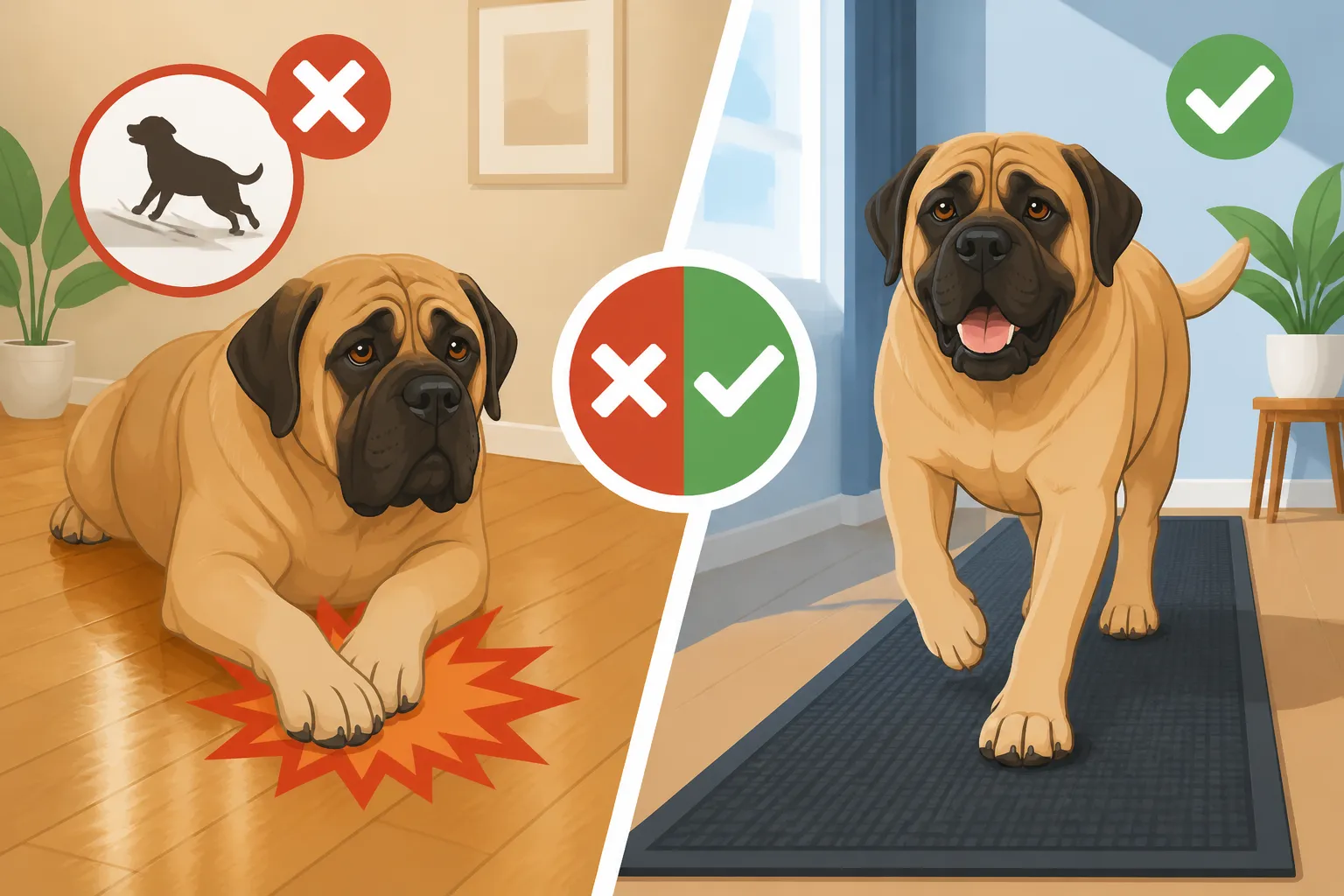
On a surface that offers no grip, this natural gait becomes a liability. Their paws can splay out from under them, leading to an awkward, uncontrolled movement that puts immense strain on their joints, muscles, and ligaments. This isn't just about a puppy learning coordination; this is about an adult dog, fully grown and immensely heavy, trying to maintain balance on an unforgiving surface. It's a fundamental mismatch between their natural design and the modern home environment, and it causes constant micro-adjustments and stress on their bodies even when they don't overtly slip.
The Immediate Risks: Falls and Acute Injuries
The most obvious and immediate danger of slippery floors is a fall. A Mastiff falling isn't like a small terrier tumbling; it's a colossal collapse. This can lead to a host of acute injuries that are not only painful but also incredibly difficult and expensive to treat given their size. We're talking about sprains and strains in their ankles, knees, and hips as they try to regain their balance. Sometimes, a more severe twist can result in a torn cruciate ligament in the knee, a common and debilitating injury that often requires extensive surgery and a long, challenging recovery.
Beyond joint and ligament damage, a sudden fall can lead to contusions, lacerations, or even fractures from hitting hard surfaces. Think about a powerful dog trying to push off with all its might, only for its back legs to shoot out from under it. The force generated is enormous, and the sudden, uncontrolled impact can cause trauma to their spine, hips, or shoulders. Even without a full-blown fall, the constant slipping and sliding can cause them to knock into furniture or walls, leading to bruising and a general sense of unease. For a dog that's meant to be calm and confident, constantly feeling unstable can also contribute to anxiety and reluctance to move freely through their own home.
Long-Term Consequences of Poor Traction
While acute injuries are scary, the insidious, long-term damage caused by slippery floors can be just as devastating for a Mastiff. These slow, cumulative effects can significantly impact their quality of life, especially as they age. What seems like minor slips today can lay the groundwork for major mobility issues down the road.
Exacerbating Joint Conditions: Hip and Elbow Dysplasia
Mastiffs are, unfortunately, predisposed to certain orthopedic conditions like hip and elbow dysplasia. These are developmental abnormalities where the joints don't fit together perfectly, leading to wear and tear over time. When a Mastiff is constantly trying to compensate for slippery floors, their muscles and ligaments are under continuous strain. They splay their legs, they brace themselves, they make small, frantic adjustments with every step to avoid a fall. This constant stress on already compromised joints dramatically accelerates the progression of conditions like dysplasia.
Every time they slip, even slightly, it grinds the already imperfect joint surfaces against each other, causing further inflammation and cartilage damage. It's like driving a car with misaligned wheels on a gravel road all the time. The uneven forces eventually lead to more severe degeneration. Providing good traction becomes a critical part of managing these conditions, slowing their progression, and ensuring your Mastiff remains as comfortable and mobile as possible for as long as possible. Neglecting this can turn a mild case of dysplasia into a severe, painful impairment years sooner than it might have otherwise. You might find it helpful to read about Why a Mastiff's Hips Fail Under Its Own Weight or Elbow Dysplasia Affects One Mastiff in Seven for more context on these issues.
Worsening Arthritis and Mobility in Senior Mastiffs
As Mastiffs age, arthritis becomes an almost inevitable reality, much like in people. Their heavy frames have carried a lot of weight for a lot of years, and those joints begin to stiffen and ache. For a senior Mastiff already struggling with creaky knees or a stiff back, a slippery floor is not just an inconvenience; it's a cruel obstacle course. They lose the strength and quick reflexes of their youth, making them even more prone to slips and falls. The fear of falling can become so pronounced that they become reluctant to move around at all, leading to a sedentary lifestyle that only worsens their arthritis and overall muscle atrophy.
Imagine your beloved older Mastiff trying to stand up from a nap on a cold, hard, slick floor. It's a tremendous effort even on carpet, but on tile or wood, their legs can slide out from under them, causing them to fall back down or struggle painfully. This often leads to a vicious cycle: they slip, they hurt themselves, they become more hesitant, they move less, their muscles weaken, and their arthritis worsens. Eventually, a senior Mastiff might reach a point where they genuinely cannot get up unassisted on a bare floor. This is a heartbreaking scenario for any owner. You can learn more about this in Arthritis in a Mastiff at Four and Why an Old Mastiff Cannot Get Up.
The Role of Runners and Rugs in a Mastiff Home
This is where runners and rugs come in as unsung heroes in a Mastiff home. They aren't just decorative items; they are essential safety equipment that can dramatically improve your dog's confidence and physical well-being. Think of them as creating safe pathways and islands of stability in a sea of potentially dangerous surfaces.
Providing Essential Grip and Confidence
The primary benefit of runners and rugs is, of course, the traction they provide. The soft, textured surface gives your Mastiff's paw pads and nails something to grip, preventing those terrifying slips and slides. This immediate physical benefit translates directly into a huge psychological boost for your dog. When a Mastiff feels stable and secure underfoot, they gain confidence. They're more willing to move freely, to get up and down, and to explore their home without hesitation.
Consider the difference in their demeanor. A Mastiff constantly on guard, tensing their muscles with every step on a hard floor, is experiencing chronic stress. A Mastiff walking confidently on a rug, however, can relax and move naturally. This sense of security can even reduce anxiety, as they no longer have to anticipate a painful slip. It allows them to truly be themselves – the calm, gentle giants we know and love – rather than hesitant, cautious versions of themselves. Runners create an environment where they can trust their own body and the ground beneath them.
Strategic Placement for Maximum Impact
It’s not enough to just throw a few rugs down; strategic placement is key to truly safeguarding your Mastiff. You want to create continuous, well-defined pathways that cover the areas where your dog moves most frequently and where they perform critical actions like getting up or lying down. Start with the "high-traffic" zones: the route from their bed to their food and water bowls, the main path from the living room to the kitchen, and the entryway to any outside doors.
Crucially, place large, stable rugs or runners around their primary sleeping areas. Getting up from a lying position is often the most challenging maneuver on a slippery floor, especially for older Mastiffs. A good, thick rug will give them the grip they need to push off the floor without their paws splaying. Similarly, areas where they eat and drink should have mats. Not only does this provide traction, but it also helps catch the inevitable drool and water splashes from those magnificent jowls! Consider using robust, non-slip mats from a retailer like Amazon that offers a wide variety of sizes and materials to fit different spaces and needs.
Choosing the Right Runners and Mats for Durability and Safety
When you're selecting runners and mats for a Mastiff household, it's not just about aesthetics. You need materials that can stand up to heavy use, provide real grip, and be easy to clean. A flimsy rug will quickly become a tripping hazard or simply disintegrate under a Mastiff's weight.
Material Matters: Non-Slip Backing and Pile Height
The most crucial feature for any runner or mat in a Mastiff home is a reliable non-slip backing. This is non-negotiable. Look for rubberized or silicone backings that firmly grip your hard floors and prevent the rug itself from sliding, bunching, or wrinkling. A rug that slides is just as dangerous as a bare floor, if not more so, as your Mastiff could trip on the moving fabric. Many rug pad options are available separately on sites like Chewy if a rug you love doesn't come with integrated non-slip material.
As for the pile height, generally, a low to medium pile is best. A very thick, plush rug can actually make it harder for a Mastiff to get stable footing, as their paws sink into the deep pile. Low-pile carpets or even flat-weave rugs offer sufficient texture for grip without creating an uneven surface. Materials like polypropylene or dense nylon are often durable and easy to clean, which is a major plus for a breed known for its drool and potential for muddy paw prints. Avoid anything too delicate or easily snagged by their powerful nails.
Sizing and Securing: Covering Enough Ground
When it comes to sizing, go big where possible. A narrow runner might create a "tightrope" effect, making your Mastiff hesitant to stay on it. Aim for runners that are wide enough to comfortably accommodate their stride. For example, if your Mastiff's typical path from the couch to the door is about three feet wide, a two-foot-wide runner might not be enough; they need space to maneuver without stepping off onto the bare floor. Measure the pathways they use most often and try to cover as much of that linear space as possible.
For larger areas, such as in front of the sofa or by their beds, consider area rugs that create larger zones of traction. Don't forget to use rug grippers or double-sided carpet tape, especially on the edges, to prevent curling or shifting. Even with good non-slip backing, a determined Mastiff can nudge a rug out of place, so extra securing can be beneficial. Remember, the goal is to create a seamless, safe path, not a series of isolated, unstable islands.
Here's a quick comparison of popular flooring types and their suitability for Mastiffs:
| Flooring Type | Traction for Mastiffs | Impact on Joints | Maintenance for Drool/Hair | Cost Factor | Notes |
|---|---|---|---|---|---|
| Hardwood/Laminate | Poor | High stress | Easy to clean | Medium-High | Requires extensive rug/runner coverage. Risk of permanent damage to floors. |
| Tile/Stone | Poor | High stress | Very easy to clean | Medium-High | Cold on joints. Extremely slippery when wet. |
| Concrete | Variable (rough/smooth) | Very high stress | Easy to clean | Low | Cold and hard. Needs thick beds. |
| Low-Pile Carpet | Excellent | Low to Medium stress | Medium-Hard to clean | Medium | Best all-around for traction and joint cushioning. |
| Vinyl/Linoleum | Good-Variable | Medium stress | Easy to clean | Low-Medium | Can still be slick when wet. |
| Area Rugs/Runners | Excellent | Significant relief | Easy to clean (if removable) | Low-Medium | Best supplemental solution for hard floors. |
Beyond Runners: A Holistic Approach to Mastiff Mobility
While runners and rugs are incredibly effective, a truly safe and comfortable home for your Mastiff involves more than just covering your floors. It's about a holistic approach to their mobility, health, and confidence. Think of it as combining good traction with good bodily maintenance.
Nail Trims and Paw Pad Care: Crucial for Natural Traction
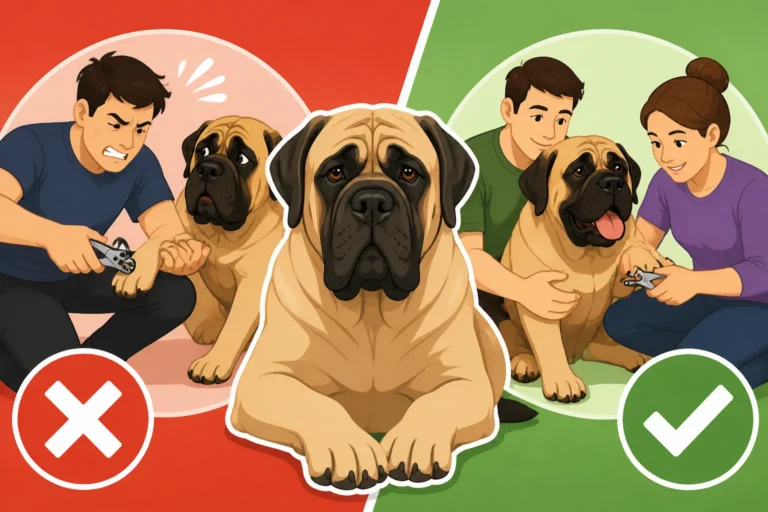
One of the simplest yet most overlooked aspects of providing traction for your Mastiff is proper nail care. Long nails act like ice skates on hard surfaces, preventing the paw pads – which are designed for grip – from making proper contact with the ground. When a Mastiff's nails are too long, they push the toes up and outward, altering their natural foot structure and making them unstable. Keeping their nails trimmed short enough so they don't click on the floor when they walk is paramount. This allows their paw pads to fully engage with the surface, whether it's carpet or pavement, providing much-needed natural traction.
Regular inspection of their paw pads is also important. Dry, cracked, or excessively rough paw pads can reduce grip and even be painful. Applying a paw balm can help keep them supple and healthy, ensuring they function optimally. This might sound minor, but for a dog of this size, every little bit of natural grip matters immensely. A well-groomed paw, combined with a properly placed runner, makes a world of difference. You can read more about how important this is in Whether a Mastiff's Nails Wear Down Naturally.
Weight Management and Controlled Exercise
Keeping your Mastiff at a healthy, lean weight is perhaps one of the most impactful things you can do for their joint health and overall mobility. Every extra pound your Mastiff carries puts additional stress on their joints, making them more prone to pain, inflammation, and further damage on slippery surfaces. It exacerbates any underlying joint issues and makes standing up and moving around much harder, increasing the risk of slips and falls. A lean Mastiff is a more agile, more comfortable Mastiff.
Equally important is controlled, appropriate exercise. For Mastiff puppies, this means absolutely no forced, intense, or prolonged exercise to protect their developing joints. High-impact activities or long walks on hard surfaces can be detrimental. For adults, regular, moderate exercise, like gentle walks on soft ground, helps maintain muscle tone and joint flexibility without overstressing their massive frames. Strong muscles provide better support for their joints, which in turn helps them maintain stability even if they encounter a less-than-ideal surface. Consider reviewing Keeping a Mastiff Lean on Purpose and Why a Mastiff Puppy Must Not Be Exercised Hard for deeper insights into managing their physical development and health.
Other Aids: Harnesses and Orthopedic Beds
Sometimes, despite all our best efforts, a Mastiff might still need a little extra help, especially as they get older or if they're recovering from an injury. A well-fitting mobility harness, particularly one with handles over the hips and chest, can be a lifesaver. These harnesses allow you to provide crucial support when your Mastiff is getting up, navigating stairs (which should generally be avoided if possible), or even just crossing a particularly slick patch of floor. It gives you leverage to stabilize them and prevent falls, providing peace of mind for both of you.
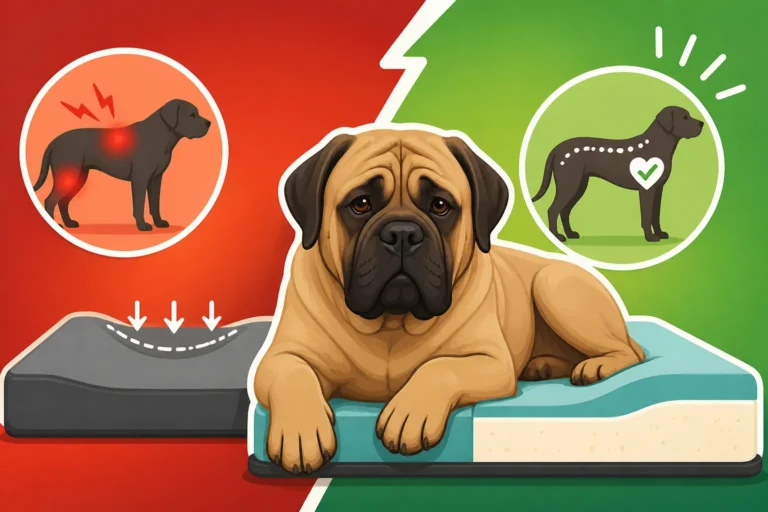
Beyond mobility aids, the right resting surfaces are vital. A high-quality orthopedic bed is not a luxury; it's a necessity for a Mastiff. These beds provide critical cushioning and support for their heavy joints, alleviating pressure points and ensuring they get restorative sleep. When they get up from a supportive bed, their joints are less stiff and painful, making it easier for them to move onto a runner or carpeted area. A flat, thin bed on a hard floor does little to protect their massive bodies from pressure sores or discomfort. Investing in a robust bed, perhaps from a brand known for durable pet products, can make a huge difference in their daily comfort and ability to rise. The article What an Orthopedic Bed for a Mastiff Costs explores this in more detail.
Ultimately, ensuring your Mastiff has proper traction throughout your home isn't just about preventing accidents. It's about proactively supporting their majestic bodies, preserving their joint health, and allowing them to live out their lives with comfort, confidence, and dignity.
Disclaimer
This article is for general informational purposes only and does not constitute professional advice. Laws, prices and regulations vary by location and change over time. Consult a qualified professional for guidance on your specific situation.