Whether a Mastiff Is Safe Around Livestock
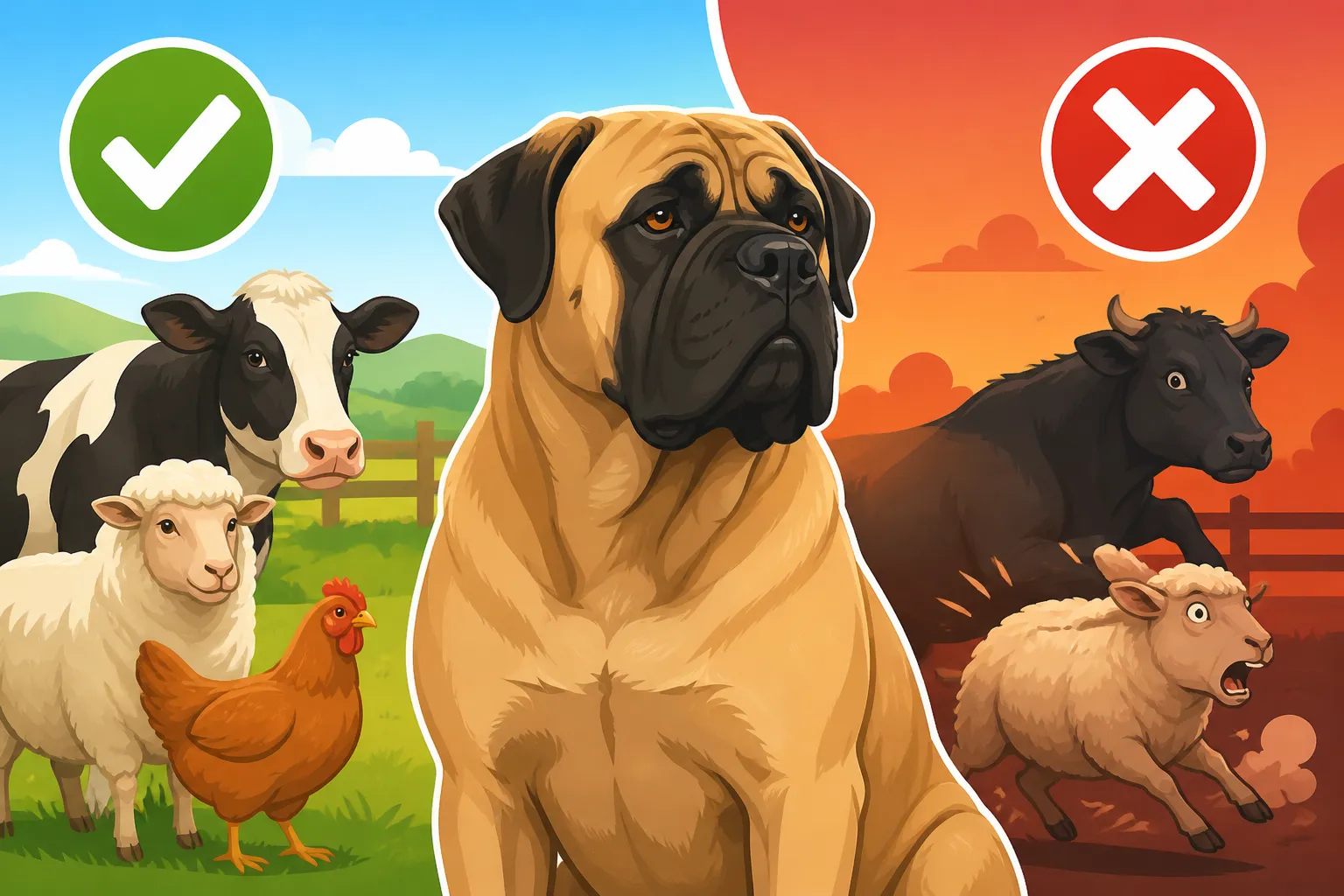
The idea of a massive, gentle Mastiff ambling through a field of lambs or chickens can conjure up a charming pastoral image, but the reality of introducing such a powerful dog to livestock is far more complex than simple idyllic daydreams. Owners often grapple with the question of whether their Mastiff's sweet disposition extends to farm animals, fearing both accidental harm due to size and the activation of dormant prey drives. This guide will thoroughly explore the considerations, challenges, and practical steps involved in ensuring your Mastiff can coexist safely and responsibly around various types of livestock.
Understanding the Mastiff's Innate Temperament and Instincts
When we talk about Mastiffs, we're talking about a breed renowned for its calm, gentle, and protective nature towards its human family. However, even the most devoted family guardian carries generations of instinct within them, and understanding these inherent traits is the first step toward responsible ownership, especially in a rural or farm setting.
The Mastiff's Gentle Nature vs. Prey Drive
It’s true that Mastiffs are often described as "gentle giants." They are typically laid-back, patient, and surprisingly tolerant, which is one reason why they can be such wonderful family dogs, even with children. This gentle temperament often leads owners to assume they'll be equally gentle with other animals, including livestock. And in many cases, a well-socialized Mastiff can be incredibly accepting of other creatures. However, beneath that calm exterior, there can still be a deeply ingrained prey drive. This isn't the same as aggression; it's a natural instinct to chase, capture, and sometimes kill smaller, faster-moving animals.
While Mastiffs weren't historically bred to be swift hunters like sighthounds, they were used as guardians against predators and human intruders. Their sheer size and intimidating presence were often enough to deter threats. But if a small animal, like a chicken or a rabbit, suddenly bolts, that primal chase instinct can override their learned calm. It’s not necessarily malice; it’s instinct. Even a game of chase with a toy can tap into this. For instance, a neighbor's small flock of chickens darting across the yard might trigger a reaction you never expected, simply because their movement mimics prey. This instinctual response is something every Mastiff owner living near livestock needs to acknowledge, rather than dismiss. You can learn more about their protective side in Whether a Mastiff Guards Without Being Taught.
Historical Context: Guardians, Not Herders
It’s crucial to remember the Mastiff's historical job. These magnificent dogs were guardians, not herders. Breeds like Border Collies or Australian Shepherds were selectively bred over centuries to manage and control livestock, exhibiting specific behaviors like "eyeing" and gathering without harming. Mastiffs, on the other hand, were bred to protect property, family, and sometimes livestock from predators. Their role was to deter, confront, and, if necessary, dispatch a threat. They weren't meant to guide sheep or gently nudge cows.
This distinction is vital. A Mastiff's protective instinct, while generally directed at perceived threats, can sometimes extend to keeping all animals, including livestock, in their place or preventing them from leaving an area. This might manifest as subtle herding behaviors, but without the finesse or control of a true herding breed. More often, it simply means they are not equipped with the specific behavioral tools needed for safe, day-to-day interaction with moving, vulnerable farm animals. Expecting a Mastiff to be a gentle herder is akin to asking a bulldog to win a marathon; it goes against their fundamental design.
Size and Accidental Harm
Even if your Mastiff has no malicious intent or strong prey drive, their sheer size and weight pose a significant risk to smaller or more delicate livestock. We're talking about dogs that can easily weigh over 150 pounds, sometimes pushing 200 pounds or more. A playful nudge from a Mastiff could send a lamb tumbling, a wagging tail could break a chicken's leg, or a casual stomp could injure a duck. Their immense physical presence means that even accidental contact can lead to serious injury or death for smaller animals.
Consider a scenario where your Mastiff is simply curious, wanting to sniff a goat. The goat might get startled and bolt, and the Mastiff, startled in turn, might lunge or bark. This sudden movement, combined with their bulk, could easily knock over a full-grown goat, potentially causing fractures or internal injuries. It’s not about aggression; it’s about physics. Owners must be constantly aware that their Mastiff’s size is a factor in every interaction with smaller creatures, requiring an elevated level of vigilance and controlled management. You might be surprised at The First Year With a Mastiff Puppy That Doubles in Size and how quickly they grow to such imposing stature.
Training and Socialization for a Mastiff Around Livestock
Simply relying on a Mastiff's "gentle giant" reputation is not enough when it comes to livestock. Proactive and consistent training, coupled with careful socialization, are absolutely critical for fostering a safe environment. This isn't a task to be taken lightly; it requires dedication and often, professional guidance.
Early and Consistent Socialization is Key
Socialization isn't just about meeting other dogs and people; it's about exposing your puppy to a wide variety of sights, sounds, smells, and experiences in a positive and controlled manner. For a Mastiff that will be around livestock, this exposure needs to begin as early as possible and continue throughout their formative years. The goal is to normalize the presence of farm animals, making them part of the everyday background rather than novel, exciting, or scary objects.
A Mastiff puppy, especially when young and impressionable, can be slowly introduced to the sights and sounds of livestock from a distance. Think of having them calmly observe chickens in a coop or sheep in a fenced pasture while on a leash, rewarding calm behavior. This isn't about letting them interact directly, but about building a foundation of neutrality. If a puppy is never exposed to livestock until adulthood, the sudden introduction of a moving, bleating, or clucking animal can be overwhelming and trigger instincts that are harder to manage later on. Remember, you're trying to Socializing a Mastiff Puppy Before It Gets Heavy, so every controlled interaction counts.
Obedience Training for Livestock Environments
Beyond basic manners, a Mastiff living near livestock needs an impeccable foundation of obedience. This means rock-solid recall, a reliable "leave it" command, and the ability to stay calmly in a designated spot, even with distractions. These commands are not just polite; they are potentially life-saving for the livestock and your dog. Imagine your Mastiff getting too close to a nervous mare and her foal; a strong recall could prevent a serious incident.
Working with a professional trainer who has experience with large breeds and livestock can be invaluable. They can help you tailor training exercises to simulate real-world farm scenarios, gradually increasing distractions and complexity. For instance, practicing "leave it" with food on the ground is one thing; practicing it when a chicken wanders by is another entirely. This kind of specialized training helps your Mastiff understand that livestock are off-limits for chasing or interacting with, and that your commands are non-negotiable. If you're looking for structured help, consider an online obedience program like those offered by BAXTER & Bella, which can provide structured lessons you can follow at your own pace, often with virtual one-on-one support to address specific challenges like livestock desensitization.
Professional Guidance for Specific Challenges
Even with the best intentions and consistent effort, some Mastiffs may present unique challenges around livestock. Perhaps their prey drive is stronger than anticipated, or they become overly fixated on certain animals. In these situations, seeking help from a certified professional dog trainer or a behaviorist specializing in large breeds and farm environments is essential. They can offer tailored strategies and hands-on support that go beyond what a typical puppy class might provide.
A professional might recommend specific management techniques, specialized training equipment (like a long line for controlled exposure), or advanced desensitization protocols. They can observe your Mastiff's behavior firsthand and identify subtle cues you might miss. Sometimes, it’s not just about teaching the dog, but teaching the owner how to read their dog better and intervene effectively. This investment in expert guidance is crucial, as the consequences of a Mastiff losing control around livestock can be devastating, both emotionally and financially. For a dog of their size, understanding Why a Mastiff Needs a Professional Trainer is paramount.
Environmental Factors and Management for Mastiffs and Livestock
Training and socialization lay the groundwork, but a safe coexistence between a Mastiff and livestock also hinges on robust environmental management. This means creating physical barriers and implementing strict routines that minimize risk.
Secure Fencing and Containment
No amount of training can replace physical security, especially for a Mastiff. These are large, powerful dogs, and if they decide to get to something, they can often find a way. Perimeter fencing needs to be strong, tall, and escape-proof, preventing your Mastiff from "visiting" neighboring pastures or fields unsupervised. For areas where livestock are kept, separate, equally secure fencing is vital to create clear boundaries.
Think about a double-gated system for entry points, ensuring one gate is always closed before the other is opened. For your Mastiff's personal yard or run, consider heavy-duty kennel panels or chain link that's dug into the ground or has a bottom skirt to prevent digging out. Remember, an excited Mastiff can test boundaries you didn't even know existed. You might find that a truly heavy-duty leash and secure tie-out stake from Amazon becomes indispensable for supervised outdoor time, but it's never a substitute for proper fencing. Strong, well-maintained barriers are the first line of defense against potential incidents.
Constant Supervision and Controlled Interactions
Even in a securely fenced environment, direct, unsupervised interaction between a Mastiff and livestock is an unnecessary risk. Every single encounter should be carefully managed and supervised, especially in the initial stages. This means your Mastiff is always on a leash, or behind a secondary barrier, when livestock are present.
Controlled interactions involve setting up scenarios where your Mastiff can observe the livestock calmly, with you present to reinforce positive behavior and intervene immediately if necessary. This could mean walking your leashed Mastiff outside the livestock enclosure, rewarding them for ignoring the animals. Over time, and only if your dog demonstrates consistent neutrality, you might progress to very brief, highly controlled introductions across a secure fence, always with an exit strategy ready. Never assume that because one interaction went well, the next one will too. Vigilance is a non-stop job when you have a giant dog and vulnerable animals.
Understanding Different Livestock Dynamics
Not all livestock are created equal when it comes to a Mastiff's safety. What might be an acceptable risk with a large, assertive steer could be catastrophic with a flock of small, flighty chickens or delicate newborn lambs. Each type of animal presents its own set of dynamics and challenges.
- Cattle: Large and often imposing, cattle are generally less vulnerable to accidental injury from a Mastiff's size, but a curious or overly excited Mastiff could still cause a stampede or get injured by a defensive cow, especially one with a calf. Their sheer size might even deter a Mastiff’s prey drive somewhat, as cattle are not easily "prey."
- Sheep and Goats: These animals are often smaller, more prone to flight, and can easily be injured by a large dog. Their tendency to run can strongly trigger a chase instinct in dogs. Lambs and kids are particularly vulnerable.
- Poultry (Chickens, Ducks, Geese): Small, fast-moving, and often making sudden, fluttering movements, poultry are perhaps the highest-risk livestock for any dog with a prey drive. Even a "playful" grab can be fatal.
- Horses: While robust, a spooked horse can inadvertently kick or injure a Mastiff. Conversely, a Mastiff getting too close to a mare and foal can provoke a dangerous reaction from the mare.
Understanding these differences is key to tailoring your management strategies. The level of supervision, the strength of your physical barriers, and the intensity of your training efforts will need to vary significantly depending on which animals share the property.
Assessing Risk and Responsible Ownership
Ultimately, the decision of whether a Mastiff is safe around livestock rests on a continuous assessment of risk, your dog's individual temperament, and your unwavering commitment to responsible ownership. It's a journey, not a destination.
Assessing the Individual Mastiff's Temperament
Every Mastiff is an individual, and while the breed as a whole shares certain traits, there will be variations. Some Mastiffs may have a naturally lower prey drive, while others might show a stronger inclination to chase. Observing your dog's behavior in various situations – how they react to squirrels, rabbits, or even quick-moving toys – can give you clues about their underlying instincts.
It’s about being brutally honest with yourself. If your Mastiff shows intense fixation, tries to break free to chase, or exhibits highly aroused body language (stiff posture, intense stare, low growls) when observing small, fast-moving animals, then the risk around actual livestock is significantly higher. If, despite your best efforts at training and socialization, your Mastiff consistently struggles to remain calm and neutral, it might be that they are simply not suited for direct interaction with livestock. In such cases, the most responsible choice is strict separation at all times. The Sensitivity Nobody Expects in a Two Hundred Pound Mastiff means their reactions can sometimes be unpredictable, even if well-meaning.
Legal and Ethical Responsibilities of Ownership
As a Mastiff owner, you carry a significant legal and ethical responsibility, particularly when your dog is around other animals. In many jurisdictions, dog owners are held liable for any damage or injury their dog causes to livestock. This can include financial penalties for lost animals, veterinary bills, and even criminal charges in severe cases. Beyond the legal ramifications, there's the ethical duty to ensure the safety and well-being of both your dog and any livestock.
This responsibility extends to preventing even the opportunity for an incident. It means being proactive, not reactive. It means having backup plans for containment failures. It means recognizing when your dog's instincts outweigh their training and adjusting your management accordingly. A Mastiff is a formidable animal, and while they can be incredibly gentle with proper guidance, their power demands the utmost respect and diligent management, especially in environments where livestock are present. After all, ensuring safety means avoiding situations where you might eventually need to consider Making the Decision for an Old Mastiff due to an irreversible behavioral problem.
Comparing Mastiff Potential Around Different Livestock Types
To summarize the varying degrees of challenge and potential for successful co-existence, here's a quick overview of how a Mastiff might fare with different types of livestock, assuming appropriate training and management are in place.
| Livestock Type | Primary Challenge(s) | Mastiff Suitability (with Management) | Key Management Strategies |
|---|---|---|---|
| Cattle | Large size, potential for injury to dog, stampede risk | Moderate to High | Strong obedience, supervised exposure, respect for space |
| Horses | Kicking risk to dog, spooking, chase instinct activation | Moderate to High | Leash control, desensitization, strict distance boundaries |
| Sheep | Prey drive trigger, accidental injury to small/flighty animals | Low to Moderate | Secure fencing, no direct interaction, constant supervision |
| Goats | Curiosity, mischievousness, small size, potential for chase | Low to Moderate | Secure fencing, consistent "leave it," supervised only |
| Poultry | High prey drive trigger, extreme vulnerability to injury | Very Low | Strict separation (double fencing), no unsupervised access |
| Pigs | Boisterousness, potential for dog injury, perceived threat | Moderate | Controlled introductions, strong boundaries, supervision |
This table isn't a guarantee of success, but a general guide to the challenges you might encounter. Every situation and every dog is unique, so professional guidance is always the best path for personalized advice.
Disclaimer
This article is for general informational purposes only and does not constitute professional advice. Laws, prices and regulations vary by location and change over time. Consult a qualified professional for guidance on your specific situation.