Why a Mastiff Puppy Must Not Run
It's incredibly exciting to welcome a bouncy, playful Mastiff puppy into your home. Their huge paws and clumsy exuberance make you want to let them run free, chase balls, and explore with all the boundless energy they seem to possess. However, that very instinct, while well-meaning, can unknowingly put your giant breed puppy at significant risk. This guide is here to explain why a Mastiff puppy absolutely must not be allowed to run freely, especially during their critical growth phases, and how to channel their puppy energy safely to protect their future health.
The Allure and The Danger: Why Running Is So Tempting (and Harmful) for Mastiff Puppies
Anyone who has ever had a puppy knows that irresistible urge to let them burn off energy. They dart, they pounce, they race around the yard as if gravity barely exists, even with their massive paws. With a Mastiff puppy, this urge is amplified by their sheer size and the expectation that a "big dog" needs "big exercise." We see them lumbering, and we think, "They need to run off that puppy fat!" But what looks like a healthy burst of puppy energy in a smaller breed can be a recipe for disaster in a rapidly growing giant.
The Illusion of Invincibility in a Growing Giant
It's easy to look at a Mastiff puppy, already weighing more than many adult dogs, and assume they are robust and ready for anything. Their enthusiasm is infectious, and you want to indulge their joy. You might think, "They're just playing! What could be the harm?" This misconception is widespread, and it's born from comparing them to other breeds that develop at a different rate. A Mastiff puppy is not just a large puppy; they are a marvel of rapid, immense growth, and this very growth spurt is what makes them incredibly vulnerable. Their skeletal system, while appearing sturdy, is undergoing profound changes at an alarming pace.
The Problem with Uncontrolled Bursts of Speed
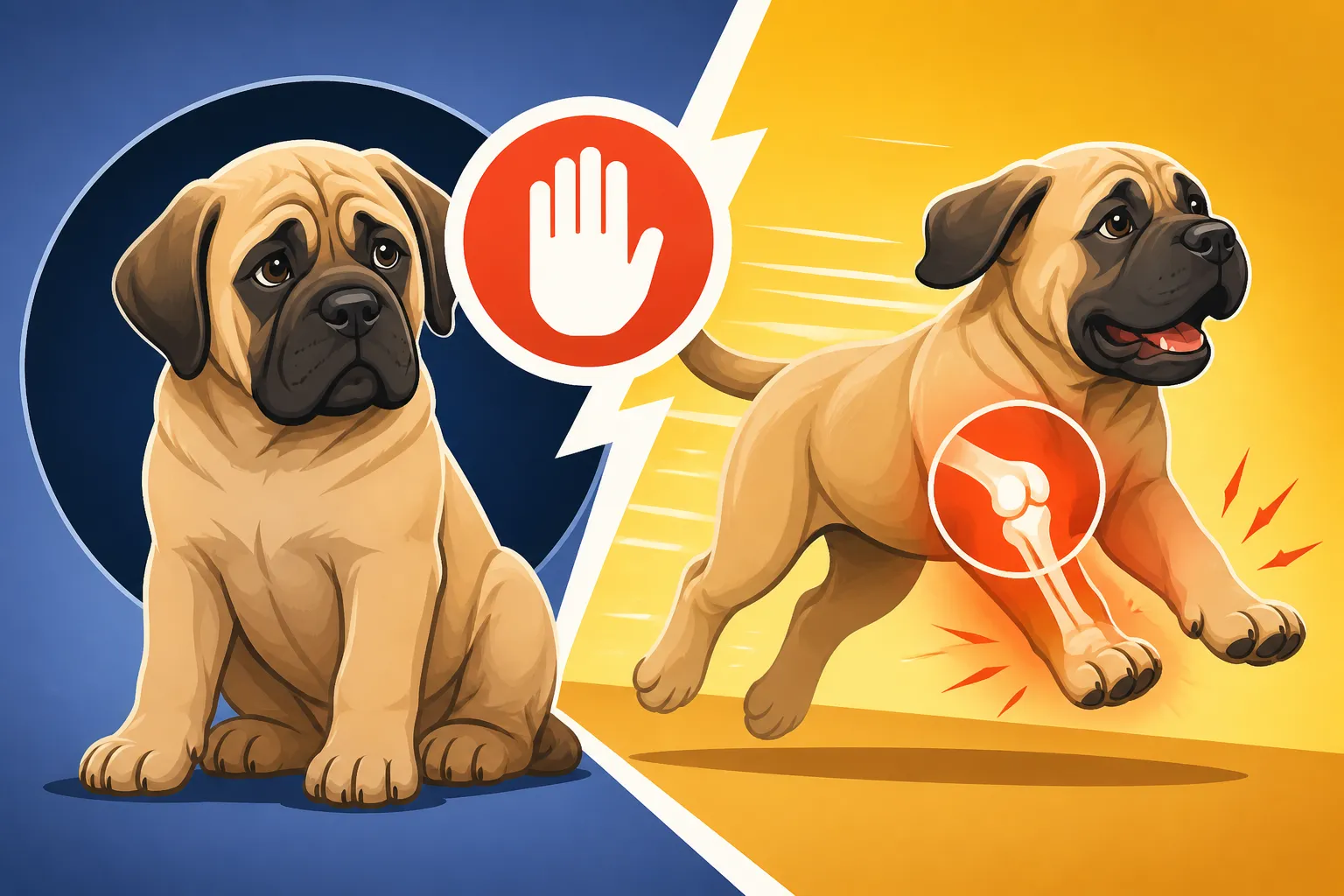
When a Mastiff puppy runs, especially at high speeds, they put immense pressure on their developing joints. This isn't just about sustained running; it's about the sudden stops, the sharp turns, the unexpected jumps, and the awkward landings that are all part of a puppy's play. Each one of these movements sends jarring forces through growth plates that are still soft and cartilage that is not yet fully formed. While a quick dash might seem harmless, repeated concussive impacts and twists can create microscopic damage that accumulates over time, often unseen until it manifests as a debilitating condition later in life. It's the silent damage that worries seasoned Mastiff owners and veterinarians the most.
Understanding the Mastiff Puppy's Fragile Skeleton
A Mastiff puppy grows at an astonishing rate, sometimes doubling or tripling its birth weight in just a few months. This rapid increase in size means their bones, joints, and associated soft tissues are under constant, intense development. Unlike smaller breeds, whose growth plates close relatively quickly, a Mastiff's growth plates remain open and susceptible to injury for much longer.
Growth Plates and Bone Development
Growth plates, also known as epiphyseal plates, are areas of cartilage near the ends of long bones in growing puppies. They are essentially the "factories" where new bone tissue is produced, allowing the bone to lengthen. These plates are incredibly vulnerable to injury because they are softer than the surrounding bone. Any significant stress, twist, or impact can damage these delicate structures, leading to improper bone growth, deformities, or even premature closure of the growth plate. This is particularly critical in a Mastiff, where the sheer volume and speed of growth mean these plates are working overtime and are exposed to high forces due to the puppy's increasing mass. Even a seemingly minor injury can have lifelong consequences if it affects a growth plate, impacting everything from leg length to joint alignment.
The Weight Factor and Joint Stress
Imagine a small child carrying a backpack that weighs as much as an adult. That's a bit like what a Mastiff puppy's skeleton is dealing with. Their rapid weight gain puts tremendous pressure on their still-developing joints. As the puppy gets heavier, the forces acting on their hips, elbows, and shoulders become exponentially greater. Activities like uncontrolled running, jumping off furniture, or even repeatedly navigating stairs can cause excessive compression and shear forces on these nascent joints. This constant stress can contribute to conditions like hip and elbow dysplasia, where the joints develop abnormally. Protecting these young joints by managing their weight and controlling their exercise is paramount. This delicate period is why we talk about The Walk Length That Damages a Mastiff Puppy and How Fast a Mastiff Puppy Puts On Weight with such earnestness.
The Hidden Risks of High-Impact Activity
High-impact activities, such as sprinting, jumping, or playing rough on hard surfaces, pose particular risks for a Mastiff puppy. The damage isn't always immediately obvious; it's often a cumulative effect that surfaces months or even years down the line.
Micro-Trauma and Cartilage Damage
Every time a Mastiff puppy makes a sudden stop, a quick turn, or lands after a jump, microscopic damage can occur within their joints. This is known as micro-trauma. The articular cartilage, which cushions the ends of bones within a joint, is not fully mature in a growing puppy. Repeated micro-trauma can lead to tiny tears, fraying, or bruising of this cartilage. Over time, this damage can compromise the joint's integrity, setting the stage for early-onset arthritis and chronic pain. Think of it like constantly tapping a fragile surface – eventually, it will crack, even if no single tap was strong enough to break it. This invisible wear and tear makes avoiding high-impact activities crucial for a Mastiff puppy's long-term joint health.
Slipping, Falling, and Awkward Movements
Mastiff puppies, despite their size, can be surprisingly clumsy. Their large paws, rapidly growing limbs, and often disproportionate bodies mean they haven't quite figured out how to coordinate all their parts. When they run or play vigorously, especially on slick surfaces like hardwood floors or ice, the risk of slipping, falling, or making an awkward movement is significantly higher. A bad slip can lead to sprains, strains, or even fractures to those vulnerable growth plates. It’s also during these moments that they might twist a knee or a shoulder in a way that causes immediate or latent injury. This is why considerations like What Bare Floors Do to a Growing Mastiff are so important for new owners. Providing good traction is not just about comfort; it's about injury prevention.
Gentle Movement: The Mastiff Puppy's Best Friends
So, if running is out, what can a Mastiff puppy do for exercise? The key is gentle, controlled movement that supports healthy development without placing undue stress on their growing bodies.
Controlled Leash Walks
Short, controlled leash walks are ideal for Mastiff puppies. These walks should be brief, perhaps 5-10 minutes a few times a day, especially for very young puppies. The goal isn't to tire them out physically, but to allow them to explore the world, practice leash manners, and develop muscle tone in a low-impact way. As they get a bit older, you can gradually increase the duration, but always prioritizing quality over quantity. Pay attention to your puppy's cues: if they lag behind, sit down, or show any signs of fatigue, it's time to stop. Remember, these walks are for mental enrichment and gentle physical conditioning, not for cardiovascular workouts. This is directly related to The Mastiff Puppy You Are Not Allowed to Exercise because controlled movement is the antithesis of uncontrolled running.
Mental Stimulation and Gentle Play
Mental exercise is just as important, if not more so, than physical exercise for a Mastiff puppy. Puzzle toys, scent games, and short, positive reinforcement training sessions can tire a puppy out mentally without stressing their joints. Interactive play, such as gentle tug-of-war (ensuring good form to protect their neck) or hide-and-seek, can also be wonderful. The key is that you control the intensity and duration. Avoid throwing toys for them to chase long distances, as this encourages sprints and sudden stops. Many owners find resources from training companies like BAXTER & Bella helpful for structured, gentle play ideas and early obedience training that protects delicate joints. These types of activities build a strong bond and a well-behaved puppy without putting their developing skeleton at risk.
Appropriate Play Surfaces
Where your Mastiff puppy exercises is almost as important as how they exercise. Soft, yielding surfaces are always preferable to hard ones. Grass, packed earth, or soft sand provide natural cushioning that absorbs impact and reduces strain on joints. Avoid asphalt, concrete, or slick indoor flooring for any vigorous play. If you have hard floors indoors, consider investing in non-slip runners or large area rugs. You can find excellent, durable options for large breeds on platforms like Amazon. These small changes in their environment can make a huge difference in preventing slips and reducing cumulative impact stress.
| Activity Type | Safe for Mastiff Puppies (0-18 months) | Unsafe for Mastiff Puppies (0-18 months) | Reason |
|---|---|---|---|
| Controlled Leash Walks | Yes (short, several times/day) | No (long, forced marches) | Promotes exploration, muscle development; avoids joint stress. |
| Fetch/Ball Chasing | No | Yes (sprinting, sudden stops, jumps) | High impact, jarring forces on growth plates and joints. |
| Agility/Jumping | No | Yes (high impact, unnatural movements) | Extreme stress on undeveloped joints, high injury risk. |
| Rough Play with Dogs | No (especially larger, boisterous dogs) | Yes | Risk of accidental injury, falls, over-exertion. |
| Swimming (controlled) | Yes (supervised, not forced) | No (uncontrolled, intense swimming) | Excellent low-impact exercise for muscle building; avoids joint impact. |
| Stairs | No (repeatedly, especially downward) | Yes | High concussive force on front joints, awkward twisting. |
| Puzzle Toys | Yes | No | Mental stimulation, no physical stress. |
| Gentle Tug-of-War | Yes (controlled, short bursts) | No (aggressive pulling, wrenching) | Builds bond, gentle muscle work; avoids neck/jaw strain. |
| Running on Hard Surfaces | No | Yes | No cushioning, increases impact shock. |
Setting Your Mastiff Up for a Long, Healthy Life
The choices you make during your Mastiff puppy's critical growth period directly influence their health and mobility in adulthood. By being diligent about controlled exercise and proactive care, you're investing in many happy, comfortable years with your gentle giant.
Monitoring Growth and Weight
One of the most powerful tools you have to protect your Mastiff puppy's joints is careful management of their growth and weight. An overweight puppy puts even more strain on already vulnerable growth plates and joints. Work closely with your veterinarian to ensure your puppy is growing at an appropriate, steady rate – not too fast. They can help you determine The Feeding Chart a Mastiff Puppy Should Follow and how much food is truly necessary. You should be able to feel your puppy's ribs easily without them being visible, and they should have a discernible waist. Remember, a lean puppy is a healthier puppy, especially a giant breed like a Mastiff. Avoid the temptation to "bulk them up" too quickly, as this can exacerbate joint issues.
Regular Veterinary Check-ups and Professional Guidance
Regular veterinary check-ups are non-negotiable for a Mastiff puppy. Your vet can monitor their growth, assess their gait, and discuss any concerns you might have. They can also provide guidance on appropriate exercise levels as your puppy matures and their growth plates begin to close. They might also discuss things like Whether a Mastiff Puppy Can Be Tested Before Purchase for genetic predispositions. Don't hesitate to seek advice from professionals who specialize in giant breeds, as they have a deep understanding of their unique developmental needs. Investing in good veterinary care from the start is an investment in your Mastiff's future mobility and comfort.
Considering Joint Support and Supplements
While not a substitute for proper exercise management, some owners choose to incorporate joint supplements into their Mastiff puppy's diet, often under veterinary guidance. Ingredients like glucosamine, chondroitin, and omega-3 fatty acids are commonly found in supplements marketed for joint health. These are thought to support cartilage health and reduce inflammation. If you decide to go this route, always discuss it with your vet first to ensure it's appropriate for your puppy's age and health, and to get recommendations for reputable brands. Many good quality supplements are available on platforms like Amazon. Remember, prevention is always better than cure, and supplements are just one piece of a larger preventative strategy.
Navigating the Mastiff Puppy's Growth Journey
Bringing a Mastiff puppy into your life is a journey filled with love, laughter, and a fair share of learning curves. Understanding and respecting their unique physiological needs during puppyhood is fundamental to ensuring they grow into the magnificent, healthy adults they are meant to be.
Patience is a Virtue
One of the biggest challenges for Mastiff owners is exercising patience during their puppy's formative months. It's natural to want to see your dog run and play freely, and it can feel almost cruel to restrict their perceived natural instincts. However, this period of restricted, controlled exercise is a relatively short one in the grand scheme of their life. By resisting the urge for strenuous activity now, you are literally buying them years of comfortable mobility later. Think of it as a crucial investment in their long-term well-being. This understanding is key to grasping Why a Mastiff Puppy Must Grow Slowly.
Educating Family and Friends
It's also important to educate everyone who interacts with your Mastiff puppy about these vital exercise restrictions. Grandchildren, enthusiastic neighbors, or even dog walkers might not understand the specific needs of a giant breed puppy and could inadvertently encourage unsafe activities. A simple conversation explaining the vulnerability of a Mastiff's developing joints and the long-term consequences of too much impact can go a long way. Make sure everyone knows the rules: no sustained running, no jumping games, and no rough-housing that could lead to awkward falls.
The Rewards of Responsible Puppy Rearing
Raising a Mastiff puppy with mindful exercise isn't always easy, but the rewards are immense. You'll have a dog with a stronger, healthier musculoskeletal system, less prone to debilitating conditions like hip and elbow dysplasia, and a much higher chance of enjoying a comfortable, active senior life. By choosing controlled, gentle activities and prioritizing their joint health, you're not just being a responsible owner; you're cultivating a deeper understanding and respect for this incredible breed. Your dedication during these critical months will manifest in a happy, mobile companion for Six to Ten Years Is What a Mastiff Gets.
Disclaimer
This article is for general informational purposes only and does not constitute professional advice. Laws, prices and regulations vary by location and change over time. Consult a qualified professional for guidance on your specific situation.