Whether a Mastiff Remembers a Bad Experience
It's a common and heartbreaking scenario: your beloved Mastiff, usually a gentle giant, suddenly shies away from a person, a sound, or a place, or perhaps displays an unexpected fear after what seemed like a minor incident. This can leave us wondering if our big dogs truly remember specific negative encounters, carrying that baggage with them long after the event itself has passed. This guide is dedicated to exploring the depth of a Mastiff's memory, how past unpleasant experiences can shape their behavior, and what we, as their devoted owners, can do to help them navigate and overcome these challenges.
The Elephant (or Mastiff) in the Room: Canine Memory Basics
When we talk about whether a Mastiff remembers a "bad experience," we're really delving into the fascinating and often misunderstood world of canine cognition. Dogs don't remember things quite like we do, replaying events in their minds with vivid detail. Instead, their memory is more intricate, relying heavily on associations and emotions.
Different Types of Dog Memory
Understanding canine memory is key to addressing past traumas. It's not about them recollecting a specific date and time, but rather how their brains connect sensory information with emotional responses.
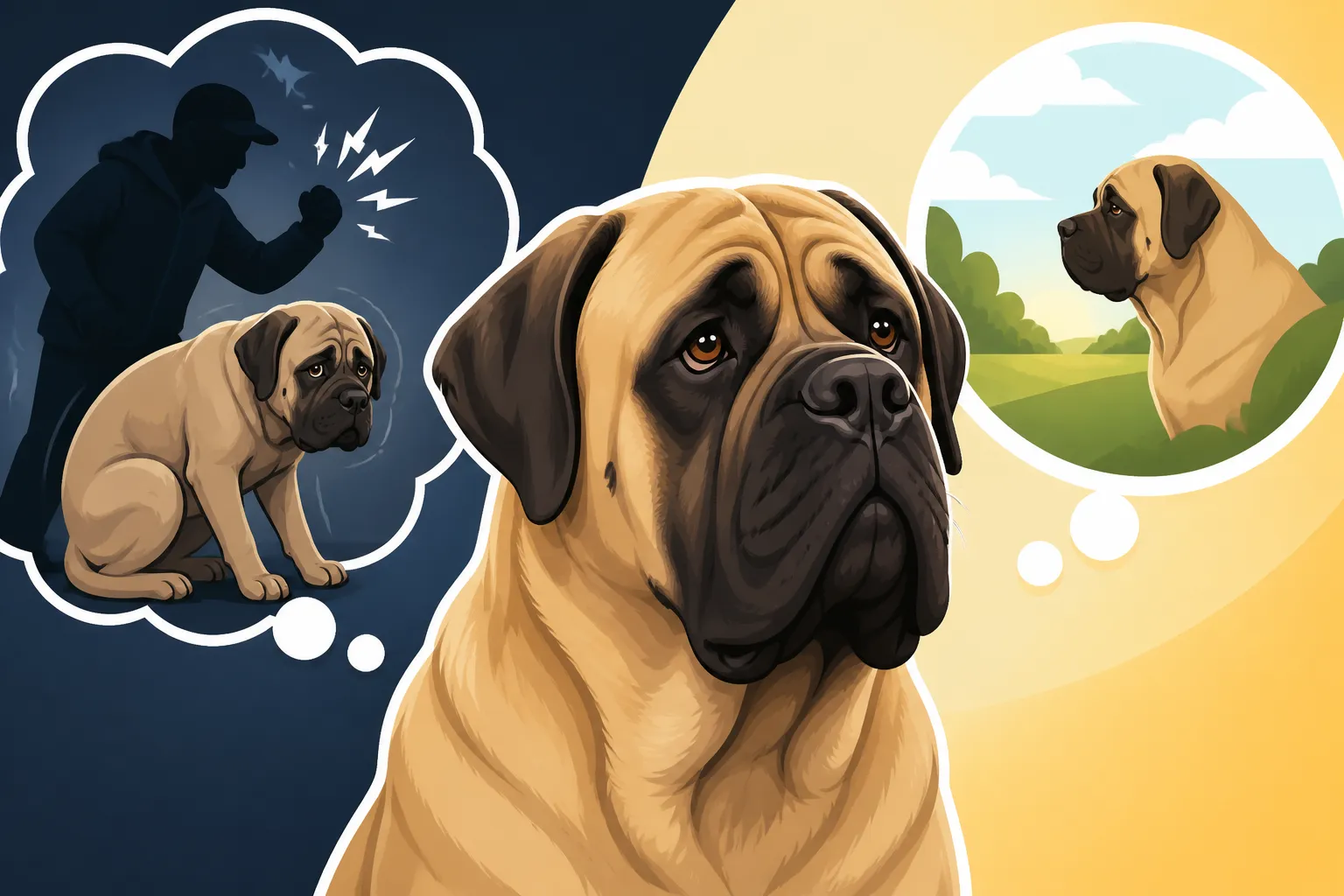
Dogs primarily operate on what’s known as associative memory. This means they link specific events, people, places, or objects with either positive or negative outcomes. For example, if a loud bang always happens right before something scary, they learn to anticipate fear when they hear a loud bang. This isn't remembering the why or when of the bang, but simply associating the sound with the feeling of fear. This is why a Mastiff might suddenly react negatively to a mail carrier even if a previous negative interaction was with a different person in uniform – the uniform itself becomes the trigger. They remember the feeling, not the specific individual.
While they don't have human-like episodic memory – the ability to consciously recall specific events from their past in a narrative way – there's growing evidence that dogs might have a rudimentary form of it. They might not remember what they had for breakfast yesterday, but they can certainly remember where their treat jar is kept or the routine for going on a walk. This often gets confused with our own long-term recall. So, when your Mastiff seems to remember a bad experience, it's less about them reliving the exact moment and more about a strong, unpleasant association that triggers a similar emotional or behavioral response. This associative learning is incredibly powerful, especially when linked to strong emotions like fear or pain.
Why Mastiffs Might Seem to Remember More
Mastiffs, despite their imposing size, are known for their sensitive and often surprisingly delicate temperaments. This inherent The Sensitivity Nobody Expects in a Two Hundred Pound Mastiff means they can be more profoundly affected by negative experiences than some other breeds. Their calm, observant nature often means they take everything in, processing experiences deeply.
Their deliberate nature, often mistaken for stubbornness, also plays a role. A Mastiff isn't usually quick to react impulsively. Instead, they absorb their surroundings and make thoughtful, if sometimes slow, decisions. If they've had a truly frightening encounter, that memory – or rather, that strong negative association – can become deeply ingrained. They don't forget easily because their initial processing is so thorough. This is particularly true if the experience involved fear, pain, or a perceived threat to their safety or that of their family. A single, intensely negative interaction with another dog, for instance, can lead to a lifetime of reactivity if not addressed carefully.
Furthermore, Mastiffs are highly intelligent in their own quiet way. They learn routines, understand subtle cues from their humans, and form incredibly strong bonds. This deep emotional connection can also amplify the impact of negative events. If they feel betrayed, confused, or hurt during an interaction, that emotional scar can persist as a strong negative association with whatever triggered it. They are not prone to shrugging things off, and a harsh word or an unfair punishment can have a lasting detrimental effect on their trust and willingness to cooperate, which is why Why Harsh Correction Ruins a Mastiff is so important to understand.
How a Bad Experience Leaves a Mark on a Mastiff
The way a Mastiff expresses a past negative experience might not always be obvious to the untrained eye. It's rarely about direct recollection but rather a complex interplay of triggers, emotional responses, and learned behaviors. These can manifest both subtly and overtly.
The Power of Association in Negative Events
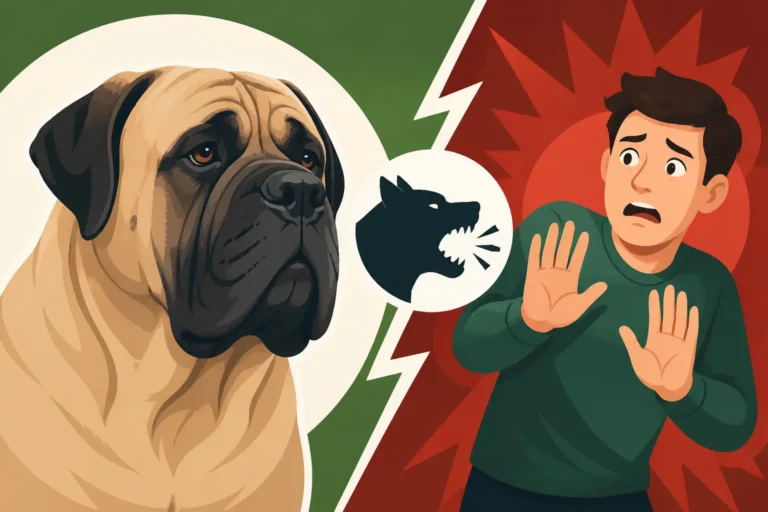
When a Mastiff has a bad experience, their brain forms a strong link between the scary or painful event and any elements present at that time. This could be a specific type of person, like someone wearing a hat or carrying a large bag, a certain sound like a motorcycle backfiring, or even a particular smell. These become triggers. For instance, if a Mastiff was startled or hurt by a child, they might develop a lasting wariness or even fear of all children, not just that specific child. The sight or sound of children then elicits the same fear response they felt during the initial traumatic event.
This ripple effect can be extensive. A single, truly frightening experience, such as being attacked by another dog while on a walk, can lead to leash reactivity, fear of specific breeds, or even a general anxiety about leaving the house. The memory isn't of the fight itself, but the sidewalk, the leash, the other dog's barking, and the accompanying adrenaline and terror. Your Mastiff might then become agitated at the sight of any dog, or even just the act of putting on their leash. It's vital to recognize that this behavior isn't defiance; it's a fear-based reaction rooted in a powerful negative association that feels very real to them. Their world shrinks as they try to avoid these triggers.
Physical Manifestations of Past Trauma
A Mastiff who is recalling a bad experience (through association) will often display a range of body language cues that signal their distress. These can include subtle signs like lip-licking, yawning when not tired, turning their head away, or excessive blinking. More overt signs might involve tail tucking, flattening their ears, whale eye (where the whites of their eyes are visible), trembling, or trying to hide behind you. In some cases, they might growl, bark, or lunge as a defensive mechanism if they feel cornered or threatened by the trigger.
| Sign of Stress/Anxiety | Description | Potential Cause (Past Trauma) |
|---|---|---|
| Lip Licking / Yawning | Often out of context (not eating or tired). | Nervousness, internal conflict, stress from a trigger. |
| Tail Tucked / Low | Sign of fear, submission, or insecurity. | Associated fear with current situation/person. |
| Flattened Ears | Pulled back against the head. | Apprehension, fear, discomfort. |
| Whale Eye | Whites of eyes visible at the sides. | High stress, anxiety, feeling threatened. |
| Trembling / Shaking | Even in a warm environment. | Extreme fear or anxiety. |
| Hiding Behind Owner | Seeking comfort and protection. | Feeling vulnerable due to a trigger. |
| Freezing | Suddenly rigid and still. | Overwhelm, trying to assess a threat, fear. |
| Excessive Panting | Without recent exercise or heat. | Physiological response to stress/anxiety. |
| Avoidance | Turning away, trying to leave. | Strong negative association with trigger. |
Avoidance behaviors are also very common. Your Mastiff might actively try to steer clear of certain people, places, or objects. If they were scared by a delivery truck, they might refuse to go near the front window or even exit the front door. If a particular type of person caused them discomfort, they might move away or stand stiffly when that person approaches. These reactions are not about being "naughty"; they are deep-seated emotional responses. Recognizing these signals is critical, because ignoring them or punishing your Mastiff for them will only exacerbate their fear and deepen the negative association, potentially leading to a breakdown of trust. It's important to understand Whether a Mastiff Reads Its Owner's Mood and how your reactions can influence their comfort.
Recovering from a Negative Encounter: Gentle Guidance for Your Giant
Helping a Mastiff recover from a bad experience requires immense patience, understanding, and a consistent, positive approach. You can't simply tell them to "get over it." You have to methodically help them rewire those negative associations.
Rebuilding Trust and Creating Positive Associations
The cornerstone of recovery is building new, positive associations with the previously frightening trigger. This process, often called desensitization and counter-conditioning, needs to be done slowly and carefully. Start by exposing your Mastiff to the trigger at such a low intensity or distance that they don't react negatively. For example, if they're afraid of men with hats, start by having a man without a hat stand far away. As your Mastiff remains calm, reward them with high-value treats and praise. Slowly, over many sessions and days, decrease the distance, or introduce a hat from a distance. The goal is to consistently pair the trigger with something wonderful, like their favorite treats or a game of tug, effectively changing their emotional response.
This isn't a quick fix. You might only make tiny increments of progress in a single session. Pushing too fast will overwhelm your Mastiff and reinforce the negative association, setting you back. Always end on a positive note, even if it means stepping back to an easier stage. The key is never to force an interaction and always allow your Mastiff to retreat if they're uncomfortable. Their willingness to engage, however small, is a huge step forward. You want them to look forward to seeing the trigger, because it means delicious things happen. Remember, consistency is crucial. Everyone in the household needs to be on board with the plan.
Professional Help and Training Strategies
Sometimes, a bad experience is so profound, or your Mastiff's reaction so intense, that trying to manage it alone feels overwhelming, if not impossible. This is precisely when reaching out to a certified professional dog trainer or veterinary behaviorist is essential. They have the expertise to assess the specific triggers, understand the underlying fear or anxiety, and develop a tailored plan for your Mastiff. They can guide you through the nuanced steps of desensitization and counter-conditioning, ensuring you don't inadvertently make things worse. Whether a Mastiff Needs a Professional Trainer is often true when dealing with ingrained fear.
Many excellent positive reinforcement training resources and tools can assist you. Online programs, such as those offered by BAXTER & Bella, provide structured courses and support that can be invaluable for owners learning to navigate complex behavioral issues. They focus on building positive relationships and clear communication, which are vital for a sensitive breed like the Mastiff. For practical tools, a good quality front-clip harness can help manage a Mastiff who pulls or reacts on a leash, offering more control without causing discomfort. These can easily be found on platforms like Amazon, along with other helpful items like long lines for safe distance work in open spaces, or puzzle toys to provide mental enrichment and distraction during training sessions. The right equipment, coupled with expert guidance, can make a world of difference in helping your Mastiff overcome their past. Always choose methods that prioritize your Mastiff's emotional well-being and build trust, rather than resorting to punitive measures which will only create more fear and resentment. Positive training is often the only truly effective approach for this sensitive breed, as detailed in Whether Positive Training Alone Works on a Mastiff.
Preventing Future Traumatic Experiences
While we can't shield our Mastiffs from every single unpleasant moment in life, we can take proactive steps to minimize the chances of truly traumatic experiences and equip them to handle the unexpected with more resilience.
Early Socialization Done Right
One of the most powerful tools in preventing future fear-based issues is proper, careful, and thorough socialization during puppyhood. For a Mastiff puppy, this means controlled, positive exposures to a wide variety of sights, sounds, smells, people, and other dogs. The emphasis here is on quality over quantity. It's not about throwing your puppy into every busy environment; it's about making sure each new experience is positive, calm, and manageable for them. A bad socialization experience early on, like being overwhelmed by an overly boisterous dog or startled by a loud noise, can quickly create a lasting negative association. This is especially critical for a breed that will grow to be so large; you want them confident, not fearful or reactive.
Take your Mastiff puppy to quiet parks, let them meet calm, vaccinated adult dogs, and introduce them to different people with varying appearances and voices. Always supervise closely and make sure encounters are brief and positive. Pair new experiences with treats and praise, building a foundation of confidence. Avoid dog parks or overly crowded places until your Mastiff is much older and has a solid foundation of confidence and social skills. For more guidance on this crucial period, check out Socializing a Mastiff Puppy Before It Gets Heavy and How Many People a Mastiff Puppy Should Meet. An undersocialized Mastiff can become incredibly wary and defensive, making their large size a potential liability rather than a gentle presence, as explained in What Becomes of an Undersocialized Mastiff.
Understanding Your Mastiff's Limits
Even with the best socialization, every Mastiff has individual limits and sensitivities. It's paramount that you become an expert in reading your dog's body language. Learn to identify the subtle signs of stress, discomfort, or fear before they escalate into a full-blown reaction. Is their tail tucked slightly? Are they licking their lips or yawning? Are they trying to put distance between themselves and a person or object? These are all signals that they are uncomfortable.
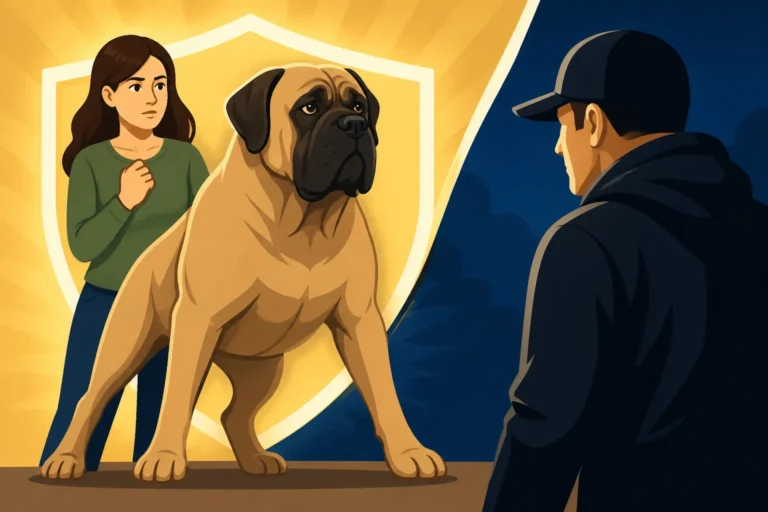
Once you recognize these signals, you must advocate for your Mastiff. This means removing them from situations that are overwhelming them, even if it feels awkward or inconvenient. Don't force them to "deal with it" or scold them for being fearful. Instead, be their protector and guide them away from potential triggers. This builds immense trust and teaches them that you are their safe haven. If you know your Mastiff has a particular fear, such as being approached by strangers, create a management plan. Use clear verbal cues like "no thank you" to politely ask people to give your dog space. By understanding and respecting your Mastiff's unique personality and stress points, you can prevent many potentially traumatic events and help them lead a more confident and peaceful life. Whether a Mastiff Forgives a Correction is a good reminder of how their deep sensitivity means patience and understanding are always the best policy.
Disclaimer
This article is for general informational purposes only and does not constitute professional advice. Laws, prices and regulations vary by location and change over time. Consult a qualified professional for guidance on your specific situation.