Whether a Mastiff Should Wear a Harness or a Collar
Choosing the right walking gear for your majestic Mastiff isn't just about fashion; it's a critical decision that impacts their safety, comfort, and how effectively you can manage their immense strength. Many Mastiff owners grapple with the daily challenge of a dog that can easily outweigh a grown adult, wondering if a simple collar is enough or if a harness is truly necessary to prevent strain and ensure control. This guide will meticulously explore the differences, advantages, and disadvantages of both collars and harnesses, helping you make an informed choice that best suits your gentle giant.
The Core Functions: Collars and Harnesses for Giant Breeds
When you’re walking a dog the size of a Mastiff, the equipment you choose for their leash attachment is far more than a simple accessory. It’s a crucial piece of safety gear, a communication tool, and, in many cases, a statement about your understanding of giant breed mechanics. Both collars and harnesses serve the fundamental purpose of connecting your dog to a leash, but they distribute pressure and offer control in vastly different ways, each with distinct implications for a breed known for its sheer mass and surprising sensitivity.
Understanding How Each Tool Works
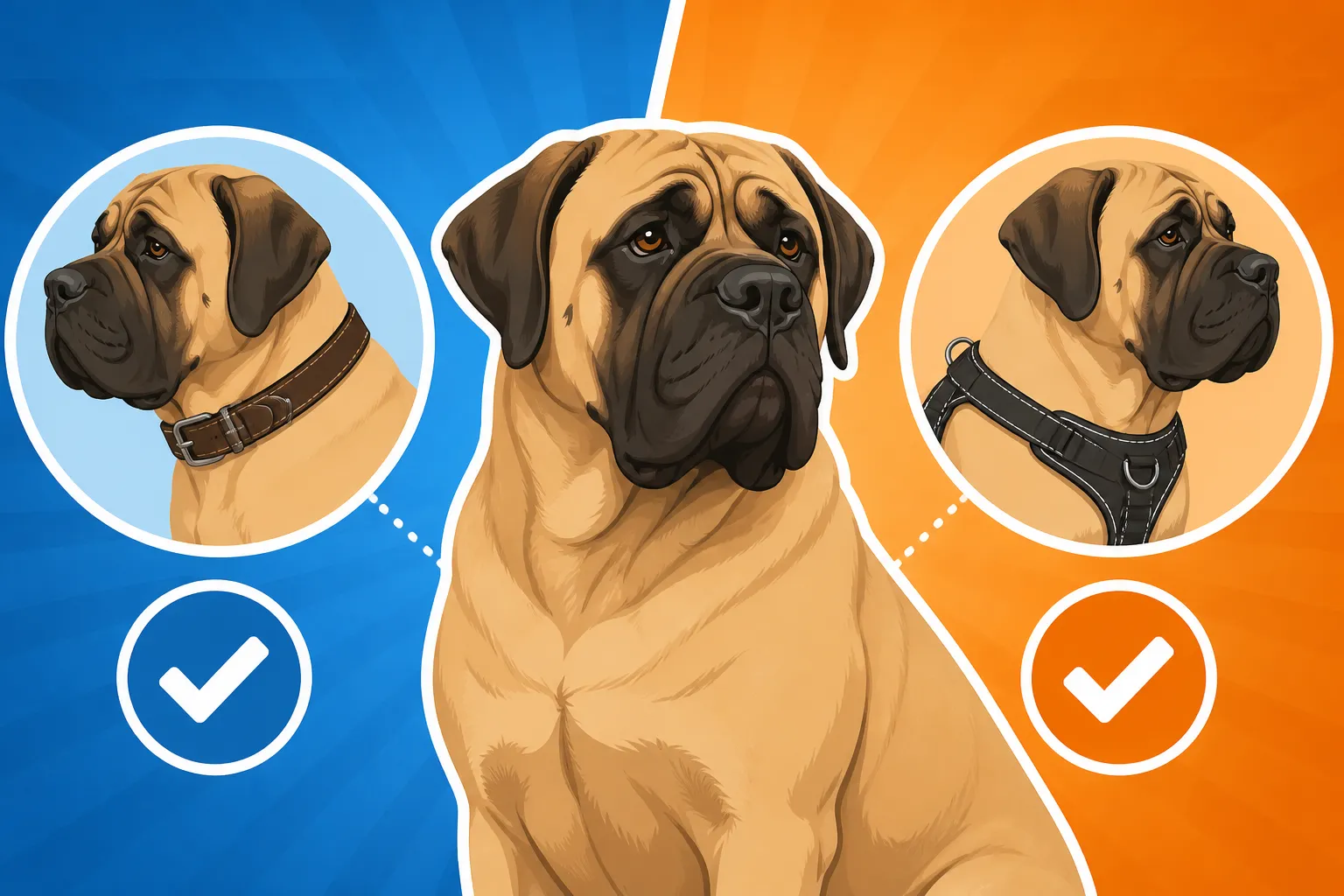
A collar, at its most basic, wraps around your dog's neck, providing a direct point of contact for the leash. When you apply tension to the leash, that pressure is concentrated solely on the neck and throat area. For smaller dogs, this might be manageable, but imagine the force a two-hundred-pound Mastiff can generate, even with a gentle tug. This direct neck pressure can be concerning for any dog, but especially for brachycephalic (short-nosed) breeds or those prone to neck or spinal issues, although Mastiffs aren't typically in this category, their sheer bulk still makes neck pressure a serious consideration.
On the other hand, a harness wraps around a dog's chest and often their back, distributing pressure across a much wider surface area. Instead of concentrating all the force on the delicate neck, a harness spreads it across the sternum, shoulders, and rib cage. This fundamental difference in pressure distribution is where much of the debate and preference for harnesses over collars for giant breeds stems from. It's about protecting sensitive areas and leveraging the dog's stronger musculature.
The Unique Physics of a Mastiff
Let's be realistic: a Mastiff is not your average dog. Their immense size and powerful build mean that even a slight pull on the leash can translate into significant force. Imagine trying to stop a charging bull with just a rope around its neck – it's an extreme analogy, but it illustrates the kind of leverage a Mastiff has. This isn't just about their strength, though; it's also about their anatomical structure. They have a massive, heavy head and neck, and while their neck muscles are strong, the underlying structures like the trachea, esophagus, and thyroid gland are still vulnerable.
Furthermore, a Mastiff's sheer bulk means that any sudden lurch or jolt, whether from a collar or harness, can impact their skeletal system. While a well-fitted harness distributes this shock more effectively, a collar can create a whip-like effect on the neck, potentially leading to discomfort or injury over time, especially if the dog frequently pulls or you need to make quick corrections. The goal is to manage their power safely for both of you, without causing undue stress or potential harm to their robust but still vulnerable body.
The Traditional Collar: When It Works for a Mastiff and When It Doesn't
The classic collar has been a staple of dog ownership for centuries, and for good reason. It’s convenient, serves as a place for identification tags, and for many dogs, it's all that's needed. However, when we're talking about a Mastiff, the "traditional" approach needs a really careful look, because what works for a Chihuahua definitely doesn't translate safely or effectively to a two-hundred-pound canine.
Identification and Basic Control
For everyday wear, especially around the house or in a securely fenced yard, a flat buckle collar is perfectly acceptable and, frankly, essential for your Mastiff. This is where their identification tags, rabies tag, and license information reside. Should your gentle giant ever manage to wander off, having this information readily available on their collar is absolutely critical for a speedy reunion. It’s a non-negotiable part of responsible pet ownership.
When it comes to basic control, a collar can offer a certain level of communication. A light tug can reinforce a 'heel' command or redirect attention. For a Mastiff that is already impeccably leash-trained and walks politely on a loose lead, a flat collar might suffice for short, controlled outings, say, a quick potty break in a quiet area. However, it's imperative that your Mastiff truly understands and respects the collar as a communication tool, not as a device for restraint against their will.
The Risks of Neck Pressure and Injury
Here's where the rubber meets the road with a Mastiff and a traditional collar. The reality is, even the best-trained Mastiff can have a moment – a squirrel, another dog, an unexpected loud noise – where instinct kicks in, and they exert their full, formidable strength. When that force is channeled through a collar around their neck, it creates immense pressure on the trachea, potentially causing coughing, gagging, or even tracheal collapse over time. For such a massive dog, the risk of serious neck or throat injury, including damage to the larynx or thyroid, is simply too high.
Beyond the physical trauma, there's the behavioral impact. Constant pressure or painful corrections from a collar can make a sensitive Mastiff shut down, become fearful of walks, or even develop negative associations with the leash. Remember, Why Harsh Correction Ruins a Mastiff is a very real concern for this breed. They are incredibly intelligent and keenly aware of how they are handled. Relying on a collar for active restraint against pulling can turn walks into a battle of wills, and frankly, a losing battle for you, physically. You should also consider that How Much Force a Mastiff Can Apply on a Leash makes a collar a hazardous choice for control.
The Modern Harness: Benefits for Your Big Dog's Comfort and Training
In recent years, harnesses have soared in popularity, especially for larger breeds, and for Mastiffs, they've become almost a necessity for safe and comfortable walks. They're designed with your dog's anatomy and well-being in mind, offering a multitude of benefits that traditional collars simply can't match when it comes to managing a powerhouse like a Mastiff.
Enhanced Comfort and Safety
The most significant advantage of a harness for a Mastiff is how it distributes pressure. Instead of focusing force on the neck and throat, a well-designed harness spreads it across the chest, shoulders, and rib cage. This means that if your Mastiff lunges or pulls, the impact is absorbed by their strongest, most muscled areas, rather than their delicate trachea. This dramatically reduces the risk of neck injuries, choking, or damage to the sensitive structures in their throat. This added comfort encourages a more relaxed walk, as your Mastiff isn't constantly bracing against potential discomfort.
Think about it from your Mastiff's perspective: a sudden jerk on a collar can be jarring, even painful. A harness, especially one with broad straps and good padding, makes walking a far more pleasant experience, fostering a positive association with their leash and with being outside. This is particularly important for Mastiffs, who thrive on gentle handling and positive reinforcement. Their robust joints, which can be prone to issues like Elbow Dysplasia Affects One Mastiff in Seven and hip dysplasia, also benefit from the smoother, less abrupt forces a harness provides, preventing unnecessary jolts to their frame.
Improved Control and Training Aids
For a dog that weighs as much as a grown person, control is paramount. Many harnesses come with both back clips and front clips, each offering distinct advantages. A back-clip harness is great for dogs that don't pull excessively, allowing them to move freely. However, for a Mastiff that is still learning leash manners, a front-clip harness can be a game-changer. When your Mastiff pulls while wearing a front-clip harness, the leash attachment point on their chest redirects their forward momentum, turning them to the side instead of allowing them to continue pulling straight ahead. This makes it incredibly difficult for them to drag you down the street.
This redirection is a humane and effective way to teach loose-leash walking without pain or discomfort. It's a natural consequence that encourages them to stay by your side. You can find a wide variety of excellent quality, durable front-clip harnesses for giant breeds on platforms like Amazon, making it easy to equip your Mastiff safely. Harnesses are also fantastic for incorporating into positive reinforcement training. When you're trying to teach your Mastiff Teaching a Mastiff Before It Outweighs You, having a tool that facilitates gentle guidance rather than harsh correction is invaluable. Training methodologies, such as those often championed by BAXTER & Bella, emphasize positive, force-free methods, and a well-fitting harness aligns perfectly with this philosophy.
Mitigating Risks: Protecting Your Mastiff's Neck and Joints
The sheer scale of a Mastiff means that what might be a minor inconvenience or risk for a smaller dog can become a major health concern for them. When considering walking equipment, their robust yet sensitive anatomy needs to be at the forefront of your decision-making. We're talking about preventing long-term damage and ensuring their comfort through all stages of life.
Preventing Tracheal and Neck Injuries
As we've discussed, the concentrated pressure of a collar on a Mastiff's throat can lead to a host of problems. Beyond the immediate coughing and gagging, repeated stress on the trachea can weaken it, potentially leading to chronic issues. Imagine the pressure of 200 pounds of solid dog muscle lunging against a narrow strap around its windpipe. It's a recipe for disaster. This risk is amplified if your Mastiff tends to pull hard or lunge suddenly, which even the most well-behaved dogs might do in certain exciting situations.
A harness, by spreading the load over a larger, more muscular area of the chest, virtually eliminates this risk. It allows your Mastiff to breathe freely and move naturally, even when there's tension on the leash. This is particularly crucial as your Mastiff ages. While they are known for a relatively Six to Ten Years Is What a Mastiff Gets, protecting their neck and spine from unnecessary strain throughout their life can contribute to their overall well-being and mobility into their senior years. Avoiding preventable injuries ensures they can enjoy their walks for as long as possible.
Joint Health and Weight Distribution
Mastiffs are predisposed to various joint issues, including hip and elbow dysplasia, largely due to their rapid growth and immense size. Any equipment that causes abrupt jolts or uneven weight distribution can exacerbate these conditions or contribute to their onset. A poorly fitting collar or harness can subtly alter their gait or posture if they are constantly trying to compensate for discomfort or pressure. This might not be immediately obvious, but over months and years, these small stresses can accumulate.
A well-fitted harness, especially one that allows for full range of shoulder motion and doesn't rub or chafe, supports your Mastiff's natural movement. It ensures that any forces from the leash are distributed symmetrically across their sturdy chest, minimizing torsional stress on their joints. While Joint Supplements for a Mastiff are a common part of their long-term care, choosing the right walking gear is another proactive step you can take to protect their precious joints. It’s about creating an environment where they can move as freely and comfortably as possible, supporting their natural biomechanics rather than hindering them.
Comparing Collars and Harnesses for Mastiffs
Let's lay out a quick comparison to help solidify the pros and cons for a Mastiff.
| Feature | Flat Collar (Traditional) | Harness (Chest/Back-Clip) |
|---|---|---|
| Pressure Point | Concentrated on neck/throat | Distributed across chest, shoulders, back |
| Risk of Injury | High for trachea, larynx, thyroid if pulling/lunging | Very low for neck, minimal if well-fitted |
| Control for Pulling | Can be ineffective, relies on discomfort, potential injury | Highly effective, especially front-clip, redirects momentum |
| Identification | Excellent for tags (primary use case) | Secondary for tags (can be on harness, or separate collar) |
| Comfort | Potentially uncomfortable/painful if dog pulls | Generally more comfortable, less restriction |
| Ease of Use | Very easy to put on/take off | Slightly more involved to put on, but quick once accustomed |
| Behavioral Impact | Can create negative associations with walks, fear | Promotes positive association, less aversion to leash |
| Joint Stress | Higher potential for jarring jolts to body | Lower potential for jarring jolts, smoother force distribution |
Training Smart: Choosing the Right Tool for Effective Communication
When you're working with a Mastiff, training isn't just a suggestion; it's a necessity for managing such a large and powerful animal. The tools you choose for your walks play an enormous role in how effectively you can communicate with your Mastiff and reinforce good manners. It’s about building a relationship of trust and understanding, not relying on physical force.
Addressing Pulling and Leash Reactivity
One of the most common frustrations for Mastiff owners is leash pulling. A Mastiff that pulls isn't being malicious; they're simply responding to their instincts and the world around them. However, a two-hundred-pound dog pulling on a leash can quickly become unmanageable and dangerous for both the dog and the handler. This is where a front-clip harness truly shines. When your Mastiff starts to pull, the front attachment point on the harness gently guides them to the side, interrupting their forward momentum without causing pain or fear. It teaches them that pulling gets them nowhere, and a loose leash allows them to continue moving forward.
For Mastiffs who might display Leash Reactivity in a Two Hundred Pound Mastiff, a harness provides a safer and more effective means of management. If they react to another dog or person, you can safely redirect them without risking injury to their neck or exacerbating their stress with a choking sensation. The broader contact of a harness allows for more subtle directional cues from you, providing clearer communication than a collar, which often just means "stop" or "pull back."
Positive Reinforcement and Communication
Mastiffs are incredibly sensitive dogs, despite their imposing appearance. They respond best to positive reinforcement and gentle, consistent guidance. Yelling, yanking, or using force-based corrections with a collar can quickly undermine your relationship and make your Mastiff resistant to training. As we explored in The Sensitivity Nobody Expects in a Two Hundred Pound Mastiff, their feelings matter deeply.
A harness, particularly one that's comfortable and allows for natural movement, becomes an extension of your positive training efforts. It's a tool that facilitates good behavior rather than punishes bad. When you combine a comfortable harness with positive training methods – using treats, praise, and clear verbal cues – you're building a foundation of trust. Your Mastiff learns that walking on a leash is a pleasant activity, not a battle, and that responding to your cues leads to good things. This makes training sessions more productive and walks more enjoyable for both of you. Many training resources, including online programs, will advocate for equipment that supports humane, effective training, and a harness typically fits this bill far better than a standard collar for managing a strong dog.
Making the Informed Choice: Matching Gear to Your Mastiff's Unique Needs
Ultimately, the decision of whether to use a harness or a collar (or both!) for your Mastiff isn't one-size-fits-all. It depends on a variety of factors, including your dog's individual temperament, their level of training, your strength and experience as a handler, and the specific activities you'll be doing together. However, for most Mastiff owners, a harness will be the primary tool for walks, with a collar serving a vital role for identification.
Assessing Your Mastiff's Personality and Training Level
Consider your Mastiff honestly. Are they a consistent, polite walker, or do they occasionally forget their manners and put their considerable weight into a pull? If your Mastiff is a seasoned pro at loose-leash walking and rarely pulls, a sturdy flat collar might be sufficient for casual strolls in low-distraction environments. However, even then, always be prepared for the unexpected. For puppies, who are still developing and exploring, a harness is almost always the safer bet to protect their delicate developing structures and prevent early negative associations with the leash. Learning Whether a Mastiff Puppy Can Be Tested Before Purchase and knowing their genetics can also inform your choices for long-term health and equipment.
If your Mastiff is prone to pulling, easily distracted, or still learning their manners, a well-fitted, comfortable harness (especially a front-clip design) is the clear winner. It will give you more control, teach better habits without discomfort, and protect your dog from potential injury. Remember, Whether a Mastiff Pulls on a Leash is a common challenge, and the right tool can make all the difference in overcoming it.
Your Role as the Handler
Your own physical capabilities are also a major factor. If you're not confident you can physically manage your Mastiff with just a collar, then a harness is a no-brainer. There's no shame in admitting that controlling a giant breed takes skill and the right equipment. A harness provides an extra layer of security and leverage that can make walks enjoyable rather than a source of anxiety. It empowers you to handle your Mastiff safely and confidently.
For activities like hiking or longer walks where your Mastiff might be exploring more, a harness offers better comfort and prevents neck strain over extended periods. Even if your Mastiff is well-behaved, a harness provides peace of mind, knowing you have maximum control should an unforeseen situation arise. For daily wear at home, a comfortable, lightweight flat collar for tags is perfect. But when it's time to hit the pavement or the trails, transition to that well-fitting harness. It’s about being prepared for the realities of life with a truly magnificent, giant dog.
Disclaimer
This article is for general informational purposes only and does not constitute professional advice. Laws, prices and regulations vary by location and change over time. Consult a qualified professional for guidance on your specific situation.