Whether Two Meals a Day Lower a Mastiff’s Bloat Risk
The fear of bloat, or Gastric Dilatation-Volvulus (GDV), is a shadow that looms large over every Mastiff owner's heart. It's a sudden, terrifying emergency that can turn a perfectly healthy dog into a critically ill patient within hours. One of the most common questions, and often a source of anxiety, revolves around feeding: specifically, whether feeding your gentle giant two meals a day truly helps lower their risk. This guide aims to thoroughly explore the role of meal frequency, among other vital factors, in protecting your beloved Mastiff from this life-threatening condition.
Understanding Bloat in Mastiffs: A Terrifying Reality
Let's not sugarcoat it: bloat is one of the most frightening emergencies a Mastiff owner can face. It's not just a bad tummy ache; it's a condition where the stomach fills with gas (gastric dilatation) and can then twist on itself (volvulus), cutting off blood supply and trapping gas. This isn't a "maybe we'll go to the vet tomorrow" situation; it's a frantic, middle-of-the-night sprint to an emergency clinic where every minute truly counts.
Why Mastiffs Are Particularly Susceptible to Bloat
Mastiffs, like many other large and giant breeds such as Great Danes, St. Bernards, and Weimaraners, have a particular anatomical predisposition to bloat. Their deep, narrow chests are a hallmark of the breed, but unfortunately, this same conformation creates a space where the stomach has more room to swing and twist once it becomes distended. Think of it like a pendulum; a longer chain allows for a wider, more dangerous swing. This isn't something you can breed out easily, and it's a fundamental aspect of their physiology that we, as owners, must constantly manage.
It's crucial to understand the two parts of GDV. First, there's Gastric Dilatation (GD), where the stomach simply fills with gas or fluid. This can be uncomfortable and painful, but it's not immediately fatal on its own. However, this distension creates the perfect storm for the second, much more dangerous part: Volvulus (V). Once the stomach is engorged, it can rotate, effectively twisting off both the entry (esophagus) and exit (duodenum). This traps gas, food, and fluids inside, leading to a rapid buildup of pressure. This pressure compromises blood flow to the stomach wall, damages other organs, and can send your dog into shock. When a Mastiff's stomach twists, it is truly a race against time, as damage to internal organs, including the spleen and heart, can become irreversible frighteningly quickly. For more on this, it's worth reading about Why the Mastiff Has the Deepest Chest of Any Breed.
The Urgency of Recognizing Symptoms
The insidious nature of bloat is that its early symptoms can be subtle and easily mistaken for general discomfort or an upset stomach. Your Mastiff might simply seem a little restless, pace, or try to vomit without bringing anything up – often described as "retching." They might whine or look at their side, indicating abdominal pain. As the condition progresses, their abdomen will become visibly distended and hard to the touch, and their breathing will become labored. Their gums might turn pale, and their heart rate will increase.
Many owners, understandably, might think their dog just ate something bad and will wait to see if it passes. With bloat, especially GDV, this "wait and see" approach is literally deadly. The window for successful intervention is incredibly narrow, often just a few hours from the onset of symptoms before severe, irreversible damage occurs. If you suspect bloat, even faintly, you need to act immediately. Don't call your regular vet if it's after hours; head straight to the nearest 24-hour emergency veterinary clinic equipped to handle giant breeds. Knowing The First Sign a Mastiff Is Bloating can literally save your dog's life, and understanding How Long a Bloating Mastiff Has Before Surgery reinforces the critical need for immediate action.
The Traditional Wisdom: Multiple Small Meals
For decades, veterinary professionals and experienced giant breed owners have advocated for feeding multiple, smaller meals throughout the day as a primary strategy to reduce bloat risk. This recommendation stems from logical reasoning about how digestion works and how a large volume of food might impact a susceptible stomach.
The Theory Behind Smaller, More Frequent Meals
The core idea behind feeding smaller, more frequent meals is to prevent the stomach from becoming excessively distended at any one time. When a Mastiff consumes a massive meal, especially if they eat quickly, their stomach expands significantly. This large volume, combined with potential air-gulping during rapid eating, can create an environment ripe for gas accumulation. A distended stomach is physically more likely to rotate or twist. By breaking down the daily food allowance into two, three, or even four smaller portions, the stomach doesn't have to work as hard to process an overwhelming amount of food all at once. This theoretically reduces the chance of gas buildup and minimizes the stomach's sheer volume, thereby lessening the risk of it twisting.
Another aspect of this theory relates to digestive processes. Smaller meals may be processed more efficiently, leading to less fermentation and gas production. Large meals can sometimes sit longer in the stomach, potentially increasing the chance for gas to accumulate. Furthermore, feeding schedules can impact a dog's general excitement levels around food. A dog fed only once a day might be ravenously hungry, leading to faster eating and more air ingestion. Spreading out meals can lead to a calmer approach to eating, although this varies widely by individual dog personality.
Is Two Meals a Day Enough to Make a Difference?
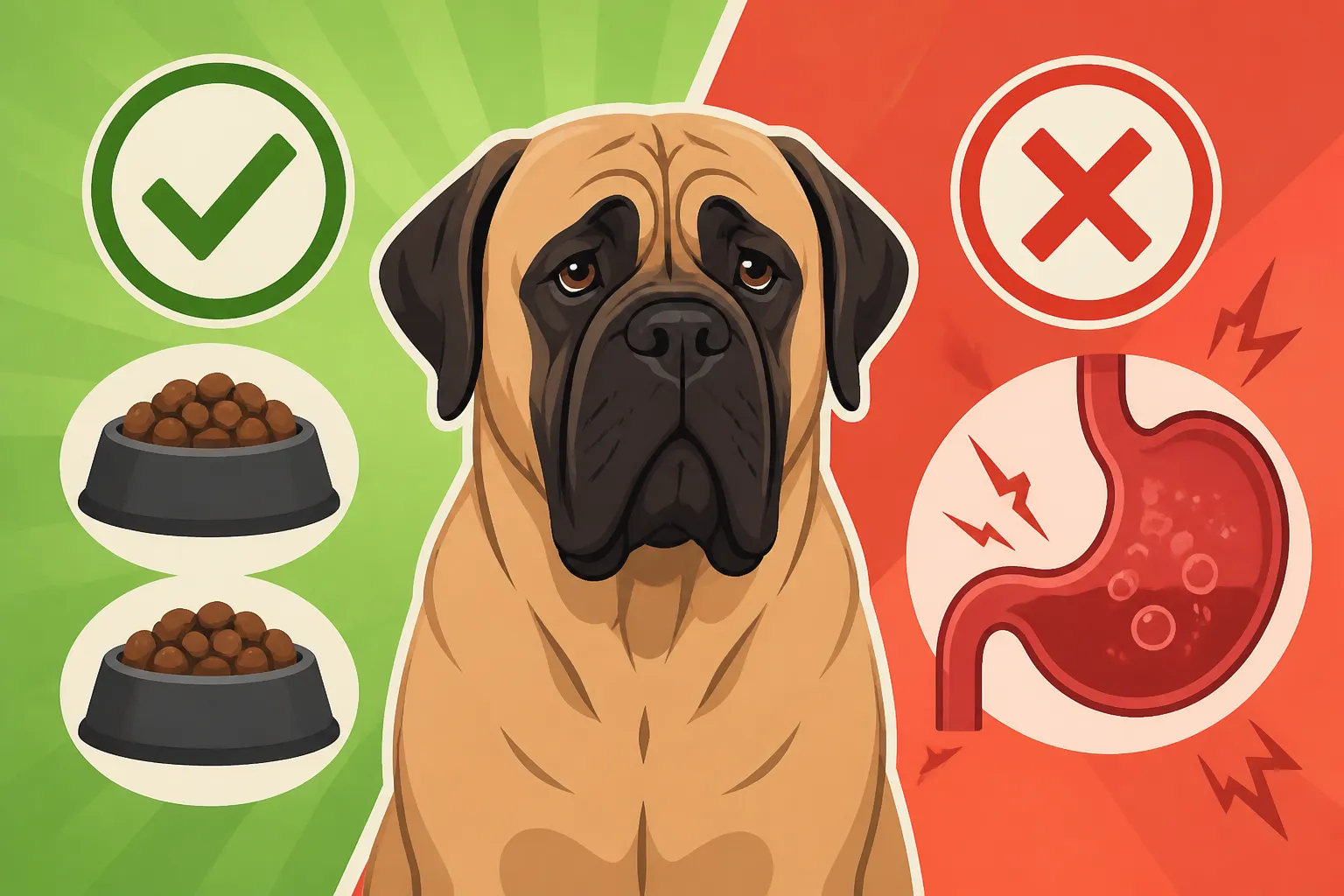
So, back to the central question: is feeding two meals a day truly enough to make a difference? For many Mastiff owners, feeding twice daily is a practical and manageable compromise between the "one giant meal a day" approach and the logistical challenge of feeding three or four times. In comparison to a single large meal, dividing the total daily food into two distinct feedings significantly reduces the volume of food ingested at any one sitting. This alone is a substantial improvement for reducing stomach distension.
While some studies and anecdotal evidence might lean towards three meals being even better, for most busy families, two meals a day is a realistic goal. It's a huge step up from one meal and is widely considered a responsible practice for giant breeds. The real impact, however, isn't just about the number of meals, but also the total daily calorie intake remaining appropriate for the dog's size and activity level. Simply splitting one large, inappropriate meal into two still means the dog is getting the same amount of food, just at different times. The effectiveness of a two-meal-a-day schedule must be viewed in conjunction with what is being fed, how it's being eaten, and what else is happening around meal times. It's a crucial piece of the puzzle, but not the only piece.
Beyond Meal Frequency: A Holistic Approach to Bloat Prevention
While feeding frequency is a significant factor, it's just one component of a comprehensive bloat prevention strategy. Mitigating bloat risk requires a holistic approach, considering everything from your Mastiff's diet composition to their environment and exercise routine.
Food Type, Ingredients, and Eating Habits
The type of food you offer your Mastiff can play a role in bloat risk. While research isn't entirely conclusive, some studies have suggested potential links between certain food characteristics and bloat. For instance, dry kibble with certain fat sources high on the ingredient list might be associated with higher risk. However, it's often more about the individual dog and other concurrent factors. The size and shape of kibble have also been debated; some suggest that smaller kibble might lead to faster eating and more air ingestion, while others argue the opposite. The consensus tends to be that very small kibble might be a slight risk factor for rapid consumption.
More critical than kibble size or shape, perhaps, are eating habits. Many Mastiffs, especially when puppies or in busy households, tend to "bolt" their food, eating incredibly fast. This rapid ingestion leads to excessive air swallowing, which contributes directly to stomach distension. This is where tools like slow feeder bowls become invaluable. These bowls have ridges or obstacles that force your dog to eat around them, significantly slowing down their mealtime. Many Mastiff owners swear by them, and they can be a real game-changer. For more information, you might find What Triggers Bloat in a Mastiff insightful, and Whether a Slow Feeder Reduces a Mastiff's Bloat Risk specifically addresses this valuable tool.
Elevated food bowls were once widely recommended to prevent bloat, with the theory that they made eating more comfortable and reduced air swallowing. However, more recent research, including a large study by Purdue University, actually found an increased risk of bloat in large and giant breeds using elevated bowls. This was a surprising and counter-intuitive finding for many. While the exact reasons aren't fully understood, it's a point of contention among experts. Given the conflicting information, many owners now opt for bowls at ground level, or at least consider this research before investing in an elevated feeder. Check out Whether Bowl Height Changes a Mastiff's Bloat Risk for a deeper dive into this topic.
Managing Activity and Stress Around Meals
This is a critical, yet often overlooked, aspect of bloat prevention. A Mastiff's activity level and emotional state around meal times can significantly impact their bloat risk. Strenuous exercise, excitement, or stress immediately before or after eating can be dangerous. Think about it: a dog that just ran around or played vigorously is panting heavily, likely taking in more air. If they then immediately gulp down a meal, that extra air combined with food in a rapidly moving, deep-chested body can be a recipe for disaster.
The general recommendation is to enforce a calm period of at least one hour before and two hours after meals. This means no vigorous play, no long walks, no high-stress situations. If your Mastiff gets particularly excited about meal times, try to create a calm environment for them. Perhaps feed them in a quiet room away from household chaos. If you have multiple dogs, ensure they are fed separately to prevent competition-related stress and rapid eating. Understanding How Long a Mastiff Must Rest After a Meal is key to integrating this into your daily routine.
The Proactive Measure: Gastropexy
For many giant breed owners, particularly those with Mastiffs, a prophylactic gastropexy is the single most effective measure to prevent the volvulus (twisting) component of GDV. A gastropexy is a surgical procedure where the stomach is permanently attached to the abdominal wall. While it doesn't prevent the stomach from filling with gas (gastric dilatation), it does prevent it from twisting, which is the truly life-threatening part.
This surgery is often performed at the same time as a spay or neuter, especially in intact male Mastiffs, as it's a convenient time since the dog is already under anesthesia. While elective surgery always carries some risk, the benefit of greatly reducing the risk of a twisted stomach often far outweighs the risks for breeds like Mastiffs. It's important to understand that a gastropexy does not completely eliminate bloat; your Mastiff can still experience gastric dilatation, which will still be uncomfortable and require veterinary attention, but the immediate, fatal risk of the stomach twisting is largely removed. This is an important distinction, as discussed in Whether a Gastropexied Mastiff Can Still Bloat. Discussing When a Mastiff's Gastropexy Should Be Done with your vet is a conversation every Mastiff owner should have. Given the significant costs associated with emergency bloat surgery, often thousands of dollars, considering pet insurance like Healthy Paws that covers such procedures, including the prophylactic gastropexy if recommended by your vet, can provide immense peace of mind.
Water Intake and Other Environmental Factors
Beyond food, how and when your Mastiff drinks water can also influence bloat risk. While restricting water is generally not recommended, especially in warm weather, excessively rapid and large gulps of water right after exercise can contribute to stomach distension. Always ensure your Mastiff has access to fresh, clean water, but perhaps monitor them after strenuous activity. Offer small amounts frequently rather than a giant bowl immediately following a run.
Environmental factors like heat and humidity can also indirectly affect bloat risk. Mastiffs are prone to overheating, and excessive panting in an attempt to cool down can lead to increased air intake. Being mindful of the weather, providing ample shade and cooling options, and avoiding intense exercise during the hottest parts of the day can help reduce overall stress and panting, which in turn might slightly lower bloat risk.
Practical Strategies for Mastiff Owners
Taking care of a Mastiff means being proactive and vigilant, especially when it comes to bloat. Integrating these strategies into your daily routine can make a real difference.
Crafting a Bloat-Conscious Feeding Schedule
Implementing a two-meal-a-day schedule for your Mastiff is a simple yet impactful step. Let's say your adult Mastiff requires 6 cups of kibble per day. Instead of one large 6-cup meal, you would offer 3 cups in the morning and 3 cups in the evening. The exact timing isn't as critical as the consistency and the calm period surrounding the meals.
A typical schedule might look like this:
- Morning Meal: Around 7:00 AM – 8:00 AM. Ensure a calm environment, and no vigorous activity until at least 9:30 AM – 10:00 AM.
- Evening Meal: Around 5:00 PM – 6:00 PM. Again, maintain a relaxed atmosphere and avoid intense play or walks until 7:00 PM – 8:00 PM.
The key here is consistency. Dogs thrive on routine, and knowing when their meals are coming can reduce anxiety and frantic eating. For puppies, the feeding schedule is even more critical, as their growth is rapid and requires careful management. Understanding How Much a Mastiff Puppy Should Eat and dividing it appropriately is vital for their long-term health. Remember to use a slow feeder bowl and place it on the floor, not elevated.
Monitoring and Early Intervention
No matter how many preventative measures you take, the risk of bloat is never entirely eliminated in a Mastiff. This is why being intimately familiar with your dog's normal behavior is your best defense. You spend the most time with your Mastiff; you know their quirks, their moods, and their typical eating and resting habits. Any deviation from the norm, especially after a meal, should raise a red flag.
- Observe: Watch your Mastiff closely after meals. Are they restless? Trying to vomit without success? Pacing?
- Palpate: Gently feel your dog's abdomen. Is it distended, hard, or painful to the touch? A normal Mastiff belly should be soft.
- Plan: Have an emergency plan in place. Know the location and phone number of the nearest 24/7 veterinary emergency hospital capable of handling a giant breed. Some clinics might not have equipment or staff experienced with a 200-pound dog. This can be a major hurdle, as elaborated in Why a Mastiff Needs a Referral Hospital for Surgery. Call ahead if you suspect bloat so they can prepare for your arrival.
- Financial Preparedness: Emergency bloat surgery can be incredibly expensive, often ranging from $2,500 to $7,000 or more, depending on your location and the complexity of the case. Having an emergency fund or robust pet insurance like Healthy Paws can make the difference between being able to save your dog and being forced to make heartbreaking decisions based on cost. Consider reading What a Mastiff Owner Should Bank Each Month to help prepare for unexpected emergencies.
When to Consult Your Vet
Regular veterinary check-ups are essential for all Mastiffs, but they become even more critical when discussing breed-specific risks like bloat. Don't hesitate to bring up your concerns with your veterinarian. They can offer personalized advice based on your dog's individual health, weight, and lifestyle.
Your vet can help you:
- Assess Risk Factors: Discuss your Mastiff's specific anatomical features, eating habits, and any history of digestive upset.
- Dietary Guidance: Get recommendations on appropriate food types, calorie intake, and whether any supplements might be beneficial.
- Gastropexy Discussion: Explore whether a prophylactic gastropexy is a suitable option for your Mastiff, considering their age, health, and whether they will be spayed or neutered.
- Emergency Plan Review: Confirm the best local emergency facilities and what steps to take if you suspect bloat.
A good veterinarian will be your partner in navigating the unique health challenges of owning a Mastiff. Utilizing services covered by insurance like Healthy Paws for these consultations and preventive discussions ensures you're making informed decisions without undue financial strain.
| Bloat Prevention Strategy | Why it Helps | Considerations |
|---|---|---|
| Two Meals Daily | Reduces stomach distension from large volumes of food. | Ensure total daily calories are appropriate; consistency is key. |
| Slow Feeder Bowls | Prevents rapid eating, reduces air swallowing. | Choose a durable design that can withstand a Mastiff's enthusiasm. |
| Ground-Level Bowls | Recent studies suggest elevated bowls may increase risk. | Less comfortable for some older dogs; monitor for neck strain. |
| Rest Before/After Meals | Avoids increased air intake from panting, prevents stomach agitation. | Minimum 1 hour before, 2 hours after; crucial for active or excitable dogs. |
| Prophylactic Gastropexy | Surgically prevents stomach twisting (volvulus). | Does not prevent gas accumulation (dilatation); typically done during spay/neuter. |
| Stress Reduction | Calm environment reduces frantic eating and air gulping. | Feed away from other pets or household noise; avoid sudden changes in routine. |
| Consistent Water Access | Prevents excessive drinking from dehydration. | Offer smaller, frequent amounts after exercise rather than one large volume. |
| Monitor Symptoms | Early detection is critical for survival. | Know the signs: restlessness, pacing, unproductive retching, distended abdomen. |
| Emergency Plan | Saves precious time in a life-threatening situation. | Know nearest 24/7 vet with giant breed experience; have transport ready. |
| Proper Nutrition | Balanced diet, avoiding overly fermentable ingredients. | Consult vet on specific kibble choices; avoid low-quality foods. |
Disclaimer
The information provided in this article is for general educational and informational purposes only, and does not constitute veterinary advice. Always consult with a qualified veterinarian for any health concerns or before making any decisions related to your pet's health or treatment.