Which Four Tests the Mastiff Club of America Requires
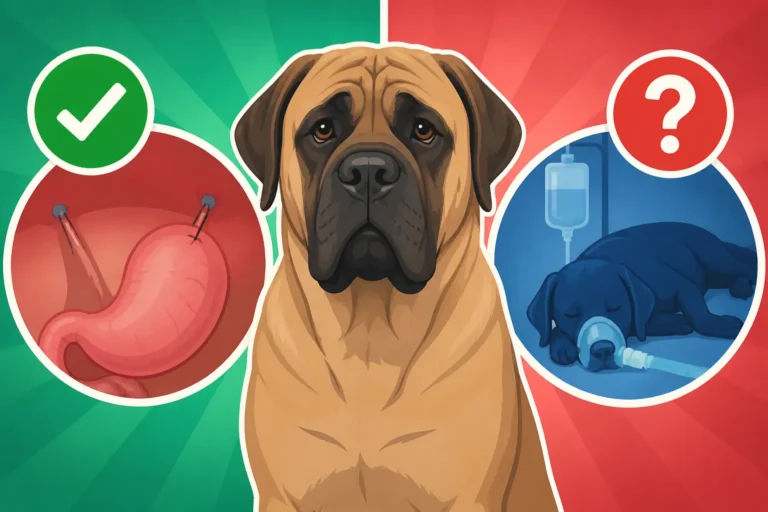
Bringing a magnificent Mastiff into your life is an unparalleled joy, but let's be honest, the journey comes with its own set of anxieties, especially when it comes to their health. It can feel like you need a veterinary degree just to understand all the potential issues and what tests are truly necessary. This guide is here to cut through the confusion and explain the four essential health tests recommended by the Mastiff Club of America (MCOA), helping you understand why they're so vital for these gentle giants.
Understanding the Importance of Health Testing in Mastiffs
It’s no secret that giant breeds, while incredibly lovable, often come with a predisposition to certain health challenges. The sheer size and rapid growth of a Mastiff can put unique stresses on their developing bodies. As responsible owners and potential breeders, understanding these vulnerabilities and how to address them proactively is paramount.
Why Health Tests Matter for Giant Breeds
Imagine a 200-pound dog bounding through your yard – it's a magnificent sight, but it also highlights the immense strain on their joints, heart, and entire skeletal system. Unlike smaller breeds, issues in a Mastiff can quickly become debilitating and incredibly costly to manage, both emotionally and financially. Many of the health conditions prevalent in Mastiffs are inherited, meaning they are passed down through generations. Without proper screening, these conditions can unknowingly be perpetuated, leading to more suffering for future puppies and heartache for their families. For instance, the very foundation of their massive structure, their hips, are notoriously susceptible to issues, which is why understanding Why a Mastiff's Hips Fail Under Its Own Weight is crucial for any owner. Comprehensive health testing is our best tool to identify carriers or affected dogs before they contribute to the problem, helping to ensure healthier lineages.
The Role of the Mastiff Club of America (MCOA)
The Mastiff Club of America, as the official AKC parent club for the breed, takes its role in safeguarding the health and future of Mastiffs very seriously. They're not just about dog shows; a significant part of their mission is to promote responsible breeding practices through education and recommended health screenings. The MCOA works closely with veterinary specialists and organizations like the Orthopedic Foundation for Animals (OFA) to establish a set of core health tests that every Mastiff used for breeding should undergo. These aren't arbitrary hoops to jump through; they represent the most critical areas of concern for the breed, identified through years of research and shared experience. By following the MCOA's recommendations, breeders demonstrate a commitment to improving the breed's health, and prospective puppy buyers can have greater confidence in the health of their chosen companion.
The First Pillar: Hip Dysplasia Evaluation (OFA Hips)
When you look at a Mastiff, you see power and majesty. But beneath that impressive exterior, their joints are under immense pressure. Hip dysplasia is arguably one of the most well-known and feared orthopedic issues in large breeds, and Mastiffs are no exception.
What is Hip Dysplasia and Why it Affects Mastiffs
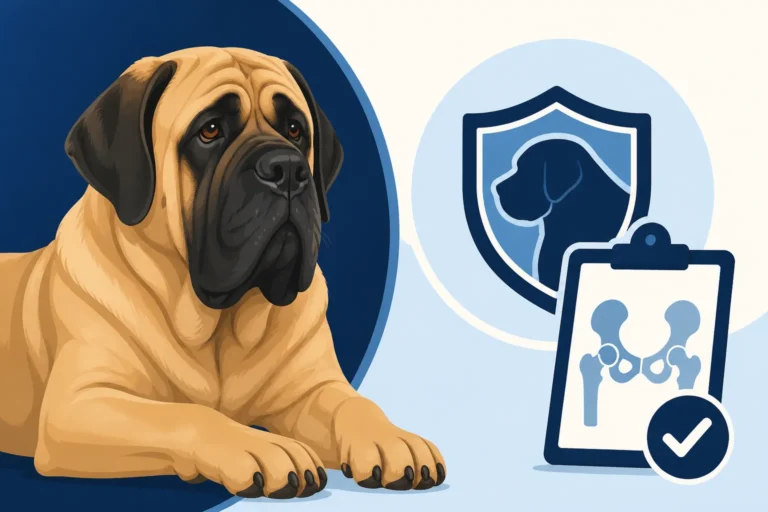
Hip dysplasia is a condition where the hip joint doesn't form correctly. Instead of the femur (thigh bone) fitting snugly into the pelvis's acetabulum (hip socket), it sits loosely, or the socket itself is too shallow. Over time, this poor fit causes grinding, leading to pain, arthritis, and a significant reduction in mobility. For a Mastiff, carrying hundreds of pounds on misaligned hips can be agonizing. The exact cause is complex, involving both genetics and environmental factors like rapid growth, diet, and excessive exercise in puppyhood. Because of their sheer size and weight, Mastiffs are particularly susceptible, as the forces acting on their hip joints are much greater than in smaller dogs. A dysplastic Mastiff may show signs of lameness, reluctance to exercise, difficulty getting up, or a swaying gait.
The OFA Certification Process for Hips
The Orthopedic Foundation for Animals (OFA) provides a standardized method for evaluating canine hips. For Mastiffs, this involves taking specific X-rays of the hips once the dog is at least 24 months old. Why 24 months? Because the hip joints need to be fully developed to get an accurate assessment. Before that age, a puppy's hips are still growing and changing, making early evaluations less reliable. These X-rays are then submitted to the OFA, where three independent veterinary radiologists review them. They look for signs of looseness, abnormal bone shape, and degenerative changes, assigning a grade from Excellent, Good, Fair (all considered passing), to Borderline, Mild, Moderate, or Severe (all considered dysplastic). This stringent process helps ensure that only Mastiffs with structurally sound hips are used in breeding programs. It's a key part of ensuring you’re getting a puppy from a health-conscious lineage. Many insurance providers, like Healthy Paws, look favorably on proactive health testing, sometimes even impacting eligibility or waiting periods for certain conditions down the line. You can learn more about The Age a Mastiff Is Certified by OFA to understand the timeline better.
Interpreting OFA Hip Scores
Understanding an OFA hip score is straightforward once you know the categories. An "Excellent" rating means the hips are nearly perfect, with deep sockets and a tight fit. "Good" and "Fair" are still considered within healthy limits for breeding, indicating minor variations but still structurally sound joints. If a dog receives a "Borderline" rating, it means there are some mild changes that make a definitive diagnosis difficult, and the OFA often recommends re-X-raying in 6-12 months. Any dog receiving a "Mild," "Moderate," or "Severe" rating is considered dysplastic and should absolutely not be bred. Responsible breeders will always be transparent about these scores, providing proof of certification for both parents. It's not enough for them to just say the parents are "cleared"; you should ask to see the actual OFA certificates with the dog's registered name and number.
The Second Pillar: Elbow Dysplasia Evaluation (OFA Elbows)
Just like hips, elbows in giant breeds are prone to developmental abnormalities, and elbow dysplasia is a significant concern for Mastiffs, often leading to lameness and chronic pain if left unaddressed.
Understanding Elbow Dysplasia in Mastiffs
Elbow dysplasia is a general term encompassing several developmental abnormalities of the elbow joint, including fragmented coronoid process (FCP), ununited anconeal process (UAP), osteochondrosis (OCD), and elbow incongruity. These conditions all result in an improperly formed or aligned elbow joint, leading to cartilage damage, inflammation, and eventually debilitating arthritis. For a large, heavy dog like a Mastiff, healthy elbows are critical for comfortable movement. The pain and stiffness associated with elbow dysplasia can severely impact their quality of life, making simple actions like standing up, walking, or playing difficult. Studies show that Elbow Dysplasia Affects One Mastiff in Seven, highlighting just how prevalent this issue is within the breed, and underscoring the necessity of testing.
The OFA Certification Process for Elbows
Similar to hip evaluations, the OFA provides a standardized screening protocol for elbow dysplasia. This involves specific X-rays of both elbows, also taken once the Mastiff is 24 months of age or older. Again, waiting until skeletal maturity ensures the most accurate assessment of the joint's final structure. These X-rays are submitted to the OFA and reviewed by three independent veterinary radiologists. Elbows are graded differently than hips, on a scale of 0 to 3. A grade of 0 means no evidence of elbow dysplasia, which is the passing grade required for breeding. Grades 1, 2, and 3 indicate mild, moderate, and severe elbow dysplasia, respectively. Any dog with a grade of 1 or higher should not be used in a breeding program. This rigorous screening helps to identify affected individuals and prevent the passing of genes that contribute to this painful condition.
The Impact of Elbow Dysplasia on a Mastiff's Life
A Mastiff with elbow dysplasia might show subtle signs at first, like a slight limp after exercise or reluctance to jump into a car. As the condition progresses, the signs become more obvious: persistent lameness, pain when touching the elbow, swelling, and a significant decrease in activity. Managing elbow dysplasia can involve a lifelong regimen of pain medication, anti-inflammatories, joint supplements, and sometimes even surgery. These treatments can be incredibly expensive and don't always fully resolve the issue, often just managing the symptoms. The goal of OFA elbow screening is to reduce the incidence of this painful and costly condition, improving the overall health and longevity of the breed. It ensures a better quality of life for your Mastiff and potentially saves you from significant veterinary bills down the road – a factor that pet insurance like Healthy Paws can help with if issues arise despite careful breeding.
The Third Pillar: Cardiac Health Screening (OFA/ACVIM Heart)
While joint issues are often top of mind for giant breed owners, heart health is equally, if not more, critical. A Mastiff's enormous body depends on a powerful, healthy heart to function correctly.
Why Heart Health is Critical for Mastiffs
Mastiffs, like many large and giant breeds, can be prone to certain inherited heart conditions that can significantly shorten their lives or cause sudden death. The most common serious cardiac concern in Mastiffs is Dilated Cardiomyopathy (DCM), a disease where the heart muscle becomes thin and weak, leading to an enlarged heart that struggles to pump blood effectively. Other conditions like subvalvular aortic stenosis (SAS) can also affect the breed. Because heart disease can progress silently for years, a seemingly healthy Mastiff could be living with a ticking time bomb without proper screening. For any family, losing a beloved Mastiff suddenly to heart failure is devastating, which is why understanding Whether a Mastiff Gets Dilated Cardiomyopathy is such an important part of breed knowledge.
Types of Cardiac Screenings and What They Detect
For breeding Mastiffs, the MCOA recommends a comprehensive cardiac evaluation by a board-certified veterinary cardiologist (a Diplomate of the American College of Veterinary Internal Medicine – Cardiology, or ACVIM-Cardiology). This isn't just listening with a stethoscope, though that's a start. The gold standard involves an echocardiogram (an ultrasound of the heart), which allows the cardiologist to visualize the heart's structure, measure chamber sizes, assess valve function, and detect any abnormalities in blood flow or muscle contractility. This advanced imaging can identify conditions like DCM or SAS before clinical signs appear. Some cardiologists may also recommend a Holter monitor, a portable ECG device worn by the dog for 24 hours, to detect intermittent arrhythmias that might not be present during a brief office visit.
The Certification for Mastiff Hearts
Once the cardiac evaluation is completed by an ACVIM cardiologist, the results are submitted to the OFA. The OFA maintains a public database of these cardiac clearances, certifying dogs that are free from significant heart disease. For Mastiffs, an "Advanced Cardiac Exam" by an ACVIM-Cardiology diplomate is the preferred method for certification. This ensures that the evaluation is performed by a specialist with the expertise to detect subtle abnormalities that might be missed by a general practitioner. A certified clear heart on both parents significantly reduces the risk of passing on inherited heart disease to puppies. When considering a puppy, ask to see the OFA Cardiac certificates, not just a note from a general vet. This is a critical step in responsible breeding, and one that any pet insurance provider, like Healthy Paws, would highlight as a preventative measure. It's also worth knowing What a Mastiff Cardiac Exam Costs to appreciate the investment breeders make.
The Fourth Pillar: Eye Health Certification (OFA/CERF Eye)
Good vision is essential for a Mastiff's quality of life, allowing them to navigate their world confidently and interact with their family. Inherited eye conditions can significantly impair their sight, sometimes leading to blindness.
Common Eye Conditions in Mastiffs
Mastiffs can be predisposed to several eye conditions, some of which are inherited. Progressive Retinal Atrophy (PRA) is a degenerative disease that affects the retina, eventually leading to blindness. Another concern is Canine Multifocal Retinopathy (CMR1), which causes retinal folds or lesions, potentially impacting vision, though often less severely than PRA. Other structural issues like entropion (inward-rolling eyelids) or ectropion (outward-rolling eyelids) are also common in breeds with heavy facial folds and can cause chronic irritation, infections, or corneal damage if not corrected. It’s important to understand What Canine Multifocal Retinopathy Does to a Mastiff to appreciate the scope of potential issues.
The Ophthalmic Exam Process
To screen for these conditions, breeding Mastiffs undergo a thorough eye examination by a board-certified veterinary ophthalmologist (a Diplomate of the American College of Veterinary Ophthalmologists, or ACVO). This exam, often referred to as a CERF (Canine Eye Registration Foundation, now part of OFA) exam, involves dilating the dog's pupils to allow the ophthalmologist to examine the entire eye, including the lens, retina, and optic nerve. They look for any signs of congenital or inherited eye diseases, documenting their findings on a standardized form. This comprehensive annual examination is crucial because some conditions might only manifest or progress with age, making regular checks important for ongoing monitoring.
Ensuring Clear Vision for Breeding Stock
After the ACVO exam, the results are submitted to the OFA. Dogs found to be free of significant, heritable eye diseases are issued an OFA Eye Certification number. This certification is usually valid for one year, meaning responsible breeders should have their breeding Mastiffs re-examined annually to ensure their eyes remain clear. This annual screening helps prevent the unwitting transmission of eye diseases to future generations, giving puppy buyers peace of mind that their Mastiff puppy has the best chance at a lifetime of clear vision. Always ask for current eye certifications for both parents before committing to a puppy.
Beyond the Core Four: Additional Recommended Tests and Breeder Responsibility
While the MCOA's four core tests are foundational, the landscape of canine health testing is always evolving. Responsible breeders often go above and beyond these requirements to ensure they are producing the healthiest puppies possible.
Other Crucial DNA Tests for Mastiffs
Thanks to advances in genetic science, several DNA tests are now available that can screen for specific inherited diseases in Mastiffs, even if the parents show no symptoms themselves (meaning they could be carriers). For instance, DNA tests for Progressive Retinal Atrophy (PRA) and Cystinuria Type III are highly recommended by the MCOA. PRA can lead to blindness, and a DNA test can identify if a dog is clear, a carrier, or affected, allowing breeders to make informed decisions to avoid producing affected puppies. Cystinuria Type III is a kidney disorder that can lead to painful bladder stones, primarily in intact male Mastiffs. A DNA test can identify carriers or affected dogs for this condition as well. These DNA tests are particularly valuable because they can be performed at any age, even on young puppies, and provide definitive results. You can find more details on Which DNA Tests a Mastiff Breeder Should Add to their panel.
The Importance of a Health Guarantee and Transparency
A responsible Mastiff breeder won't just tell you about their health testing; they'll show you the certifications and be completely transparent about any health issues in their lines. They will openly discuss The CHIC Four Plus the DNA Stack Behind a Mastiff's Price, justifying the cost by the comprehensive health investment. Furthermore, they will offer a health guarantee, typically covering serious genetic conditions for a specified period. This guarantee isn't just a piece of paper; it's a testament to the breeder's confidence in their breeding program and their commitment to the puppies they produce. It should outline what happens if a genetic health issue arises within the guarantee period, whether it's a refund, a replacement puppy, or assistance with veterinary costs. This transparency and commitment are hallmarks of an ethical breeder dedicated to the welfare of their dogs and the families who adopt them.
How to Find a Responsible Mastiff Breeder
Finding a responsible Mastiff breeder can feel like a daunting task, but knowing what questions to ask and what to look for makes it easier. Start by researching breeders affiliated with the MCOA or local Mastiff clubs. These breeders are generally more likely to adhere to recommended health testing protocols. When you contact a breeder, ask specifically about their health testing practices. Request to see OFA certificates for hips, elbows, heart, and eyes, as well as DNA test results for PRA and Cystinuria for both parents of any litter. A good breeder will welcome these questions and be eager to share documentation. They should also be knowledgeable about the breed's health challenges and able to discuss how they screen for and address these concerns in their breeding program. Beyond tests, observe the conditions the puppies and adult dogs live in, ask about their socialization practices, and inquire about their vetting process for prospective buyers. A truly responsible breeder is investing significant time and resources, much like how a good pet insurance plan, such as Healthy Paws, invests in your pet's future health.
Summary of MCOA Required Health Tests
To help visualize these crucial tests, here's a quick summary of the four primary certifications mandated by the Mastiff Club of America for breeding stock, which contribute to a Mastiff receiving a CHIC (Canine Health Information Center) number.
| Test Category | Condition Screened For | Certification Body | Minimum Age for Evaluation | Passing Grade for Breeding |
|---|---|---|---|---|
| Hips | Hip Dysplasia | OFA | 24 Months | Excellent, Good, or Fair |
| Elbows | Elbow Dysplasia | OFA | 24 Months | Grade 0 (Normal) |
| Heart | Cardiac Disease | OFA/ACVIM | 12 Months (specialist) | Normal (No evidence of disease) |
| Eyes | Inherited Eye Disease | OFA/ACVO | 12 Months (annual re-exam) | Normal (No evidence of disease) |
This table serves as a quick reference for the foundational health screenings. Remember, DNA tests for conditions like PRA and Cystinuria Type III are highly recommended additions to this list, showing a breeder's commitment to going the extra mile for their Mastiffs.
Disclaimer
The information provided in this guide is intended for general informational purposes only and does not constitute veterinary advice. Always consult with a qualified veterinarian or veterinary specialist for any health concerns or before making any decisions about your Mastiff's care or breeding. Health testing recommendations can evolve, so always refer to the most current guidelines from the Mastiff Club of America and your trusted veterinary professionals.