How the Modern Mastiff Differs From the Prewar Type
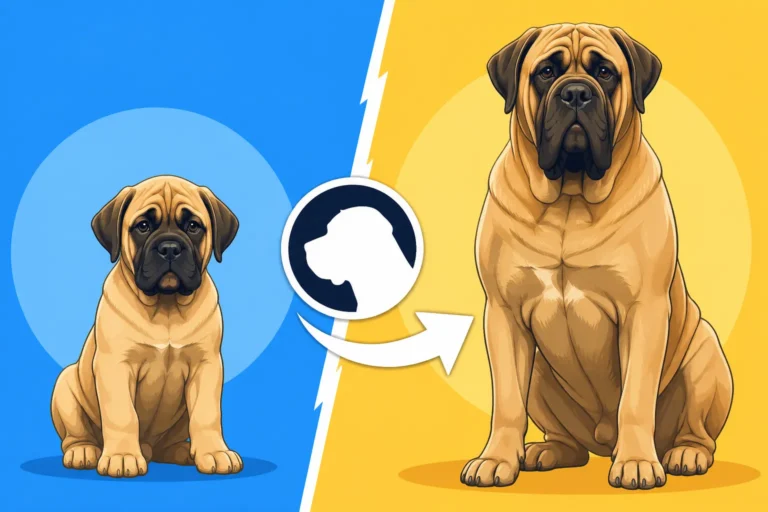
A modern Mastiff may look familiar beside an old photograph, but the breed has changed in build, breeding practices, daily life and the work people expect it to do. Comparing today’s dogs with prewar Mastiffs is not as simple as measuring a head or weighing a body: the earlier population was never perfectly uniform, and the breed nearly disappeared during the Second World War.
What the prewar Mastiff was like
A breed shaped by different lives
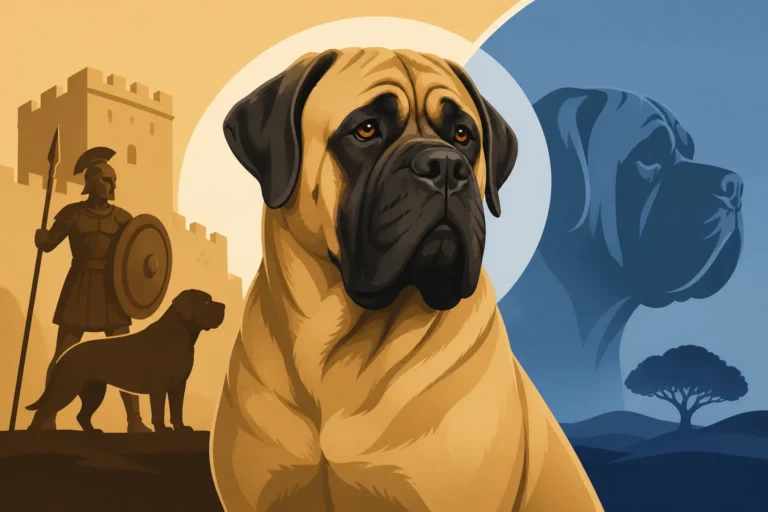
Before the Second World War, Mastiffs were kept in a world that looked very different from the one most dogs live in now. Some guarded property, farmsteads or estates; others were companions or show dogs. Their size and imposing presence made them useful as deterrents, but it would be misleading to picture every prewar Mastiff as a working guardian. Individual dogs and households varied, just as they do today.
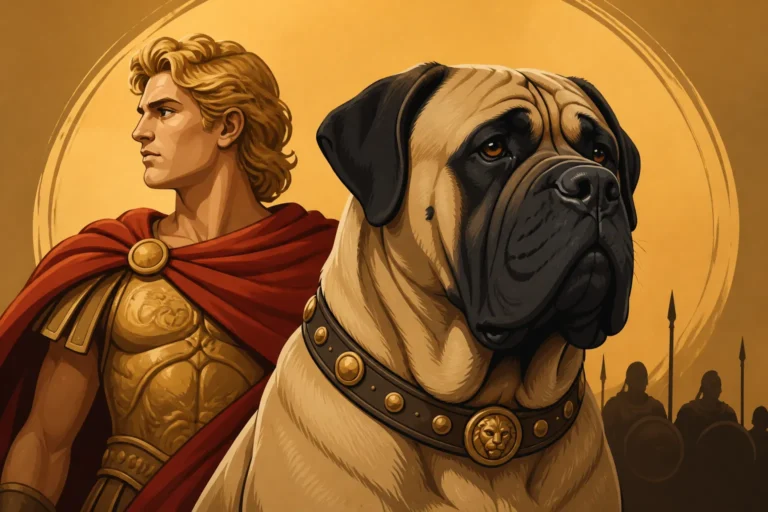
The breed’s history reaches back well beyond the prewar period. Its role shifted over centuries, from associations with guarding and combat to a broader place as a companion and show breed. For more background on those earlier roles, see Whether Mastiffs Guarded English Estates and How the Mastiff Was Bred Away From Fighting. By the early twentieth century, the Mastiff was already a recognized breed with a developing show tradition, rather than a single, standardized type of estate dog.
Even within a particular era, dogs did not all look alike. Breeding aims, local preferences, available pedigrees and the individual choices of breeders shaped appearance. Photographs can give a useful impression of an era, but they are a narrow sample: a posed show dog is not necessarily representative of every Mastiff then living.
Why wartime losses changed the breed
The Second World War brought severe pressure to dog breeding in Britain. Food shortages and difficult living conditions made it harder to keep very large dogs, and the Mastiff population fell drastically. This was not simply a matter of one breeding line becoming less fashionable. When a breed has few surviving dogs, the available pool of future parents becomes small too.
That history matters when comparing prewar and modern Mastiffs. After the war, breeders faced the task of rebuilding a population from a limited number of survivors and available dogs. Accounts of that period often emphasize the role of American and Canadian Mastiffs in helping restore the breed in Britain. The rebuilding story is covered further in Fewer Than Twenty Mastiffs Survived the Second World War and How American and Canadian Dogs Rebuilt the Mastiff.
The result was not a neat return to a frozen prewar ideal. A breed cannot be restored like a piece of furniture: breeders have to work with the dogs that remain, the pedigrees available and the goals they are trying to preserve. Rebuilding inevitably affects which lines contribute to later generations, and it can alter how common certain traits become.
How the modern Mastiff’s appearance compares
Broad similarities, not a wholly different dog
The modern English Mastiff remains a giant, heavy-bodied dog with a broad head, short coat and characteristic dark mask. Those familiar features connect present-day dogs with earlier examples. The breed has not become an entirely different kind of dog simply because breeding and presentation have changed.
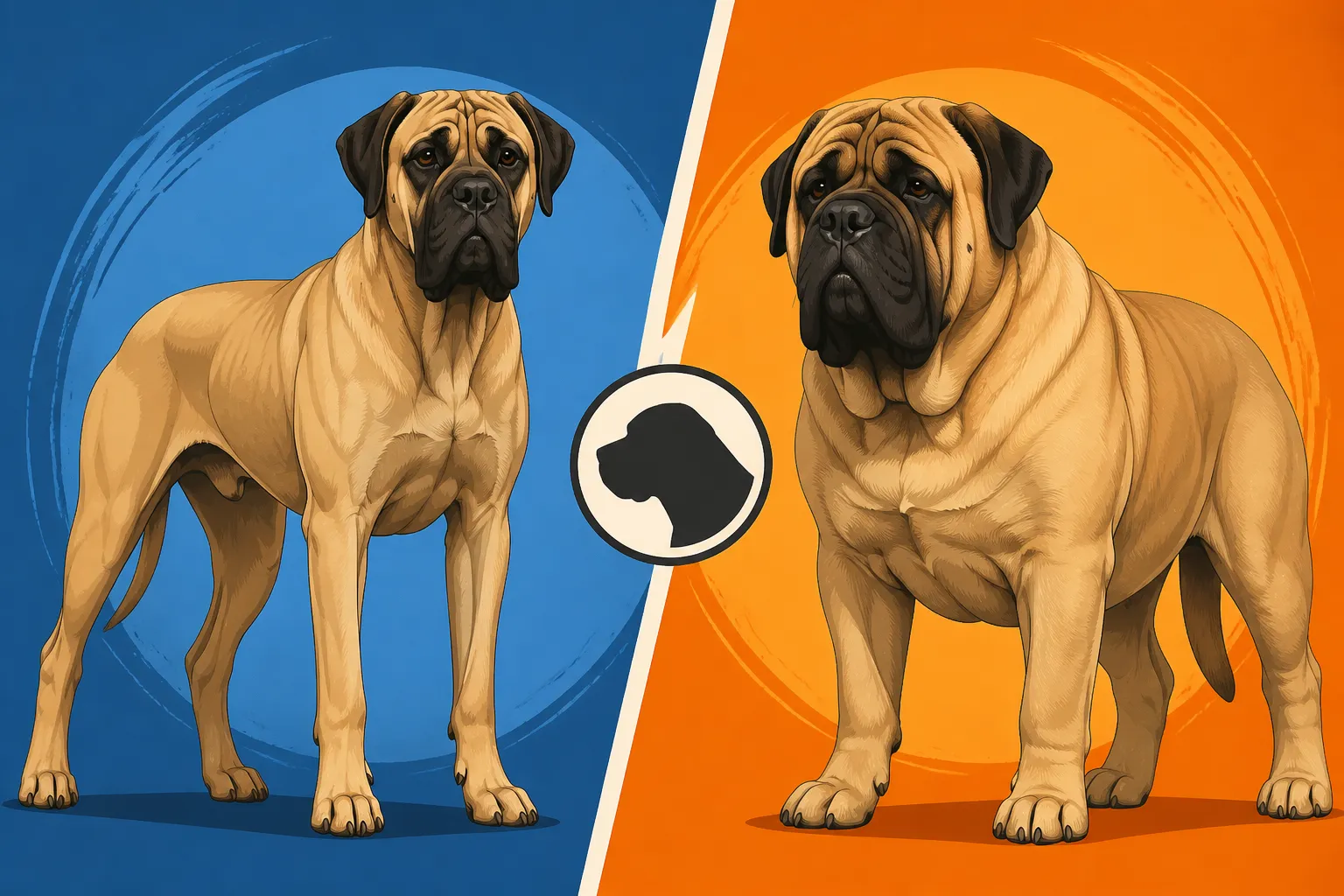
The more useful comparison is about degree and emphasis. A modern show ring places strong attention on a written breed standard, and breeders may select for particular proportions, head features, movement and overall appearance. Earlier dogs were also bred and shown, but the available photographs, records and changing preferences make a direct, one-to-one comparison difficult. It is safer to talk about tendencies across periods than to claim every modern dog has a particular feature that every prewar dog lacked.
Photographs can also mislead. Camera angle, posture, age, condition and the way a dog is presented all affect how large or substantial it appears. A side-by-side comparison is most meaningful when the images show dogs in similar poses and provide reliable information about their age and size. For context on how varied weight can be among Mastiffs, see What a Mastiff Actually Weighs.
Breeding ideals and the question of size
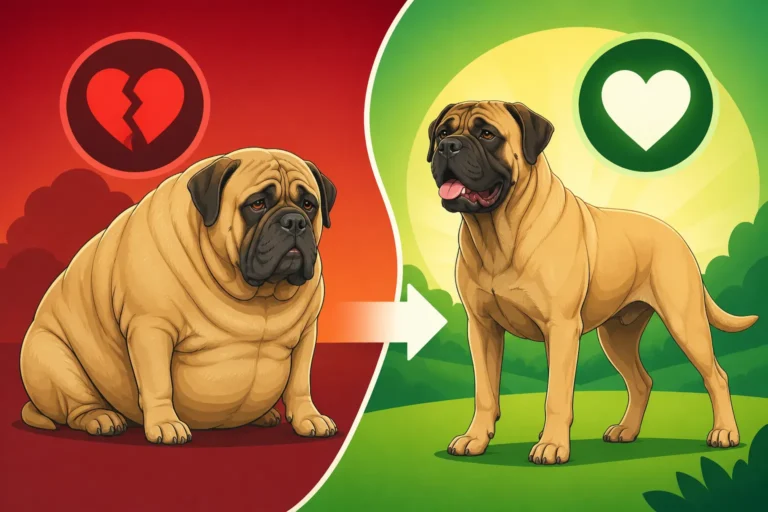
Modern Mastiffs are often associated with exceptional mass, but being as heavy as possible is not the same thing as being a good example of the breed. Health, sound movement and a body that can function comfortably matter alongside appearance. The focus on sheer size can obscure how much individual dogs vary and how important a lean, manageable condition is to their wellbeing.
It is also difficult to say that the modern Mastiff is simply “bigger” than the prewar type without specifying what is being compared. Reliable measurements from different periods may be incomplete or inconsistent, while a few famous dogs can distort the impression of an entire population. The record-setting dog Zorba, for example, is not a sensible stand-in for the typical Mastiff of any era. Zorba the Mastiff Weighed Three Hundred and Forty Three Pounds offers a closer look at why exceptional records should not be treated as breed averages.
The breed standard is another piece of the puzzle. It describes the desired type, but it does not mean that every dog meets every point equally, nor does it prove that the average household Mastiff has changed in a single, measurable direction. When comparing generations, distinguish between the written ideal, the dogs shown in competition and the broader population kept as companions.
How breeding and health management changed
A smaller population leaves a lasting mark
A sharp population decline can leave a genetic legacy. When fewer dogs contribute to later generations, the breed’s gene pool may be narrower than it would have been if a larger, more diverse population had survived. That does not mean every modern Mastiff is unhealthy, or that every prewar dog was healthier. It means that ancestry and breeding choices deserve attention when discussing the breed’s development.
Modern breeders have access to health screening and pedigree information that earlier generations did not have in the same form. That can help people make more informed choices, though no test can guarantee a puppy will never develop a health problem. Health programs also change over time as knowledge grows. To understand the present-day screening conversation, see The Four CHIC Tests a Mastiff Breeder Must Clear and The CHIC Tests Both Mastiff Parents Must Clear.
For prospective owners, the practical lesson is to ask about the health information available for both parents and to understand what the results do and do not tell you. A breeder who can discuss health history clearly is offering more useful context than one who relies only on claims about size, appearance or pedigree prestige. The historical story of reconstruction makes those questions especially relevant: a celebrated lineage and a healthy individual dog are not identical things.
Veterinary care and the modern owner’s role
Modern Mastiffs benefit from veterinary diagnostics, anesthesia planning, preventive care and treatment options that were less available in the prewar era. That can make a significant difference when a dog is ill or injured, but it does not remove the challenges of caring for a giant breed. Their size affects handling, transport, equipment and the logistics of a clinic visit. Owners may need to plan ahead for a practice that can safely accommodate a very large dog.
Everyday care has changed too. Modern owners can choose from commercial diets, feeding equipment, grooming supplies and mobility aids that were not part of ordinary dog ownership in the same way generations ago. A household might compare large-breed food options or source a suitable mat or cleaning supplies through retailers such as Chewy, while still asking a veterinarian for advice about the individual dog’s nutrition and health needs. Access to products is not the same as a tailored care plan.
The day-to-day household has changed alongside the dog. Many modern Mastiffs live primarily as indoor companions, sharing family spaces and adapting to routines built around walks, rest, training and veterinary visits. That makes practical matters—traction on slick floors, safe steps and enough room for a resting dog—part of responsible ownership. A modern owner might browse Chewy for basic care supplies, but should choose items based on the dog’s real needs rather than assuming every giant-breed product will fit every Mastiff.
What the comparison means for owners today
Temperament and purpose are not fixed by an old photograph
A Mastiff’s appearance does not tell the whole story of its temperament. Historical jobs such as guarding property may be part of the breed’s background, but a modern dog’s behavior is influenced by genetics, socialization, training, environment and individual experience. It is not safe to assume that a Mastiff will behave like a historical estate guardian, or that a modern companion has no guarding instincts at all.
Many modern owners want a steady family companion rather than a dog trained for a specific working role. That changes what responsible preparation looks like. Early, positive socialization and thoughtful training help a large dog learn to move calmly through ordinary situations, from visitors at the door to veterinary handling. The breed’s size makes even friendly, untrained behavior consequential, so good manners matter well before a puppy reaches adult weight. The Household a Mastiff Was Built For provides additional context on matching the breed to a home.
Read the history without turning it into a simple before-and-after story
The modern Mastiff is connected to its prewar predecessors, but it is not a perfect replica of them. War, population decline, postwar reconstruction, changing breeding priorities, veterinary advances and the shift toward companion-dog life all helped shape the breed people know today. Some physical traits remain instantly recognizable, while the population and the conditions under which dogs are bred and cared for have changed substantially.
If you are comparing old photographs with a dog in your home, avoid judging the difference by one feature alone. Ask what the image can actually show: Is the dog posed? Is its age known? Is there reliable information about its weight or pedigree? Does it represent a show line, a working household dog or simply one individual? Those questions keep the comparison grounded and prevent a dramatic photograph from standing in for an entire generation.
For a prospective owner, the most useful takeaway is not that one era produced a “better” Mastiff. It is that the breed’s history explains why responsible breeding, health awareness and realistic care planning matter. Modern knowledge gives owners more ways to prepare, but it also asks them to look beyond the imposing outline and consider the individual dog’s comfort, movement, health and daily needs. Practical supplies can be found through retailers such as Chewy, but the right choices begin with the dog and, when health is involved, a veterinarian’s guidance.
Disclaimer
This article is for general informational purposes only and does not constitute professional advice. Laws, prices and regulations vary by location and change over time. Consult a qualified professional for guidance on your specific situation.