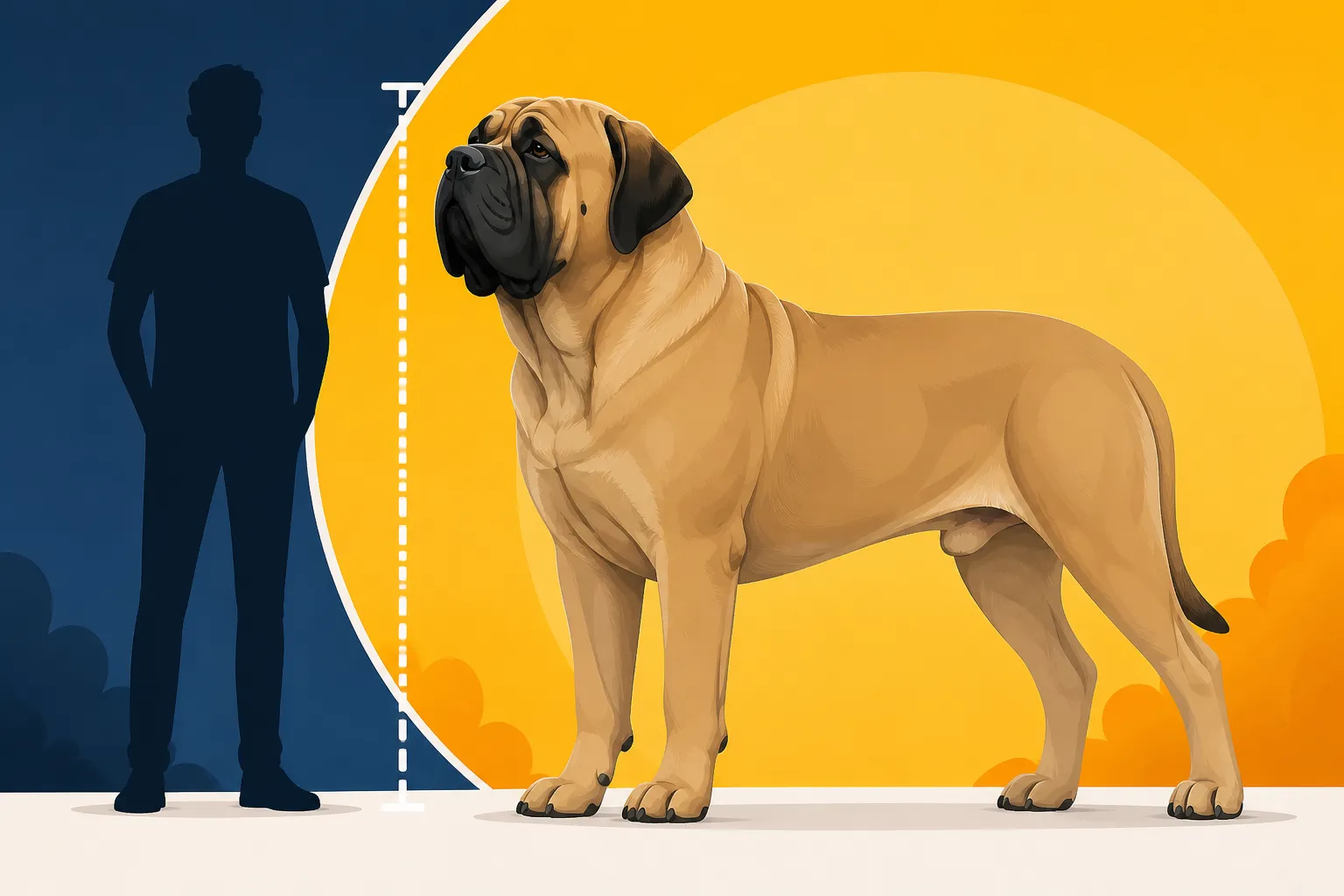
How Tall a Mastiff Stands
One of the first things people wonder when they consider bringing a Mastiff into their lives is just how big they really get. You see pictures, you read numbers, but until you're standing next to a fully grown Mastiff, it's hard to truly grasp the sheer scale of these gentle giants. This guide is here to demystify the numbers and give you a realistic picture of what Mastiff height actually looks like, from puppyhood to maturity, and how it impacts daily life.
The Official Standard for Mastiff Height
When we talk about how tall a Mastiff stands, we're usually referring to their height at the shoulder, also known as the "withers." This is the highest point of their back, between the shoulder blades, and it's the measurement used in breed standards worldwide. The numbers might seem conservative compared to their overall mass, but they represent a minimum standard for a dog that is built for power and substance.
Decoding the Breed Standard's Minimums
The breed standard for the Mastiff, as outlined by organizations like the American Kennel Club (AKC), specifies a minimum height rather than a maximum. For a male Mastiff, the minimum height at the withers is typically 30 inches, and for females, it's 27.5 inches. These are just starting points, though! Many Mastiffs, especially males, will comfortably exceed these minimums, often reaching 32, 33, or even 34 inches. The standard emphasizes that "the greater the height and weight, the better, provided that type, symmetry, temperament and soundness are retained." This means a truly impressive Mastiff isn't just tall, but also well-proportioned and healthy for its size.
It’s important to remember that these are minimums. A male Mastiff that just scrapes by at 30 inches is still perfectly within standard, but you’ll find many breeders aiming for dogs with a bit more impressive stature, as long as it doesn't compromise their health or soundness. The goal is a dog that looks majestic and powerful, not gangly or oversized for the sake of it. The overall impression should be one of "massive, symmetrical, powerful and majestic," where height contributes to that overall grandeur rather than standing out as a singular feature.
Why Weight Often Exceeds the Height Ideal
While height is a key component, it's often the incredible weight that truly defines the Mastiff's colossal presence. A 30-inch male Mastiff, for example, might weigh anywhere from 160 to 230 pounds or more. This isn't just about fat; it's about dense bone, muscle, and broad proportions. The breed standard specifically calls for "a massive, heavy, powerful, and large-boned dog." This emphasis on mass means that even if two Mastiffs stand at the same height, one might appear significantly more imposing due to its greater bone density and overall bulk.
Sometimes, new owners are surprised when their Mastiff puppy matures into a dog that isn't as "tall" as some of the more extreme examples they might see online, but still carries immense weight. This is perfectly normal and often desirable for soundness. An overly tall dog that lacks corresponding bone and muscle mass can be prone to joint issues. The ideal Mastiff is a harmonious balance of height, length, and width, creating that undeniably grand and solid presence. You want a dog that looks like it could have stood bravely beside a knight at Agincourt, not one that looks like it might blow over in a strong wind. The Mastiff That Stood Over Sir Piers Legh at Agincourt can give you a historical sense of their formidable presence.
Understanding Mastiff Growth Stages
Raising a Mastiff puppy is a journey of watching a creature double, then triple, and then quadruple its size in what feels like mere months. It’s fascinating, but it also comes with unique challenges, especially regarding their skeletal development. Understanding these growth stages is crucial for ensuring your Mastiff grows into a healthy adult with the impressive stature the breed is known for.
Puppyhood: Setting the Foundation for Stature
From the moment they arrive home as tiny, clumsy fluffballs, Mastiff puppies are on an accelerated growth trajectory. They don't just grow fast; they grow big. A Mastiff puppy can gain several pounds a week, and sometimes even a pound a day! It's a marvel to witness, but this rapid growth period is also incredibly delicate for their developing bones and joints. Unlike smaller breeds, whose growth plates close relatively quickly, a Mastiff's growth plates remain open for a longer time, making them vulnerable to injury from excessive exercise or improper nutrition.
For this reason, controlled growth is paramount. You really shouldn't be pushing for maximum size early on. Instead, the focus should be on steady, even development to avoid putting undue stress on their forming skeletal structure. This means no forced runs, no endless games of fetch, and certainly no jumping off furniture. You want to avoid Why a Mastiff Puppy Must Not Be Exercised Hard. Their bones are literally soft and prone to damage, and damage during this critical phase can impact their adult height and overall soundness.
Reaching Full Height: When the Growth Plates Close
Most Mastiffs will reach their full height at a younger age than they reach their full weight and bulk. Generally, a Mastiff will hit its full height somewhere between 18 and 24 months, though some can continue to add a tiny bit more until they are closer to two years old. This is when their growth plates finally close, signaling the end of vertical growth. However, don't be fooled into thinking they're "done" growing then! While they won't get any taller, they will continue to broaden and fill out, adding significant muscle and density until they are closer to three or even four years old.
This means you might have a two-year-old Mastiff who is at his adult height but looks rather gangly and lean. Give him time. He'll slowly transform from a lanky teenager into a truly massive and substantial adult. It's a bit like watching a skyscraper being built; the frame goes up first, and then the interior and exterior are slowly added to create the finished product. This later filling-out phase is why it's so important to maintain a healthy weight and proper nutrition throughout their early adult years, not just puppyhood. Understanding The Age a Mastiff Stops Growing is key to managing expectations.
The Impact of Genetics and Nutrition on Stature
While the breed standard sets the ideal, the actual height your Mastiff achieves is a complex interplay of the genes inherited from its parents and the care it receives during its crucial developmental stages. Responsible breeding and appropriate nutrition are not just about meeting a height requirement; they're about ensuring a healthy, sound dog.
The Role of Sound Breeding Practices
A Mastiff's adult height is largely predetermined by its genetics. Good breeders select for healthy, well-structured parents who meet or exceed the breed standard in terms of height, weight, and overall type. They aim for dogs that are genetically predisposed to grow to a substantial, but not extreme, size, while prioritizing health clearances. This is why it's so important to research breeders and ask about the lineage of their dogs. You want to see the parents, if possible, and ask about their height and weight, and that of previous litters. A breeder who focuses purely on "biggest dog ever" might be overlooking crucial health aspects for a Mastiff.
The parents' stature gives you a good indication of what to expect, but it's never a guarantee. Even from two well-sized parents, you might get a pup that falls on the smaller or larger end of the spectrum. Reputable breeders understand the nuances of How Much a Male Mastiff Weighs and How Much a Female Mastiff Weighs and can usually offer insights into the typical size of their lines. They aren't trying to produce freakishly large dogs, but rather dogs that embody the majestic presence of the breed while remaining structurally sound.
Feeding for Steady, Healthy Growth
Nutrition plays an enormous, foundational role in how a Mastiff puppy grows, including its ultimate height. Contrary to popular belief, overfeeding a Mastiff puppy or giving it a diet too rich in protein and calcium won't make it taller; it can actually do more harm than good. Rapid growth, often fueled by inappropriate diets, puts immense stress on developing joints and can contribute to orthopedic problems like hip and elbow dysplasia, which can ultimately limit their comfortable height.
The key is a diet formulated specifically for large and giant breed puppies. These foods are designed to promote slow, steady growth, with carefully controlled levels of calcium, phosphorus, and protein. Brands like Chewy offer a wide selection of reputable giant breed puppy foods that are well-suited for a Mastiff's needs. Skipping these specialized formulas in favor of an all-purpose puppy food, or worse, an adult dog food prematurely, can set your Mastiff up for future health issues. It's an investment in their long-term soundness and their ability to reach their genetic height potential safely.
Living in a World Built for Smaller Dogs
Let’s be honest, the world wasn’t really designed with a two-hundred-pound, thirty-inch-tall dog in mind. Living with a Mastiff means making certain adjustments to your home, your vehicle, and even your daily routines. Their sheer height and bulk affect everything from where they sleep to how they travel.
Navigating a Home with a Giant
Imagine a dog whose head can easily rest on your kitchen counter, or who can casually eye the dinner plates on your dining room table. That’s a Mastiff. Their height means that anything left within about 36-40 inches off the floor is fair game for their curious noses and sometimes thieving mouths. Counter-surfing becomes less of a "jumping up" and more of a "stretching out" for these giants. You'll quickly learn to clear your counters and tables, not just for food safety but also to protect your Mastiff from ingesting something harmful.
Beyond counter-surfing, their size influences furniture choices. Standard dog beds often look like tiny postage stamps under a sprawling Mastiff, and many will opt for the comfort of a sofa or your bed. If you'd rather they have their own space, invest in truly giant orthopedic beds. You'll also find that simple doorways, especially those with tight turns, become strategic navigation points. They don't just walk through; they often block them with their sheer presence, as discussed in Why a Mastiff Blocks Doorways Instead of Guarding Them. It's not malicious, just a consequence of their impressive dimensions. You'll probably find yourself walking around a sleeping giant quite often.
Practical Considerations for Travel and Equipment
Thinking about taking your Mastiff on a road trip? Their height and length dictate the size of your vehicle. A small sedan simply won't cut it. You'll likely need an SUV, a large minivan, or even a truck with a cap to comfortably accommodate a fully grown Mastiff. Even then, getting them in and out can be a challenge. Ramps become a necessity to protect their joints, especially as they age, as lifting a 200-pound dog is a monumental task for most people. Whether a Mastiff Fits in a Sedan highlights this common dilemma.
Beyond vehicles, consider everyday equipment. Collars and harnesses need to be extra-large and incredibly sturdy. Their leashes need to be robust enough to handle the force of a dog that, even when well-behaved, has immense pulling power if startled or distracted. Crates, if you choose to use one, must be among the absolute largest available, ensuring they can stand up, turn around, and lie down comfortably. Products like extra-large crates and orthopedic beds designed for giant breeds are readily available at places like Chewy, making the search for suitable equipment a bit easier.
Comparing the Mastiff's Stature to Other Giants
The Mastiff is undeniably a giant breed, but how does its height compare to other colossal canine companions? While it often gets recognized for its immense weight, its height, though significant, sometimes falls into a slightly different category than some of the other tall dogs.
Mastiff Height vs. Other Molossers
When comparing the Mastiff to other molosser breeds, it's essential to look at both height and overall bulk. The Mastiff is often considered one of the heaviest breeds, with an emphasis on mass. Here's a quick comparison:
| Breed | Typical Male Height (at withers) | Typical Female Height (at withers) | Key Stature Characteristic |
|---|---|---|---|
| Mastiff | 30-36 inches | 27.5-33 inches | Massive, broad, heavy-boned, significant weight for height |
| Great Dane | 30-34 inches | 28-32 inches | Tallest breed, more slender and elegant frame |
| Saint Bernard | 28-30 inches | 26-28 inches | Heavy, muscular, powerful, often similar weight to Mastiff |
| Neapolitan Mastiff | 26-31 inches | 24-29 inches | Very heavily boned, loose skin, often shorter and bulkier |
| Bullmastiff | 25-27 inches | 24-26 inches | Shorter, incredibly powerful, "gamekeeper's night dog" |
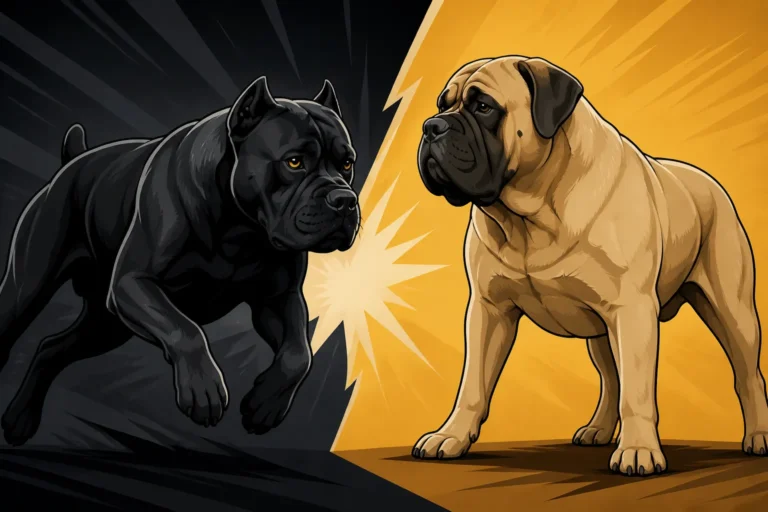
As you can see, the Mastiff's minimum height is quite substantial, often overlapping with or even exceeding some other large breeds. However, breeds like the Great Dane are often consistently taller, known for their statuesque, leggy appearance. The Mastiff's distinction isn't always about being the absolute tallest, but about combining considerable height with truly monumental girth and bone. The Mastiff Against the Bullmastiff and the Cane Corso further explores the differences between these mighty molossers.
The Perception Versus Reality of Pure Mass
It's common for people to perceive a Mastiff as even taller than it actually is, simply because its immense weight and broad chest create such an overwhelming presence. A 32-inch Mastiff can feel much "larger" than a 34-inch Great Dane due to its sheer volume. What a Mastiff Actually Weighs contributes significantly to this perception. When a Mastiff stands on its hind legs to give a hug, it can easily reach over six feet, making a human feel quite small. This visual impact is a huge part of the breed's appeal and deterrent qualities.
This perception of mass also means that managing their body condition is paramount. An overweight Mastiff carries that extra bulk on an already immense frame, putting even more strain on their joints and shortening their already limited lifespan of Six to Ten Years Is What a Mastiff Gets. Keeping them lean and well-muscled allows them to carry their impressive height and weight with the grace and power they were bred for. Their impressive stature is a gift that requires careful stewardship.
Ensuring a Mastiff's Comfort at Its Impressive Height
Living with a dog of such majestic stature requires continuous consideration for their comfort and long-term health. From preventing joint strain to accommodating their size in everyday items, mindful care is crucial for a tall Mastiff.
Mitigating Joint Strain and Supporting Mobility
The great height and immense weight of a Mastiff naturally put considerable stress on their joints, particularly their hips and elbows. It's a sad reality that issues like Elbow Dysplasia Affects One Mastiff in Seven are common in the breed. While genetics play a huge role, providing adequate support and minimizing strain throughout their lives is vital. This begins in puppyhood by managing their exercise and growth, but it continues into adulthood. Orthopedic beds are not a luxury for a Mastiff; they are a necessity. These specialized beds distribute their weight evenly, cushioning their joints and preventing pressure sores or calluses.
Consider also the surfaces in your home. Slippery hardwood or tile floors can be incredibly challenging for a Mastiff, especially as they age, making it difficult for them to get traction and potentially leading to falls or injuries. Placing runners or rugs in high-traffic areas can make a significant difference in their comfort and stability. Furthermore, early and ongoing discussions with your veterinarian about joint supplements, such as glucosamine and chondroitin, can be beneficial, often starting before signs of discomfort appear. Proactive care is the best approach to supporting their immense frame.
Daily Life Adjustments for a Tall Dog
Beyond specific health considerations, the Mastiff's height impacts numerous aspects of daily living. Their elevated head position means they breathe air from a different level than smaller dogs, and they're more likely to track scents from high surfaces than from the floor. This can make training more complex; what's "off-limits" on the floor for a smaller dog might require higher placement or different deterrents for a Mastiff.
Even simple actions like drinking water become a bigger event. Many Mastiff owners use elevated food and water bowls to reduce strain on their necks and aid digestion. This can be a game-changer for a Mastiff's comfort. You’ll also quickly learn that a Mastiff’s tail, at a height that can effortlessly sweep coffee tables and knock over drinks, requires constant awareness. They don’t mean to be destructive, but their sheer size can lead to accidental chaos. It's all part of the charming, sometimes challenging, reality of living with a dog whose eyes meet yours at chest height. What a Mastiff Needs Every Day might involve wiping down kitchen counters after every meal, not just your dog's.
Disclaimer
This article is for general informational purposes only and does not constitute professional advice. Laws, prices and regulations vary by location and change over time. Consult a qualified professional for guidance on your specific situation.