Fewer Than Twenty Mastiffs Survived the Second World War
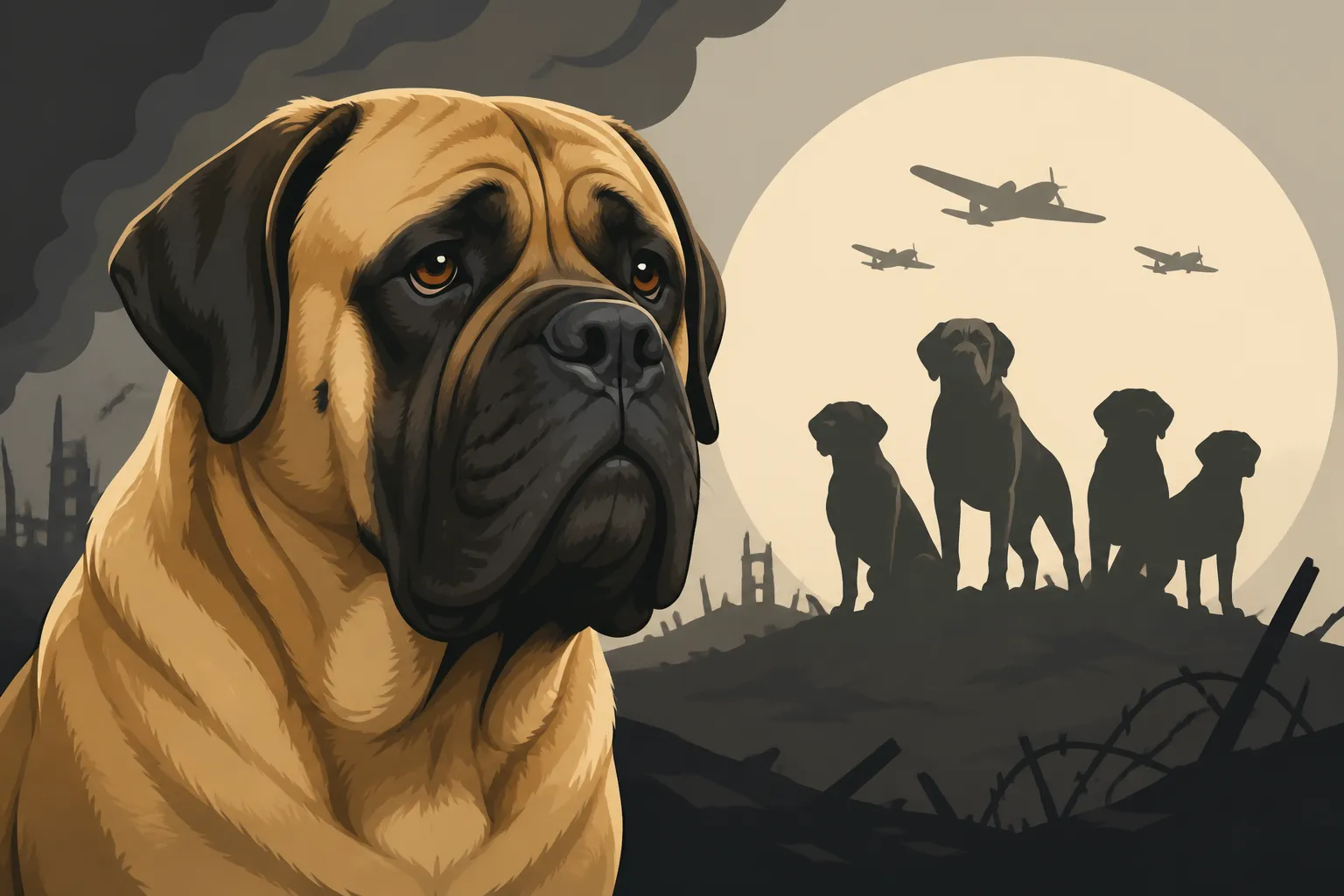
It's hard to imagine, looking at a magnificent Mastiff today, the sheer struggle for survival their ancestors faced just a few decades ago. Many people don't realize just how close this incredible breed came to disappearing forever, decimated by world events that stripped away their numbers and threatened their very existence. This guide will take you through the harrowing journey of the Mastiff during and after the Second World War, exploring the challenges they faced and the dedicated efforts that brought them back from the brink.
Before the Storm: The Mastiff in Early 20th Century Britain
The Mastiff, a breed steeped in history and legend, had a long and storied presence in Britain for centuries. They were revered for their imposing size, protective nature, and calm demeanor, often found guarding large estates and country homes. Yet, even before the rumblings of global conflict began, the breed faced its own quiet challenges.
A Breed of Noble Lineage
These ancient dogs traced their roots back to antiquity, with tales of them fighting alongside warriors and guarding homes from intruders. By the turn of the 20th century, the Mastiff had solidified its place as a distinguished breed, admired for its immense power and gentle spirit. Breeders took great pride in maintaining their robust health and impressive physical standards, meticulously tracking lineages and focusing on the traits that made the Mastiff so unique. Many families had a long tradition of keeping Mastiffs, passing down knowledge and passion for the breed through generations. The breed was certainly not at its peak in numbers compared to some smaller, more fashionable breeds, but it had a solid, if niche, following.
The Impact of the First World War
While often overshadowed by the later devastation, the First World War also took a significant toll on many dog breeds, Mastiffs included. Resources became scarce, and feeding a giant dog became an immense financial burden for many families. Breeding efforts dwindled as men went off to war and priorities shifted dramatically. Many dogs, including beloved Mastiffs, were euthanized simply because their owners could no longer afford to keep them, or they were lost to the chaos of wartime. How Far Mastiff Numbers Fell After the First World War paints a stark picture of the decline seen even then. The breed managed to bounce back somewhat in the interwar years, but it was a fragile recovery, leaving them vulnerable to the next great upheaval. The concept of pet ownership itself shifted; dogs were no longer just working animals but cherished companions, making the emotional toll of these losses even heavier.
War's Devastation: Why Dog Breeds Collapsed
The Second World War brought unprecedented hardship to Britain and indeed, much of Europe. For dogs, especially large breeds like the Mastiff, it was a fight for survival against starvation, bombs, and the harsh realities of a nation at war. The sheer scale of the conflict meant that basic necessities became luxuries, and maintaining large animals was simply not feasible for most households.
Food Shortages and Rationing
One of the most immediate and profound impacts of the war was the severe rationing of food. Meat, grains, and other staples were strictly controlled to ensure enough provisions for the human population and the war effort. Imagine trying to feed a Mastiff, a dog that typically weighs well over a hundred pounds, on meager rations meant for a small family. It was an impossible task for many. Owners were forced to make agonizing choices, often having to give up their beloved dogs or, heartbreakingly, put them to sleep. Why Food Shortages Nearly Ended the Mastiff highlights just how critical the food supply became for these giant breeds. The choice wasn't about preference; it was about sheer survival for the family unit. Many dogs starved or became so emaciated that they succumbed to illness, their massive frames shrinking to gaunt shadows.
The Home Front and Air Raids
Life on the home front was a constant state of anxiety and danger. Air raids were a terrifying reality, with bombs dropping indiscriminately on cities and towns. Dogs, with their acute hearing and sensitivity, often reacted poorly to the loud noises and explosions. Shelters were often cramped and not designed for giant breeds, making it difficult to find safe refuge. Furthermore, the destruction of homes meant countless families were displaced, and finding new accommodation that would accept a huge dog was nearly impossible. The stress of constant bombardment, the disruption of routine, and the sheer noise deeply affected canine well-being, leading to nervous breakdowns or escape attempts. For a Mastiff, who thrives on routine and companionship, this was a particularly cruel environment.
The Shift in Priorities
When a nation is at war, all resources and efforts are directed towards the conflict. Breeding dogs, showing them, or even simply maintaining a kennel became secondary, if not impossible. Many breeders joined the armed forces, their kennels disbanded or left in the care of those ill-equipped to handle the demands of a large breeding operation amidst such scarcity. The focus shifted entirely to human survival and the war effort, leaving little room for the preservation of canine bloodlines. The notion of 'luxury' pets, even those as historically significant as the Mastiff, was seen as impractical at best, unpatriotic at worst. This prioritization, while understandable in wartime, had devastating long-term consequences for many breeds.
The Mastiff's Unique Vulnerability
While many breeds suffered during WWII, the Mastiff's immense size and specific characteristics made it particularly susceptible to the ravages of war, pushing it closer to extinction than many others. Their very grandeur became their greatest weakness in a world of scarcity.
Sheer Size and Resource Consumption
A Mastiff is a magnificent animal, but that magnificence comes with a substantial need for resources. They eat an enormous amount of food, require large living spaces, and their care demands more time and physical effort than smaller dogs. In a time of rationing and cramped living conditions due to bombed-out homes, maintaining such a large creature became an almost insurmountable challenge. It wasn't just food; bedding, veterinary supplies, and even the space to exercise a giant dog became precious commodities. A small terrier might slip by on scraps, but a Mastiff's caloric needs were simply too vast. Families simply couldn't justify the resources required, even for a beloved pet, when their own children might be going hungry.
The Gentle Giant Misconception
Despite their intimidating appearance, Mastiffs are known for their gentle and sensitive nature. This characteristic, normally a cherished trait, became a vulnerability during the war. They are not dogs that thrive on upheaval, loud noises, or separation. The constant stress of air raids, the loss of routine, and the general atmosphere of fear would have been incredibly distressing for these sensitive souls. Unlike some more independent or resilient breeds, a Mastiff's emotional well-being is deeply tied to its human family and a stable environment. The emotional toll of wartime separation or the sheer noise and chaos undoubtedly led to increased anxiety and health issues, further compromising their already precarious situation. A nervous Mastiff is a heartbreaking sight, and many undoubtedly suffered in silence.
Breeding Comes to a Standstill
With survival as the primary goal, selective breeding programs, which are vital for maintaining breed health and characteristics, effectively ceased. The few Mastiffs that did survive were often not bred, or if they were, it was without the careful consideration of temperament, health, and lineage that responsible breeding demands. This meant that the gene pool, already not exceptionally wide, became critically shallow. Even if a few individual Mastiffs survived, the continuity of healthy breeding lines was shattered. Without active breeders working to preserve specific traits and screen for genetic issues, the breed began to drift, and its future looked incredibly bleak.
The Scramble for Survival: Post-War Efforts
As the war finally ended and the world began to pick up the pieces, the dire situation of many dog breeds became alarmingly clear. For the Mastiff, it was a race against time to find enough surviving individuals to even begin rebuilding. The numbers were truly shocking.
The Stark Reality of 1945
The official records and historical accounts paint a grim picture: How Many Mastiffs Were Left in Britain in 1945. The estimates vary slightly, but generally, it's believed that fewer than twenty purebred Mastiffs remained in Britain by the end of the Second World War. Twenty. Imagine a breed with such a magnificent heritage, reduced to such a tiny, fragile remnant. This wasn't just a reduction in numbers; it was a catastrophic loss of genetic diversity, of established bloodlines, and of the collective knowledge held by generations of breeders. The scale of the loss meant that the breed's very genetic viability was in question. It was a wake-up call that shocked the nascent post-war dog fancy.
The Search for Surviving Stock
With so few Mastiffs left, the first urgent task was to locate every single remaining purebred individual. This was a monumental effort, involving dedicated breed enthusiasts scouring the country, placing advertisements, and following every lead. Many of the survivors were likely older dogs, or those whose owners had managed to keep them fed through sheer determination and sacrifice. Finding these dogs was like searching for needles in a haystack, and each discovery was a small victory in itself. The focus was not on show quality or perfect conformation at this point, but simply on finding viable animals that could contribute to a breeding program. Every Mastiff found was a precious genetic resource.
The Desperate Need for New Bloodlines
Even if all twenty (or slightly more) individuals were located, the genetic bottleneck was immense. Breeding closely related dogs, while sometimes necessary in rescue situations, rapidly leads to inbreeding depression, where undesirable recessive traits become more common, and overall health and fertility decline. The surviving British Mastiffs desperately needed new, unrelated bloodlines to broaden their gene pool and ensure a healthier future. Without this influx, the breed was likely doomed to a slow decline even after the war. This realization turned the attention of British breeders across the Atlantic, to where the breed had found a foothold decades earlier.
American and Canadian Lifelines
The survival of the Mastiff breed owes an enormous debt of gratitude to breeders and enthusiasts in North America. While Britain was engulfed in war, some Mastiff lines had been quietly thriving across the ocean, providing the critical genetic diversity needed to rebuild.
The American Mastiff Population
Unlike their British counterparts, American Mastiffs had been spared the direct devastation of war on their home soil. While there were certainly challenges and changes due to wartime economy, the severe rationing and direct threat of bombing that decimated the British population were not present. This allowed a small but stable population of Mastiffs to continue to exist and, importantly, to be bred. These dogs, descendants of earlier imports from Britain, had maintained their type and health largely uninterrupted. They represented a genetic reservoir, an intact branch of the family tree that the British Mastiff so desperately needed. The American Kennels That Sent Mastiffs Back to Britain played a pivotal role in this international effort.
Identifying and Importing Key Individuals
The task of bringing American and Canadian Mastiffs to Britain was no small feat. It involved identifying suitable dogs, negotiating with their owners, and then navigating the complex logistics of international dog travel in the post-war era. This was before the days of easily accessible air freight, and shipping large dogs across the Atlantic was a significant undertaking, both in terms of cost and effort. Dedicated individuals on both sides of the ocean worked tirelessly to make these transfers happen. These imported dogs, carefully selected for their health, temperament, and genetic distance from the remaining British stock, were literally the saviors of the breed. Their arrival in Britain was met with immense relief and hope.
The Blended Heritage of the Modern Mastiff
The result of these imports is that virtually every Mastiff alive today traces a significant portion of its lineage back to these crucial North American dogs. The modern Mastiff is a testament to this international collaboration, a beautiful blend of the surviving British lines with the genetic strength provided by their overseas cousins. This blending was essential for preventing the worst effects of inbreeding and for re-establishing the breed's vitality. It's a powerful reminder that while breeds are often associated with a particular country, their survival can depend on a global community of dedicated enthusiasts. This shared history means that when we look at Mastiffs today, we are seeing the direct result of this critical bridge built across the Atlantic.
The Long Road to Recovery: Modern Mastiffs
Rebuilding a breed from such a tiny genetic base is a monumental undertaking that extends far beyond simply importing new dogs. It requires careful planning, dedicated breeding, and a long-term commitment to health and genetic diversity. The Mastiff breed clubs and individual breeders embarked on a generational project to bring the breed back to robust health and numbers.
Expanding the Gene Pool Responsibly
The initial challenge was to judiciously use the limited genetic material available. This meant carefully selecting breeding pairs to maximize genetic diversity within the new, combined population. It wasn't about simply breeding any two available dogs; it was about strategizing to minimize inbreeding coefficients and to spread the genetic contributions of the imported dogs as widely as possible. Breeders had to make difficult decisions, often breeding dogs that might not have been considered "show quality" under normal circumstances, but who carried vital genetic material. This phase was about genetic survival first and foremost, before refining breed type.
Re-establishing Breed Type and Standards
With the immediate threat of extinction somewhat mitigated, the focus could then shift back to re-establishing the distinctive Mastiff breed type, as defined by the breed standard. This meant selecting for the iconic head, powerful body, calm temperament, and correct coat and color. This was a slower process, as generations of careful breeding were needed to consistently produce dogs that met the ideal. How the Modern Mastiff Differs From the Prewar Type is an interesting look at how the breed has evolved slightly, partly due to the bottleneck and the selective pressures of the rebuilding process. The Mastiff Club of America and The Old English Mastiff Club in the UK played crucial roles in guiding these efforts, ensuring that breeders had a shared vision for the future of the breed.
The Role of Dedicated Breeders and Organizations
The success of the Mastiff's recovery is largely due to the tireless work of dedicated individuals and breed organizations. They invested their time, money, and passion into finding, importing, breeding, and promoting these dogs. Without their commitment, the Mastiff would likely be a footnote in history books. Organizations like the Mastiff Club of America helped to coordinate efforts, maintain pedigrees, and educate new breeders. They understood the gravity of the situation and the importance of preserving this magnificent breed for future generations. Many of these dedicated people treated their dogs not just as pets, but as living history, vital to the continuation of the Mastiff story.
The Lasting Impact on the Breed
The near-extinction event of WWII left an indelible mark on the Mastiff breed, shaping its genetic makeup and influencing breeding practices even today. While the breed has recovered in numbers, some echoes of that bottleneck remain.
The Narrow Gene Pool
Despite the heroic efforts to import new bloodlines, the fact remains that the entire modern Mastiff population descends from a relatively small number of individuals who survived WWII or were imported in its aftermath. How Narrow the Mastiff Gene Pool Is is a critical piece of understanding for anyone interested in the breed's health. This limited genetic diversity means that certain recessive genes, both beneficial and detrimental, can be more prevalent. While responsible breeders work diligently to manage this, it's a constant consideration in breeding decisions. This is why thorough health testing and careful pedigree analysis are so crucial in the Mastiff breed today.
Health Considerations and Genetic Predispositions
A narrow gene pool can unfortunately increase the prevalence of certain genetic health issues. While Mastiffs are generally robust dogs, they can be predisposed to conditions such as hip and elbow dysplasia, certain cancers, and some eye conditions. How Inbreeding Shortened the Mastiff's Life by concentrating undesirable genes is a real concern for any breed that has gone through a genetic bottleneck. This isn't to say all Mastiffs will have these issues, but it underscores the importance of breeders actively screening their dogs using available health tests. For potential owners, understanding this history reinforces the need to choose a reputable breeder who prioritizes health clearances. Products available on platforms like Chewy sometimes offer specialized diets or supplements targeting joint health, reflecting these common concerns.
The Push for Healthier Breeding Practices
In response to these challenges, there has been a strong and growing movement among Mastiff breeders to focus intensely on health and longevity. The Push to Breed Healthier Mastiffs is not just a slogan; it's a philosophy. This includes extensive health testing through organizations like the Orthopedic Foundation for Animals (OFA) and genetic DNA tests for specific conditions. Many breeders strive to diversify their lines as much as possible, even within the limitations of the existing gene pool, to reduce the risk of concentrating undesirable traits. The goal is to produce Mastiffs that are not only magnificent in appearance but also live long, healthy lives, honoring the resilience of the breed that survived such a dramatic crisis.
Lessons Learned for Future Generations
The Mastiff's story of survival is a powerful reminder of the fragility of even the most robust breeds and the profound impact of global events. It also offers valuable lessons for how we approach breeding and preservation today.
The Importance of Global Breed Preservation
The Mastiff's recovery unequivocally demonstrates the vital role of international cooperation in breed preservation. Had there not been Mastiffs in North America, the breed as we know it might not exist today. This highlights the importance of maintaining diverse populations of a breed across different geographical regions, acting as safeguards against localized disasters. It also underscores the ethical responsibility of breeders worldwide to contribute to the health and longevity of the breed, rather than focusing solely on individual kennels or national trends. The story of the Mastiff reminds us that dog breeds are a shared global heritage.
The Value of Genetic Diversity
The Mastiff's bottleneck experience is a textbook example of why genetic diversity is crucial for any breed's long-term health and adaptability. While numbers alone are important, the variety of genes within those numbers is perhaps even more critical. This lesson influences modern breeding programs, with many breeders actively seeking out lines that may not be as common but can introduce valuable genetic material. Tools and services, some of which can be found through online pet retailers like Chewy, assist owners in providing tailored care based on breed-specific needs that arise from these genetic realities. Understanding pedigree depth and breadth is paramount.
A Legacy of Resilience and Dedication
Ultimately, the story of the Mastiff after the Second World War is a testament to the incredible resilience of dogs and the unwavering dedication of the people who love them. From fewer than twenty individuals, the breed was brought back, slowly and painstakingly, through sheer will and collaboration. It serves as an inspiring narrative for anyone involved in dog breeding or rescue, reminding us that even in the face of overwhelming odds, hope and hard work can prevail. When you see a majestic Mastiff today, remember not just their ancient history, but also their more recent triumph over near-extinction, a testament to enduring loyalty and human commitment.
Comparing Pre-War and Post-War Mastiff Populations
To truly appreciate the scale of the challenge and the recovery, it's helpful to visualize the change in the Mastiff population.
| Characteristic | Pre-WWII British Mastiff Population | Post-WWII British Mastiff Population | Modern Mastiff Population (Global) |
|---|---|---|---|
| Number of Individuals | Hundreds, possibly thousands (estimate) | Fewer than 20 | Thousands, globally |
| Genetic Diversity | Relatively broad, established bloodlines | Severely limited, extreme bottleneck | Improved, but still considered narrow |
| Breeding Focus | Maintenance of type, temperament, health, show | Pure survival, any viable breeding stock | Health, longevity, type, genetic diversity |
| Primary Location | Primarily UK (strong presence), some in North America | Concentrated in UK (extremely low numbers), USA/CAN as vital external source | Widespread, significant populations globally |
| Challenges | Some breed-specific health issues, economic shifts | Starvation, bombings, displacement, lack of breeders, inbreeding depression | Genetic predispositions, demand for responsible breeding, longevity issues |
| Recovery Strategy | N/A (thriving) | Importation of North American stock, careful line breeding | Health testing, genetic screening, pedigree analysis, selective breeding |
This article is for general informational purposes only and does not constitute professional advice. Laws, prices and regulations vary by location and change over time. Consult a qualified professional for guidance on your specific situation.