Degenerative Myelopathy in a Mastiff
It's absolutely heartbreaking to see your beloved Mastiff, a breed known for its impressive size and gentle nature, begin to struggle with its mobility. The fear and confusion when those once-steady hind legs start to falter can be overwhelming, leaving you wondering if it's just old age or something more insidious. This comprehensive guide aims to shed light on Degenerative Myelopathy (DM) in Mastiffs, helping you understand this challenging condition, recognize its signs, navigate diagnosis, and provide the best possible care for your cherished companion.
Understanding Degenerative Myelopathy in Mastiffs
When you first hear the words "Degenerative Myelopathy," it can feel like a punch to the gut. This isn't just a minor ailment; it's a serious neurological condition that many Mastiff owners unfortunately encounter. Understanding what it is and why our large, wonderful dogs are susceptible is the first step in facing this difficult journey.
What Exactly Is Degenerative Myelopathy?
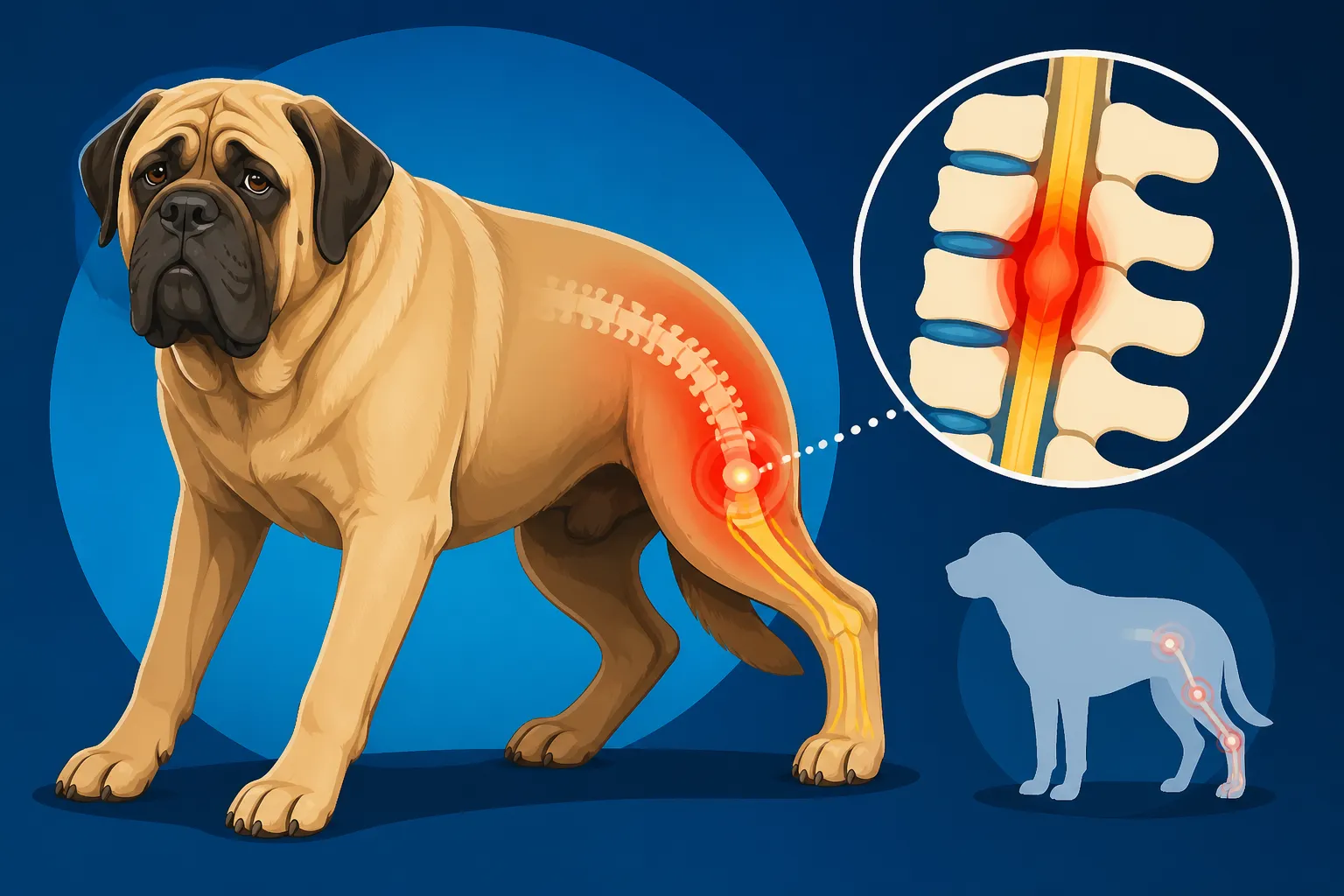
Imagine a progressive neurological disease that slowly, relentlessly robs a dog of its ability to walk. That's essentially what Degenerative Myelopathy is. It's often compared to Amyotrophic Lateral Sclerosis (ALS), or Lou Gehrig's disease, in humans, and for good reason. DM is a cruel disease that affects the white matter of the spinal cord, which is responsible for transmitting commands from the brain to the limbs and sensory information back to the brain.
In affected Mastiffs, the myelin sheath—the protective covering around nerve fibers—and the nerve fibers themselves begin to degenerate. This process disrupts the communication pathway between the brain and the hind limbs. The scary part is that it typically starts subtly, often in the thoracic (chest) region of the spinal cord, causing a gradual loss of coordination and weakness in the back legs. It's a non-painful condition in its initial stages, which can sometimes make it even harder to pinpoint, as many owners might initially dismiss the signs as simple aches and pains of aging in a giant breed. However, the lack of pain doesn't make the functional decline any less devastating for the dog or its family.
The Genetic Link: Why Mastiffs Are at Risk
One of the most frustrating aspects of DM is its genetic basis. Degenerative Myelopathy is primarily associated with a mutation in the SOD1 gene. This gene produces an enzyme called superoxide dismutase 1, which plays a crucial role in protecting cells from oxidative damage. When this gene is mutated, it's thought to lead to the breakdown of nerve cells in the spinal cord.
For a Mastiff to be considered "at-risk" of developing DM, it typically needs to inherit two copies of this mutated gene—one from each parent. This is known as an autosomal recessive inheritance pattern. A dog that inherits only one copy of the mutated gene is considered a "carrier" and generally will not develop DM itself, but it can pass the gene on to its offspring. If two carriers are bred together, there's a 25% chance that each puppy in the litter could inherit two copies of the mutated gene and thus be at-risk for developing DM. There's also a 50% chance they'll be carriers, and a 25% chance they'll be clear.
Breeders committed to the health of the Mastiff breed utilize DNA tests, such as those offered by the Orthopedic Foundation for Animals (OFA) or laboratories like Embark, to screen their breeding dogs for the SOD1 mutation. This allows them to make informed decisions and avoid breeding two carriers together, thereby reducing the incidence of DM in future generations. It’s an essential step in safeguarding the future health of our beloved giants. If you're considering a Mastiff puppy, asking the breeder about the genetic testing results for both parents is crucial. For existing Mastiff owners, understanding if your dog carries the gene can offer a piece of mind or prepare you for potential future challenges, though a positive test for two copies doesn't guarantee your dog will develop DM, only that they are genetically predisposed. You can learn more about this by reading up on Whether a DNA Test Predicts Mastiff DM.
Recognizing the Early Signs of DM in Your Gentle Giant
Identifying Degenerative Myelopathy early can be incredibly challenging, particularly in a Mastiff. These are large dogs, prone to other joint and mobility issues, and their stoic nature often means they don't complain much until things are quite advanced. Owners often wrestle with the guilt of wondering if they missed something. It's important to remember that DM mimics many other common ailments, making it a true diagnostic puzzle.
Subtle Changes in Gait and Hind Limb Weakness
The very first signs of DM are usually so subtle that they can easily be mistaken for something else. You might start noticing your Mastiff’s back legs just aren't quite right. Perhaps their gait seems a little off, a slight wobble that wasn't there before. A common early indicator is scuffing of the hind paw nails. If your Mastiff is dragging its back toes, you might see the nails on its rear paws wearing down unevenly or even bleeding slightly from repeated scraping on pavement during walks. This is due to a loss of proprioception, which is the dog's unconscious awareness of where its limbs are in space. They simply aren't picking their feet up as high as they used to.
Another common observation is that your Mastiff might cross its hind legs more often when standing or walking, or seem to stumble over its own feet. Getting up from a lying position, especially on slippery floors, might become a bit more laborious, taking them a few tries or requiring more effort. Owners might initially think, "Oh, it's just his hips acting up," or "He’s getting stiff in his old age." This is a natural assumption, especially since the median age for DM onset in Mastiffs is typically around 8 to 9 years old, an age when many large breeds are indeed starting to show signs of arthritis. It’s important to remember that these giants are often considered "old" even by age five, so any changes in gait are often attributed to aging joints. To delve deeper into this, check out The Age Degenerative Myelopathy Starts in a Mastiff.
Progression of Symptoms: What to Watch For
As DM progresses, these subtle signs unfortunately become more pronounced and debilitating. The initial mild hind limb weakness will develop into a more noticeable ataxia, which means a severe lack of coordination. Your Mastiff's hindquarters might sway more dramatically when they walk, and their steps will become more exaggerated and uncontrolled. They may begin to trip and fall more frequently, especially when turning corners or navigating uneven terrain. Climbing stairs becomes a monumental task, and eventually, even standing unassisted for long periods becomes difficult.
Eventually, the weakness will progress to complete paralysis of the hind limbs. At this stage, your Mastiff will be unable to stand or walk without significant assistance, requiring a sling or a cart. Unfortunately, the disease doesn't stop there. While it typically starts in the hind limbs, the degeneration can eventually move forward up the spinal cord, affecting the front limbs, trunk, and even the ability to swallow or breathe in the very late stages.
One of the most misleading aspects of DM is that it’s generally not painful. Unlike arthritis or hip dysplasia, where a dog might yelp or limp due to discomfort, a Mastiff with DM often shows no signs of pain, even as their mobility rapidly declines. This can be incredibly confusing for owners who are used to seeing pain as a primary indicator of a problem. They might think, "He's not hurting, so he must be okay," but the functional loss is severe. This lack of pain is a key differentiator from many other mobility issues, and understanding it is crucial for proper diagnosis. More on this can be found in Whether Degenerative Myelopathy Is Painful for a Mastiff.
Diagnosing Degenerative Myelopathy in Mastiffs
Receiving a diagnosis of Degenerative Myelopathy is not straightforward. In fact, it's one of the most frustrating aspects of this disease. Because its symptoms overlap so heavily with other common conditions in large breeds, veterinarians often embark on a long journey of ruling out everything else before DM even comes into sharp focus.
Ruling Out Other Conditions: The Diagnostic Journey
The process of diagnosing DM is what medical professionals call a "diagnosis of exclusion." This means that your veterinarian will systematically rule out every other possible cause for your Mastiff's symptoms before concluding that DM is the most likely culprit. This can be a lengthy, emotionally taxing, and financially draining process for owners, but it’s absolutely essential to ensure your Mastiff receives the correct care.
The first step usually involves a thorough physical and neurological examination. Your vet will check reflexes, muscle tone, and proprioception (your dog's awareness of its limb positions). They might perform tests like placing your Mastiff's paw upside down to see how quickly it rights itself – a dog with DM will be slower or not correct it at all.
Next, a battery of diagnostic tests will likely be recommended to rule out common orthopedic and neurological conditions prevalent in Mastiffs. These can include:
- X-rays: Radiographs of the spine, hips, and elbows are routinely performed to check for conditions like hip dysplasia, elbow dysplasia, intervertebral disc disease (IVDD), or spinal tumors. These are common in Mastiffs and can cause similar hind limb weakness.
- Blood work and Urinalysis: These tests help rule out metabolic diseases, infections, or inflammatory conditions that could affect neurological function.
- Advanced Imaging (MRI/CT): If spinal compression, tumors, or disc issues are suspected, your veterinarian might recommend an MRI or CT scan of the spine. These advanced imaging techniques provide detailed views of the soft tissues and spinal cord, allowing for the identification of treatable conditions. For example, a severe herniated disc could mimic DM, but unlike DM, it often has surgical solutions. It's often recommended to get an MRI if your Mastiff shows signs of severe neurological deficits that aren't clearly explained by X-rays. You can learn more about this by reading Whether a Mastiff Needs an MRI.
- Cerebrospinal Fluid (CSF) Analysis: Sometimes, a sample of spinal fluid is collected to check for inflammation or infection within the central nervous system, which could point to other diseases.
The challenge here is immense. Many Mastiffs, especially as they age, might have pre-existing conditions like arthritis or mild hip dysplasia. It can be incredibly difficult to discern if the new symptoms are an exacerbation of these old problems, or if something entirely new, like DM, is at play. It's easy for DM to be mistaken for arthritis in a Mastiff, given their propensity for joint issues and the similar presentation of hind-end weakness. The key difference, again, is the lack of pain associated with DM, at least initially, and the specific neurological deficits that worsen over time, often disproportionately to any pain response. This is why a comprehensive workup is so critical. Also, conditions like Whether a Mastiff Gets Wobbler Syndrome can present with similar gait issues, adding to the diagnostic complexity.
The Definitive Diagnosis: Post-Mortem Confirmation
Here’s the hard truth about Degenerative Myelopathy: a definitive, absolute diagnosis can only be made through a histopathological examination of the spinal cord after the dog has passed away. This means a veterinary pathologist examines tissue samples from the spinal cord under a microscope to confirm the characteristic lesions and degeneration of the nerve fibers.
During your Mastiff's lifetime, even with a strong suspicion based on ruling out other conditions and a positive genetic test for two copies of the SOD1 mutation, the diagnosis remains "presumptive" or "highly probable." This can be incredibly frustrating for owners who desperately want a clear answer and a treatment plan. The genetic test tells you if your Mastiff is at-risk of developing DM, but it doesn't confirm that the symptoms your dog is currently experiencing are definitively due to DM. Some dogs with the at-risk genotype never develop clinical signs, while others do.
This unique diagnostic challenge underscores the importance of working closely with your veterinarian and potentially a board-certified veterinary neurologist. They are best equipped to interpret the various test results, rule out other conditions, and guide you through this difficult diagnostic process. While not being able to get a 100% confirmed diagnosis during life is tough, a presumptive diagnosis based on a comprehensive work-up and genetic testing allows owners to move forward with supportive care and management, focusing on their Mastiff's comfort and quality of life.
Living with a Mastiff Diagnosed with DM
A diagnosis of Degenerative Myelopathy, even a presumptive one, brings a whirlwind of emotions and practical challenges. As a Mastiff owner, you’re already accustomed to managing a large dog, but DM introduces a new layer of complexity, demanding profound dedication, patience, and often, significant physical effort. The goal isn’t to cure the disease, as there is no cure, but to maximize your Mastiff’s comfort, mobility, and overall quality of life for as long as possible.
Managing Mobility Challenges and Maintaining Quality of Life
The cornerstone of living with a Mastiff with DM is proactive management of their declining mobility. These dogs are heavy, and as their hindquarters weaken, they rely on you more and more. It starts with simple environmental modifications in your home.
- Non-Slip Surfaces: One of the most critical adjustments is to address slippery floors. Hardwood, tile, or laminate floors become treacherous ice rinks for a Mastiff losing proprioception and strength in its hind legs. Lay down plenty of non-slip rugs, carpet runners, or yoga mats in all high-traffic areas, especially where your Mastiff walks, eats, and sleeps. This provides crucial traction, prevents painful slips and falls, and reduces fear and anxiety in your dog. You might remember the advice about avoiding bare floors for a growing Mastiff puppy; this becomes even more vital for an adult dog with DM. For more detail, check out What Bare Floors Do to a Growing Mastiff.
- Assistive Devices: As weakness progresses, lifting slings, support harnesses, and eventually dog wheelchairs (carts) become invaluable. A good quality hind-end support harness, such as those from brands like Walkaboout or Ruffwear, can help you provide stability during walks and assist your Mastiff in getting up and down. These are designed to distribute weight evenly and minimize strain on your dog's abdomen. Learning how to properly use these devices and lift your Mastiff can prevent injuries for both of you.
- Easy Access: Think about ramps for cars, steps, or even furniture if your Mastiff is allowed on sofas. Removing obstacles and ensuring clear pathways will minimize frustration and the risk of falls.
- Hygiene and Comfort: As hind leg paralysis progresses, incontinence can become an issue. It’s vital to keep your Mastiff clean and dry to prevent urine scald, skin infections, and bedsores. Absorbent bedding, waterproof covers, and frequent cleaning are a must. Regular turning of your Mastiff if they become recumbent is also critical to prevent pressure sores, especially on their hips and elbows.
It’s an immense undertaking, emotionally and physically. Watching a proud, powerful Mastiff struggle can be heartbreaking, and the daily demands can be exhausting. Remember, you’re not alone. Many owners of giant breeds with DM face these challenges, and connecting with support groups can provide invaluable advice and emotional solidarity.
Physical Therapy and Exercise: Keeping Them Moving
While there's no cure for DM, aggressive physical therapy and controlled exercise are crucial for slowing the progression of muscle atrophy and maintaining remaining strength and mobility for as long as possible. This isn't about pushing your Mastiff to do things they can't, but rather about gentle, consistent support.
- Veterinary Rehabilitation Specialist: Ideally, you'll work with a certified canine rehabilitation therapist. These professionals can design a tailored program that addresses your Mastiff’s specific needs.
- Hydrotherapy: Swimming or underwater treadmill therapy is a fantastic option for Mastiffs with DM. The buoyancy of water supports their body weight, reducing stress on their joints while allowing them to move their legs and build muscle. It’s often one of the few forms of exercise they can still enjoy without the risk of falling.
- Therapeutic Exercises: These might include passive range of motion exercises, where you gently move your Mastiff’s joints through their natural range to maintain flexibility and prevent stiffness. Other exercises might involve weight-shifting drills, controlled walking on different surfaces (like grass or sand), or gentle massage to stimulate circulation. More detailed guidance on this can be found in Whether Physical Therapy Slows a Mastiff's DM.
- Assistive Carts/Wheelchairs: As the disease advances, a custom-fitted wheelchair can be a game-changer. It allows your Mastiff to regain independence, exercise, and enjoy walks, often with a renewed sense of purpose. Seeing a Mastiff with DM fitted with a cart can be incredibly uplifting, as it restores some of their lost freedom. This topic is covered more in-depth in Whether a Mastiff With DM Can Be Fitted With a Cart.
- Regular, Gentle Walks: Even short, slow, supervised walks are beneficial, as long as your Mastiff isn't struggling excessively. The movement helps maintain muscle tone, bowel function, and mental well-being. The key is never to push them to the point of exhaustion or frustration.
The goal of physical therapy isn't to reverse the damage, but to preserve what function they have, improve coordination, maintain muscle mass, and prevent secondary complications. It's about empowering your Mastiff to live its best life, even with this formidable challenge.
Nutritional and Supportive Care for Mastiffs with DM
Beyond managing mobility, thoughtful nutritional choices and a robust support system can make a significant difference in the daily lives of Mastiffs living with Degenerative Myelopathy. While diet can't cure DM, it can certainly contribute to overall health, manage inflammation, and support neurological function.
Diet and Supplements: What Can Help?
When it comes to feeding a Mastiff with DM, the focus shifts slightly from simply meeting caloric needs to providing targeted support for their neurological and muscular systems.
- Antioxidants: Foods rich in antioxidants can help combat oxidative stress, which is believed to play a role in the progression of DM. Look for ingredients like blueberries, spinach, kale, and sweet potatoes. Supplements containing vitamins E and C are also often recommended by veterinarians.
- B Vitamins: B vitamins, particularly B12 (cobalamin) and folate, are crucial for nerve health. Some holistic vets or specialists might recommend B-complex supplements or even B12 injections, especially if there's any indication of malabsorption.
- Omega-3 Fatty Acids: These powerful anti-inflammatory agents, found in fish oil, can help reduce inflammation throughout the body, including the nervous system. High-quality fish oil supplements are often suggested to support overall neurological health.
- L-Carnitine and Coenzyme Q10: These are sometimes recommended for their roles in cellular energy production and antioxidant properties, though scientific evidence directly linking them to slowing DM progression is limited.
- Maintaining a Lean Body Condition: This is paramount for any Mastiff, but especially one with mobility challenges. Excess weight puts incredible strain on already compromised joints and makes it even harder for them to move. Keeping your Mastiff lean on purpose can significantly improve their comfort and prolong their functional mobility. Work with your vet to determine the ideal weight range for your individual dog and adjust their diet accordingly. Remember, even a few extra pounds on a Mastiff can be like carrying a heavy backpack for a human with mobility issues. Learn more about the benefits of keeping your Mastiff lean by checking out Whether a Lean Mastiff Lives Longer.
- High-Quality Protein: To combat muscle atrophy, ensure your Mastiff is receiving adequate amounts of high-quality protein in their diet. This helps maintain muscle mass for as long as possible.
Always consult with your veterinarian or a veterinary nutritionist before introducing any new supplements or making drastic changes to your Mastiff's diet. They can help you create a balanced and beneficial plan tailored to your dog's specific needs and health status.
The Importance of a Strong Support System
Caring for a Mastiff with DM is a marathon, not a sprint. It demands incredible physical and emotional resilience from owners. It’s easy to feel isolated and overwhelmed, which is why a strong support system is absolutely vital.
- Your Veterinary Team: Your veterinarian and any specialists (neurologists, rehabilitation therapists) become your most important allies. Don't hesitate to ask questions, voice your concerns, and seek their guidance on every aspect of care. Regular check-ups are essential to monitor progression and adjust management strategies.
- Online Communities and Support Groups: Connecting with other owners who have or are currently navigating DM can be a lifeline. Forums, social media groups, and online communities dedicated to canine DM provide a space to share experiences, ask for advice on practical issues (like the best type of lifting harness for a 200lb Mastiff), and receive emotional support from people who truly understand what you're going through.
- Friends and Family: Lean on your loved ones for help with daily tasks, whether it’s assisting with walks, helping lift your Mastiff, or simply providing a listening ear. Giant dogs require a village, and a giant dog with special needs requires an even bigger one.
- Pet Insurance: The financial strain of ongoing veterinary visits, physical therapy sessions, medications, and assistive devices can be substantial. Having robust pet insurance can alleviate some of this burden, allowing you to focus on your Mastiff's care without constant worry about costs. Companies like Healthy Paws offer comprehensive plans that can cover a significant portion of diagnostic tests, rehabilitation, and long-term supportive care for conditions like DM, provided it's not a pre-existing condition. This financial buffer can be crucial in affording the best possible quality of life for your beloved Mastiff.
- Self-Care for the Caregiver: Don't forget your own well-being. Caring for a special needs dog is incredibly demanding. Make sure you're taking breaks, getting enough rest, and seeking your own emotional support if needed. Burnout is a real risk, and you can only care for your Mastiff effectively if you're also taking care of yourself.
This journey is tough, but with the right knowledge, resources, and support, you can provide your Mastiff with love and comfort every step of the way, even as their hind end fails with DM. You'll be amazed at the resilience and love they show in return.
Prognosis and End-of-Life Decisions
Facing a diagnosis of Degenerative Myelopathy in your Mastiff means confronting a reality without a cure. This is perhaps the hardest part for any loving owner. While we can manage symptoms and offer supportive care, the disease will inevitably progress. Understanding the prognosis and preparing for end-of-life decisions is a crucial, albeit heartbreaking, aspect of this journey.
Understanding the Progression and Timeline
Degenerative Myelopathy is a relentlessly progressive disease. There will be good days and bad days, but the overall trajectory is a gradual decline in mobility. The rate of progression can vary significantly between individual Mastiffs. Some may decline relatively quickly, within 6-12 months, while others might have a slower progression that extends over two to three years. There's no way to predict the exact timeline for your dog.
Typically, the disease starts with hind limb weakness and ataxia. This progresses to loss of coordination, difficulty standing, and eventually, complete paralysis of the hindquarters. During this stage, your Mastiff will lose deep pain sensation in their hind limbs. As the disease advances further up the spinal cord, it can start to affect the front limbs, leading to generalized weakness. In the very late stages, the muscles responsible for breathing and swallowing can also be impacted, making feeding and even breathing difficult. This is the stage when quality of life becomes severely compromised.
Throughout this progression, it's vital to monitor your Mastiff's comfort levels, functional abilities, and overall demeanor. Keeping a journal of their good days and bad days, their ability to perform daily activities, and any changes in their appetite or behavior can be immensely helpful in tracking the disease's progress and making informed decisions.
Making Difficult Choices: When to Say Goodbye
This is arguably the most agonizing decision any pet owner has to make. For a Mastiff with DM, knowing when to say goodbye is about assessing their quality of life, not about fighting the disease until the very last breath. Because DM is not initially painful, it can make this decision even more complex; you’re not seeing overt signs of suffering in the traditional sense, but you are witnessing a profound loss of dignity and joy.
Here are some indicators that can help guide you, often referred to as "quality of life" metrics:
- Inability to Stand or Move Independently: When your Mastiff can no longer stand or shift positions without significant, constant human intervention, despite assistive devices like slings or carts, their daily life becomes a struggle. If they are spending almost all their time lying down, unable to relieve themselves or move to a comfortable spot, their quality of life is severely impacted.
- Chronic Incontinence and Skin Issues: While managed incontinence is possible for a time, chronic wetness, urine scald, and the development of bedsores despite diligent care can cause discomfort and risk of infection.
- Loss of Interest in Favorite Activities: Does your Mastiff still enjoy eating? Do they respond to your presence? Do they show any interest in toys, walks (even in a cart), or interactions? A profound loss of joy, appetite, or engagement with their environment is a significant red flag.
- Difficulty Breathing or Swallowing: In the very late stages of DM, the disease can affect the nerves controlling respiratory and swallowing functions. If your Mastiff is struggling to breathe, choking on food or water, or showing signs of respiratory distress, it's a clear indicator that their quality of life has severely diminished.
- Constant Frustration or Anxiety: Even if they're not in physical pain, the constant struggle to move, the inability to control their bodily functions, and the loss of independence can lead to immense frustration and anxiety in a proud Mastiff.
This decision is deeply personal, and there is no single "right" answer. Many veterinarians use a "good day vs. bad day" ratio; when the bad days consistently outweigh the good ones, it's time to consider compassionate euthanasia. Discussing these indicators openly and honestly with your veterinarian, and leaning on your support system, can help you gain clarity during this incredibly painful time. Remember that making this final, selfless decision is the ultimate act of love for your Mastiff, sparing them from prolonged suffering and preserving their dignity. Caring for a Mastiff past five years old often means navigating these complex health challenges, and it speaks volumes about your dedication.
| Symptom Category | Degenerative Myelopathy (DM) | Hip Dysplasia/Arthritis | Intervertebral Disc Disease (IVDD) |
|---|---|---|---|
| Onset | Gradual, insidious | Gradual, often episodic, can worsen with age/activity | Sudden (acute) or gradual |
| Pain Level | Typically non-painful initially | Painful, especially after exercise or in cold weather | Often very painful, may yelp when touched/moved |
| Gait Changes | Progressive hind limb weakness, ataxia (wobbliness), scuffing of toes, crossing legs, loss of proprioception. | Hind limb lameness, stiffness, "bunny hopping," difficulty rising, reluctance to jump/climb stairs. | Hind limb weakness, paralysis (ranging from mild to severe), knuckling, arched back (pain), reluctance to move. |
| Reflexes | Decreased or absent withdrawal reflex in hind limbs; patellar reflex may be normal or exaggerated. | Often normal, but pain may inhibit movement. | Decreased or absent reflexes below the lesion; may have hyperreflexia above. |
| Muscle Atrophy | Significant and progressive in hind limbs | May be present due to disuse, less severe or focal | Can occur with prolonged paralysis |
| Incontinence | Can develop in late stages | Rarely due to orthopedic issues, unless nerve compression. | Common with severe disc compression, especially in hind limbs. |
| Diagnosis | Diagnosis of exclusion, genetic test (risk factor), post-mortem confirmation. | X-rays, physical exam, palpation, gait analysis. | Neurological exam, X-rays, MRI/CT for definitive diagnosis. |
| Prognosis | Progressive, incurable | Manageable with medication, surgery, rehab; non-progressive. | Variable, depends on severity and treatment; can be curable/manageable. |
Disclaimer
This article is for general informational purposes only and does not constitute professional advice. Laws, prices and regulations vary by location and change over time. Consult a qualified professional for guidance on your specific situation.