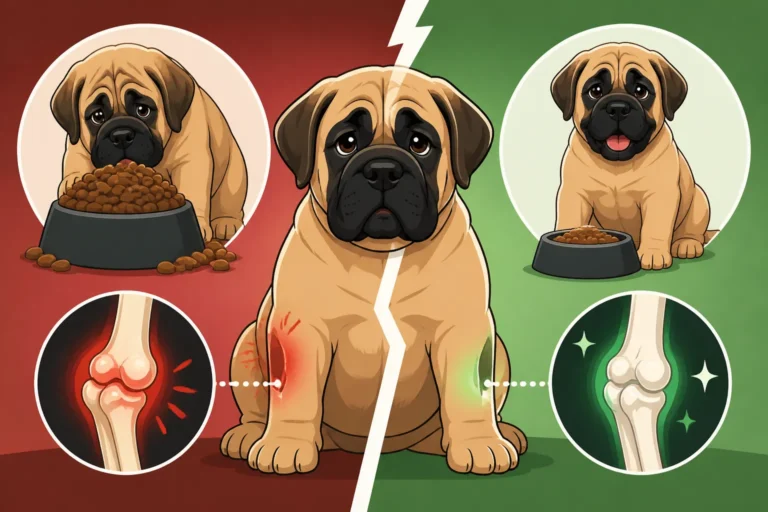
Why a Mastiff Puppy Must Grow Slowly
Bringing home a Mastiff puppy is an exciting, joyful time, but it comes with a unique set of responsibilities, especially concerning their monumental growth. Many new owners, eager to see their little bear cub transform into a majestic giant, sometimes inadvertently accelerate this process, unaware of the profound and often painful consequences. This guide is dedicated to explaining precisely why a Mastiff puppy must grow slowly and how you can ensure your gentle giant develops into a healthy adult, avoiding common pitfalls that lead to serious health issues down the road.
The Perils of Pushing Growth in Your Mastiff Puppy
It's a common misconception, especially with giant breeds, that bigger and faster automatically means healthier or stronger. For a Mastiff puppy, nothing could be further from the truth. Their impressive adult size, which can easily exceed 200 pounds, is a marvel of nature, but it's also a delicate balance of bone, cartilage, and muscle developing over a surprisingly long period. Rushing this development can have irreversible negative impacts that will haunt your Mastiff throughout its (already too short) life.
The Delicate Dance of Bone Development
Imagine building a skyscraper. You wouldn't rush the foundation, would you? You'd ensure each beam is perfectly placed, each rivet secure, allowing the concrete to cure properly before adding more weight. A Mastiff puppy's skeleton is no different, perhaps even more complex. Their bones don't just get bigger; they undergo a intricate process of lengthening and widening, with crucial areas known as "growth plates" at the ends of long bones. These growth plates are made of cartilage and are the sites where new bone tissue is generated, gradually hardening into solid bone as the puppy matures.
These growth plates are incredibly vulnerable during a Mastiff's rapid growth phase, which can extend well past their first birthday, sometimes even into their second year. They are soft, pliable, and easily damaged by excessive weight or undue stress. When a puppy grows too quickly, these plates can be subjected to abnormal forces, leading to uneven growth, premature closure, or even micro-fractures. It's like trying to force a sapling to bear the weight of a mature oak – the structure simply isn't ready, and it will buckle under the pressure. Proper, slow development allows these growth plates to mature and ossify (turn into bone) correctly, forming a strong, stable skeletal framework that can actually support the immense weight of an adult Mastiff without collapsing or deforming.
Why a Mastiff's Size Compounds the Risk
The sheer scale of a Mastiff makes them uniquely susceptible to problems caused by fast growth. A Chihuahua puppy, for example, will reach its adult size much faster, but its tiny frame is far less stressed by rapid development than a breed that will grow to be as heavy as an adult human. A Mastiff puppy is gaining pounds and inches at an astonishing rate. If that growth is accelerated, even by a small percentage, the forces on those developing joints multiply dramatically.
Consider the physics: every extra pound a Mastiff puppy carries, especially during crucial growth periods, translates to immense pressure on its immature joints. If a puppy is growing too fast, its bones might be lengthening rapidly, but the surrounding support structures like ligaments, tendons, and muscles simply cannot keep pace. This creates instability, misalignment, and an environment ripe for injury or abnormal development. Their already immense bulk, combined with potentially weak or misaligned joints, is a recipe for orthopedic disaster. It's why responsible breeders and veterinarians emphasize a slow, steady trajectory for these gentle giants. Their natural inclination to be somewhat clumsy, combined with their developing coordination, means any structural weakness is further amplified by their sheer mass as they navigate the world.
Orthopedic Nightmares: When Growth Goes Too Fast
The consequences of pushing a Mastiff puppy to grow too quickly are not abstract; they manifest as real, often painful, and sometimes debilitating orthopedic conditions. These aren't just minor aches; they can severely impact a Mastiff's quality of life and lifespan. When the delicate balance of growth is disturbed, the body tries to compensate, often leading to abnormal joint formation.
Hip and Elbow Dysplasia: The Silent Cripplers
Hip and elbow dysplasia are perhaps the most well-known and feared orthopedic issues in large and giant breeds like the Mastiff. While these conditions have a strong genetic component – meaning selective breeding plays a huge role in their prevalence – environmental factors, particularly rapid growth, can significantly exacerbate them, even in puppies from otherwise healthy lines. We discuss the genetic aspects in How Common Hip Dysplasia Is in Mastiffs and Why One Mastiff in Seven Fails Its Elbow Grade.
-
Hip Dysplasia: This condition occurs when the hip joint – a ball-and-socket joint – doesn't develop properly. Instead of fitting snugly, the ball (femoral head) and socket (acetabulum) become loose, grinding against each other. When a Mastiff puppy grows too fast, the skeletal structures might outpace the muscular and ligamentous support, leading to even greater laxity in the hip joint. The extra weight from accelerated growth puts immense strain on these immature, poorly formed joints, causing abnormal wear and tear, pain, and eventually debilitating arthritis. You might see a puppy struggling to get up, walking with a "bunny hop" gait, or showing reluctance to play. This isn't just puppy clumsiness; it could be a sign of a deeper issue aggravated by growth.
-
Elbow Dysplasia: Similarly, elbow dysplasia is a complex condition involving multiple developmental abnormalities in the elbow joint. Rapid growth and excessive weight gain are significant contributors. The elbow joint is made up of three bones that must fit together perfectly. When a Mastiff puppy's growth is too fast, the bones might grow at different rates, leading to uneven joint surfaces, cartilage lesions, or even bone fragments breaking off within the joint. This causes pain, lameness, and degenerative joint disease. A puppy with elbow dysplasia might exhibit a subtle limp, stiffness, or an outward rotation of their front paws. The immense weight a Mastiff carries on its front limbs makes healthy elbow development absolutely paramount. For more on this, check out Elbow Dysplasia Affects One Mastiff in Seven.
These conditions are heartbreaking because while surgery can sometimes help, it's often expensive and doesn't always fully restore normal function. Prevention through controlled growth is always the best strategy.
Other Bone and Joint Issues from Rapid Weight Gain
Beyond hip and elbow dysplasia, a Mastiff puppy growing too fast can encounter a host of other skeletal problems.
-
Osteochondritis Dissecans (OCD): This is another cartilage disorder where a flap of cartilage separates from the underlying bone, most commonly affecting the shoulder, elbow, or stifle (knee) joints. Rapid growth, combined with genetic predisposition and trauma, is a primary cause. The cartilage, which normally cushions the joint, thickens and detaches, causing pain and lameness. Imagine a thin layer of protective plastic peeling off a surface; it leaves the delicate layer underneath exposed and vulnerable. This can necessitate complex surgeries, and even then, long-term arthritis is a likely outcome.
-
Panosteitis ("Pano" or "Growing Pains"): While often self-limiting, panosteitis is inflammation of the long bones, characterized by shifting lameness in young, rapidly growing dogs. Though not as severe as dysplasia or OCD, it's a clear indicator that the bones are under stress from growth. It causes intermittent pain and lameness, often shifting from one leg to another, and while usually resolving on its own, it speaks to the stress the skeletal system is under. We discuss this further in The Shifting Lameness of a Growing Mastiff.
-
Hypertrophic Osteodystrophy (HOD): This condition, also known as "double-lined bone" due to its appearance on X-rays, is an inflammatory disease of the growth plates in rapidly growing large and giant breed puppies. It causes severe pain, lameness, swelling of the joints, and can even be accompanied by fever and loss of appetite. HOD can be debilitating and, in severe cases, even life-threatening. While its exact cause is complex, rapid growth and nutritional imbalances are strong contributing factors.
All these conditions underscore the critical importance of moderation in a Mastiff puppy's development. Their large frame is a double-edged sword: magnificent when healthy, but incredibly vulnerable when subjected to unnatural stresses during its formative months.
| Condition | Primary Cause(s) | Impact on Puppy | Long-Term Outlook |
|---|---|---|---|
| Hip Dysplasia | Genetics, Rapid Growth, Overfeeding | Laxity, pain, bunny hop gait, reluctance to move | Arthritis, chronic pain, possible surgery, mobility issues |
| Elbow Dysplasia | Genetics, Rapid Growth, Overfeeding | Lameness, stiffness, outward paw rotation, pain | Arthritis, chronic pain, possible surgery, mobility issues |
| Osteochondritis Dissecans (OCD) | Genetics, Rapid Growth, Trauma | Pain, lameness, joint swelling | Arthritis, chronic pain, possible surgery |
| Panosteitis (Growing Pains) | Rapid Growth, Inflammation of long bones | Shifting lameness, intermittent pain | Generally resolves, but indicates growth stress |
| Hypertrophic Osteodystrophy (HOD) | Rapid Growth, Nutritional imbalance, Inflammation | Severe pain, lameness, fever, swollen joints | Can be debilitating, potentially life-threatening if severe |
Nutrition: The Cornerstone of Controlled Development
Nutrition plays the single most critical role in managing a Mastiff puppy's growth rate. It's where many well-meaning owners inadvertently go wrong, often believing that more food or extra supplements will lead to a stronger, bigger dog. For Mastiffs, this approach is counterproductive and dangerous. The goal is steady, moderate growth, not maximum growth.
Decoding "Large Breed Puppy" Food Labels
Choosing the right food for your Mastiff puppy can feel overwhelming with so many options on the market. The key is to select a high-quality "large breed puppy" formula. These foods are specifically designed to support the slower growth rate necessary for giant breeds. They differ significantly from regular puppy foods in their nutrient composition, particularly concerning protein, fat, and crucial minerals like calcium and phosphorus.
-
Protein and Fat Content: While puppies need protein for muscle development, an excessively high protein or fat content can lead to too-rapid weight gain. Large breed puppy formulas typically have slightly lower, yet still adequate, protein and fat levels compared to standard puppy foods. This helps prevent them from becoming overweight too quickly, which puts undue stress on their developing joints. You want to see healthy, lean muscle development, not fat.
-
Calcium and Phosphorus Ratio: This is arguably the most critical factor. Standard puppy foods, formulated for smaller, faster-growing breeds, often have higher calcium levels. For a Mastiff, too much calcium (or an incorrect calcium-to-phosphorus ratio) can interfere with bone development, leading to conditions like HOD and OCD. Large breed puppy foods are carefully formulated to provide appropriate, controlled levels of these minerals to ensure proper bone mineralization without promoting excessive growth. Always check the guaranteed analysis on the bag, and don't hesitate to call the manufacturer if you have questions about the precise nutrient levels. Brands like Purina Pro Plan Large Breed Puppy or Royal Canin Giant Puppy are often recommended by veterinarians for their carefully balanced formulas. You can find these readily available through retailers like Chewy or Amazon, often with detailed nutritional information online.
Remember, the goal isn't to starve your puppy or stunt its growth; it's to provide balanced nutrition that supports appropriate growth, allowing their skeleton to mature at a healthy pace.
The Pitfalls of Overfeeding and Supplement Overload
This is where the loving, but misguided, instincts of many Mastiff owners can cause harm. Seeing a seemingly always-hungry puppy can lead to giving extra kibble, "just a little more" or adding calorie-dense table scraps. This is a direct path to overfeeding, which is a major culprit in rapid growth. An overweight puppy is a puppy whose joints are under constant, unnecessary strain. You can learn more about how to manage their diet in How Much a Mastiff Puppy Should Eat and Why a Mastiff Puppy Must Grow Slowly.
Equally dangerous is the temptation to add supplements, especially calcium or other joint supplements, without veterinary guidance. While some supplements might be beneficial for adult Mastiffs or those with diagnosed issues, adding extra calcium to a puppy's diet that is already on a properly formulated large breed food can be disastrous. As mentioned, an excess of calcium can disrupt the delicate bone development process, leading to severe orthopedic problems. Many owners mistakenly believe that if a little is good, more must be better. For Mastiff puppies and calcium, less is often more when it comes to supplementation, provided their food is already balanced. Always consult your veterinarian before adding any supplements to your Mastiff puppy's diet. A well-balanced large breed puppy food provides everything they need.
Structured Meals Versus Free-Feeding for Giants
For a Mastiff puppy, free-feeding (leaving food out all day) is an absolute no-go. It makes it nearly impossible to control their caloric intake and manage their growth rate effectively. Mastiffs, like many dogs, will often eat simply because food is available, not necessarily because they are genuinely hungry.
Instead, a structured meal schedule is essential. Most Mastiff puppies will thrive on three meals a day up until about 6-12 months of age, then transitioning to two meals a day. The key is to measure out each meal precisely according to the feeding guidelines on your chosen large breed puppy food bag, adjusted for your puppy's individual growth and body condition. These guidelines are usually based on the puppy's current weight and projected adult weight.
Here's how a structured approach helps:
- Portion Control: You know exactly how many calories your puppy is consuming each day, allowing you to make small adjustments as needed.
- Monitoring Appetite: You can easily monitor if your puppy's appetite changes, which can be an early indicator of illness.
- Digestive Health: Regular meal times can aid in digestive regularity and can even help reduce the risk of bloat, a life-threatening condition for deep-chested breeds, though this is more of a concern for adults. Why the Mastiff Has the Deepest Chest of Any Breed delves into this.
- Training Opportunities: Meal times become valuable training opportunities, reinforcing good manners and the owner's leadership.
Always consult your veterinarian for specific feeding amounts and to regularly assess your puppy's body condition. They can help you determine The Feeding Chart a Mastiff Puppy Should Follow. Remember, a lean Mastiff puppy is a healthy Mastiff puppy, even if it looks a bit "ribby" compared to pictures of show dogs.
Exercise: Guiding Gentle Movement for Growing Joints
Just as crucial as nutrition is managing your Mastiff puppy's exercise regimen. Their massive size and growth potential mean that while they need activity, it must be carefully controlled to prevent damage to their developing skeletal system. This often goes against natural puppy exuberance, but it's a critical act of responsible ownership.
The Myth of the "Active Puppy" for Mastiffs
When people think of puppies, they often picture boundless energy, endless games of fetch, and long runs in the park. For many breeds, this kind of activity is healthy and encouraged. For a Mastiff puppy, it can be detrimental. Their bones and joints are simply not designed to withstand high-impact or repetitive stress during their rapid growth period. While they have short bursts of energy, they are generally not built for endurance or agility in puppyhood.
Over-exercising a Mastiff puppy can put immense strain on those vulnerable growth plates and developing joints, leading to micro-traumas, inflammation, and contributing to the orthopedic problems we discussed earlier. Think of it as pushing a developing athlete too hard, too fast; injuries are almost inevitable.
Instead, focus on short, gentle, and controlled exercise sessions. This means:
- Short Leash Walks: Several short walks (5-15 minutes, depending on age and energy) on soft surfaces like grass are far better than one long trek. Avoid forced marches or jogging alongside a bicycle. The Walk Length That Damages a Mastiff Puppy provides more detail.
- Supervised Play: Allow for free play in a securely fenced yard, but monitor it closely. Interrupt if play becomes too rough, if there's excessive jumping or twisting, or if they seem to be overexerting themselves.
- Mental Stimulation: Since physical exercise is limited, lean heavily on mental stimulation. Puzzle toys, short training sessions, and interactive games that don't involve high impact can keep their big brains engaged and tire them out without stressing their bodies.
Remember, the goal is to promote healthy muscle development and good coordination without taxing their fragile skeletal system.
Protecting Fragile Growth Plates from Impact
Beyond controlled walks and play, it's vital to minimize activities that put high impact or undue strain on your Mastiff puppy's joints and growth plates.
- Avoid Stairs: Stairs, especially repeated trips up and down, are incredibly hard on a growing Mastiff's joints, particularly their elbows and hips. If you live in a multi-story home, consider using baby gates to restrict access, or carry your puppy up and down as long as you safely can. This is easier said than done as they grow, but every effort helps. Learn why in Why Stairs Are Worse for a Mastiff Than Any Breed.
- Limit Jumping: Discourage jumping on and off furniture, in and out of cars, or enthusiastic leaps to greet people. These movements can cause sudden, jarring impacts on their still-soft growth plates. Consider a ramp for getting in and out of vehicles, even when they are older, as Why a Mastiff Puppy Must Be Lifted Into a Car advises.
- Careful with Slippery Surfaces: Bare hardwood or tile floors can be treacherous for a growing Mastiff puppy. Their rapidly increasing weight and developing coordination mean they can easily slip and splay out, potentially causing serious injury to hips and ligaments. Use runners, rugs, or non-slip mats in areas where your puppy spends a lot of time. This provides crucial traction and stability. Find out more in What Bare Floors Do to a Growing Mastiff.
- No Forced Running or Agility: Absolutely no jogging, running long distances, or participating in agility courses until your veterinarian clears your Mastiff to be skeletally mature, which is typically around 18-24 months. Even then, moderation is key for a dog of this size. Their bodies simply aren't built for it.
By adopting a philosophy of gentle, low-impact exercise and being mindful of their environment, you are giving your Mastiff puppy the best chance to develop a strong, healthy musculoskeletal system capable of supporting their magnificent adult size.
Monitoring and Early Intervention: Being Your Puppy's Best Advocate
Even with the most diligent care, Mastiffs can still face challenges during their growth phases, often due to their genetic predisposition or simply the sheer mechanics of growing so large. Regular monitoring and proactive veterinary care are your best tools for catching potential issues early and intervening effectively.
Body Condition Scoring and Regular Check-ups
One of the most valuable tools you have as a Mastiff owner is the ability to assess your puppy's body condition. This isn't about looking at a number on a scale (though that's important too!), but about visually and manually assessing their fat and muscle coverage. You want a lean puppy, almost slightly ribby, rather than round and chubby.
- Visual Assessment: From above, your puppy should have a visible waistline. From the side, their belly should tuck up slightly. They should look athletic, not blocky or heavy.
- Palpation (Feeling): You should be able to easily feel your puppy's ribs with light pressure, but not see them prominently. If you have to press hard to feel them, they are likely overweight. Similarly, you should be able to feel their hip bones without them protruding sharply.
Regular veterinary check-ups are non-negotiable. Your vet can perform a professional body condition score, monitor their weight, and discuss their growth curve. They can also perform physical examinations to check for any signs of lameness, stiffness, or joint pain that might indicate a problem. These routine visits are crucial for ensuring your Mastiff puppy stays on track. Don't be afraid to ask questions, even seemingly small ones, about their growth and development.
When to Seek Veterinary Guidance
Beyond routine check-ups, there are specific signs that warrant an immediate call to your veterinarian:
- Lameness or Limping: Any persistent limping, favoring a leg, or shifting lameness that lasts more than a day or two, especially after rest.
- Stiffness or Reluctance to Move: If your puppy is hesitant to jump (even from a low height), struggles to get up after resting, or seems stiff, particularly in the mornings.
- Joint Swelling or Heat: Any noticeable swelling, warmth, or tenderness around a joint.
- Changes in Gait: An unusual way of walking, like a "bunny hop" or an abnormal swing of the legs.
- Pain Response: Crying out when touched in certain areas, or reacting negatively to normal handling.
- Unexpected Weight Gain or Loss: While growth is expected, a sudden surge in weight or, conversely, a failure to gain weight can both be concerns.
- Lethargy or Loss of Appetite: These general signs can indicate a wide range of issues, including those related to rapid growth discomfort.
Early intervention is absolutely key. Many orthopedic conditions, if caught early, can be managed more effectively, sometimes with dietary changes, anti-inflammatory medications, or physical therapy, potentially delaying or even avoiding invasive surgery. Being vigilant and communicative with your vet is paramount to ensuring your Mastiff's long-term health.
Understanding the Long-Term Implications
The efforts you put into carefully managing your Mastiff puppy's growth rate in their first 18-24 months will pay dividends for the rest of their lives. A Mastiff that grows slowly and steadily is much more likely to develop strong, healthy joints and a robust skeletal system capable of supporting their immense size without pain. This translates to:
- Reduced Risk of Orthopedic Disease: While genetics play a role, controlled growth significantly lowers the likelihood and severity of conditions like hip and elbow dysplasia, OCD, and HOD.
- Better Mobility in Adulthood: A Mastiff with healthy joints will be more comfortable and mobile throughout its life, enjoying walks, playtime, and simply getting around the house with greater ease.
- Lower Veterinary Bills: Proactive care to prevent orthopedic issues often saves owners a substantial amount of money in costly surgeries, medications, and specialized treatments later on. What Hip Surgery Costs on a Mastiff and What Elbow Surgery Costs on a Mastiff are sobering reads.
- Improved Quality of Life: Most importantly, a Mastiff free from chronic pain and mobility issues can truly embody the gentle giant temperament they are known for. They will be happier, more active (within breed-appropriate limits), and more engaged with their families.
- Potentially Longer Lifespan: While Mastiffs already have a tragically short lifespan, a healthy skeletal system contributes to overall well-being and can help maximize the precious years you have together. We talk about this more in Why a Mastiff Only Gets Six to Ten Years.
It might seem tedious to restrict a bouncy puppy's activity or carefully measure every meal, but these are small sacrifices for a lifetime of comfort and health for your beloved Mastiff. Their massive bodies are a gift, but they require our informed and dedicated stewardship to grow into the magnificent companions they are meant to be.
Disclaimer
This article is for general informational purposes only and does not constitute professional advice. Laws, prices and regulations vary by location and change over time. Consult a qualified professional for guidance on your specific situation.