Whether a Mastiff’s Nails Wear Down Naturally
One of the common misconceptions I hear from new Mastiff owners is the idea that a big dog, especially one that spends time outdoors, will naturally wear down their nails. It sounds logical, right? All that walking, all that bulk, surely it grinds them down. But the reality is often very different, leading to painful issues if we don't actively manage their magnificent paws. This guide will walk you through why "natural wear" usually isn't enough for our gentle giants and how to keep their nails in tip-top shape for their comfort and long-term health.
The Myth of Naturally Worn Nails in Mastiffs
It's a romantic notion: your Mastiff roaming the yard, maybe taking a daily stroll on the pavement, and their nails just magically staying short. Unfortunately, for most Mastiffs, this simply isn't the case. Their size and typical activity levels, combined with the surfaces they usually walk on, mean that dedicated nail care is almost always a necessity. Dismissing this crucial aspect of their grooming can lead to discomfort and, eventually, more serious health issues for your beloved companion.
Why "Natural Wear" Isn't Enough for Most Mastiffs
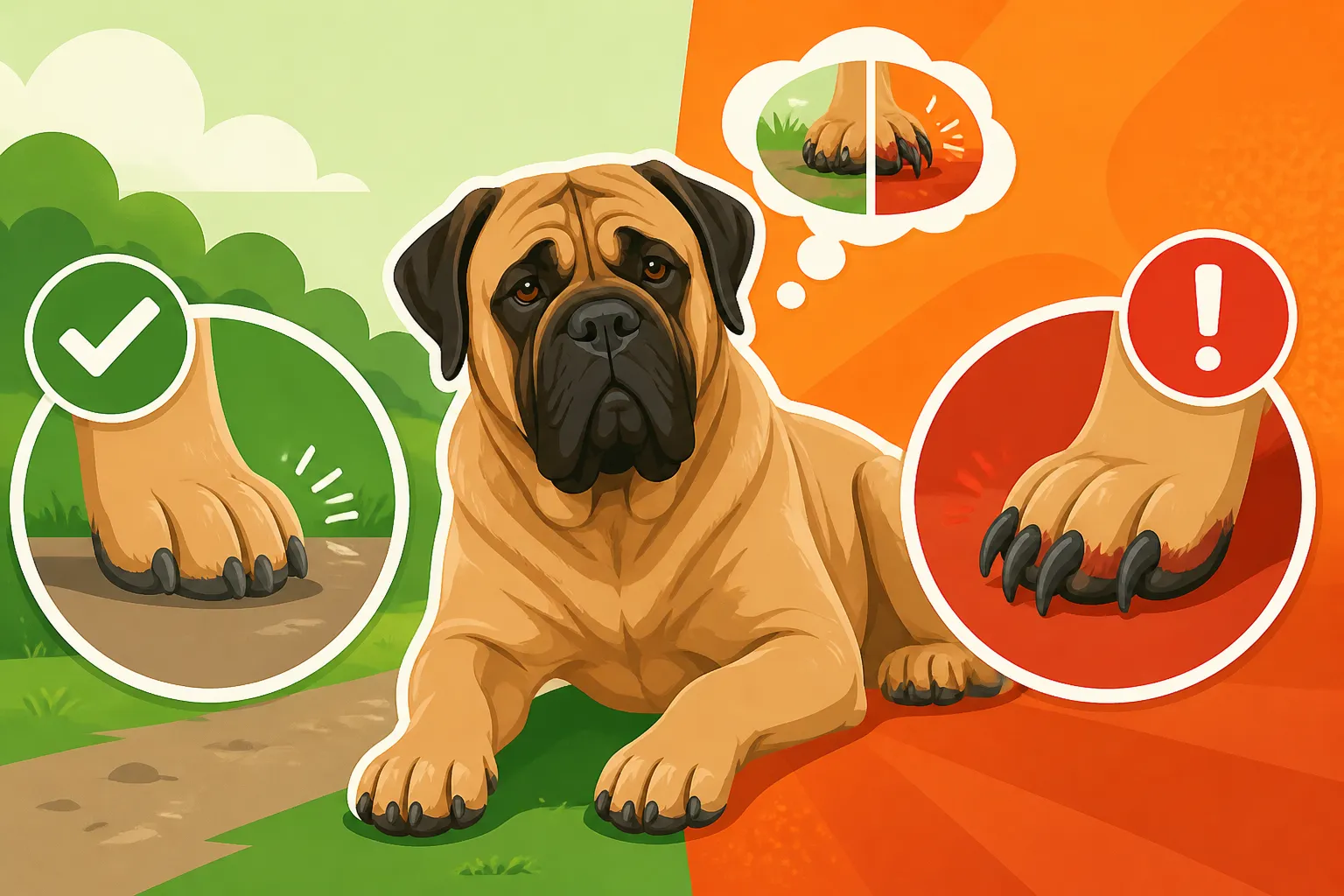
Let's break down why this idea often falls short. Firstly, many Mastiffs, despite their imposing size, are not built for extensive, high-impact exercise that would truly grind down their nails. Their massive frames and slower metabolisms mean they're often content with a leisurely stroll rather than a vigorous hike. While they need regular, moderate exercise for their joint health, it's rarely the kind of activity that provides consistent and aggressive nail abrasion. Think about it: how much do your own nails wear down if you walk on carpet all day versus a rocky trail? Most Mastiffs spend a good portion of their lives on softer surfaces, like grass in the yard, carpets, or rugs inside the house. These surfaces do very little to file down strong, thick Mastiff nails. Even walks on concrete or asphalt, while helpful, might only affect the very tips, leaving the quick—the sensitive blood vessel and nerve within the nail—to grow longer.
Furthermore, the structure of a Mastiff's paw and nail growth plays a role. Their nails are robust and grow continuously. Unless there's persistent, high-friction activity on very abrasive surfaces, those nails will simply keep growing. We're talking about conditions most domestic Mastiffs simply don't experience daily. If you've ever seen a Mastiff try to get up from a [slippery floor without proper traction], you'll understand why having nails that are too long only exacerbates this problem. They need every bit of grip they can get.
The Lifestyle Factors That Influence Nail Wear
The amount of natural nail wear a Mastiff experiences is heavily dependent on their lifestyle. A Mastiff living on a working farm, frequently walking on varied, rough terrain like gravel paths, hard-packed earth, or rocky fields, might see more natural wear. However, even then, it’s often not enough to keep them perfectly short. Most pet Mastiffs, however, live a much different life.
Consider the average Mastiff's day. They likely have access to a fenced yard, which is usually grass. Inside, they're probably lounging on comfortable beds or soft carpets. Even daily walks, while important for their mental and physical well-being, often occur on sidewalks or paved paths that are relatively smooth. These surfaces, while better than grass for nail wear, are not the abrasive grinders needed to counteract the continuous growth of Mastiff nails. Imagine trying to file down a thick piece of wood with fine-grit sandpaper – it would take ages! The same principle applies to your Mastiff's nails. How much yard a Mastiff actually uses might also factor in; if they mostly stick to a small, grassy patch, their nails will see even less friction. Owners who don't have suitable outdoor space and rely on indoor living primarily will find this problem amplified.
Understanding the Mastiff's Unique Nail Challenges
Dealing with Mastiff nails isn't just about aesthetics; it's about comfort, mobility, and preventing pain. Their sheer size means that problems like overgrown nails can have a disproportionately large impact on their health and quality of life. It’s not a problem that can be ignored in the hopes it will resolve itself.
The Quick: A Mastiff's Special Consideration
The "quick" is perhaps the most daunting aspect of nail care for any dog owner, and with a Mastiff, it feels even more critical. The quick is the living part of the nail, containing blood vessels and nerves. If you cut into it, it's painful for your dog and can bleed quite a bit, which is distressing for everyone involved. For Mastiffs, whose nails are often dark and thick, seeing the quick can be challenging.
What many owners don't realize is that the quick grows with the nail. If a Mastiff's nails are allowed to grow long, the quick will also extend further down the nail. This makes it incredibly difficult to trim the nails back to a healthy, short length without hitting the quick. It's a vicious cycle: long nails mean long quicks, which means you can only take off a tiny bit at a time. This is why consistent, frequent trimming is key. You're not just trimming the keratin; you're encouraging the quick to recede, little by little. This process is often referred to as "training the quick" and takes time and patience. Keeping a Mastiff's nails short enough for traction is a vital part of this, as longer nails prevent the paw pads from making proper contact with the ground.
The Impact of Overgrown Nails on a Mastiff's Body
Overgrown nails aren't just an annoyance; they can cause significant pain and contribute to long-term orthopedic issues in a massive breed like the Mastiff. When a dog's nails are too long, they push up into the nail bed, creating pressure and discomfort with every step. Imagine walking around with tiny pebbles constantly pressed into your toes – that's essentially what long nails feel like.
Beyond immediate discomfort, overgrown nails change a Mastiff's gait. To compensate for the pressure, they'll shift their weight, changing how their paws meet the ground. This unnatural distribution of weight can put undue stress on their toes, feet, hocks, and even their shoulders and spine. Over time, this can exacerbate or contribute to conditions like arthritis, hip dysplasia, or elbow dysplasia, which Mastiffs are already predisposed to. A Mastiff already lying two hundred pounds on one elbow all day needs perfectly healthy paws to avoid putting additional strain on their joints. Their substantial weight makes any biomechanical imbalance a serious concern. It's a domino effect: neglected nails lead to altered gait, which stresses joints, potentially leading to pain and reduced mobility. This is especially critical as a Mastiff ages; why an old Mastiff cannot get up can often be partly attributed to painful, long nails preventing proper leverage and grip.
Practical Strategies for Mastiff Nail Maintenance
Given that natural wear is rarely sufficient, a proactive approach to Mastiff nail care is essential. It might seem like a daunting task, especially with a dog that can outweigh you, but with the right tools, routine, and a positive mindset, it's entirely manageable.
The Essential Tools for Large Breed Nail Care
When it comes to Mastiff nails, you can't just grab any old clippers. You need sturdy, well-made tools designed for large, thick nails. Investing in good quality equipment is paramount, not just for efficacy but for safety.
Here are the primary tools you'll consider:
- Guillotine-style clippers: These are often preferred for their strength and precision on larger nails. Brands like Millers Forge or Safari make heavy-duty versions. Ensure they have sharp blades, which make a clean cut and reduce the chance of splitting the nail.
- Scissor-style clippers: Some owners find these easier to handle, especially if their Mastiff has particularly thick or curved nails. Again, look for robust, sharp versions designed for large breeds.
- Dremel or other rotary tool: A Dremel is a fantastic tool for Mastiffs, especially for owners nervous about cutting too much or dealing with dark nails where the quick is hard to see. It grinds the nail down smoothly, sealing the edge and making it harder for debris to get in. It also allows you to take off tiny amounts at a time, gradually encouraging the quick to recede. Many Mastiffs tolerate the vibration and sound surprisingly well with proper introduction. You can often find attachments specifically for pet grooming, sometimes on sites like Chewy or Amazon.
- Styptic powder: This is an absolute must-have. Accidents happen, and if you accidentally nick the quick, styptic powder will stop the bleeding quickly. Always have it within reach.
Here's a quick comparison of common tools:
| Tool Type | Pros | Cons | Best For |
|---|---|---|---|
| Guillotine Clippers | Quick cuts, good leverage for thick nails | Risk of cutting quick, can splinter if dull | Regular trimming on cooperative dogs, quick touch-ups |
| Scissor Clippers | Ergonomic for some, good for curved nails | Less precise for some, can be cumbersome | Very thick or curved nails, beginners |
| Rotary Tool (Dremel) | Gradual grinding, safer for quick, smooth finish | Noise/vibration can scare some dogs, takes longer | Dark nails, quick receding, smooth finish, nervous owners |
Remember, no matter which tool you choose, ensure it's kept clean and sharp. Dull clippers crush the nail rather than cutting it, causing pain and splintering.
Establishing a Routine and Positive Association
The key to successful Mastiff nail care is consistency and making it a positive experience for your dog. A scared Mastiff resisting a nail trim is a force of nature you do not want to contend with. Start early with puppies, if possible. Socializing a Mastiff puppy before it gets heavy is crucial for all aspects of care, including nail trims.
- Start Slow: Begin by simply touching your Mastiff's paws and nails frequently, offering praise and treats. Do this several times a day, even if you're not trimming. The goal is to make paw handling a normal, pleasant interaction.
- Introduce Tools: Let your Mastiff see and sniff the clippers or Dremel. Turn the Dremel on for a second or two, far away from them, then treat. Gradually move it closer, always associating the sound and sight with something positive.
- One Nail at a Time: Don't try to do all four paws in one sitting, especially initially. Trim or Dremel just one nail, lavish praise, and offer a high-value treat. End the session on a positive note. Build up slowly over days or weeks. Some owners even smear a treat like peanut butter or a spread from Ollie on a lick mat to distract their Mastiff during the trim.
- Frequency is Key: Aim for weekly or bi-weekly trims. Frequent, small trims are far better than infrequent, drastic ones. This allows the quick to recede naturally and prevents the nails from ever getting too long. It also helps with whether a Mastiff tolerates nail trims in the long run.
- Proper Technique: If using clippers, aim to cut straight across the tip, avoiding the quick. If your Mastiff has light-colored nails, you can usually see the quick as a pink area. For dark nails, only take off tiny slivers at a time, looking at the cut surface for a greyish-white center, which means you're still in the dead part of the nail. If you see a dark dot, you're getting close to the quick. With a Dremel, you're aiming to shorten the nail and round the edges, making sure the nail doesn't touch the ground when your Mastiff is standing naturally.
Consistency will build trust. Your Mastiff needs to believe that this routine is not scary and that good things happen when their paws are handled.
When to Seek Professional Help
There's absolutely no shame in admitting that Mastiff nail trims are too much for you. Whether it's the sheer size of your dog, their resistance, or your own nervousness about hitting the quick, professional help is always an option.
Many veterinary clinics offer nail trimming services. They often have experienced staff, appropriate large-breed equipment, and the ability to handle a resistant dog safely. Some even have a lift table that can help position a large Mastiff. Professional groomers are another excellent resource. Look for groomers experienced with giant breeds; they'll often have specialized equipment and techniques for making the process less stressful. Before committing, ask about their experience with Mastiffs specifically, as their weight and temperament require a nuanced approach. What a nail trim costs on a Mastiff might be higher than for a smaller dog due to the time and effort involved, but it's a worthwhile investment in your dog's comfort and health. Don't be afraid to ask your vet or local groomer if a groomer has a table rated for a Mastiff, as this can make a huge difference in safety and ease.
Long-Term Health and Comfort
Proper nail care isn't just a short-term fix; it's a critical component of your Mastiff's overall long-term health, mobility, and comfort. Neglecting it can lead to a cascade of problems that impact their quality of life, especially as they age.
Preventing Future Nail Issues
Once you've managed to get your Mastiff's nails to a good length, the goal is to maintain that length consistently. This means sticking to a regular trimming or grinding schedule, ideally weekly or bi-weekly, taking off small amounts each time. Regularity prevents the quick from growing out and keeps the nails from interfering with their natural posture.
Beyond direct trimming, consider modifications to their environment. While you can't pave your entire house, strategic placement of rough surfaces can help. Some owners place a concrete or abrasive mat near a door their Mastiff frequently uses, encouraging some natural grinding. Ensure your Mastiff has plenty of opportunities for controlled walks on concrete or asphalt, which offers more friction than grass. However, always be mindful of paw pad health on hot surfaces or with excessive friction. Using floor runners for a Mastiff throughout the house can prevent slipping, but they won't help with nail wear. The key is balance: provide safe indoor traction while also seeking opportunities for natural wear where appropriate, always backed up by manual trimming.
The Connection Between Nails and Overall Mobility
We've touched on this, but it bears repeating: a Mastiff's nails are intrinsically linked to their mobility. When nails are too long, they act like miniature stilts, forcing the paw pads off the ground and preventing the natural grip and weight distribution. This impacts everything from their ability to stand up smoothly to their comfort during walks.
Think about a senior Mastiff who already has compromised joints. Arthritis in a Mastiff at four is not uncommon, and overgrown nails can significantly worsen their discomfort and make movement even more challenging. If their nails are pushing back into the nail bed, they're constantly sending pain signals, making them reluctant to move or put full weight on their paws. This can lead to a sedentary lifestyle, which in turn can lead to weight gain, muscle atrophy, and further joint deterioration. Maintaining short nails helps ensure their paws can spread naturally, providing maximum traction and comfort, and supporting their massive bodies as they move. It's a fundamental part of supporting their joint health and ensuring they can enjoy their shorter lifespan with as much comfort and freedom as possible.
Disclaimer
This article is for general informational purposes only and does not constitute professional advice. Laws, prices and regulations vary by location and change over time. Consult a qualified professional for guidance on your specific situation.