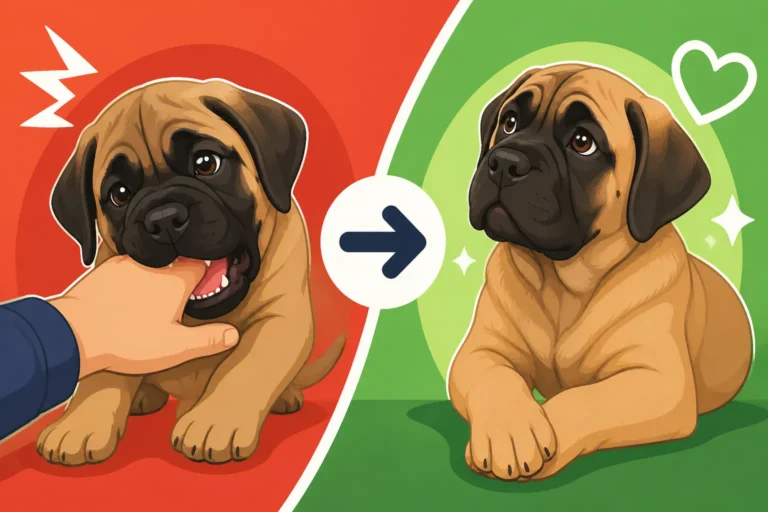
Whether a Mastiff Is Slow to Learn
It’s a common frustration: you're trying to teach your massive, majestic Mastiff a new command, and they just stare at you, blink slowly, and perhaps let out a sigh. You might find yourself wondering, "Are Mastiffs just slow to learn?" This guide is here to tell you that while a Mastiff's learning style might be different from a high-drive working breed, they are far from "slow" or unintelligent. We’ll explore their unique cognitive traits and effective training approaches.
The Mastiff Mindset: Deliberate, Not Dull
Many people mistakenly believe that Mastiffs are slow-witted simply because they don't respond with the instant eagerness of, say, a Border Collie. This perception often leads owners to get frustrated or, even worse, assume their gentle giant isn't capable of learning complex tasks. But the truth is, a Mastiff's brain works on a different rhythm, one that values thoughtful consideration over rapid-fire reactions. They observe, they process, and they decide if your request is truly worth their effort.
The Myth of the "Slow" Learner
The sheer size and calm demeanor of a Mastiff can be incredibly misleading. When a Mastiff takes its time to respond to a command, it's often not because they don't understand it, but because they are evaluating the situation. Are you truly asking them to do this? Is there a good reason? What's in it for them? This deliberate approach is often misinterpreted as slowness or even stubbornness. In reality, they are intelligent creatures with a strong sense of self-preservation and a natural inclination towards comfort. They aren't trying to be difficult; they're simply being Mastiffs. They are definitely not the kind of dog to blindly follow every command just because you said so.
Think of it this way: if you ask your Mastiff to "sit" and they take an extra few seconds to plop their substantial rear end on the floor, it's less about a processing delay and more about their assessment. Perhaps the floor is cold, or they were just getting comfortable. They need a compelling reason, consistently applied, to move their immense body. This is why understanding Whether a Mastiff Is Slow or Deliberate is so crucial to successful training. Their pace is part of their charm, and once you adapt to it, you'll find them quite capable.
Sensitivity and Sulking: Why Harsh Methods Fail
One of the most critical aspects of training a Mastiff is understanding their profound sensitivity. These giant dogs, despite their imposing appearance, are incredibly soft-hearted and prone to shutting down if treated harshly. A sharp voice, a yank on the leash, or any form of punishment can deeply impact their trust and willingness to engage. Instead of learning, they'll often retreat emotionally, becoming withdrawn or resistant.
I've seen it firsthand: a well-meaning owner, frustrated by a lack of immediate response, raises their voice. The Mastiff, who seconds before was considering the cue, suddenly looks away, lowers its head, and becomes completely unresponsive. This isn't defiance; it's a reaction to perceived unfairness or fear. They remember negative experiences keenly, and it can take a long time to rebuild that lost trust. This is why Why Harsh Correction Ruins a Mastiff is not just a theory, but a practical reality that every Mastiff owner must understand to avoid irreparable damage to their relationship and their dog's willingness to learn.
When a Mastiff "sulks," it's their way of expressing their discomfort or disagreement. They might refuse to make eye contact, turn their back, or simply lie down and ignore you. This isn't petty; it's a genuine emotional response. Their bond with their human is paramount, and any perceived breach of that trust can have lasting effects on their training progress. Therefore, patience, gentle guidance, and positive reinforcement are not just preferred methods; they are the only effective methods for a Mastiff.
Understanding How a Mastiff Learns Best
Training a Mastiff isn't about breaking their spirit or forcing compliance. It's about building a partnership based on respect, understanding, and positive motivation. Once you tap into what truly drives them, you'll find them eager, albeit deliberate, participants in their own education.
Short Sessions and High-Value Rewards
Given a Mastiff's thoughtful nature and often shorter attention span for repetitive tasks, brief, engaging training sessions are far more effective than long, drawn-out ones. Aim for 5-10 minute sessions, a few times a day, rather than one intense 30-minute session. This keeps the experience positive, prevents boredom, and allows them to absorb information without becoming overwhelmed. Think quality over quantity. Whether Short Sessions Suit a Mastiff isn't just a suggestion; it's a foundational principle for success. You want to end each session on a high note, leaving them wanting more, not dreading the next one.
What constitutes a "high-value reward" for a Mastiff can vary, but generally, it means something exceptionally appealing. While some dogs are happy with a dry biscuit, a Mastiff might need something richer: small pieces of cooked chicken, cheese, or even liverwurst. Praise and gentle affection are also powerful motivators for these emotionally connected dogs, especially when combined with a tasty treat. Experiment to find what truly makes your Mastiff's eyes light up. Knowing Whether Food Motivates a Mastiff is key, but don't underestimate the power of your verbal encouragement and a good ear scratch!
Beyond food, play can be a reward too, though Mastiffs aren't typically keen on frantic games. A gentle tug with a sturdy rope toy, a brief chase in the yard, or a favorite squeaky toy brought to life can be excellent reinforcers. The key is variety and understanding your individual dog's preferences. The more appealing the reward, the more quickly they'll connect their action to the desired outcome.
Consistency and Clear Communication
Imagine trying to understand a language where the rules kept changing. That’s what it feels like for a dog when training isn't consistent. With a Mastiff, consistency is paramount because of their deliberate nature. Every member of the household needs to use the same commands, hand signals, and expectations. If one person allows jumping on guests and another punishes it, your Mastiff will be utterly confused and default to what suits them best, which is often the easier, less-demanding option.
Clear communication goes hand-in-hand with consistency. Use short, distinct words for commands and pair them with consistent hand signals. Mastiffs, like all dogs, are excellent at reading body language. A clear, calm voice and unambiguous cues will help them process your requests more efficiently. The more you repeat a command in exactly the same way, with the same hand signal, and follow it with the same desired action and reward, the faster your Mastiff will generalize the behavior. Knowing How Many Repetitions a Mastiff Needs before a behavior is truly ingrained will help you manage your expectations and prevent frustration for both you and your gentle giant.
If your Mastiff gives you that slow blink or confused look, it’s often a sign that your communication isn't clear enough, not that they aren't intelligent. Break down complex commands into smaller, simpler steps. For instance, if teaching "down," don't just expect them to plop immediately. Start by luring their nose to the floor, then rewarding, gradually asking for more of the "down" position. This step-by-step clarity is essential for a dog that likes to think things through.
Positive Reinforcement: Building Trust, Not Fear
Positive reinforcement is the cornerstone of effective Mastiff training. This approach focuses on rewarding desired behaviors, making your Mastiff want to perform them. It creates a positive association with learning and strengthens the bond between you and your dog. Methods like clicker training, where a distinct sound (the click) marks the exact moment of a correct behavior, followed immediately by a reward, can be incredibly effective. The clicker helps them pinpoint exactly what they did right, even with their slower processing time.
Luring is another fantastic positive reinforcement technique for Mastiffs, especially for initial teaching. Using a treat to guide them into a "sit" or "down" position, then immediately rewarding, makes learning effortless and fun. The goal is to set your Mastiff up for success, praising every small step in the right direction. This builds confidence and encourages them to offer behaviors rather than waiting to be told. The online courses from BAXTER & Bella, for example, heavily emphasize these positive, force-free methods, offering a structured way to approach training from puppyhood. Their approach aligns perfectly with the sensitive nature of Mastiffs.
Remember, a Mastiff that trusts you and enjoys the training process will be a much more willing student. They are companions, not robots. Their affection and loyalty are powerful motivators. Celebrate their successes, no matter how small, and approach every training session with patience and a positive attitude. This foundational approach ensures a happy, well-adjusted Mastiff who views learning as a rewarding interaction with their beloved human.
Navigating Common Training Challenges
While Mastiffs are intelligent, their unique temperament can present specific challenges. Understanding these and having strategies to address them will make your training journey much smoother. It’s all about working with their nature, not against it.
The Art of Motivation: What a Mastiff Actually Wants
Beyond food, what truly motivates a Mastiff? For many, it's comfort, companionship, and quiet praise. They are deeply bonded dogs who thrive on being near their people. For a Mastiff, a successful training session isn't just about getting a treat; it's about pleasing you and maintaining that cherished connection. A happy "Good boy!" delivered with a loving scratch behind the ears can be just as powerful as a piece of cheese, especially when they truly understand what they've done right. What Actually Motivates a Mastiff is often a blend of all these things, tailored to their individual personality.
Some Mastiffs enjoy a short, gentle game of tug, while others prefer simply lounging at your feet after performing a task. Observe your dog closely to understand their unique motivators. For instance, if your Mastiff loves car rides, making "sit" and "stay" a prerequisite for getting in the car can be a powerful motivator. If they adore their comfy bed, a "place" command that leads to that sanctuary is often eagerly obeyed. Tapping into these intrinsic desires makes training less of a chore and more of an enhancement of their already comfortable life.
Overcoming Stubbornness or "Selective Hearing"
That infamous Mastiff "stubbornness" is rarely true defiance. More often, it's their thoughtful nature at play, or what I like to call "executive decision-making." They might be assessing if your request is truly necessary, if the reward is worth the effort, or if there's a more comfortable alternative. This is The Stubbornness That Is Actually a Mastiff Thinking. They're not being disobedient; they're deliberating. Our job is to make our request the most appealing option.
To overcome this, make your requests crystal clear and highly rewarding. If your Mastiff is sitting and you ask them to "come," and they're taking their sweet time, don't repeat the command in an increasingly frustrated tone. Instead, make yourself incredibly exciting – clap your hands, use an enticing voice, perhaps even jog a few steps away. The moment they take a single step towards you, praise and reward enthusiastically. Gradually, they'll learn that immediate compliance leads to great things. Avoid nagging, as it quickly teaches a Mastiff to tune you out. One clear command, followed by consistent reinforcement or gentle guidance, is far more effective.
Sometimes, their "selective hearing" is simply a preference for lounging. If they lie down and refuse to move, trying to drag or force them is not only physically impossible for most people, but it will also damage their trust. Instead, try to re-engage them with a high-value treat or a happy, inviting tone. If all else fails, sometimes a change of scenery or a brief break is needed. Remember, Mastiffs are rarely in a hurry, and sometimes, you just have to meet them where they are.
Early Socialization and Exposure: Building a Confident Giant
Training isn't just about commands; it's about shaping a well-adjusted, confident dog. For a Mastiff, early and thorough socialization is absolutely critical. A tiny puppy is easy to pick up and expose to new sights, sounds, people, and other friendly animals. As they grow into massive adults, this becomes much more challenging. An undersocialized Mastiff can become fearful or anxious, and a fearful giant is a significant concern.
Start socialization the moment your puppy comes home, after they’ve had their initial vet check-up and are deemed healthy enough for limited outings. Introduce them to a wide variety of gentle, positive experiences. Enroll in a puppy class, invite calm friends over, visit quiet parks, and let them observe the world safely from your arms or a comfortable distance. This is why Socializing a Mastiff Puppy Before It Gets Heavy is so important—it's much easier to carry a 30-pound puppy than a 150-pound teenager into novel situations.
Ensure every new experience is positive, paired with treats and praise. You want them to associate new things with good feelings. Consider getting some helpful tools from Amazon, like a long training leash for safe exploration or a treat pouch to always have rewards on hand during outings. A well-socialized Mastiff is a confident Mastiff, and a confident Mastiff is far more likely to engage willingly in training and navigate the world without fear.
Training Tools and Resources for Mastiff Owners
Having the right equipment and knowing when to seek expert help can make a huge difference in your Mastiff's training journey. These tools aren't about brute force, but about safe, effective management and communication.
Harnesses and Leashes for Control, Not Force
Given their immense size and strength, the right walking equipment is non-negotiable for a Mastiff. A standard flat collar might be fine for identification, but for walks, a well-fitting harness is usually a better choice. It distributes pressure across their chest and shoulders, preventing strain on their neck and throat, especially if they decide to suddenly lunge or plant their feet. The decision of Whether a Mastiff Should Wear a Harness or a Collar often comes down to comfort and control for both dog and owner.
Many owners find front-clip harnesses incredibly helpful. These harnesses have a leash attachment ring on the dog's chest. When your Mastiff pulls, the leash redirects them gently to the side, discouraging pulling without causing discomfort. This teaches them to walk nicely on a leash much more effectively than a traditional back-clip harness. Using a good quality, sturdy front-clip harness, easily found on Amazon, can make walks much more enjoyable. It’s a tool that helps you teach them politely, rather than relying on force. Learning Whether a Front Clip Harness Stops a Mastiff Pulling can transform your walking experience and maintain your Mastiff's willingness to go for a stroll.
Professional Help: When to Call in the Experts
Even the most dedicated owner can benefit from professional guidance. If you're struggling with specific behaviors, feel overwhelmed, or just want to ensure you're on the right track, don't hesitate to seek out a certified professional dog trainer, especially one with experience in giant breeds. They can offer personalized strategies, help you understand your Mastiff's unique body language, and provide hands-on coaching. Whether a Mastiff Needs a Professional Trainer isn't a sign of failure, but a wise investment in your dog's future.
Consider looking for trainers who use positive reinforcement methods exclusively. Avoid anyone who suggests harsh corrections, punitive tools, or methods based on dominance theory, as these are detrimental to a Mastiff's sensitive temperament. Online resources, like the comprehensive programs offered by BAXTER & Bella, can also provide excellent guidance and support, connecting you with certified trainers and a community of like-minded owners from the comfort of your home. They often have resources specifically addressing the unique challenges of larger breeds.
A professional trainer can help you refine your timing, improve your communication, and troubleshoot problem behaviors before they become deeply ingrained. They can also offer valuable insights into your Mastiff's specific needs and help you build an even stronger bond based on mutual understanding and respect.
Understanding Mastiff Learning: Myth vs. Reality
To help clarify some common misconceptions, here's a quick comparison of what people often assume about Mastiff learning versus the reality of their cognitive style.
| Aspect of Learning | Common Myth (Why they seem "slow") | Mastiff Reality (Their true learning style) |
|---|---|---|
| Response Time | Takes too long to respond to commands. | Deliberate; processes information and assesses the situation before acting. |
| Motivation | Lazy; only works for the highest value treats. | Highly motivated by positive reinforcement, consistency, and pleasing their family. |
| Attention Span | Gets bored quickly with training. | Benefits from short, fun sessions; repetition dulls interest, but engagement thrives. |
| Memory | Forgets commands easily, needs constant reminding. | Excellent long-term memory for both positive and negative experiences. |
| Sensitivity | Tolerates rough handling due to size. | Extremely sensitive; harshness leads to shutdown and distrust. |
| Problem Solving | Not very clever; struggles with new tasks. | Intelligent and thoughtful problem-solvers; will find their own solutions if not guided clearly. |
Ultimately, a Mastiff is not "slow" to learn, but rather learns on their own terms, at their own pace, and with a deep need for positive, respectful interaction. Embrace their unique learning style, and you'll uncover a deeply intelligent, devoted companion.
Disclaimer
This article is for general informational purposes only and does not constitute professional advice. Laws, prices and regulations vary by location and change over time. Consult a qualified professional for guidance on your specific situation.