Why a Mastiff Only Gets Six to Ten Years
Mastiff life expectancy of six to ten years is caused by rapid cellular growth, massive weight, and physical strain on bones.

Mastiff life expectancy of six to ten years is caused by rapid cellular growth, massive weight, and physical strain on bones.

Pre-anesthetic bloodwork for a Mastiff reveals hidden health risks and helps veterinarians tailor anesthesia protocols for safety.

Safely moving a two-hundred-pound collapsed Mastiff requires teamwork, emergency vet preparation, and an improvised blanket stretcher.

Mastiff orthopedic surgeries like TPLO and total hip replacement require a board certified veterinary specialist to ensure successful outcomes.

Mastiff medication dosing using body surface area prevents toxicity and inaccurate treatment in dogs weighing up to two hundred pounds.

Anesthetic dosing for a two hundred pound Mastiff requires calculating lean body weight instead of scale weight and addressing breed sensitivities.

Male Mastiff neutering age impacts growth plate closure, testosterone production, muscle mass, and long-term joint health.

Mastiff neutering timing and its connection to cancer risk, bone development, and long-term health implications for giant breeds.
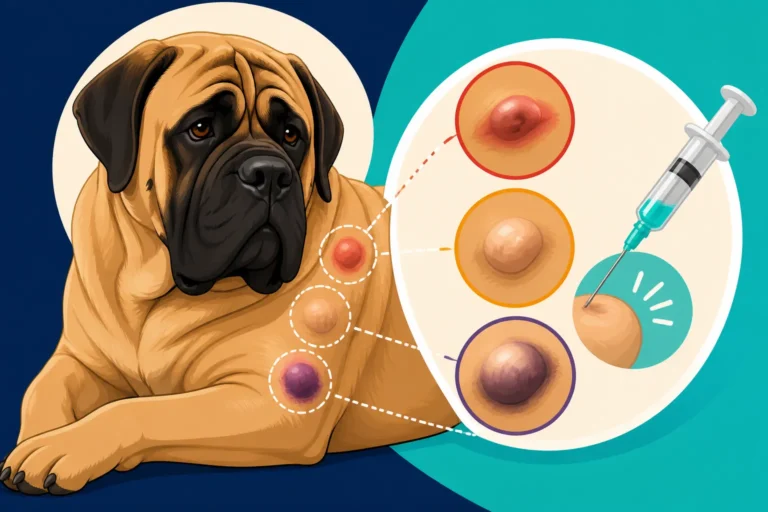
Mastiff lump aspiration details explain fine needle procedures, cellular sample collection, and veterinary diagnosis for giant dog growths.

Lymphoma in Mastiffs is a systemic cancer affecting white blood cells, presenting in multiple forms with distinct symptoms.